



A chick vaccination method selection matrix helps a hatchery compare injection, spray and combined workflows against the approved veterinary program instead of choosing a machine from a headline capacity. The matrix should cover the biological and procedural program, input condition, handling, preparation, traceability, operator work, cleaning, exception handling and acceptance evidence. It must not invent a dose, coverage rate or animal-health outcome.
This article is for hatchery managers, veterinary leads, production engineers and procurement teams. It turns a difficult “which method is best?” question into a documented choice with visible assumptions and a clear list of information still required.
What should the matrix decide?
Chick vaccination method selection matrix work begins by defining the decision boundary. Is the team choosing a method for one approved program, comparing an existing station with a future line, or deciding whether a combined machine can reduce handoffs? The answer changes which evidence matters.
Write the approved program and its owner before scoring equipment. State the target input, vaccine preparation responsibility, required records, acceptable handling conditions, cleaning boundary and escalation route. Keep veterinary decisions separate from equipment assumptions. A machine can support a process, but it cannot approve a program.
The WOAH Terrestrial Code is a credible reference for animal-health responsibilities. The site's veterinarian and approved product instructions remain the controlling source for the actual vaccination procedure.

Which criteria belong in the first comparison?
Use criteria that change the practical decision. Do not score a method because it sounds modern. Compare how the method receives chicks, prepares the product, delivers the approved procedure, records the batch, handles an interruption and returns to a released state.
| Criterion | Question to ask | Evidence required |
|---|---|---|
| Program fit | Does the method support the approved veterinary program and product instructions? | Program owner confirmation and controlled procedure |
| Input and handling | Can the station accept the carrier, flow and presentation without unsafe shortcuts? | Samples, layout and handling review |
| Preparation | How are preparation, transfer, timing and hold conditions controlled? | Handoff map, records and responsibility matrix |
| Traceability | Can the batch, product, device, operator and time be linked? | Trace fields and example record |
| Cleaning | What is cleaned, how, by whom and before which release? | Approved sanitation method and inspection card |
| Recovery | What happens after a stop, failed check or uncertain batch? | Exception route and restart evidence |
Set weights as a project decision and label them as proposed. A heavily weighted criterion should have a reason and an accountable owner. A score without evidence is only a preference.
When might injection fit?
Injection may fit when the approved program requires a controlled delivery route, the handling and preparation steps are defined, and the site can support the required inspection, cleaning and traceability. Review the carrier, access, needle or delivery component controls, batch identification and exception route before discussing capacity.
Ask how the station detects a missing or uncertain input, how an operator responds, and how the record links preparation to the delivered process. Do not turn a supplier's nominal output into a biological claim. The procedure owner must define what is verified and how.
Which injection risks need explicit controls?
Review preparation handoff, component wear, cleaning, missed or uncertain delivery, batch segregation and safe access. Include a controlled response for a stoppage in the middle of a batch. The matrix should show whether the required evidence is available during production, not only after the shift.
When might spray fit?
Spray may fit when the approved program, input presentation and coverage verification method align with the site. Compare the spray zone, carrier orientation, preparation handoff, environmental conditions, cleaning and the way uncertain coverage is handled.
“The birds look wet” is not a complete acceptance criterion. Ask which approved method verifies the process, who reviews the result and how the affected batch is identified when a check fails. Keep the actual procedure and acceptance boundary in the quality file.
When does a combined workflow make sense?
A combined workflow may reduce a handoff or connect two approved steps in one controlled line. It can also introduce more interfaces, more changeover conditions and a larger recovery boundary. Compare the whole process, not the number of functions in the brochure.
Map preparation, carrier flow, operator positions, cleaning zones, records and downstream dispatch. Ask what happens if one method is ready while the other is not. A combined machine should have a clear degraded mode or a documented stop rule.
How should staffing and layout be compared?
Draw the operator route for each method. Include preparation, replenishment, loading, checks, exception handling, cleaning and handover. Count the work at the real shift rhythm, including breaks and a second person needed for a controlled intervention. A theoretical headcount is not a staffing plan.
Check clearances, access, hygiene separation, drainage, utilities and maintenance routes. The ISO 12100 machinery safety reference is useful when reviewing foreseeable use and intervention. Apply the site's own safety and sanitation requirements for the final choice.
How should a score be turned into a decision?
Use a matrix with a score, evidence, owner and open question for every criterion. Add disqualifying conditions separately so a high average cannot hide a failed safety or program requirement. Mark uncertain evidence as pending rather than awarding a neutral score without explanation.
Keep the chick vaccination method selection matrix versioned with the approved program and the supplier responses. The score is only meaningful when the evidence and decision boundary remain visible.
Review the chick vaccination method selection matrix with production, quality, engineering and procurement before a commercial award. This catches a staffing or cleaning assumption that a technical score may hide.
Use the chick vaccination method selection matrix again during FAT and SAT planning. Every preferred criterion should have a test, record or owner rather than a brochure statement.
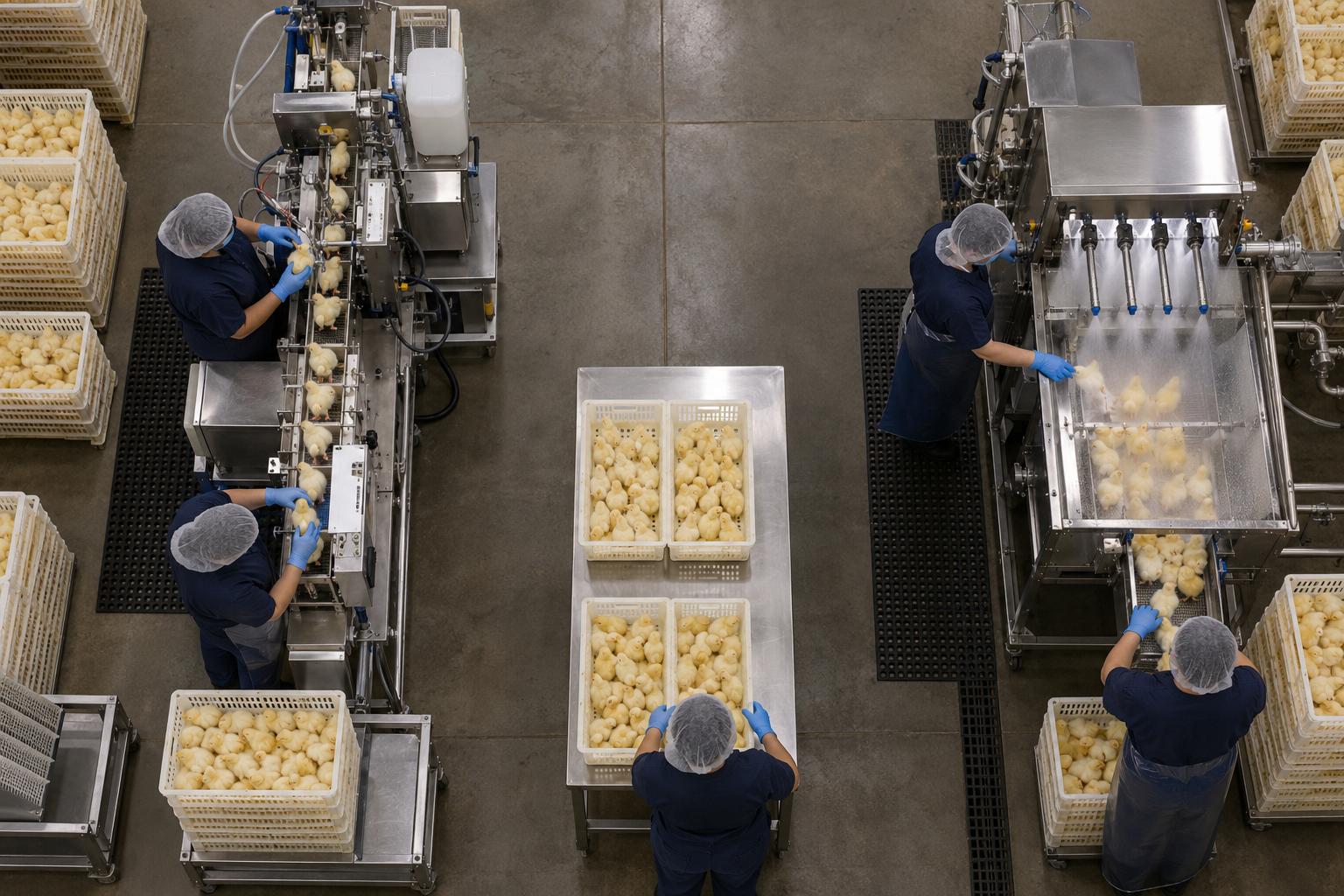
| Decision state | Meaning | Next action |
|---|---|---|
| Preferred for confirmation | Fits the approved program and has evidence for the major risks | Run samples, site review and a controlled proposal |
| Technically possible | Could fit, but key inputs or responsibilities are unresolved | Close named questions before commercial comparison |
| Hold | Evidence is incomplete or a boundary is unclear | Request documents, samples or owner decisions |
| Not suitable | Fails a required program, safety, hygiene or interface condition | Record reason and stop the comparison |
What should the RFQ ask suppliers to return?
Request a method narrative, input assumptions, process boundary, preparation handoff, operator tasks, records, cleaning plan, exception route, FAT/SAT proposal, training, spare parts and service assumptions. Ask for a marked list of what the supplier does not provide. The buyer should be able to place each answer into the same matrix.
Connect the discussion to the JuliSense injection vaccinator, spray vaccinator or combined treatment and vaccination machine only after the approved program and input workflow are defined. The quality control service, FAQs and contact page are useful follow-up routes.
How should the selected method be accepted?
Write acceptance as a sequence: approved input, prepared product, controlled run, verification method, records, cleaning and release. Include an interruption and a restart if they are in scope. Define who witnesses, who decides, what evidence is retained and what happens to an uncertain batch.
Close the project by reading the chick vaccination method selection matrix against the final test record, training sign-off and open-action list. The chosen method should be explainable after the first production month.
After launch, review actual handoffs, exceptions, cleaning time, traceability gaps and training needs. If the selected method changes, repeat the matrix with the new evidence. A decision record stays useful when it explains why the method fit the process at that time.
FAQ
Is injection always more precise than spray?
The matrix should not assume that. Compare each method against the approved program, verification method, input condition, operator work and evidence requirements.
Can a combined machine reduce staffing?
It may change the work, but staffing must be checked against preparation, replenishment, checks, cleaning, exceptions and breaks in the real layout.
Who owns the method decision?
The veterinary or quality authority owns the approved program. Production, engineering and procurement contribute evidence and implementation constraints.
What is a disqualifying condition?
A condition that fails an approved program, safety, hygiene, traceability or interface requirement and cannot be accepted as an open assumption.
When should the matrix be updated?
Update it when the program, carrier, line boundary, site condition, supplier proposal or acceptance evidence changes. Keep the prior version for traceability.