


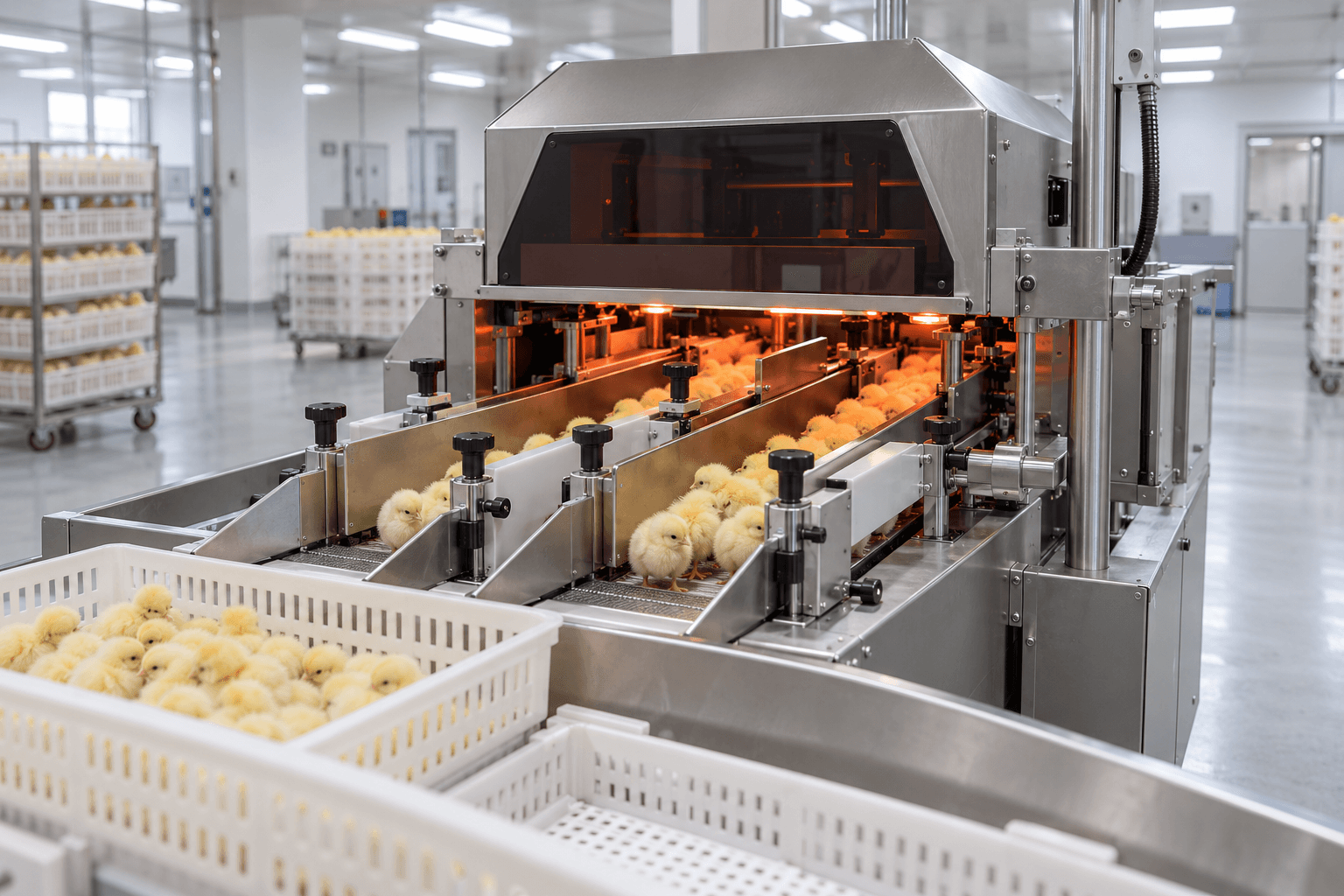
An infrared beak treatment input specification defines what must arrive at the station before an approved setting can be expected to work consistently. It covers chick condition, tray or carrier format, orientation, spacing, batch identity, operator checks and changeover information. The station settings, welfare controls and treatment limits must come from approved product, veterinary and site procedures. This article does not prescribe a biological outcome or a universal setting.
The audience is a hatchery production manager, equipment engineer or buyer preparing an IRBT project. The goal is to replace vague statements such as “handles our chicks” with a controlled input card that can be reviewed at design, FAT, SAT and routine production.
Why start with inputs instead of lamp settings?
Infrared beak treatment input specification starts with the material and operating condition the station receives. A lamp or recipe cannot compensate for a tray that does not locate correctly, a mixed input that was not approved, or an operator who cannot see the first-run checks.
Define the input boundary before discussing performance. Identify the poultry type and approved age or condition, the carrier, the presentation direction, the expected variation, the batch identity and the handoff from the previous station. Separate confirmed facts from items that require a sample trial or veterinary approval.
The WOAH Terrestrial Code provides an international reference point for animal-health and welfare responsibilities. It does not replace the site's approved procedure or the equipment-specific instructions.

Which chick and carrier facts matter?
Record the facts that affect location, access, timing or approved treatment conditions. Use a sample and a drawing whenever possible. Include the range, not only a single nominal value, and state who approves a change outside the range.
| Input group | What to document | Design question |
|---|---|---|
| Chick condition | Approved type, age/condition range and presentation state | Can the station locate and process the approved input safely? |
| Tray or carrier | Dimensions, openings, orientation, material and variation | Does the carrier register without forcing or misalignment? |
| Flow | Arrival pattern, spacing, batch boundaries and changeover | Can the station identify the run and keep a stable rhythm? |
| Operator input | Loading, visual checks, replenishment and exception action | Is the required work visible and reachable? |
| Records | Recipe, batch, sample, approval and deviation fields | Can the first-run decision be traced later? |
Do not replace the approved input range with a guessed average. A sample that looks typical may conceal edge conditions that cause mislocation or an unsafe intervention.
How should the presentation be checked?
Walk the input from the upstream handoff to the treatment point. Check direction, pitch, spacing, carrier support, guide contact, sensor visibility and the position an operator must occupy. The input card should include photographs or controlled sketches that show the reference edges without exposing confidential information.
Observe the first and last input in a batch, a normal carrier and an approved variation. Note whether the station can distinguish an empty position, an overfilled position and a carrier that is present but not seated. A clear rejection route is part of the specification, not an afterthought.
What if the input varies by flock or supplier?
Define a changeover trigger and a controlled review. The team may need a new sample, an approved setting, a first-run check or a temporary hold. Never let an operator silently copy a setting from a different input.
Which settings belong in the controlled record?
List the setting names and source documents without inventing values. A controlled record may include recipe identity, lamp or optical module identity, carrier format, software revision, date, operator, sample result and approval status. The exact technical parameters remain configuration-specific and should be confirmed against the approved manual and procedure.
Use permissions so only authorized roles can change a recipe. Record the previous value, new value, reason, approver and effective batch. The ISO 12100 machinery safety reference is useful when reviewing foreseeable access, guarding and maintenance tasks around the station.
| Record | Purpose | Owner |
|---|---|---|
| Input identity | Connects the run to the approved chick and carrier condition | Production or quality |
| Recipe and revision | Shows which controlled settings were used | Authorized process owner |
| First-run check | Confirms the input is presented as expected | Trained operator and reviewer |
| Deviation | Explains a hold, adjustment or rejected input | Quality with technical support |
How should changeover be designed?
Use a changeover card with the old input, new input, cleaning or isolation steps, approved recipe, sample check, first-run release and record handoff. Include time for the operator to verify guides, sensors and carrier orientation. A fast changeover that skips the first-run decision simply moves risk into production.
Mark any task that requires maintenance, quality or a veterinarian. Define who can stop the line and who can release it. If an input is outside the approved scope, the correct action may be to hold the batch and request a technical decision, not to adjust the machine by feel.
How should acceptance prove input compatibility?
Build FAT and SAT around representative samples and boundaries. Test the agreed carrier formats, normal presentation, approved variation, empty position, mislocation response and restart after a controlled stop. Record the sample identity, conditions, operator action and decision. Avoid a single demonstration with a carefully staged carrier.
At site, verify the real room, lighting, access, upstream handoff and downstream route. Check that the input card can be completed in the production rhythm and that records survive a shift change or power interruption. A buyer should receive the final input specification, sample evidence, open deviations and training record.
Which maintenance and cleaning inputs should be included?
Input specification also includes the condition of the station before a run. State the optical-area cleaning method, permitted tools, guard condition, sensor check, emergency-stop or interlock check and the escalation route for a failed pre-shift item. The machine should not be released because a screen says “ready” when a required physical check is incomplete.
Review access from the cleaning and maintenance side. The input route must remain visible after guards, cables and adjacent conveyors are installed. Keep a record of changes that affect guides, carrier support or sensor alignment.
Use the infrared beak treatment input specification as the shared reference for production, engineering, quality and the approved veterinary authority. A single controlled card is easier to review than disconnected notes.
Update the infrared beak treatment input specification when a carrier, upstream handoff or approved input range changes. Do not copy a prior setting without checking the new input.
How should the RFQ describe the requirement?
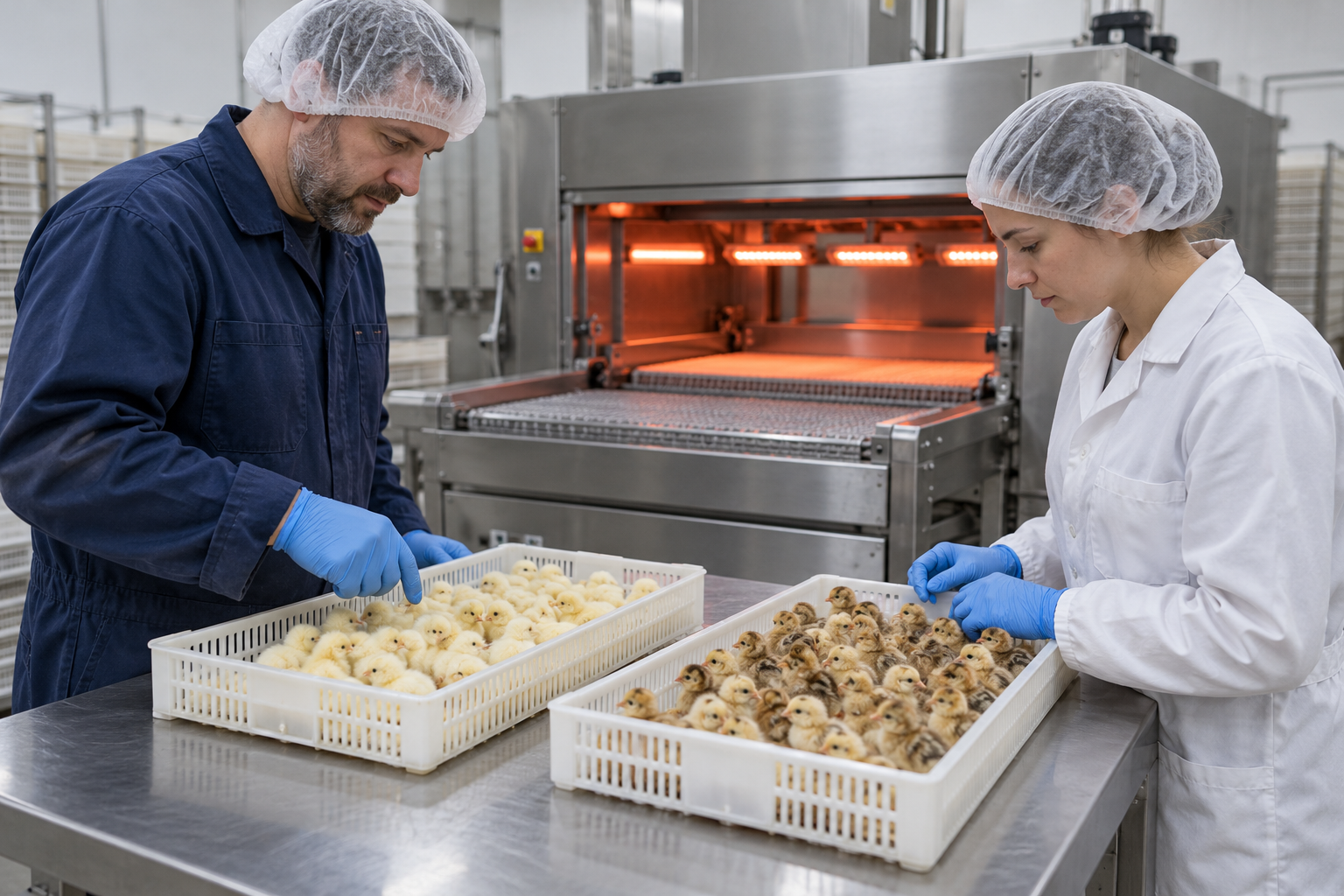
Use infrared beak treatment input specification as a deliverable. Ask the supplier to return an input data sheet, compatibility assumptions, required samples, changeover limits, operator checks, controlled setting fields, exception route and proposed FAT/SAT evidence. Ask what remains to be confirmed by the site's approved procedure.
Connect the project discussion to the JuliSense infrared beak trimming machine after the input range and workflow are documented. The combined treatment and vaccination machine, quality control service, FAQs and contact page support further clarification.
What should the first production review ask?
Ask whether the approved input stayed within range, which changeovers required intervention, whether any carrier was mislocated, which alarms repeated, whether the operator could see the required check, and whether the record linked the batch to the correct recipe and approval. Review facts rather than assuming a stable result from one successful run.
The first review should compare the actual shift record with the infrared beak treatment input specification, including any approved exception and the person who released it.
Feed recurring issues into the design, training and maintenance review. Keep the original input specification and change revisions through formal control. A living document is useful only when each change has an owner and a reason.
FAQ
Does the input specification set the treatment result?
No. It defines the approved input and controls needed for a valid process. Treatment settings and outcomes require approved technical and veterinary decisions.
Should every flock have a new recipe?
Not necessarily. Use the approved procedure and change-control rules. A new input condition may require review, but it should not trigger an improvised setting.
What is the most useful sample?
A representative carrier and input range, including an approved variation that exposes location, spacing and access limits.
Who owns the input card?
Production can own the operating record, while quality, engineering and the relevant veterinary authority approve the conditions and changes.
Can an operator correct a misaligned carrier?
Only under the approved safe procedure. The input specification should state when to stop, how to contain the batch and who can authorize recovery.