


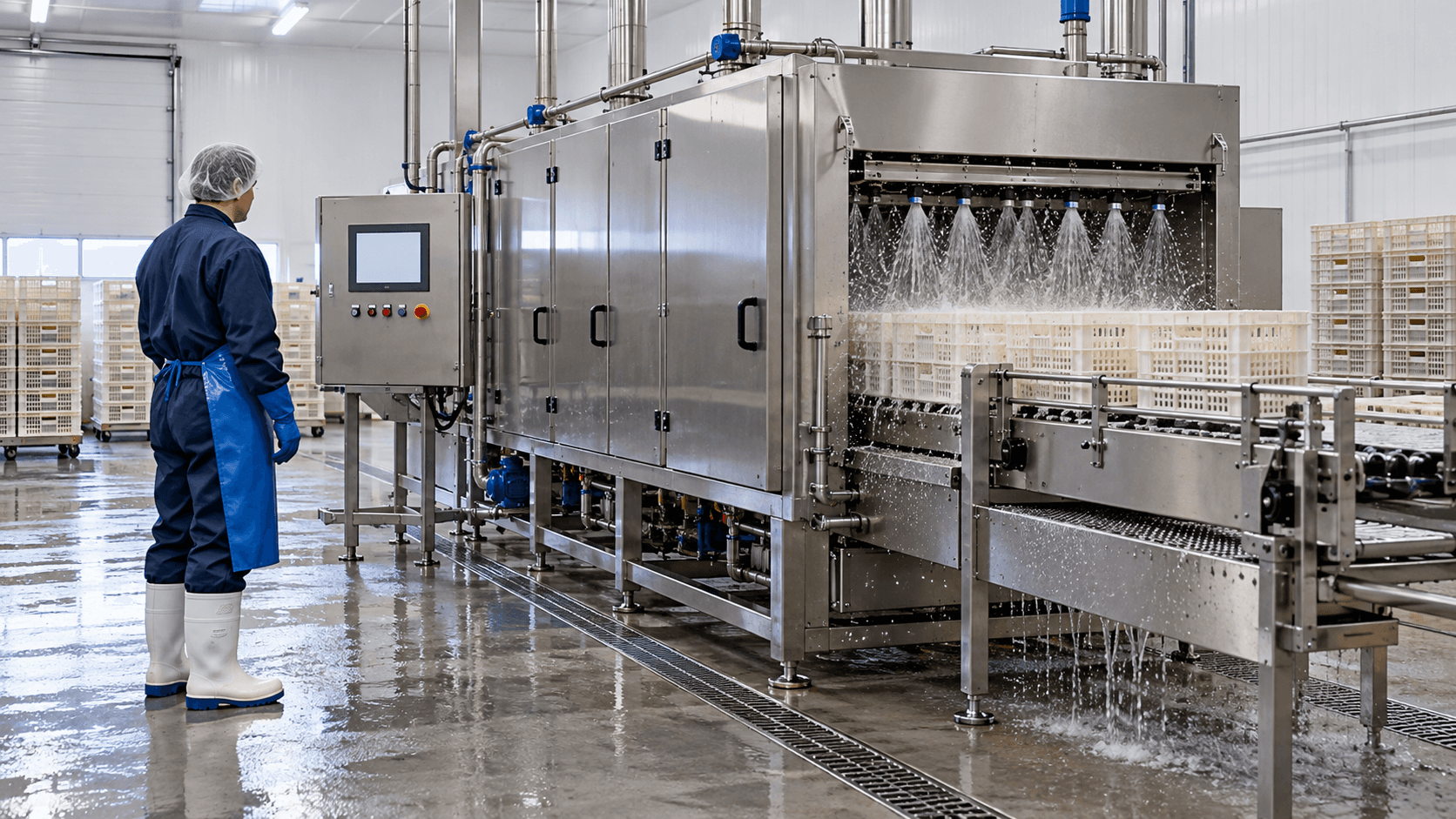
## Why wash quality depends on more than pressure
A crate washer can have strong pump pressure and still produce inconsistent results. Soil load, water temperature, detergent concentration, filtration, nozzle condition, dwell time, and final-rinse quality all affect the result. The goal is not to chase one impressive pressure reading. It is to keep the full wash process inside the approved operating window and to detect drift before dirty crates move to the next area.
Water limits and sanitation criteria should come from the site's water source assessment, chemical supplier instructions, equipment design, and applicable hygiene program. The controls below are a framework for making those requirements visible at the machine.
Define the washer's control points
Map the process into stages:
1. Pre-rinse removes loose soil and protects the wash tank from excessive loading.
2. Wash applies the approved chemistry, temperature, pressure, and contact time.
3. Intermediate separation or filtration limits the return of solids to the spray circuit.
4. Final rinse removes detergent and remaining soil with the specified water quality.
5. Drain or drying prevents standing water from becoming a new contamination source.
For each stage, identify the parameter, target or limit, measurement method, frequency, and response when out of range.
Monitor water quality at the right locations
Do not assume that water quality at the incoming connection is the same as water quality at the spray nozzle. Monitor the points that influence the crate surface:
- Incoming water source and any treatment system.
- Wash-tank water after normal production loading.
- Final-rinse supply at the machine.
- Filters, strainers, and recirculation returns.
- Drain or effluent points when required by the site program.
Depending on the local specification, useful indicators may include temperature, hardness, conductivity, turbidity, pH, sanitizer concentration, or visible solids. Not every site needs every test. Select indicators that explain the failure modes you actually need to control.
Keep chemistry and temperature records together
Chemistry and temperature interact. A detergent may perform differently when the water is cold, hard, or heavily loaded with organic matter. Record the chemical product, concentration method, temperature, and time of check on the same batch or shift record. This makes it possible to distinguish a low-concentration event from a temperature loss or an overloaded tank.
Use the chemical supplier's instructions for concentration and safe handling. Never increase dosage simply because a crate looks dirty without checking whether nozzle coverage, filtration, or pre-rinse performance is the real problem.
Inspect nozzles, filters, and spray coverage
Nozzle wear and blockage can create clean-looking pressure readings while leaving shadow areas on the crate. A routine inspection should check:
- Nozzle presence, orientation, and spray pattern.
- Blockage or mineral buildup at tips.
- Pump seals, pressure stability, and leaks.
- Filter or strainer condition and differential pressure where available.
- Conveyor speed and crate spacing.
- Guides that prevent the crate from presenting all surfaces to the spray.
Use a defined test method for coverage, such as an approved test strip, pattern check, or visual standard. Record which nozzles were checked rather than recording only “spray OK.”
Control the final rinse as its own step
The final rinse is not an afterthought. It can reintroduce soil if the supply is poor, or leave chemical residue if flow, temperature, or timing is insufficient. Define the final-rinse requirements separately from the wash stage. Verify that the rinse tank or supply is not cross-connected to a dirty return line, that drains are clear, and that rinse water reaches the intended crate surfaces.
Where the site uses a residue or conductivity check, establish the sampling point and action limit in the procedure. If no such test is required, keep a documented visual and operational check that is still meaningful: clear flow, correct valve position, no foaming beyond the approved condition, and no standing water after exit.
Use a simple shift-start checklist
At shift start and after an extended stop, verify:
- Correct water source and valve positions.
- Wash and rinse tanks at the required level.
- Temperature and chemistry readings within the approved window.
- Filters and strainers installed and clean enough for the run.
- Nozzles present, oriented, and free of visible blockage.
- Conveyor speed and crate spacing set for the validated recipe.
- Drains, splash guards, and covers in place.
- First crate inspected and result recorded.
After a jam, chemical refill, or major maintenance intervention, repeat the checks that could have been affected. A restart after an intervention is a new verification point, not simply a continuation of the previous record.
Trend drift instead of waiting for a complaint
Record readings over time so the team can see gradual change. Rising filter differential pressure, falling temperature recovery, increasing chemical correction, or recurring nozzle blockage can predict a cleaning failure. Use a trend review to plan maintenance before the washer reaches an unstable condition.
When a crate fails inspection, retain the batch or identify the affected period according to the site's traceability plan. Check the last good verification, the change in water or chemistry, and any washer intervention. Avoid changing multiple settings at once; controlled troubleshooting produces a more reliable cause.
FAQ
### What is the most important crate washer water quality test?
The answer depends on the site's water source and failure modes. Start with the parameters that affect chemistry performance and final-rinse cleanliness, then validate that they predict the cleaning result.
### Should wash water be reused?
Some systems are designed for controlled recirculation, while others require fresh water at specific stages. Follow the equipment and sanitation procedure, and monitor the recirculated water for loading and drift.
### How often should nozzles be checked?
Use a frequency based on soil load, water hardness, nozzle material, and failure history. Always recheck after a blockage, maintenance activity, or spray-coverage concern.
### Why can a clean crate still smell of detergent?
Possible causes include insufficient final-rinse flow, incorrect concentration, poor drainage, or residual foam. Check the full rinse and drain sequence before changing chemistry.
Closing
Stable crate washer performance comes from controlling water, chemistry, coverage, rinse, and records as one process. When operators can see the control window and the response to drift, cleaning quality becomes repeatable and easier to verify.