


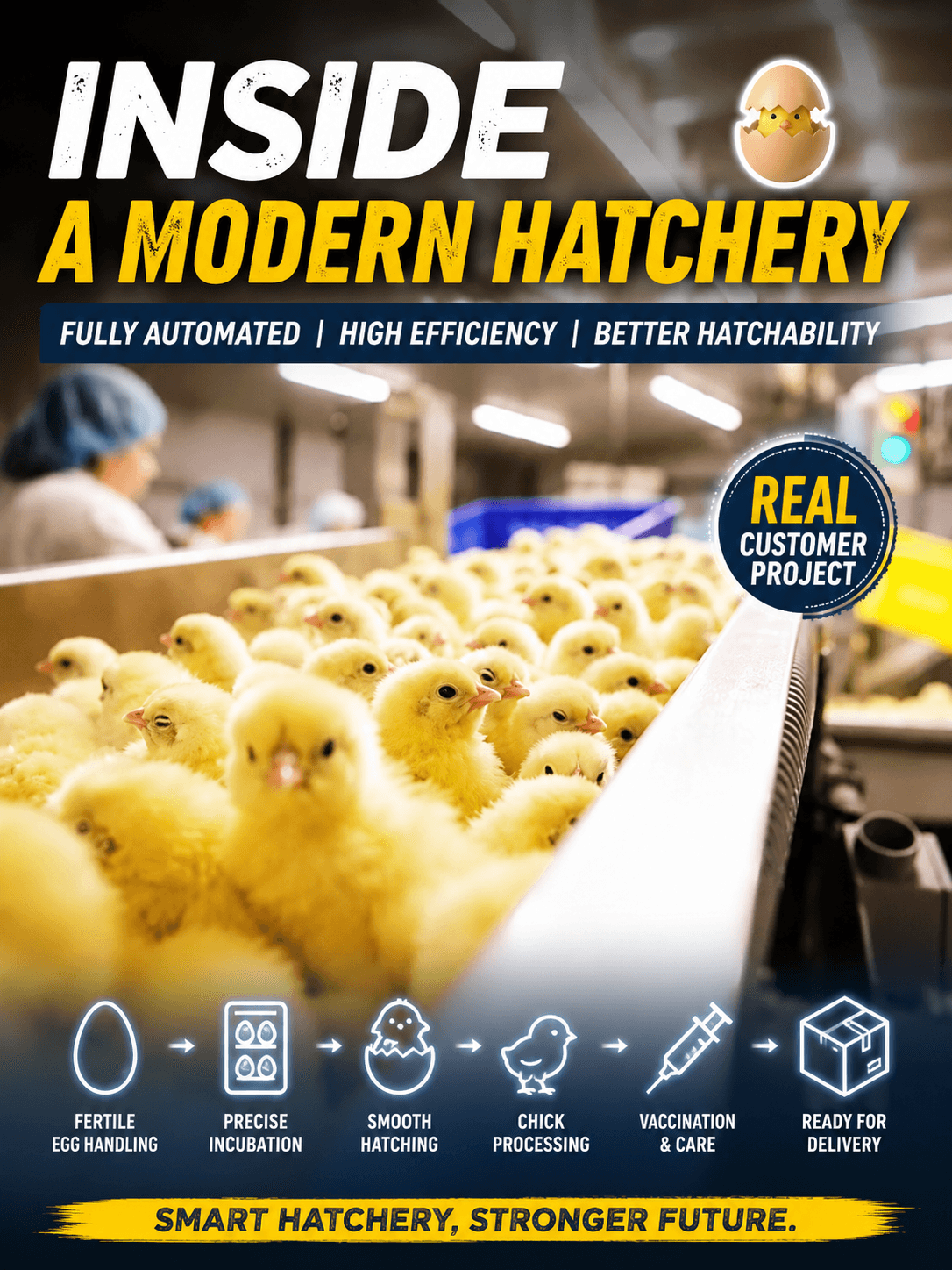
An automated day old chick processing line succeeds when three clocks agree. The batch clock describes when work arrives. The operator clock describes what people can complete safely and consistently. The maintenance and sanitation clock describes when equipment is truly available.
Many projects plan only the first clock. That can create a line with impressive rated capacity but recurring queues, rushed changeovers, or cleaning that pushes into the next production window. Jili Intelligent's three-clock model gives buyers a more realistic way to shape the system.
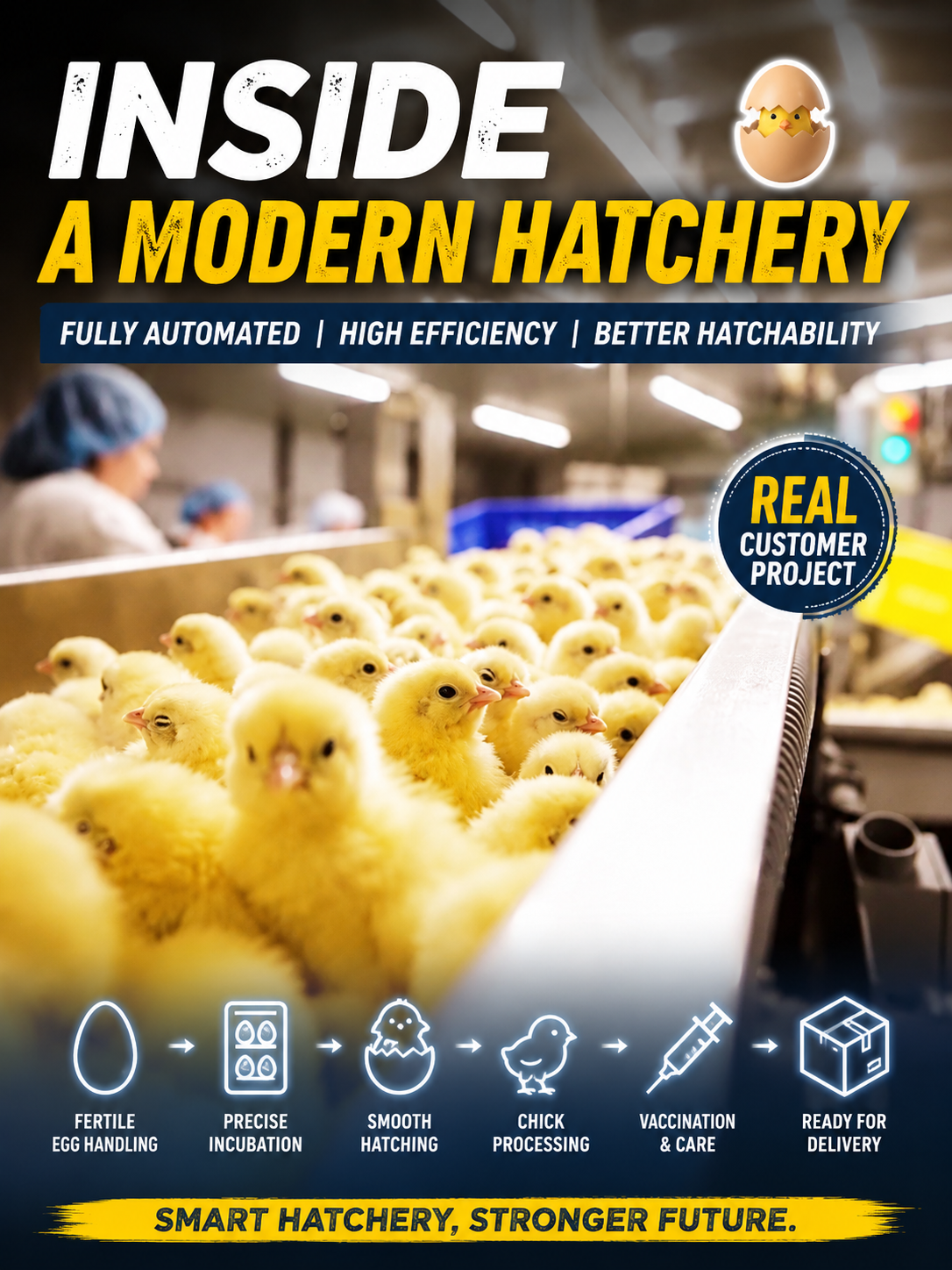
Clock 1 Starts With the Arrival Pattern
Do not begin with a single daily total. Plot arrivals in 15-minute or 30-minute blocks. Show normal volume, peaks, batch changes, planned pauses, and the latest acceptable dispatch time.
Then follow the route from picking or transfer through the customer's approved treatment or vaccination steps, counting, loading, conveying, stacking, and dispatch. Mark any crate, tray, or waste-handling movement that shares the room.
Jili Intelligent provides modules for day-old chick picking and transfer, infrared beak trimming, vaccination, and conveying. The right combination depends on the customer's process, measured bottleneck, room, and expansion plan.
Clock 1 Must Include Stops
A batch clock that assumes uninterrupted production is incomplete. Add planned breaks, supply replacement, batch identification, quality holds, downstream delays, and the time required to restart.
For each stop, answer three questions: where does work wait, who controls the restart, and how is the batch kept identifiable? These answers determine whether the line needs accumulation, a bypass, an isolation point, or a manual recovery route.
When specifying an automated day old chick processing line, ask suppliers to state capacity assumptions beside the proposed figure. Usable output depends on the full route, not the fastest machine.
Clock 2 Measures Human Work
Automation changes work; it does not remove people from the system. Map every normal touch, decision, observation, replenishment task, record, and intervention.
Stand at each operator position and look at reach, visibility, walking distance, shared access, and communication with the next station. A small interruption repeated hundreds of times can become the real production constraint.
Separate roles clearly. Operators run and recover normal conditions. Supervisors approve changes and manage escalation. Maintenance performs inspections and controlled adjustments. Technical or veterinary owners approve the relevant application and release rules.
Clock 2 Includes Learning and Handover
The first weeks of operation are not the same as a mature shift. Plan training by role and allow time for supervised practice, alarm review, stop recovery, and adjustment of local work instructions.
At handover, the customer should receive the agreed documents, parameter and permission boundaries, spare-parts identification, maintenance tasks, cleaning guidance, and open-item list. Training attendance alone does not prove operational readiness.
Clock 3 Protects Equipment Availability
The third clock begins when production stops. It includes inspection, preventive maintenance, cleaning, reassembly, verification, and release.
Place those tasks on the same daily timeline as production. If there is not enough space between the last dispatch and the next startup, the line plan has a scheduling problem even if every machine meets its individual specification.
Ask maintenance and sanitation teams to review access before purchase. They should see removable parts, wear areas, inspection points, isolation, tool needs, and the route used to remove and replace components.
Synchronize the Three Clocks at Acceptance
Factory acceptance can test machine functions, interfaces, alarms, controlled stops, and documentation. Site acceptance should add the real room, utilities, surrounding equipment, operators, sanitation method, and representative production pattern.
Create one acceptance table with the condition, expected response, evidence, owner, result, and closure date. Keep equipment acceptance separate from the customer's biological or veterinary approval.
Jili Intelligent's service page explains its broader support approach. The quotation should still define the exact factory test, commissioning, training, remote support, travel, and site-service scope.
Frequently Asked Questions
Which clock usually creates the first bottleneck?
It varies. Uneven arrivals, operator replenishment, downstream stops, maintenance access, or cleaning duration can each become the limiting factor.
Should every station have the same rated capacity?
Not necessarily. The system should be designed around arrival patterns, handoffs, buffers, stops, and usable shift output rather than identical headline figures.
Can the line be expanded later?
Yes, when future space, utilities, controls, interfaces, and workflow changes are considered during the initial layout and responsibility review.
Build One Schedule Everyone Can Use
The right automated day old chick processing line is a synchronized operation, not a row of fast machines. Aligning the three clocks gives management a clearer investment case and gives production a line it can actually run.
Share your batch timeline, process route, layout, staffing, cleaning window, utilities, and expansion goals with Jili Intelligent through the contact page. Ask for a system proposal based on usable time, clear interfaces, and defined responsibilities.