


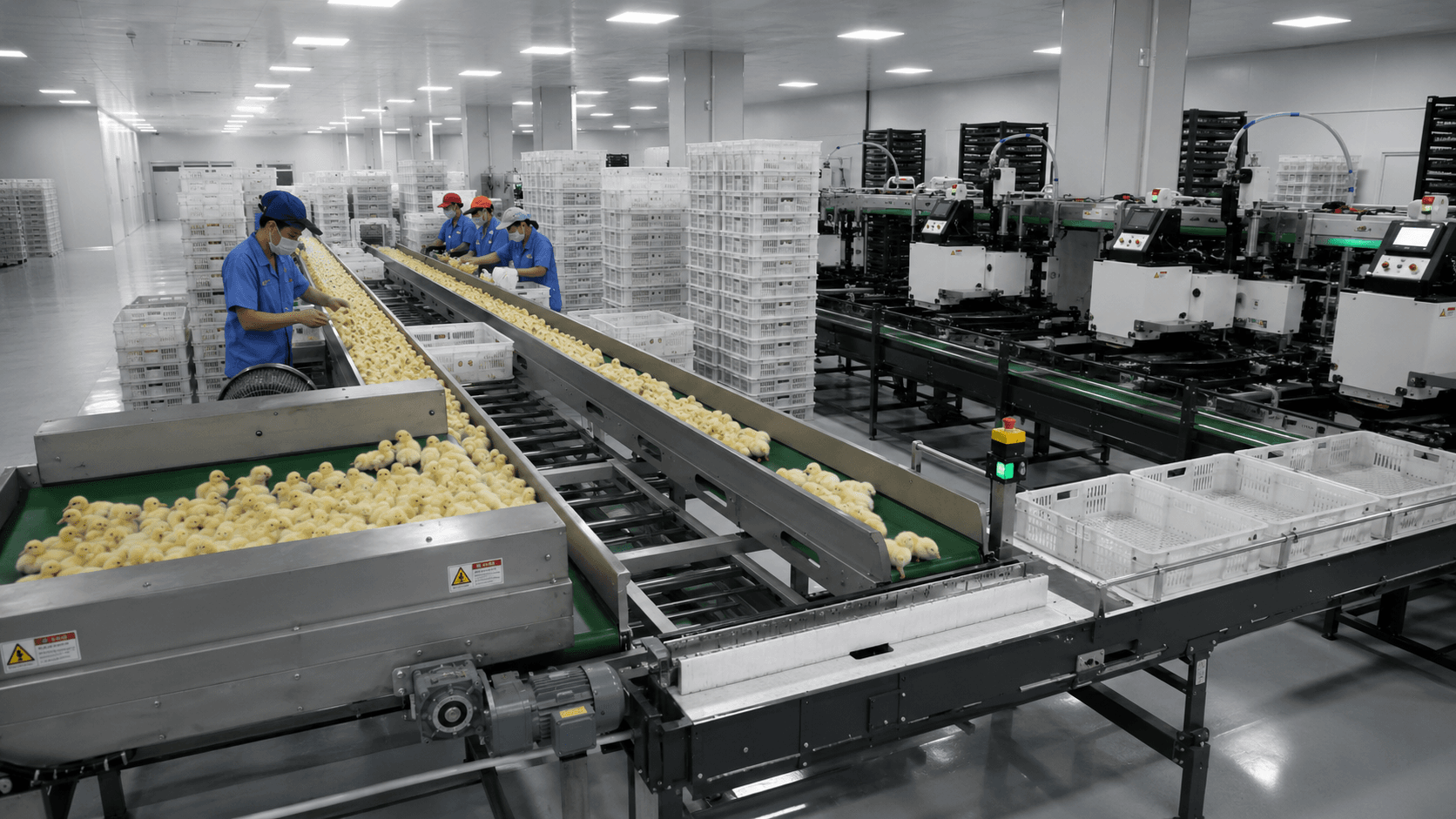
The purpose of automated hatchery equipment is not to remove people from every step. It is to give repeatable movement, presentation, timing, transfer, and machine control to equipment while keeping technical judgment, exception ownership, sanitation release, maintenance, and approval with clearly responsible people.
A good project draws those boundaries before the layout is frozen. Otherwise, the line may automate normal flow while leaving every difficult decision undefined.
Boundary One: Machines Repeat; People Approve
Equipment is well suited to a defined sequence with stable inputs and clear conditions. Customer teams remain responsible for approving the production process, veterinary program, welfare requirements, sanitation release, and any regulatory or quality decisions.
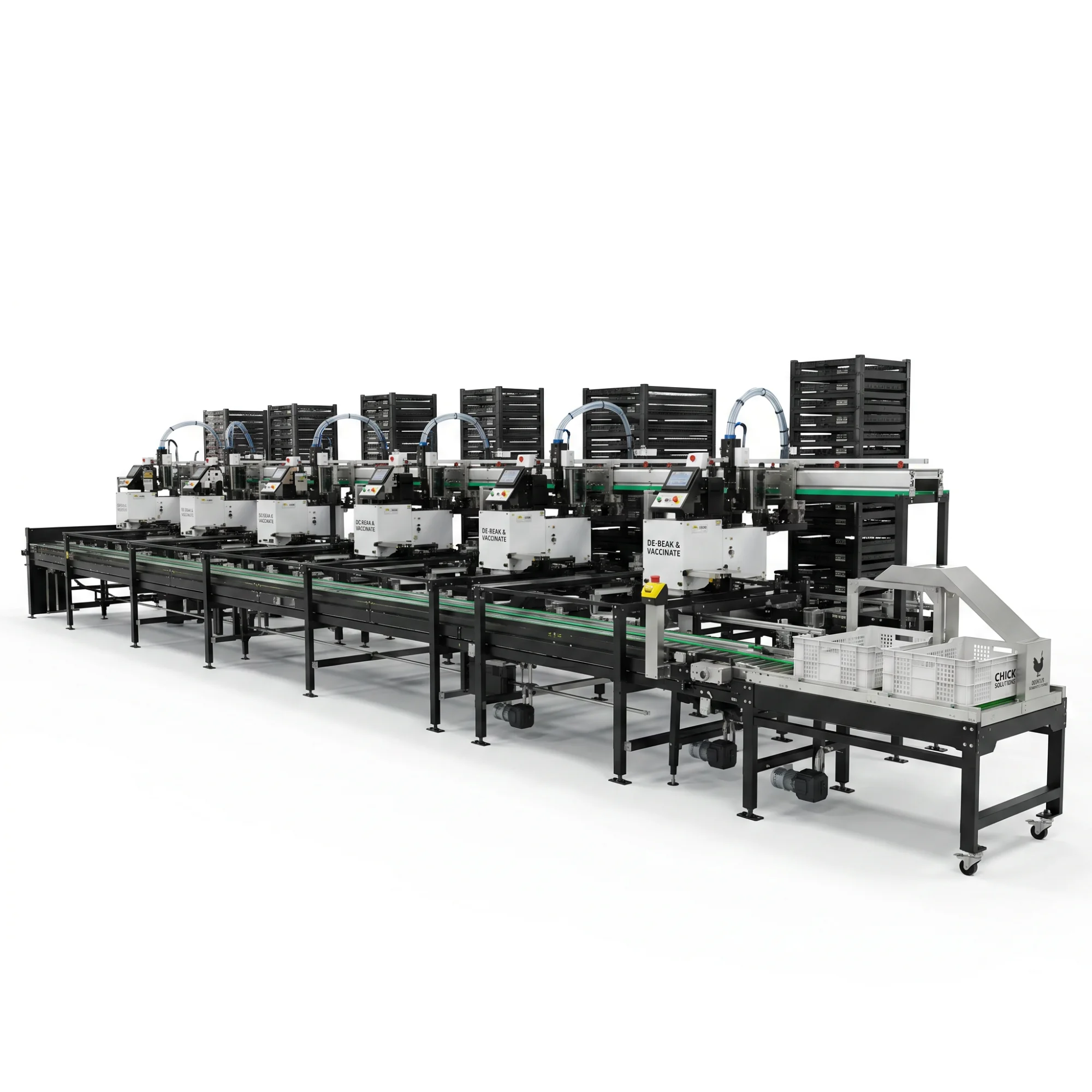
For example, Jili Intelligent supplies equipment for day-old chick infrared treatment and vaccination. The machine can support controlled presentation and operation, while the responsible hatchery team defines the approved application, verification, acceptance, and release criteria.
Write this boundary into the project documents. State which settings operators may use, which changes require technical authorization, and which records support release. More automation should make responsibility clearer, not hide it behind a screen.
Boundary Two: Conveyors Move Normal Flow; People Own Exceptions
Conveyors and transfer devices can reduce carrying, walking, inconsistent presentation, and repeated container handling. They work best when the normal route is stable and exceptions have a deliberate place to go.
Jili publishes a day-old chick picking and transfer machine and a conveying and stacking line.
The project should still define what happens to a damaged box, an unclear batch, a blocked downstream station, or material requiring technical review. The operator needs visible status, a controlled holding position, and an identified decision owner.
If every exception requires carrying containers through the normal line, the automation boundary is incomplete.
Boundary Three: Controls Detect Conditions; People Diagnose Causes
Sensors, alarms, interlocks, and machine states can show that a condition is outside the expected sequence. They do not automatically explain the operational cause.
An alarm may be related to presentation, a container, an upstream pause, a downstream block, a setup change, wear, maintenance, or operator action. The control system should provide useful evidence: time, machine state, affected zone, sequence, and restart conditions.
Maintenance and production teams need a shared response. Define who may reset, who investigates repeated alarms, what evidence is recorded, and when the supplier is contacted. Remote support becomes faster when the team can provide the exact state instead of only saying the line stopped.
When evaluating automated hatchery equipment, ask to see a planned stop, a representative alarm, diagnosis information, and controlled recovery. Continuous running shows only half the operating story.
Boundary Four: Equipment Provides Access; Sanitation Releases the Line
Automation can reduce unnecessary contact and organize product and container routes. Sanitation still depends on approved procedures, access, inspection, reassembly, records, and release by the responsible team.
Review guards, doors, removable parts, surfaces, work height, access around utilities, and the route for cleaning tools and removed components. A compact layout that blocks cleaning or inspection will create pressure to shorten the procedure.
Jili's published quality-control process can support supplier discussions. The customer should define site sanitation standards and include cleaning access in factory and site acceptance.
Ask sanitation staff to review the concept drawing before equipment positions become fixed. Their comments often reveal access conflicts that production drawings miss.
Boundary Five: Data Supports Decisions; Management Chooses Action
Automated lines can produce counts, alarms, runtime, stops, or batch records depending on the offered configuration. Data has value only when it answers a decision.
Start with a short list: Where is the first queue? Which stop repeats? How long does restart take? Which changeover reduces available time? Which container causes disruption? Which maintenance task is overdue?
Do not collect every possible signal before deciding who reviews it and what action follows. A simple daily review of five meaningful measures can be more useful than a dashboard no one owns.
Management also decides the investment boundary. Automate tasks with high frequency, physical burden, variation, delay, or risk. Keep human judgment where conditions vary and accountability matters. Revisit the boundary as the hatchery gains operating evidence.
A Practical Green, Amber, and Red Review
Mark each task green when it is repeatable, measurable, and supported by stable inputs. Mark it amber when automation is possible but exceptions, cleaning, or interfaces need more design. Mark it red when the task depends on technical approval, uncertain inputs, or a decision that must remain accountable to a person.
Apply the review to transfer, treatment, vaccination, loading, conveying, stacking, cleaning, records, maintenance, and dispatch. The colors are not permanent. An amber task can become green after upstream variation is controlled and the exception route is designed.
Jili's complete hatchery automation solutions allow buyers to discuss several modules and interfaces together. The final scope should still be based on the customer's measured workflow and responsibility map.
Frequently Asked Questions
Does more automation always mean higher output?
No. Output depends on arrivals, line balance, staffing, replenishment, changeovers, stops, recovery, containers, and dispatch. Automating the wrong task may move the bottleneck.
Which tasks should usually remain under human approval?
Technical and veterinary release, sanitation release, unresolved exception decisions, maintenance authorization, and configuration changes should have clearly responsible people according to the hatchery's procedures.
Can a hatchery automate in phases?
Yes. A phased plan can address the strongest bottleneck first while reserving space, controls, utilities, and interfaces for later modules.
Automate the Repetition and Clarify the Responsibility
The strongest automated hatchery equipment project does two things at once: it removes avoidable manual burden from repeatable work and makes human decisions more visible where judgment and accountability remain essential.
Send Jili Intelligent your workflow, manual touch points, exception cases, batch data, layout, staffing, sanitation route, and expansion plan through the contact page. Ask for a concept that marks both automated functions and human decision points.