


An automated poultry hatchery system should begin with a measured production problem, not a shopping list. The buyer first needs to know where work waits, where handling is inconsistent, where cleaning routes conflict, and where information disappears between stages. Only then can automation be divided into useful phases.
This approach is less dramatic than announcing a fully automated hatchery. It is also more practical. A roadmap gives production, engineering, sanitation, maintenance, quality, and procurement a shared way to decide what belongs in the first contract and what should remain a future option.
Phase 1: Observe the Hatchery Before Selecting Equipment
Begin with several representative production windows. Map arrival patterns, batch changes, manual transfers, operator waiting, equipment stops, sanitation windows, full and empty container routes, and dispatch pressure.
Do not average away the difficult periods. A stable hour and a peak hour may require different accumulation, staffing, and exception routes. The system concept should explain both.
For an automated poultry hatchery system, useful baseline evidence includes:
- where chicks, boxes, baskets, crates, supplies, waste, and people move;
- the duration and cause of recurring waits;
- which decisions require qualified technical approval;
- which stops affect only one station and which stop the wider room;
- how cleaning and maintenance access change the available production window;
- which records are created, transferred, or lost at each handoff.
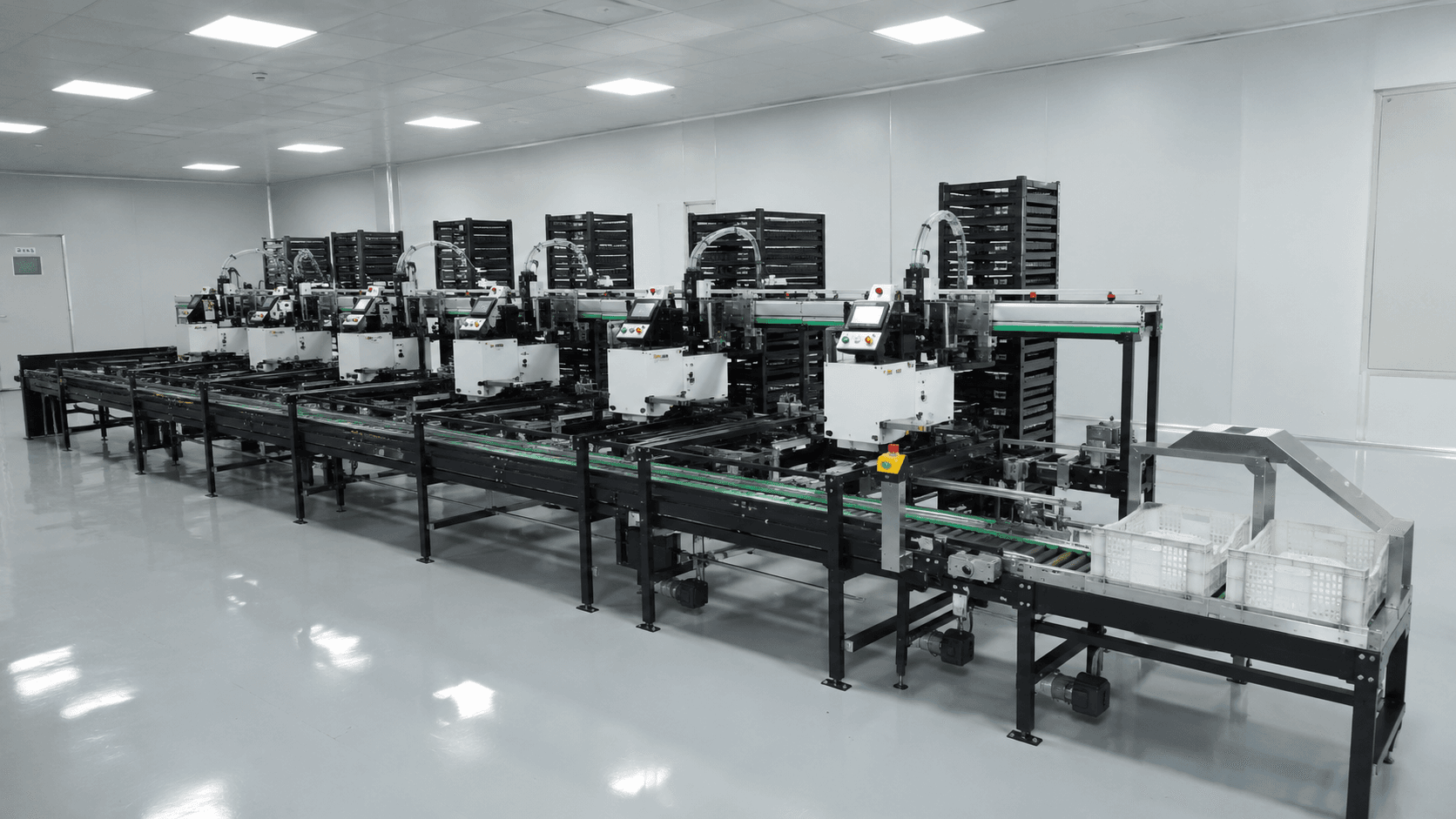
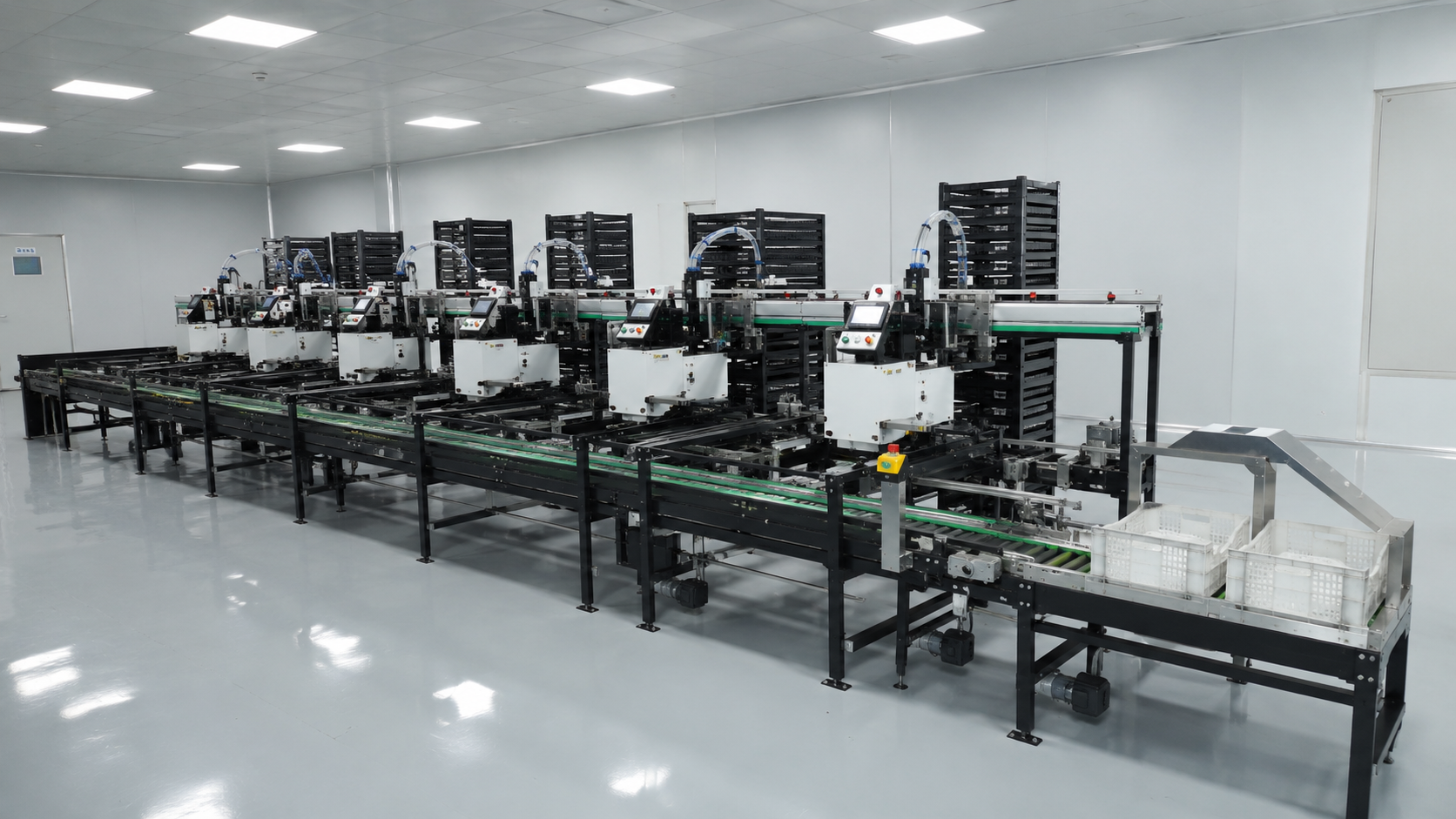
Jili Intelligent presents complete hatchery automation solutions that can connect handling, treatment, vaccination, conveying, stacking, and related functions. The selected modules should follow the customer's observed constraint and approved process.
Phase 2: Isolate the First Constraint
The first automation phase should solve a defined constraint without creating two new ones. A manual transfer problem may point toward picking and transfer equipment. A box-flow problem may require conveying, accumulation, or stacking. A dirty-container turnaround problem belongs to another route entirely.
Use a simple constraint statement:
During a defined production window, a specific handoff causes a measurable wait, repeated handling, unclear responsibility, or loss of control that the proposed phase must reduce or manage.
This statement is more useful than "we need more automation." It tells suppliers which evidence to request and helps the buyer reject modules that do not address the first problem.
JuliSense offers a day-old chick picking and transfer machine and a connected conveying and stacking line. These pages show available equipment families, while the project proposal must define the actual route, interfaces, containers, and responsibilities.
Phase 3: Design the Interfaces Before Adding More Modules
An isolated machine can look successful during a demonstration and still disappoint after connection. The third phase of planning is therefore not "buy the next machine." It is to define the physical, control, information, sanitation, and responsibility interfaces around the first phase.
| Interface | Questions the roadmap must answer |
|---|---|
| Physical flow | What arrives, in what container, from which height and direction, and where does it go next? |
| Control | What ready, stop, fault, reset, and restart signals cross the boundary? |
| Accumulation | Where can work wait, for how long, and under whose control? |
| Information | Which batch, program, count, exception, or release data must follow the work? |
| Cleaning | Which parts belong to clean and dirty routes, and when can access occur? |
| Ownership | Which supplier or customer team owns each connection and unresolved event? |
This interface table is the foundation of a scalable automated poultry hatchery system. It keeps future expansion from depending on last-minute site modifications or undocumented assumptions.
For machinery safety planning, ISO 12100 provides a general risk-assessment and risk-reduction framework. The completed installation must also meet applicable destination requirements and the customer's site standards.
Phase 4: Expand Only After the First Phase Produces Evidence
Expansion decisions should use operating evidence from the installed phase: actual stops, maintenance work, operator interventions, sanitation access, changeovers, interface performance, and remaining waits.
This evidence may confirm the original roadmap or change it. Perhaps the next constraint has moved downstream. Perhaps a planned module is no longer urgent. A phased plan is valuable because it allows the project to learn without losing the long-term layout.
Reserve space, utilities, access, controls, and connection points for likely future modules, but do not treat every reservation as a purchase commitment. The final investment sequence belongs to the customer's measured production priorities.
Draw Three Maps, Not One Layout
A machine layout is only the first map. The roadmap also needs a stop-and-recovery map and a sanitation-and-maintenance map.
The production map
Show normal flow, accumulation, operator positions, supplies, full and empty container routes, and dispatch. Mark the expected and peak patterns separately.
The stop-and-recovery map
Show what happens when each major station is unavailable. Identify controlled holding, alternate routes if approved, communication, restart authority, and the effect on connected equipment.
The sanitation-and-maintenance map
Show access, removal paths, tools, parts storage, clean and dirty movement, waste routes, maintenance clearance, and release responsibility.
These maps make the automated poultry hatchery system understandable to people who will run and support it, not only to the team that approves the capital project.
Keep Biosecurity and Automation in the Same Conversation
Automation changes movement. It may reduce some manual handoffs while creating new surfaces, access points, components, and maintenance activities that need to fit the site's approved biosecurity plan.
The USDA APHIS Defend the Flock resources provide practical poultry biosecurity guidance. The buyer should use qualified owners to translate that guidance and applicable local requirements into site procedures.
JuliSense can explain equipment access, cleaning boundaries, integration assumptions, and training scope. The customer should approve the final sanitation, welfare, veterinary, and biosecurity programs.
Put Acceptance Evidence Into Every Phase
Each phase should have its own acceptance method. Avoid a single statement that the complete system must "run normally." Define the configuration, representative materials, operating window, interfaces, stops, records, responsibilities, and evidence required for that phase.
Separate factory acceptance, installation checks, commissioning, and site acceptance. A successful factory demonstration does not prove site utilities, upstream flow, operator readiness, or downstream interfaces.
For every automated poultry hatchery system phase, link the acceptance evidence to a named configuration, project boundary, responsible team, and closure milestone.
The JuliSense service page can support discussion of layout, integration, commissioning, training, and after-sales support. The quotation should state which activities are included in each phase.
Ten Roadmap Questions
Must a hatchery automate the entire line at once?
No. A phased plan can solve the first measured constraint while reserving space, utilities, controls, and interfaces for later modules.
How should the first bottleneck be selected?
Use representative observations and records. Choose a recurring wait, handling issue, control gap, or turnaround constraint that the proposed phase can clearly address.
Can capacity alone define the system?
No. Capacity must be reviewed with batch pattern, stops, changeovers, sanitation, operator rhythm, accumulation, interfaces, and dispatch.
What information should follow the physical flow?
Define the batch, count, approved program reference, exception, status, and release information required at each handoff.
What should happen when one module stops?
The project should define the controlled response, effect on upstream and downstream equipment, holding or alternate route, communication, and restart authority.
How can future expansion be protected?
Reserve realistic space, access, utilities, network or control provisions, supports, and interface points without forcing an early purchase.
Who owns the connections between suppliers?
The contract should name the owner of each physical, control, information, and commissioning interface. Shared responsibility without a named lead is a risk.
Should sanitation be planned after the layout?
No. Sanitation, parts removal, tools, clean and dirty routes, waste, drying, inspection, and release should influence the layout from the beginning.
What evidence supports the next phase?
Use actual stop records, operator interventions, maintenance work, cleaning access, changeovers, remaining waits, and interface performance.
How can JuliSense review a phased project?
Send the current process map, measured constraint, room layout, utilities, containers, approved functions, future goals, and destination through the contact page.
A Roadmap Should Make the Next Decision Easier
The best automated poultry hatchery system roadmap does not lock the buyer into the largest possible project. It makes the first constraint visible, defines the interfaces, protects the approved process, and creates evidence for the next investment decision.
Share the present-state map with JuliSense before requesting a machine list. Jili Intelligent can then discuss a phased system boundary, suitable modules, required interfaces, and the evidence needed to move from concept to quotation.