


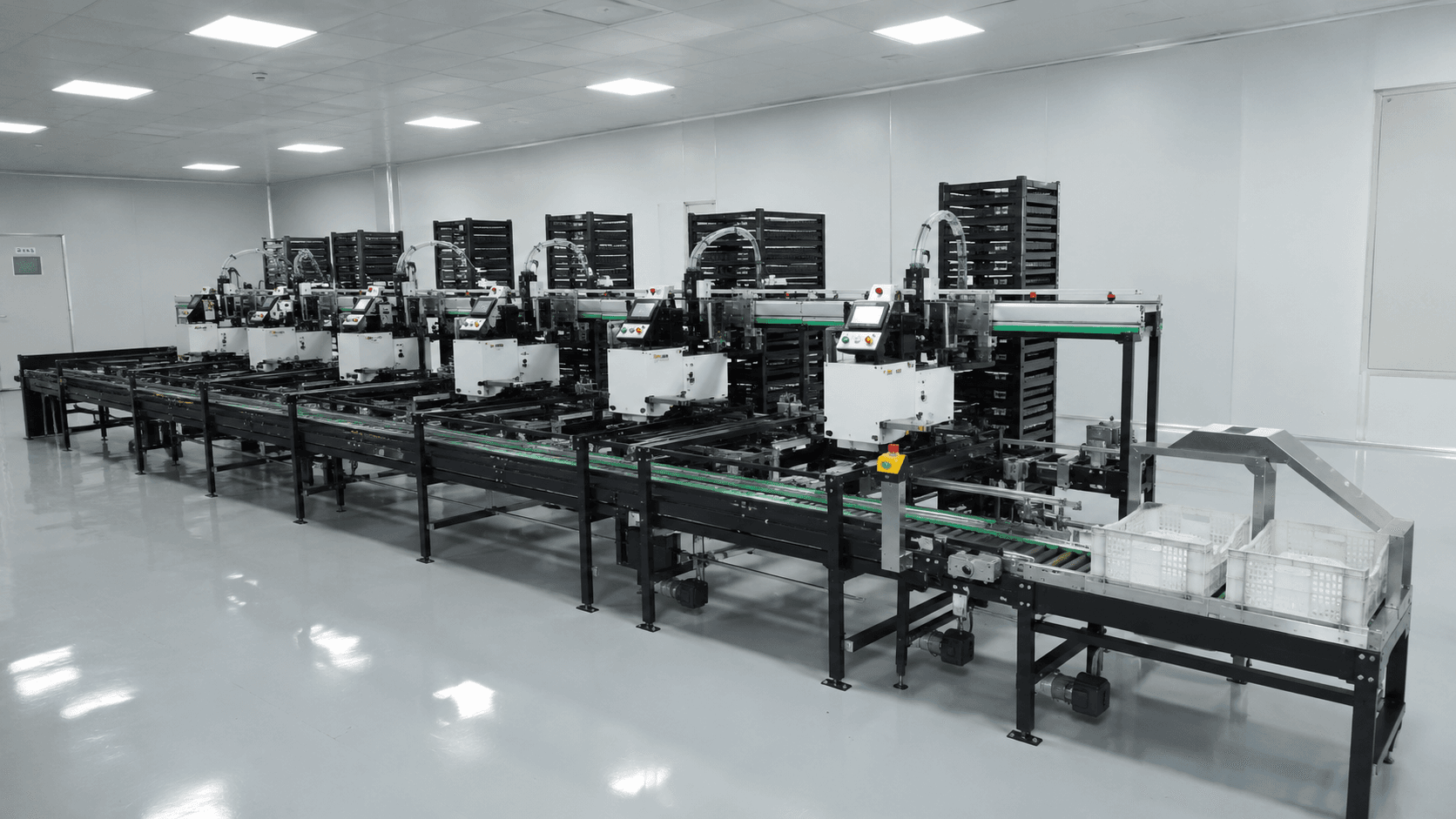
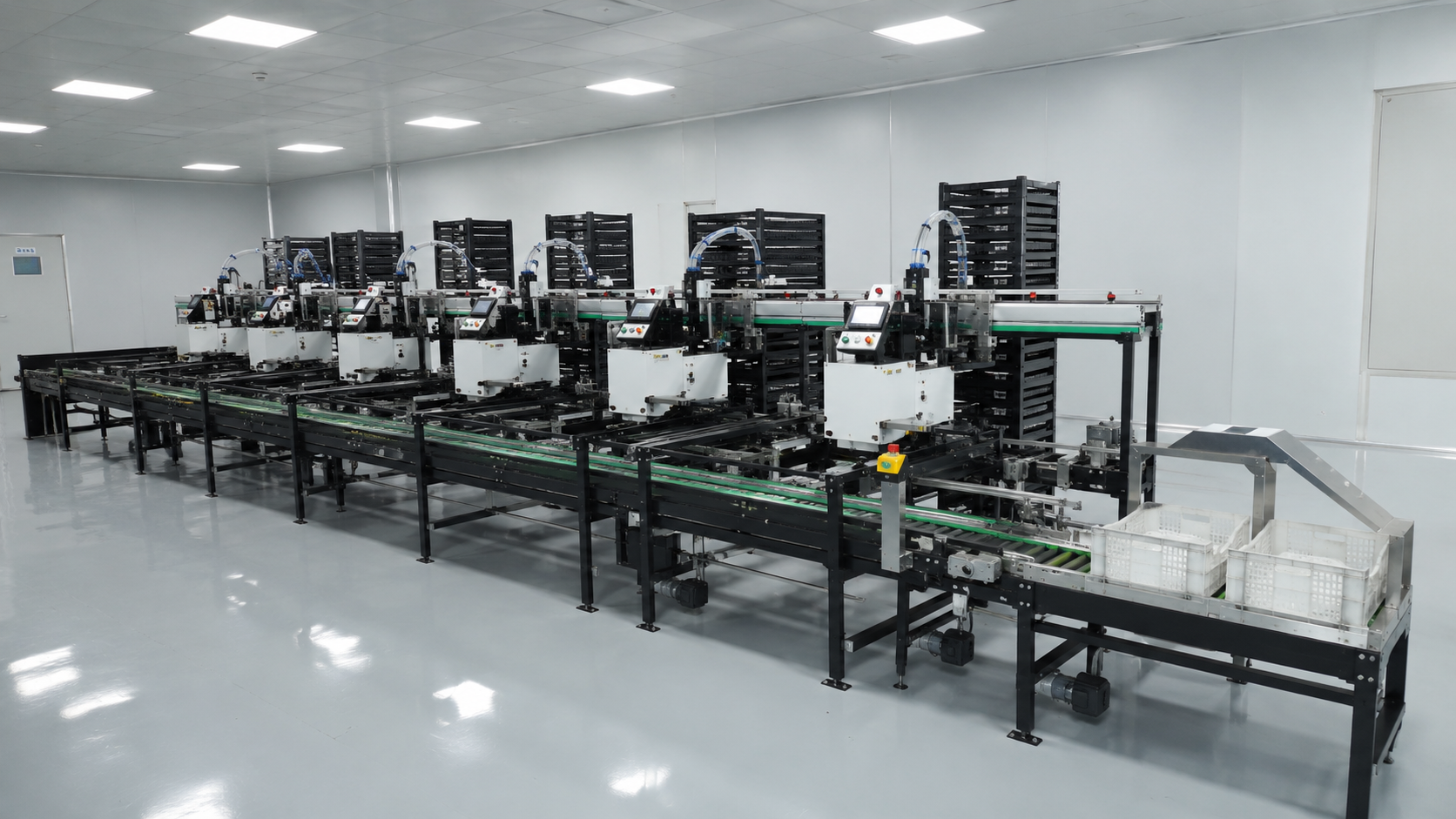
An automatic chick picking machine helps hatcheries handle one of the most labor-intensive early processes: moving chicks from hatcher baskets into the next workflow while managing shells and waste. Buyers searching this keyword usually need a more stable transfer process, not a generic automation description.
The Jili Day-Old Chick Picking and Transfer Machine supports picking, transfer, basket tipping, shell handling, and chick boxing. Product material references about 50,000-70,000 chicks per hour, 2-3 operators, about 8-10 seconds per basket tipping cycle, about 7.5 kW power, about 95% single-box chick accuracy, and machine size around 6000 mm x 3800 mm x 1800 mm.
Why picking and transfer affect the whole line
If chicks arrive unevenly from the transfer area, every downstream station can be affected. Beak treatment, vaccination, conveying, stacking, and dispatch preparation all depend on a stable upstream flow. A picking machine should therefore be judged by line balance, not only by its own speed.
Shell handling also matters. If shells and waste are not moved away cleanly, operators spend more time correcting the area and the hatchery loses the benefit of automation.
Questions buyers should answer first
- What hatcher basket size and shape must the machine handle?
- How many chicks are processed per hour at peak time?
- Where should shells, infertile eggs, and waste move?
- What is the next station after picking and transfer?
- How much space is available for operators and maintenance?
- Does the project need chick boxing, conveying, or wider automation later?
Data table for project comparison
| Planning factor | Jili reference information |
| Main functions | Chick picking, transfer, basket tipping, shell handling, and boxing |
| Reference capacity | About 50,000-70,000 chicks per hour |
| Operators | 2-3 operators |
| Basket tipping time | About 8-10 seconds per basket |
| Power | About 7.5 kW |
| Accuracy reference | About 95% single-box chick accuracy |
How to request a more useful proposal
Send photos of baskets, basket dimensions, room layout, current manual picking steps, daily chick volume, shell route, and the equipment after transfer. A simple floor sketch can help Jili see turning space, operator positions, and whether the transfer machine should connect with other equipment.
If the project is part of a larger upgrade, include that information early. Transfer equipment planned alone may not leave the right space for conveying, stacking, or future processing modules.
Common buying mistakes
A common mistake is choosing based on maximum capacity while the downstream station is slower. Another is ignoring egg shell flow and collection. A third is approving the layout without enough maintenance space. These issues can turn a promising automation project into a daily workflow problem.
For connected downstream movement, buyers can also review the Jili Conveying and Stacking Line or Jili Complete Hatchery Automation Solutions after the transfer requirements are clear.
How to judge long-term value
Long-term value comes from stable flow, not only first-day performance. Buyers should check how easy it is to clean the transfer area, remove shells, inspect moving parts, and train operators. If the machine is difficult to access, small daily tasks can become a hidden cost.
The quotation should also explain how the machine handles real basket variation. Hatcheries often use baskets with wear, different loading conditions, or changed operating habits. A practical transfer plan considers these details before installation.
A practical automatic chick picking machine should be easy to inspect and should support stable transfer even when basket loading conditions vary during the shift.
FAQ
What does an automatic chick picking machine do?
It helps move chicks from hatcher baskets into the next workflow while supporting transfer, shell handling, and chick boxing.
What output is referenced in Jili material?
Jili material references about 50,000-70,000 chicks per hour depending on project configuration.
Why should buyers send basket dimensions?
Basket size affects tipping, machine layout, operator access, and line balance.
What downstream details matter?
Buyers should explain whether the next station is conveying, beak treatment, vaccination, boxing, or a wider automation line.
How can buyers avoid overbuying?
Match the picking machine to real basket flow, shell handling, downstream speed, and available space before choosing a configuration.