

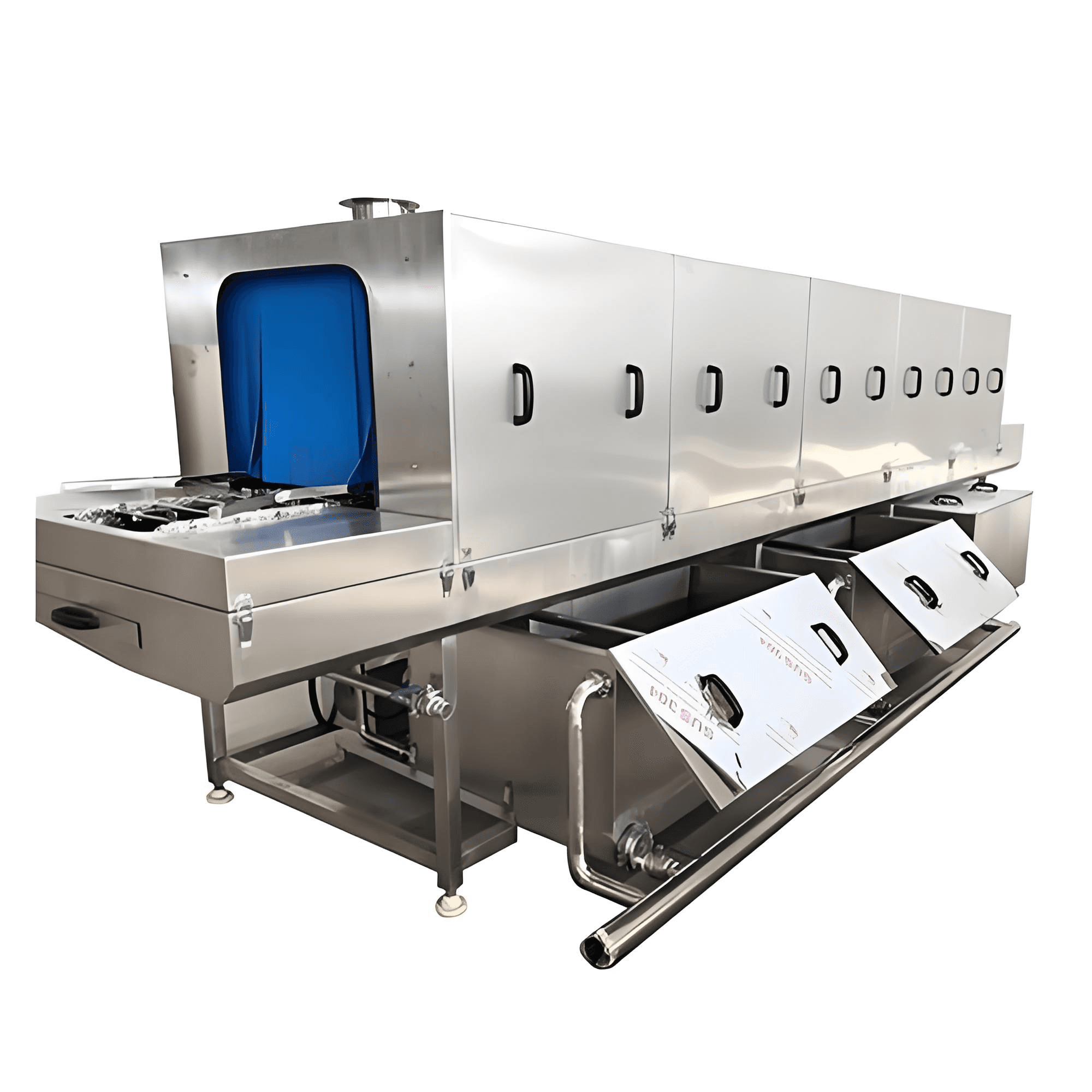
Good automatic poultry crate washer commissioning should answer three different questions. Can representative incoming crates enter and move through the selected system? Can the customer inspect and release the cleaned result under its approved method? Can the team control current work when utilities, discharge, or another ordinary condition interrupts the run?
Put each question in a separate envelope: dirty run, clean run, and interrupted run. Open them in sequence. This keeps the project from declaring success after one smooth demonstration while important sanitation and recovery boundaries remain untested.
Envelope One: The Dirty Run Begins at Intake
The first envelope contains representative crates, not ideal display pieces. The customer should define the incoming condition, crate types, dimensions, damage limits, debris expectations, orientation, loading method, and any items that are unsuitable for the planned test.
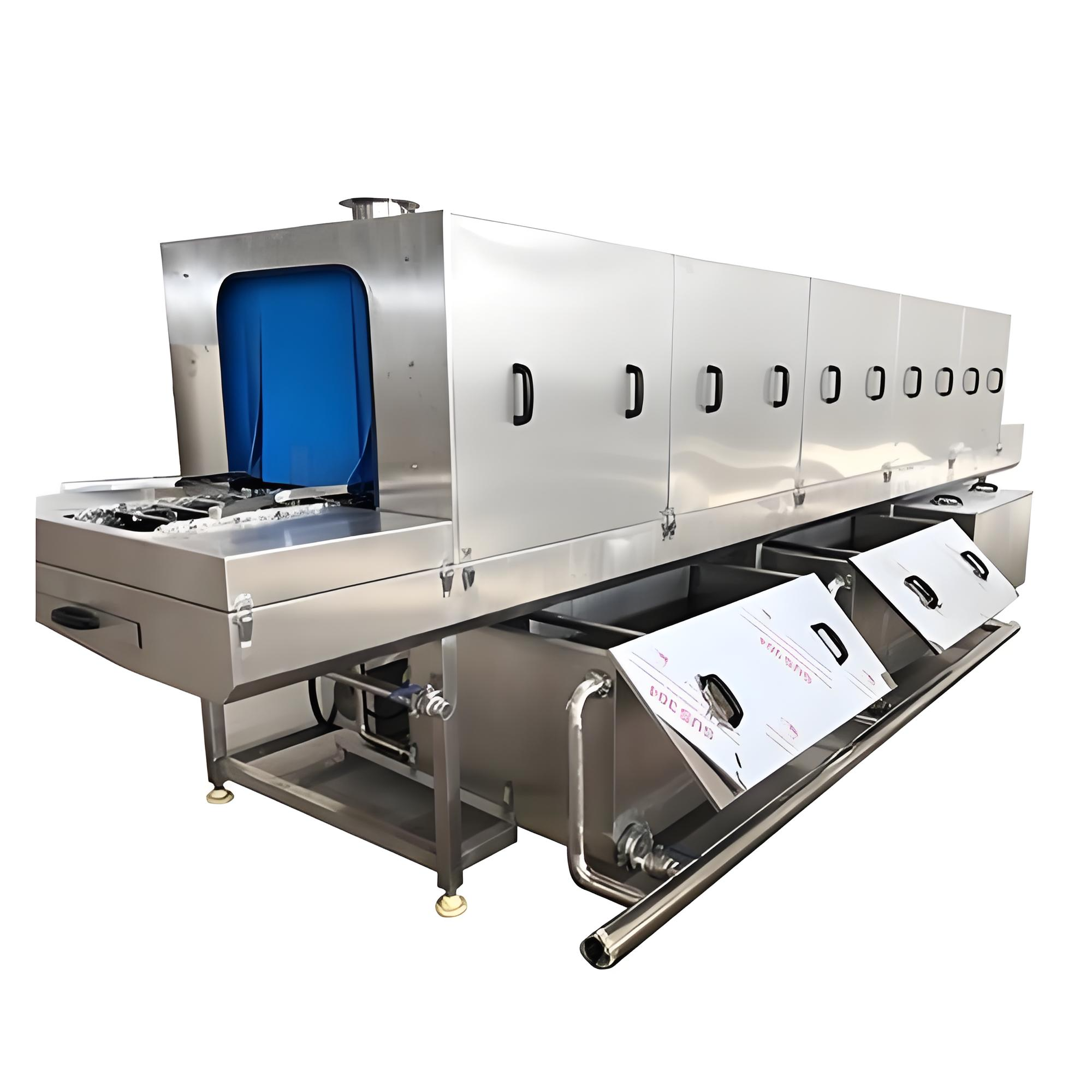
Jili Intelligent presents poultry crate cleaning equipment through the JuliSense product portfolio. The ordered machine, conveyor, utilities, and accessories should be matched to the actual crate route and project scope.
Watch the first ten crates slowly
Before a continuous run, observe a small group from several positions. Can the operator identify a wrong orientation or unsuitable crate? Is the loading point clear? Where does loose material go? Does the line hide a problem until it reaches an enclosed area?
Then watch a representative sequence
Use the agreed mix and rhythm. Observe spacing, feeding, temporary waiting, operator movement, water or debris management, and the relationship between incoming condition and machine behavior. Record exceptions rather than removing them from the story.
The Dirty Run Must End With an Intake Rule
A successful intake test should leave the customer with a short, approved rule: what can enter, how it is presented, what must be removed first, what is rejected, where exceptions wait, and who makes the decision.
During automatic poultry crate washer commissioning, this rule is more valuable than a general claim that the washer accepts many crate types. It connects the equipment to normal production responsibility.
Make rejection visible
An unsuitable crate should not sit beside approved incoming crates without a clear status. Give the exception area a location, identity method, owner, and next action.
Test the upstream stop point
If intake becomes unavailable, determine where returning dirty crates accumulate, who receives the information, what traffic can continue, and what condition allows restart.
Envelope Two: The Clean Run Starts at Release
The second envelope moves to the discharge side. The customer defines what inspection or release is required under its approved sanitation program. Machine discharge is not automatically the end of the clean route. Handling, accumulation, inspection, stacking, storage, traffic, and the surrounding environment all matter.
The FAO food safety and quality pages provide broad international reference material. The actual sanitation program, validation, verification, chemical use, operating limits, and release criteria must be established by the customer's qualified owners for the site and destination.
Inspect the route, not only the crate
Walk from discharge to the approved released location. Look for contact points, splash or drainage concerns, mixed traffic, waiting areas, manual handling, and any opportunity for released and unreleased crates to become confused.
Record the decision owner
The machine supplier can demonstrate the equipment under agreed conditions. The customer's authorized sanitation or quality role should own the site-specific release decision and evidence.
The Clean Run Needs More Than a Photograph
A clean-looking crate in a photo is not a complete acceptance record. Agree what test crates are used, how incoming condition is documented, which machine configuration applies, what utilities are present, how long the run lasts, what is observed, and who signs the result.
Build the clean-run section of automatic poultry crate washer commissioning around traceable evidence:
| Evidence point | What to record |
|---|---|
| Incoming condition | Representative crate type, condition, debris, orientation |
| Machine state | Ordered configuration, selected settings, utilities, alarms |
| Run context | Duration, flow, operator roles, stops, replenishment |
| Discharge | Handling, accumulation, exceptions, downstream route |
| Customer inspection | Approved method, observer, result, record reference |
| Open items | Impact, owner, due date, closure evidence |
The table does not replace the customer's sanitation procedure. It makes the project demonstration auditable and comparable with the ordered scope.
Include end-of-run crates
The final crates may experience a different rhythm, more waiting, or a partial downstream sequence. Include them in the inspection story rather than stopping the record when the main flow ends.
Include the washer itself
After the run, inspect visibility, access, removable components, collection areas, reassembly, tool needs, and the transition from machine cleaning to production release.
Envelope Three: The Interrupted Run Reveals Ownership
The third envelope contains no surprise fault. It contains one or two planned, controlled interruptions agreed before the test. Examples might include temporary downstream unavailability, an intake pause, or a utility-related response appropriate to the selected configuration.
This stage of automatic poultry crate washer commissioning shows whether the current crates and team decisions remain controlled when normal flow stops.
For machinery risk assessment and risk reduction, ISO 12100 offers a general framework. The final test method should follow the applicable risk assessment, supplier instructions, customer procedures, and local requirements.
Freeze the current crate positions
When the agreed pause occurs, record where dirty crates are waiting, which crates are inside the washer, what is at discharge, and what status each group has. This turns recovery into a visible decision.
Ask five people what happens next
The operator, supervisor, sanitation owner, maintenance representative, and quality owner may see different responsibilities. Compare their answers before restart. Any contradiction is useful commissioning evidence about training, status information, or the operating method.
Restart only after the agreed checks
Define what must be inspected, drained, cleared, reset, confirmed, or documented before work resumes. Also define who has authority to make that decision.
Combine the Three Envelopes at Handover
At the end of the project, the dirty-run intake rule, clean-run release evidence, and interrupted-run recovery record should tell one coherent story. The handover package should also include applicable drawings, controls information, inspection guidance, parts information, training records, open-item closure, and the support route.
Together, these records make automatic poultry crate washer commissioning useful after the visiting project team leaves the site.
JuliSense describes design, integration, commissioning, training, and after-sales conversations on its service page. Exact deliverables, timing, travel, languages, and commercial commitments should be confirmed for the project.
Let the customer lead one complete run
The supplier can observe while the authorized customer team prepares, operates, pauses, inspects, cleans, and hands over under the agreed test rules. This reveals whether training and documents work without constant supplier direction.
Separate acceptance from future validation
Equipment acceptance verifies agreed project deliverables. The customer's ongoing sanitation validation, verification, monitoring, regulatory compliance, and production release responsibilities continue under its approved program.
Ten Questions Before Opening the First Envelope
Which crates represent the real route?
Define dimensions, features, variation, condition, orientation, damage limits, and the mix expected during the agreed test.
Who prepares incoming crates?
Assign debris removal, sorting, orientation, rejection, loading, and traffic responsibilities.
Which utilities must be ready?
List each utility's capacity, quality, connection, test, release owner, and evidence before commissioning begins.
Who defines the clean-release decision?
The customer's qualified sanitation or quality owner should approve the site-specific method, evidence, and authority.
What happens to an unacceptable discharged crate?
Use a separate exception route with visible status, named ownership, and a documented next action.
Which interruption will be tested?
Choose a controlled, representative scenario that is permitted by the risk assessment and agreed test plan.
What happens to crates already inside?
Confirm their status, handling, inspection, disposition, and the checks required before restart.
How is the washer cleaned after the test?
Review access, removal, visibility, collection areas, tools, reassembly, inspection, and customer release.
Which evidence closes acceptance?
Use the agreed equipment list, test records, training evidence, documents, open-item log, and authorized signatures.
How can buyers plan commissioning with JuliSense?
Send crate details, incoming condition, required route, utilities, room drawing, project boundary, and acceptance questions through the JuliSense contact page.
Three Runs Create One Understandable Handover
Complete automatic poultry crate washer commissioning should not be one continuous run remembered as successful. The dirty envelope confirms intake and representative movement. The clean envelope connects equipment discharge to customer release. The interrupted envelope shows whether the team can control and recover current work.
JuliSense can use the three-envelope format to organize the project discussion in customer language. When all three records agree, the buyer receives more than a machine demonstration: the team receives a visible route from dirty return to controlled clean handover.