


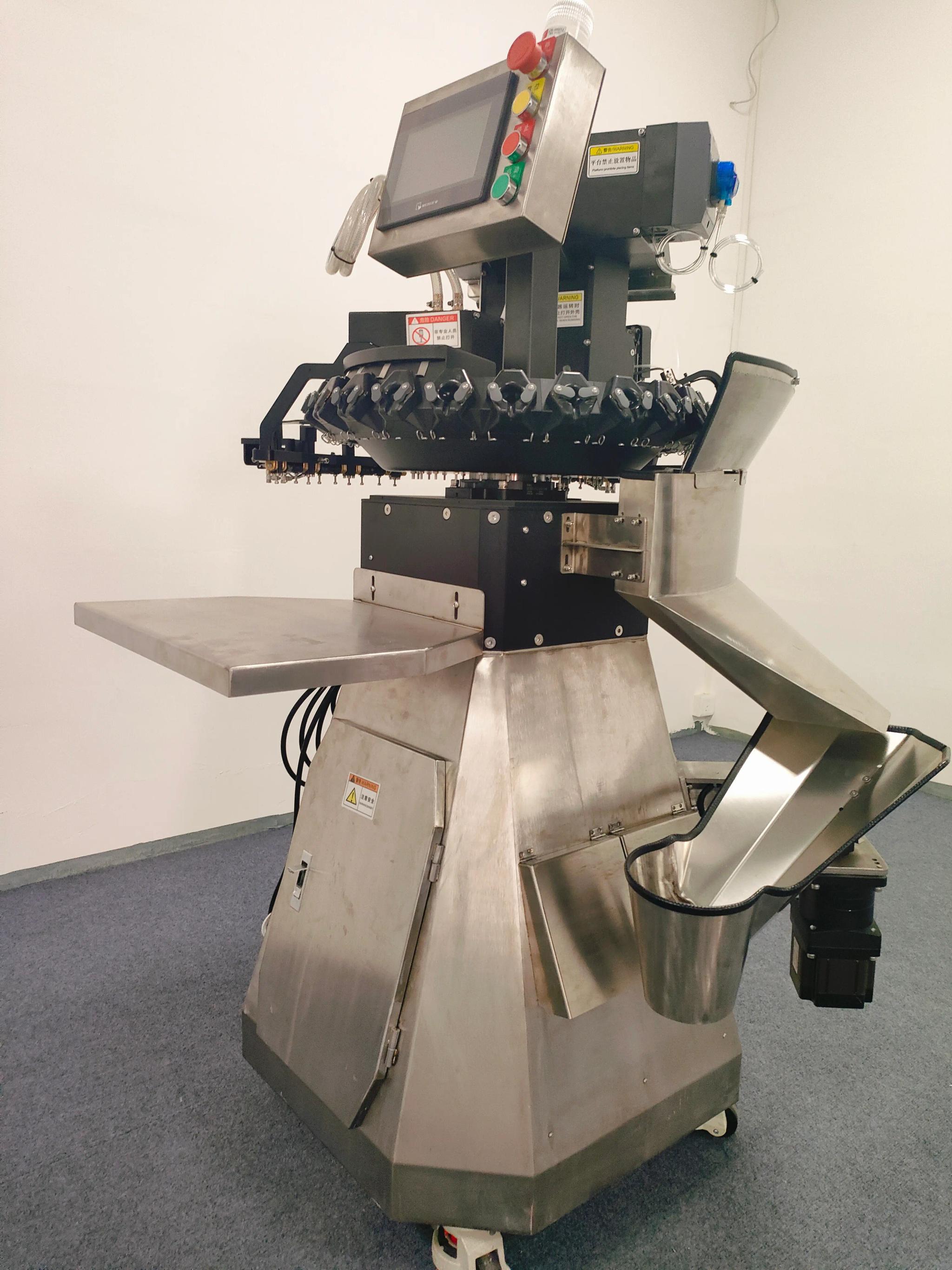
There is no universal best equipment for day old chick processing. A hatchery with unstable chick transfer needs a different first investment from one losing time at vaccination, crate loading, or sanitation.
The right equipment is the configuration that removes the measured constraint, fits the approved handling process, and leaves the next stage easier to manage. Four hatchery profiles show why the answer changes.
Profile One: The Main Problem Happens Before Treatment
This hatchery has capable treatment or vaccination stations, but chicks arrive unevenly. Operators repeatedly correct containers, move batches, or wait for the next presentation. During peak arrivals, the upstream area fills; later, expensive stations stand idle.
The first investment may belong in picking, separation, and transfer rather than another treatment position. Map the batch from the hatcher area to the first processing station. Measure arrivals in short intervals, operator walking, manual lifts, presentation variation, and stop causes.
A day-old chick picking and transfer machine can be relevant when the handoff itself is the constraint. It should be configured around the real containers, approved handling, layout, and downstream ready signals.
Profile Two: The Treatment Job Varies by Operator
The line reaches the treatment area consistently, but output and routine checks depend heavily on individual technique. Replenishment interrupts the rhythm, machine status is not always visible, or training a new operator takes too long.
Here, the priority may be a defined infrared beak treatment, injection, spray, or combined station, depending on the approved hatchery process. The buying team should not begin by choosing the machine with the largest rated output. It should define bird and age, approved method, operator work, consumables, checks, cleaning, stop recovery, and validation responsibility.
Jili Intelligent publishes equipment for infrared beak trimming, injection vaccination, spray vaccination, and a combined beak trimming and vaccination machine. The correct choice follows the approved job, not the longest feature list.
Profile Three: Processing Finishes, but Boxes Do Not Move
Treatment is not the slowest stage. Empty boxes arrive late, loading pauses, full boxes wait, stack pickup is blocked, or operators create temporary routes through the room.
The best first project may be conveying, loading, accumulation, or stacking. Follow one box from empty storage through loading, full-box movement, stacking, dispatch, return, washing, and reuse. Every change of direction, height, status, or owner can create a delay.
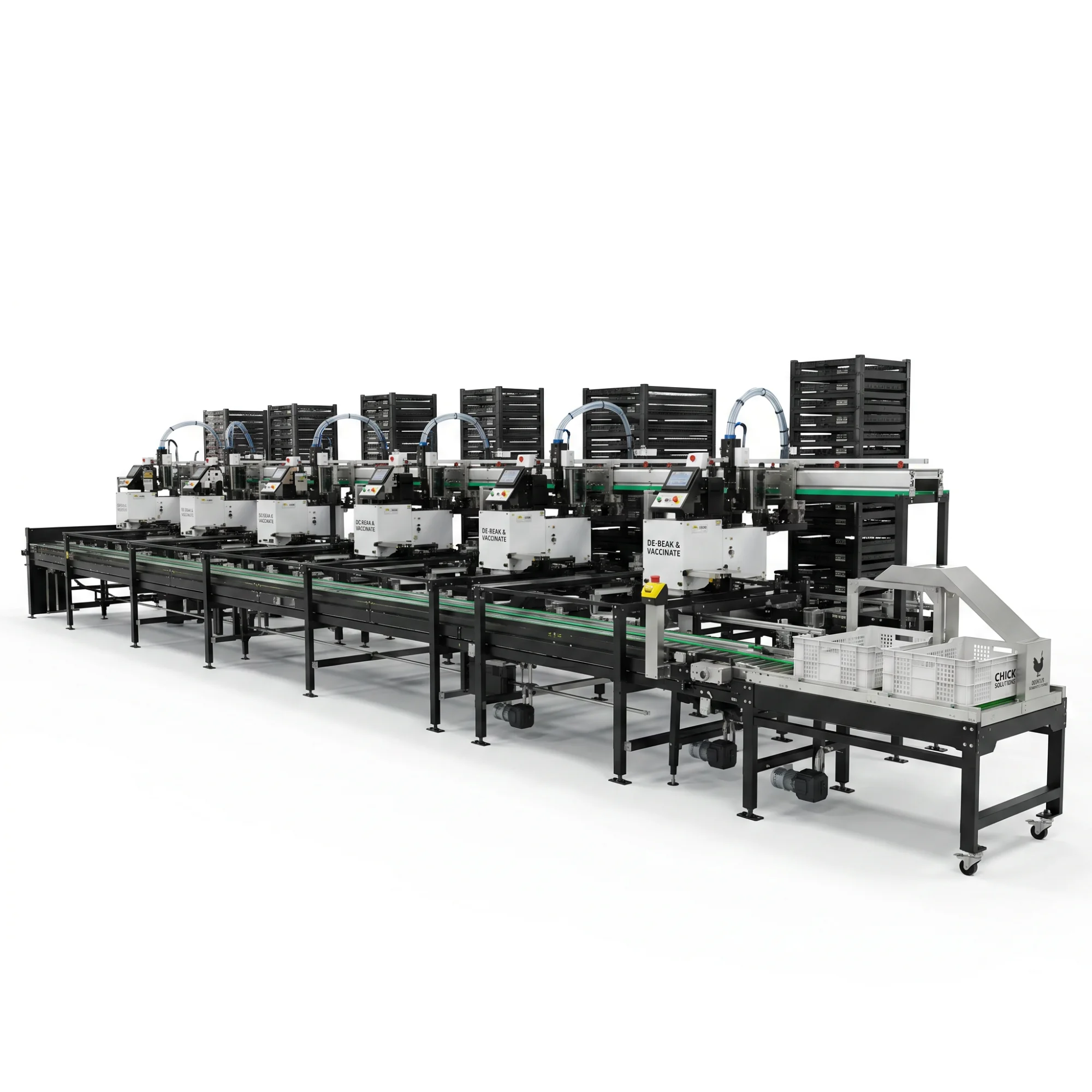
Jili Intelligent's conveying and stacking line connects chick processing with box handling. A proposal should still define the exact box models, stack rules, discharge method, stop sequence, cleaning access, and boundary of supply.
Profile Four: Every Machine Works, but the Shift Still Misses the Target
This hatchery already owns several capable machines. The loss appears between them: different controls, unclear ready signals, oversized or missing buffers, slow restart, repeated manual handoffs, or sanitation access that was never designed as one route.
Buying another isolated machine may add complexity. The priority is a line-level review. Put arrival data, stop history, operator roles, container flow, utilities, cleaning, and future volume on one process map. Identify which interface limits the busiest interval and how the line should stop and recover.
In this profile, complete hatchery automation solutions are relevant because transfer, treatment, vaccination, conveying, stacking, and controls can be discussed together. The project can still be phased. Long-term interfaces should be planned before the first new module is installed.
The Best First Purchase May Be a Layout Decision
Sometimes the equipment is not the first constraint. The room may lack clean operator routes, maintenance clearance, suitable utilities, drainage, container staging, or clean and dirty separation. Freezing a machine order before resolving those conditions can make an otherwise capable system difficult to operate.
Use the supplier's concept layout to test production, engineering, sanitation, and maintenance views. A route that is efficient during normal running may block cleaning or safe recovery. Adjusting the layout early is usually easier than compensating with more equipment later.
Ask for Evidence That Matches the Profile
The four profiles require different acceptance evidence. A transfer project should demonstrate real containers and downstream-not-ready behavior. A treatment station should demonstrate operator routine, replenishment, stops, cleaning access, and agreed application checks. A box-handling project should test uneven arrivals, blocked discharge, and representative boxes. An integrated line should demonstrate coordinated stops and recovery across modules.
This is why the best equipment for day old chick processing can only be identified after the hatchery names the operating problem and the proof required to solve it.
This evidence is more useful than a generic factory video because it tests the problem the hatchery is paying to solve.
Where Jili Intelligent Fits
Jili Intelligent's published range spans the main day-old chick processing stages: picking and transfer, infrared beak treatment, injection and spray vaccination, combined treatment and vaccination, conveying, stacking, crate washing, and complete automation.
This breadth allows the discussion to begin with the bottleneck rather than forcing every inquiry into one product. The customer still needs to provide real operating data, and the proposal should distinguish immediate scope from future expansion.
Frequently Asked Questions
Should we automate the whole hatchery at once?
Not necessarily. A phased project can reduce risk when the long-term process and interfaces are planned from the beginning and each phase solves a measured constraint.
Is the fastest machine usually the best choice?
No. Shift output also depends on arrivals, operators, connected stages, boxes, stops, recovery, sanitation, and the available operating window.
What data helps a supplier recommend equipment?
Provide batch-level arrivals, required operations, current process map, stop history, staffing, room layout, containers, utilities, cleaning sequence, destination, and expected growth.
Choose Equipment by the Problem It Removes
The best equipment for day old chick processing is the equipment that improves the real workday. Diagnose whether the first constraint is transfer, treatment, box flow, sanitation, or coordination before selecting the machine.
Send Jili Intelligent your batch data, process map, layout, existing equipment, containers, stop history, cleaning constraints, and expansion plan through the contact page. Ask for a recommendation tied to the measured bottleneck and an acceptance test that proves the result.