


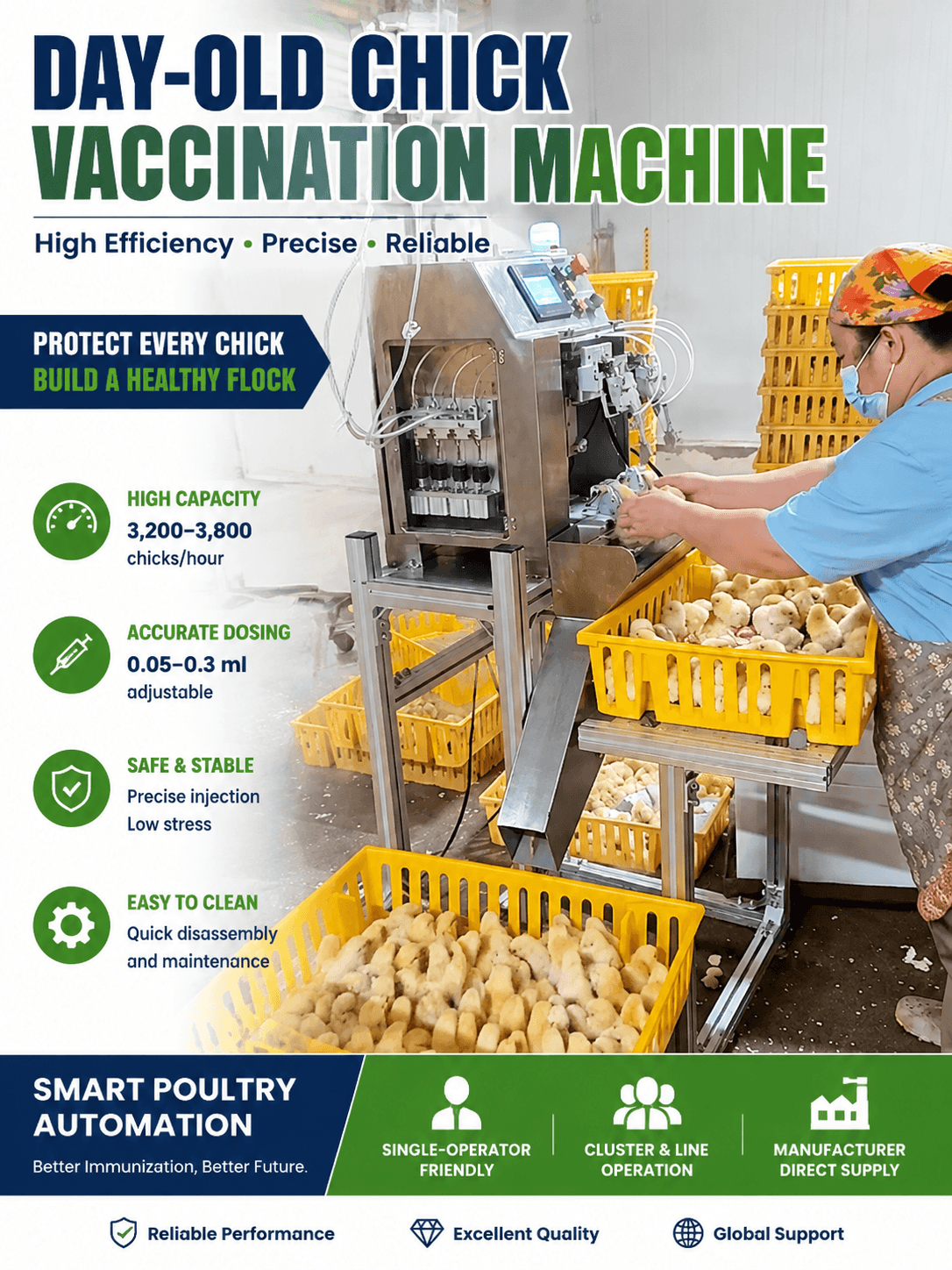
A search for buy poultry vaccination machine often begins with models and prices. A safer purchase begins one step earlier: define the vaccination job before choosing the machine. Bird type, age, approved administration method, daily workflow, and responsibility for installation all affect what the hatchery actually needs.
This matters because "poultry vaccination machine" is a broad search term. A buyer may be looking for injection equipment, a spray system, or a station that combines vaccination with another hatchery process. These products are not interchangeable, even when their descriptions use similar words.
The following five questions help a mixed team of hatchery managers, veterinarians, production supervisors, and procurement staff reach a practical decision without turning the purchase into a technical manual.
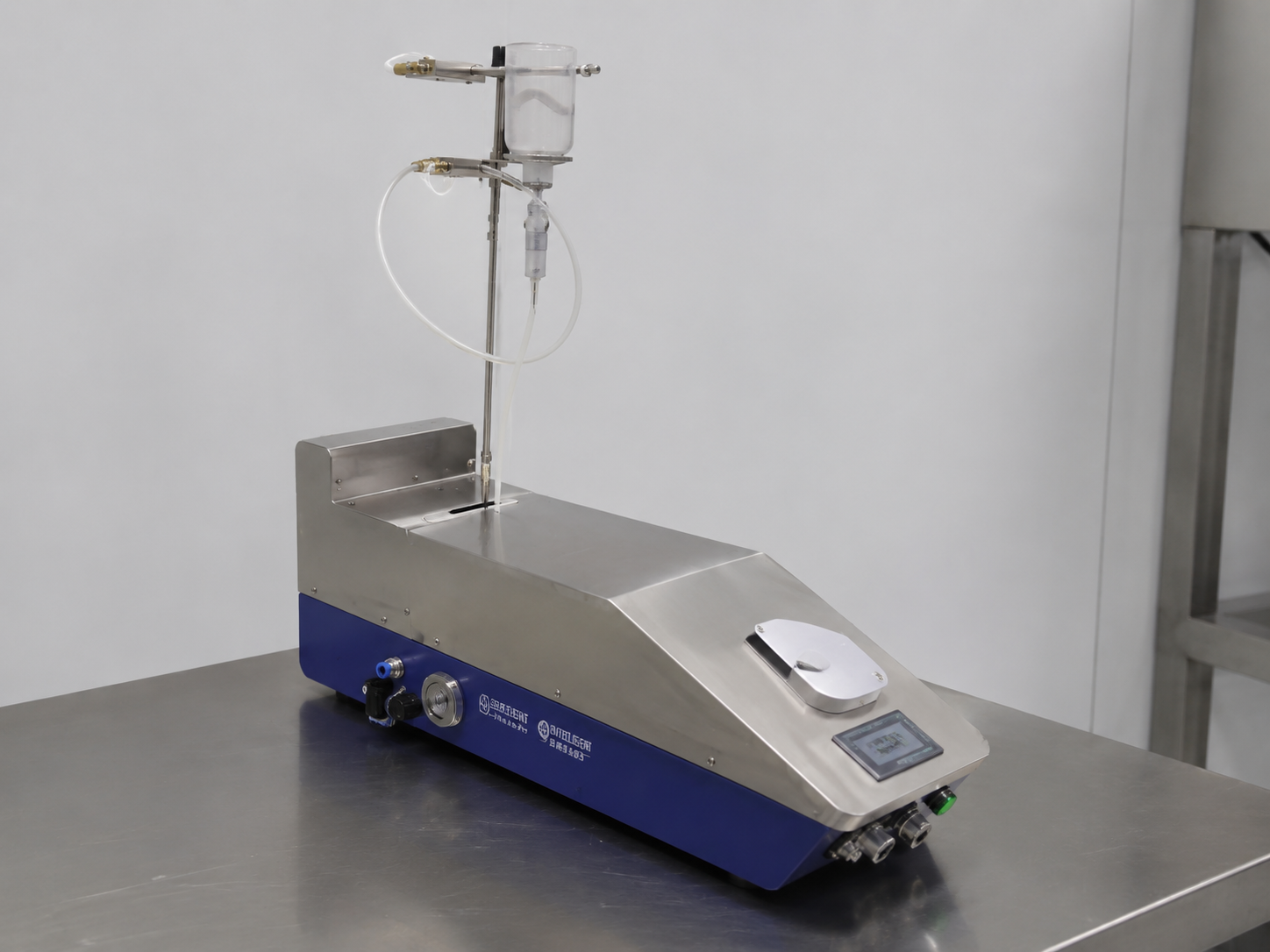
1. What Has the Veterinary Team Approved?
Imagine that procurement receives a request saying, "We need an automatic vaccinator before the next production expansion." The natural response is to ask suppliers for models and prices. But the first useful conversation belongs inside the hatchery.
The veterinary team needs to define the approved biological product instructions and equipment-related requirements. The machine supplier can explain how a particular model operates, but it should not choose the vaccine, dose, route, or treatment program for the hatchery.
Once the approved procedure is clear, procurement can translate it into an equipment request: bird type and age, administration method, whether one or two injection paths are required, and what verification the operating team must perform. That information immediately removes unsuitable offers.
Jili Intelligent, the company behind Julisense.com, publishes a day-old chick injection vaccinator. Its published application is day-old chick hatchery vaccination. Buyers should confirm how the proposed configuration supports their approved procedure rather than assuming one machine fits every poultry vaccination program.
2. Does the Machine Match the Birds and the Workday?
A machine can be technically capable and still be wrong for the site. The most common mismatch is not a hidden component; it is a missing description of the real workday.
For example, a hatchery may process several batches with short peaks rather than one continuous flow. Operators may also handle chick presentation, supplies, records, and crate changes. If a quotation assumes uninterrupted feeding and no surrounding delays, its stated output may not represent the hatchery's shift result.
The inquiry should describe the bird application, normal and peak batch size, operating window, current handling method, and the point where vaccination begins and ends. It should also state whether the station will be standalone or connected to existing processing and crate-handling equipment.
| Question | Why the answer changes the offer |
|---|---|
| Which bird type and age? | Confirms the equipment's intended application |
| Injection or spray? | Determines the relevant machine category |
| What is the batch pattern? | Reveals peak flow, stops, and staffing needs |
| Standalone or integrated? | Defines conveyors, signals, layout, and controls |
| Who installs and trains? | Clarifies the real startup cost and timetable |
This is enough structure for a first comparison. A long questionnaire can come later, once the supplier has confirmed that the application is within scope.
3. Which Vaccination Format Fits the Process?
The right format is the one that supports the approved procedure and reduces unnecessary handling in the hatchery.
A standalone injection station may suit a replacement project or a site that already has workable chick presentation and outfeed. It gives the buyer a focused equipment boundary, but the surrounding operator positions, supplies, cleaning, and crate movement still need review.
A combined station may make sense when the approved process includes both infrared beak treatment and vaccination. Jili Intelligent publishes a combined infrared beak trimming and vaccination machine. Bringing two operations into one workstation can reduce transfers, although it also makes stop recovery, cleaning, and changeover coordination more important.
Where the approved program calls for spray application, injection equipment is the wrong comparison. Jili Intelligent also publishes a day-old chick spray vaccinator. The choice between injection and spray follows the approved program, not a general claim that one technology is always better.
The same principle applies to single- and double-path configurations. More paths do not automatically mean a better machine. They add setup, consumables, verification, and changeover work and should only be specified when the approved procedure requires them. The Julisense guide to dual-needle machine integration explains this boundary in more detail.
4. What Happens During the Difficult Two Hours?
Most demonstrations show a machine during smooth production. A buyer learns more by asking what happens when the hatchery falls behind.
Suppose a batch arrives late. The team starts quickly, then needs to replenish supplies during the busiest period. A downstream crate is not ready, the station stops, and an operator must understand the alarm before production can resume. Later, the batch changes and sanitation needs access to the equipment.
Walking through this sequence with the people who will operate, clean, and maintain the station reveals practical issues that a specification sheet cannot show. Can supplies be replenished without disrupting the working position? Does the operator know why the machine stopped? Is there a clear and controlled restart? Can sanitation reach the necessary areas within the planned downtime?
The answers affect labor planning, room layout, training, and the number of stations required. They also tell procurement which parts of the supplier's demonstration deserve closer attention.
5. What Exactly Is the Supplier Delivering?
The final purchase decision should be based on the complete project scope, not the machine price alone. A useful quotation identifies the model and configuration, included options, utilities, line interfaces, factory testing, export packing, trade terms, installation duties, commissioning, training, spare parts, documents, warranty terms, and exclusions.
This does not mean every supplier must provide every service. It means the buyer should be able to see which party owns each responsibility. A lower equipment price may still be the right choice if the hatchery can manage integration and startup internally. The problem appears when that work is discovered only after the order.
Before approval, ask the supplier to demonstrate the exact or closest available configuration and discuss three ordinary events: replenishment, a controlled stop and restart, and cleaning access. These moments show more about everyday usability than a continuous high-speed run.
A Short Decision Example
Consider a hatchery that initially asks for a standalone double-path injection machine. After the veterinary and production teams review the process, they find that only one approved injection path is required, while the larger operational problem is repeated chick transfer between separate workstations.
The best purchasing conversation may therefore shift from "Which double-path machine should we buy?" to "Should vaccination remain standalone, or should it be evaluated with the related treatment step?" Nothing about the biological program has been changed by the supplier. The team has simply described its real process more accurately.
This is why a good equipment inquiry should leave room for configuration discussion while keeping veterinary decisions firmly with the responsible professionals.
Where Jili Intelligent Fits
Jili Intelligent's published range includes a day-old chick injection vaccinator, a combined infrared beak trimming and vaccination machine, and a day-old chick spray vaccinator. This gives hatchery buyers several equipment formats to discuss around an already approved procedure.
The company should still be asked to confirm the exact model, administration format, integration boundary, testing, documents, and service scope for the destination. Product range alone does not replace project definition.
Frequently Asked Questions
Can the machine supplier recommend the vaccine or dose?
The supplier can explain equipment functions and configuration. Vaccine choice, dose, route, and program approval should remain with the hatchery veterinarian, approved product instructions, and applicable requirements.
Is a combined machine always more efficient?
No. It may reduce transfers where both processes are approved and belong in the same workflow, but it also creates a more connected workstation. Compare handling, stops, changeovers, cleaning, and maintenance with the standalone alternative.
What should be sent with the first inquiry?
Send the bird type and age, approved administration method, typical and peak batch pattern, current process, room layout, utilities, destination, and whether the equipment will be standalone or integrated.
Buy the Process Fit, Not Just the Machine
Before buying poultry vaccination equipment, settle the approved procedure, bird application, operating pattern, equipment format, and delivery scope. That sequence makes the supplier conversation faster and gives the hatchery team a clearer basis for approval.
Send Jili Intelligent the application, approved equipment requirements, batch pattern, layout, connected equipment, and destination through the contact page. Ask for a configuration and responsibility list that production, veterinary, engineering, and procurement teams can review together.