


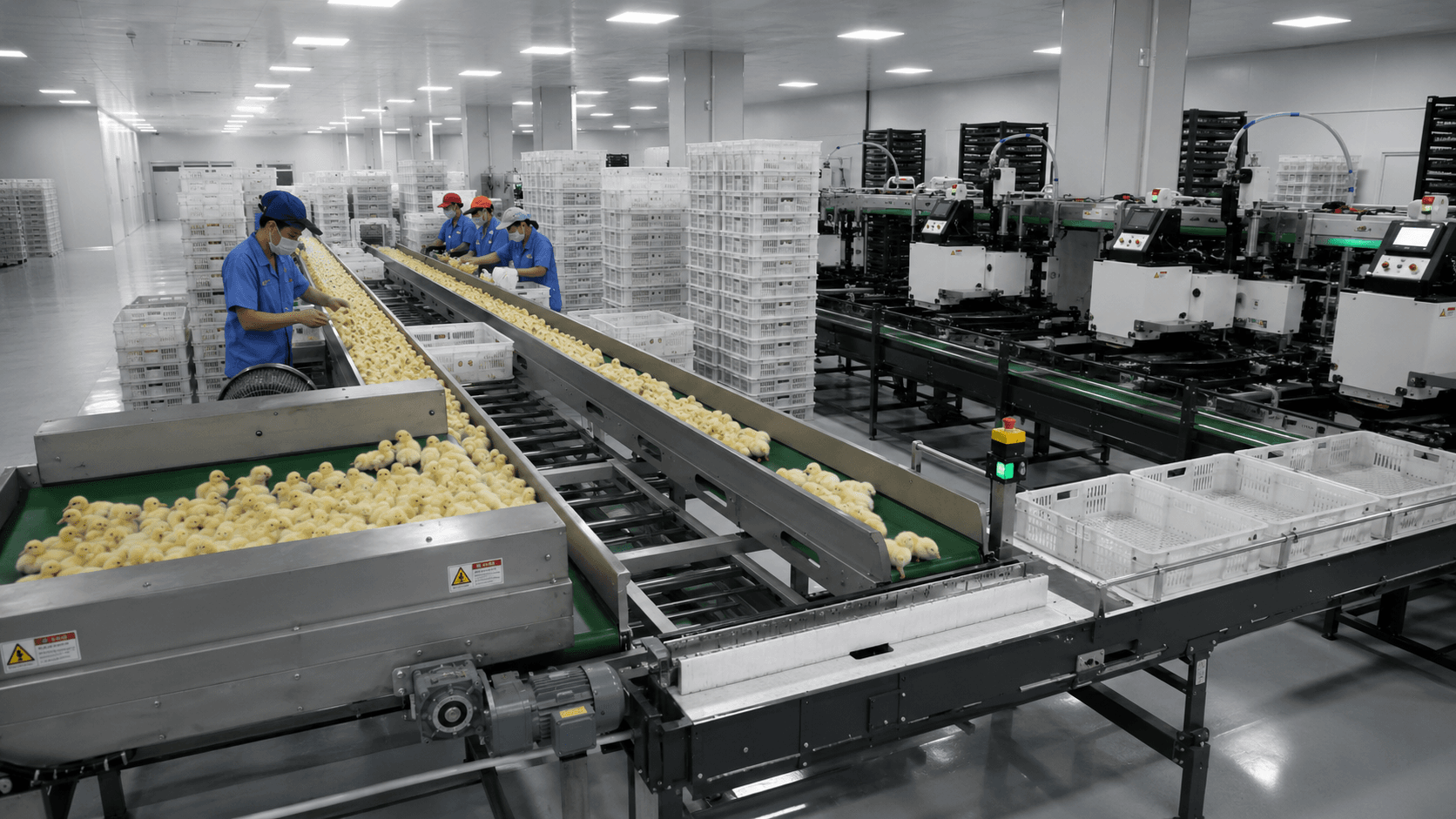
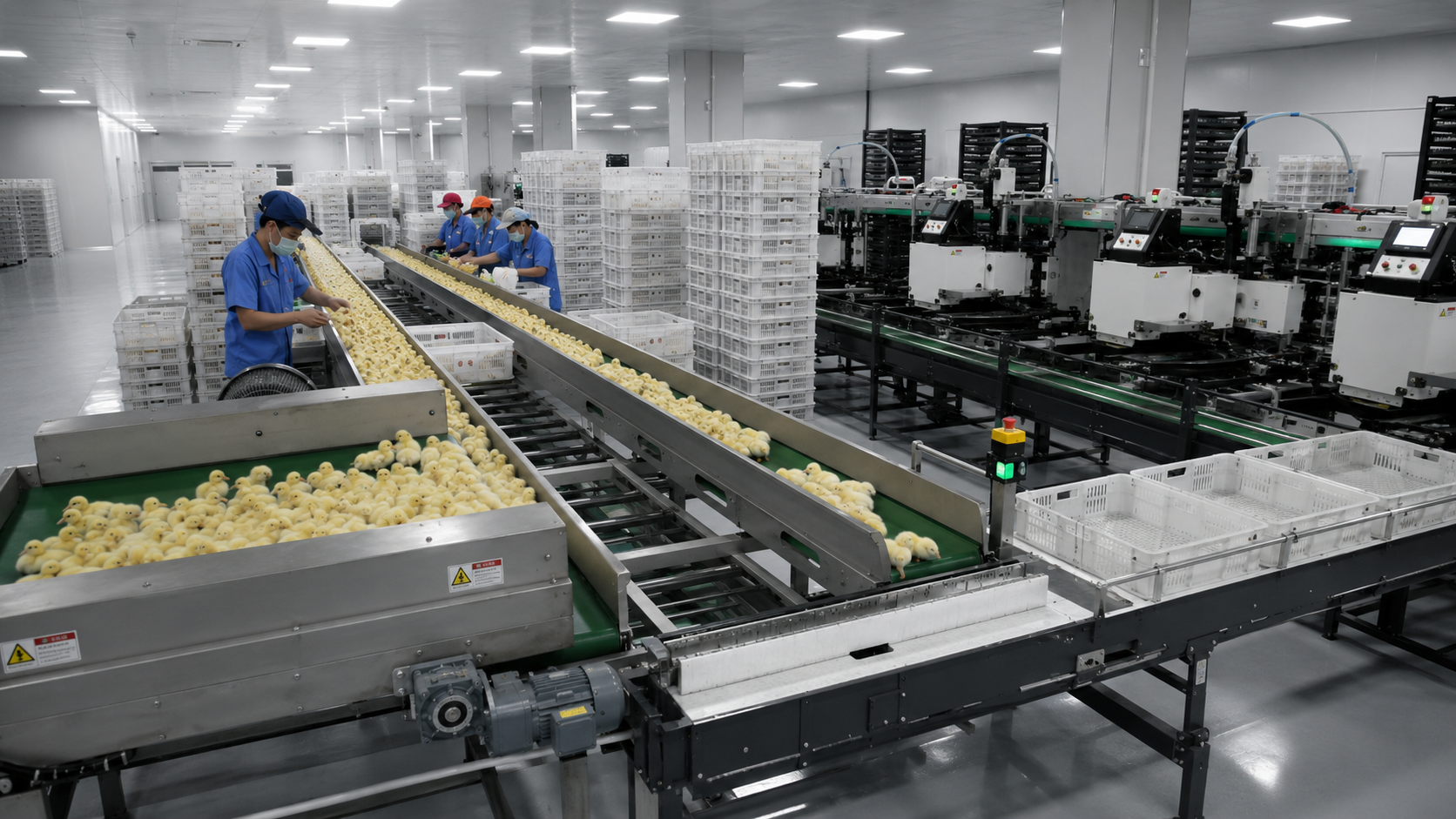
A poultry hatchery processing line should be selected as a connected workflow, not as a collection of unrelated machines. Buyers need to understand how chicks enter the line, where operators inspect them, which station controls the pace, and how chicks move to vaccination, beak treatment, conveying, stacking, or dispatch.
Jili provides modules including the Day-Old Chick Picking and Transfer Machine, Day-Old Chick Injection Vaccinator, Infrared Beak Trimming and Vaccination Machine, and Conveying and Stacking Line. Buyers can combine modules according to the current process and growth plan.
Start with the bottleneck, not the equipment list
Some hatcheries lose time during manual transfer. Others have unstable vaccination rhythm, repeated chick handling, crowded conveying areas, or manual stacking at the end of the line. The first project phase should address the constraint that has the largest effect on production and labor.
A supplier should ask for current output, peak-hour demand, shift schedule, operator number, room layout, and videos of the existing process before recommending a poultry hatchery processing line.
Check whether station capacities are balanced
The rated output of each machine is only one part of capacity planning. Loading, inspection, consumable replacement, cleaning, breaks, changeovers, and downstream receiving capacity affect actual performance. The line should be planned around a stable working rhythm rather than the highest number shown on a specification sheet.
Ask the supplier to explain what happens when one station pauses. Buffer space, bypass options, manual recovery points, and clear stop procedures can help the team manage interruptions.
Processing line buyer checklist
| Checklist area | Buyer question |
| Chick flow | Is the path from entry to dispatch clear and continuous? |
| Capacity | Do upstream and downstream stations have compatible output? |
| Operators | Can staff inspect, clean, and respond without crowding? |
| Utilities | Are power, air, water, drainage, and room conditions confirmed? |
| Maintenance | Can service points and consumables be accessed easily? |
| Expansion | Can future modules be added without rebuilding the room? |
Review layout and operator access
Layout drawings should include equipment dimensions, working clearances, doors, columns, drains, control panels, cleaning routes, and operator positions. Transfer height and direction between stations should be confirmed before fabrication. A line can meet its capacity target on paper and still be difficult to operate if people cannot reach inspection or maintenance points.
Compare support before placing the order
Ask what is included in installation guidance, commissioning, operator training, manuals, spare parts, remote support, and troubleshooting. The proposal should identify the buyer's site-preparation responsibilities and the supplier's startup responsibilities. This reduces uncertainty when the equipment arrives.
A reliable poultry hatchery processing line also needs a preventive-maintenance plan. Buyers can request a recommended spare-part list and inspection schedule for the first operating year.
Prepare measurable acceptance criteria
Acceptance can cover mechanical installation, utility connection, safety functions, controls, alarms, station handoffs, operator training, cleaning access, and performance during a representative production batch. Record output, waiting time, manual interventions, downtime, and operator observations during the first week.
Build a stronger RFQ
Send chick species, daily volume, peak hourly demand, current equipment, room layout, operator plan, utilities, bottleneck description, required processes, and future expansion goals. If the project will be phased, state which problem must be solved first.
This information helps Jili recommend a poultry hatchery processing line that fits the actual facility and inquiry goal rather than a generic package.
FAQ
What processes can be included in a hatchery line?
Transfer, vaccination, infrared beak treatment, conveying, stacking, inspection, and related handling can be planned as connected modules.
Should every buyer choose a complete line immediately?
No. A phased project can solve the strongest bottleneck first and reserve space for future modules.
Why is line balance important?
Balanced stations reduce waiting, idle equipment, repeated handling, and manual correction between processes.
What should be checked in the layout?
Check dimensions, transfer direction, operator access, maintenance space, cleaning routes, utilities, doors, columns, and drains.
What should be sent with the RFQ?
Send volume, layout, chick type, current workflow, utilities, bottlenecks, required modules, and expansion plans.