


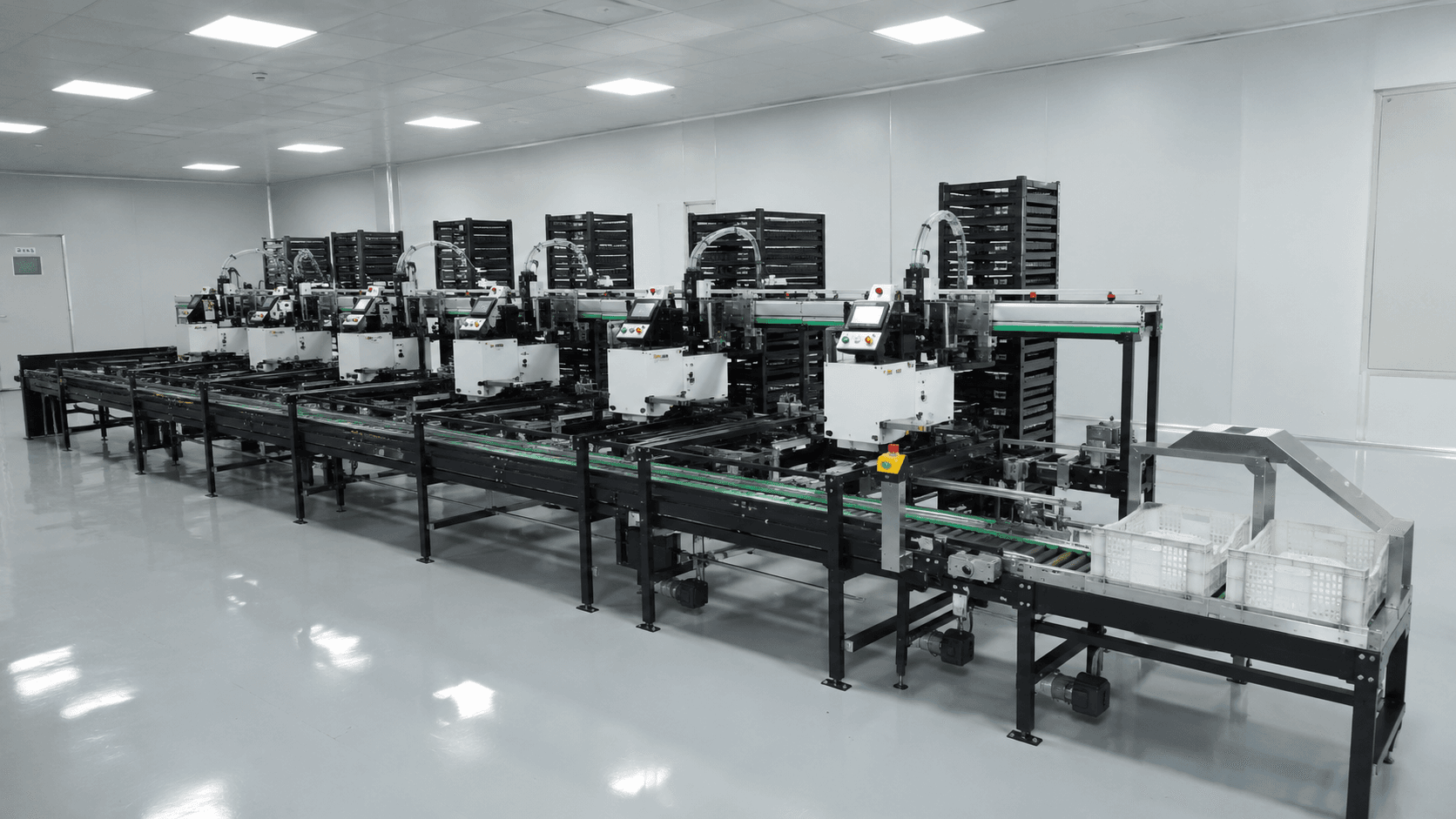
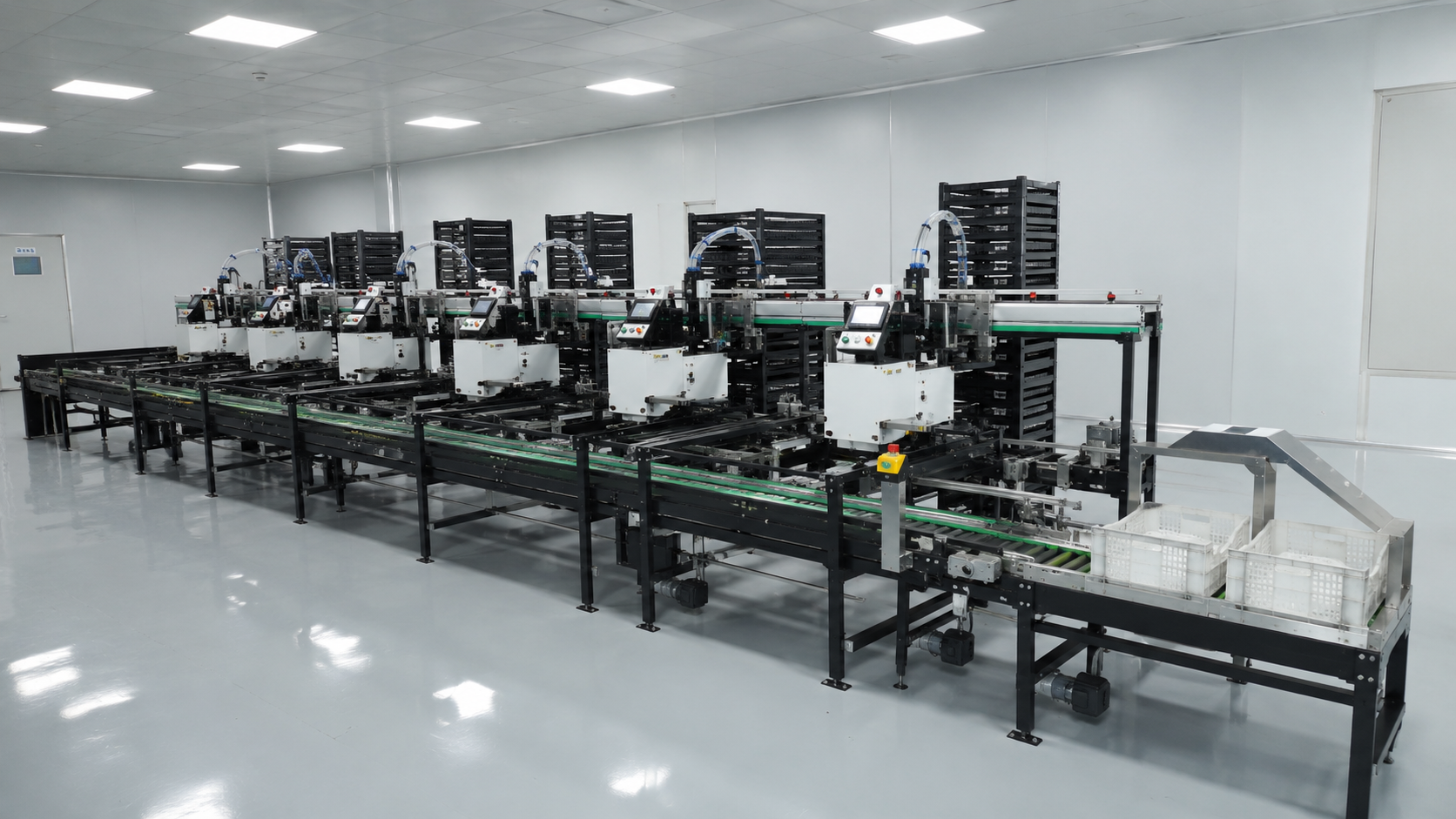
A chick transfer machine supports one of the busiest early stages in a hatchery: moving day-old chicks from hatcher baskets or trays into the next handling process. Buyers usually search this topic because manual tipping, picking, shell handling, or downstream feeding has become too slow or too inconsistent.
The Jili Day-Old Chick Picking and Transfer Machine is designed for high-volume transfer work. Product material references about 50,000-70,000 chicks per hour, 2-3 operators, about 8-10 seconds per basket tipping cycle, about 7.5 kW power, about 95% single-box chick accuracy, and a full-machine size of about 6000 mm x 3800 mm x 1800 mm.
Why transfer is a line-planning decision
Transfer quality affects every station after it. If chicks arrive unevenly, beak treatment, vaccination, conveying, boxing, or inspection may wait. If shells and waste are not removed smoothly, the working area becomes harder to manage. A good transfer plan balances basket tipping, chick movement, shell conveying, operator access, and downstream capacity.
A better comparison looks beyond maximum output. The machine must match basket size, building space, workflow direction, cleaning access, and the real speed of the next station.
Checklist before comparing suppliers
- Measure hatcher basket size, weight, and tipping direction.
- Record daily chick volume and peak hourly demand.
- Map where shells, infertile eggs, and waste should move.
- Check whether downstream equipment can receive the transfer output.
- Reserve enough operator space for inspection, cleaning, and maintenance.
- Confirm whether the project needs chick boxing, shell crushing, or connected conveying.
Key planning data
| Planning factor | Jili reference information |
| Main work | Picking, transfer, basket tipping, shell handling, and chick boxing |
| Reference capacity | About 50,000-70,000 chicks per hour |
| Operators | 2-3 operators |
| Single basket tipping | About 8-10 seconds |
| Power | About 7.5 kW |
| Single-box chick accuracy | About 95% |
How to prepare a quotation request
Send basket photos, basket dimensions, room layout, current manual transfer process, chick volume, shell handling requirement, and the process after transfer. Short videos or floor-plan sketches can be especially helpful because they show turning space, operator movement, and where the machine should connect.
If the hatchery is planning a wider upgrade, explain whether transfer will connect with conveying, stacking, beak treatment, vaccination, or dispatch preparation. This allows the transfer station to be planned as part of a practical line rather than as an isolated machine.
Common mistakes when buying a transfer machine
One mistake is choosing a machine with high transfer capacity while ignoring downstream speed. Another is forgetting shell and waste flow. A third is approving a layout without maintenance access. These mistakes can reduce the value of automation because the problem simply moves from one station to another.
For connected movement after transfer, buyers can review the Jili Conveying and Stacking Line or the wider Jili Complete Hatchery Automation Solutions page after confirming the transfer station requirements.
How transfer planning supports inquiries
A well-prepared inquiry helps Jili respond with a practical layout instead of a broad equipment suggestion. Buyers who provide basket data, flow direction, shell route, and downstream capacity usually receive a clearer proposal because the transfer machine can be matched to the real hatchery line.
This is especially important for high-volume projects, where small layout mistakes can become daily labor pressure. The earlier these details are shared, the easier it is to protect capacity, cleaning access, and future expansion space.
The right chick transfer machine should protect line balance by matching basket tipping, shell handling, chick flow, and the receiving capacity of the next station.
FAQ
Where does a chick transfer machine fit in a hatchery?
It usually fits near the start of day-old chick handling, before downstream processing, conveying, boxing, or dispatch preparation.
What capacity does Jili material reference?
Jili material references about 50,000-70,000 chicks per hour depending on project configuration.
Why does basket information matter?
Basket size, weight, and tipping direction affect machine layout, operator access, and transfer rhythm.
What should be sent before quotation?
Send basket dimensions, room layout, current process, daily volume, shell route, and downstream station details.
How can buyers avoid a new bottleneck?
Compare transfer output with the capacity of the next station and plan shell handling at the same time.