


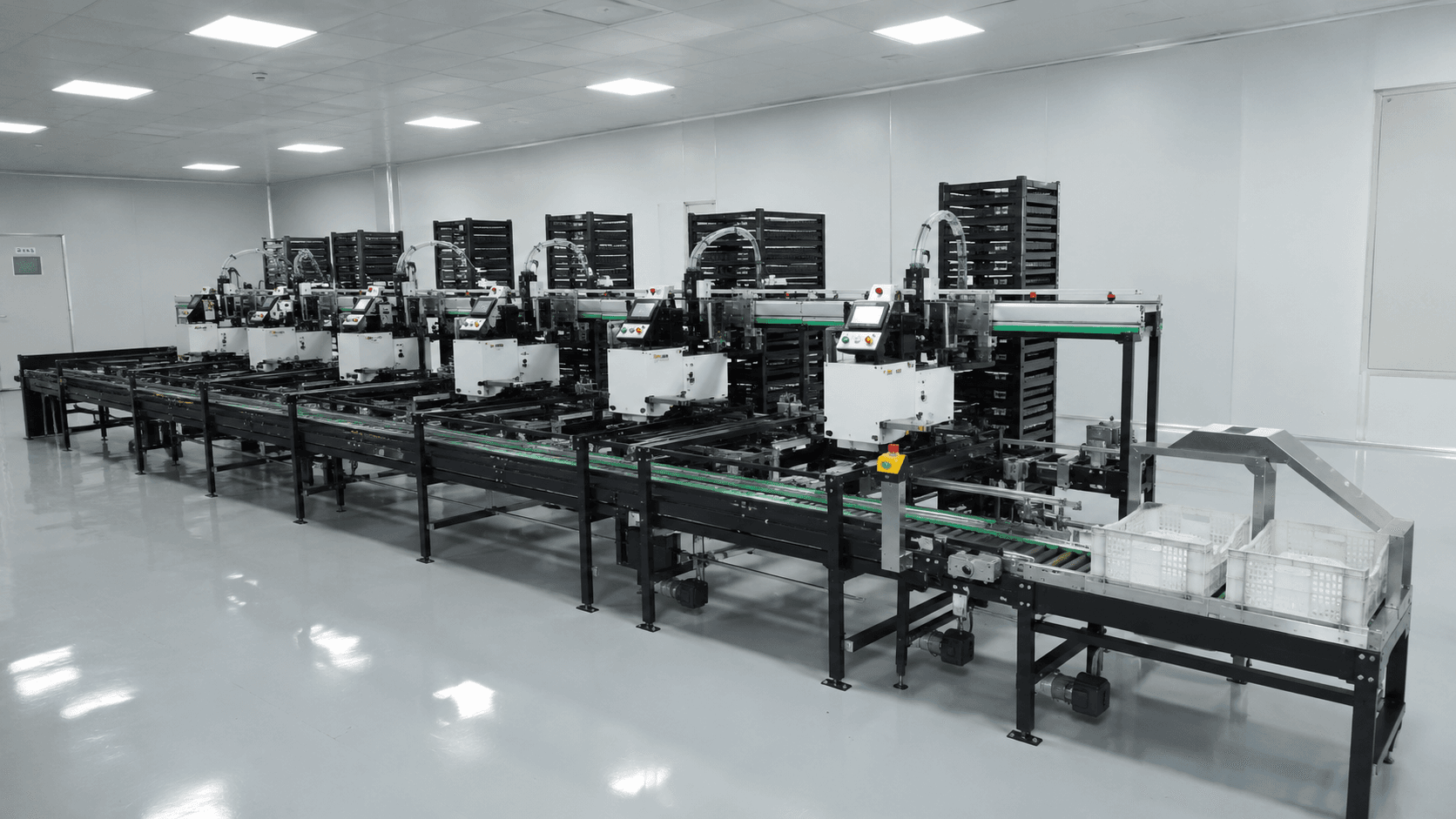
A stacker is often shown at the satisfying moment when one box settles neatly on another. The purchasing decision should begin earlier and end later.
Follow one full box from loading to pickup. That journey reveals whether a chick box stacking machine fits the actual box fleet, line rhythm, dispatch method, floor space, operator route, and cleaning window. It also reveals what happens when the perfect sequence is interrupted.
The Box Arrives at the Loading Point
Before it can be stacked, the box must arrive in the correct orientation and condition. Its base, rim, side openings, labels, and accessories can affect guides, sensors, transfers, and the stability of the final stack.
Do not design around a clean sample chosen for a demonstration. Review new boxes and representative normally worn boxes from the operating fleet. Agree on the acceptable condition and a rejection method. Automation should handle the approved fleet reliably; the hatchery still needs an inspection rule for boxes that are too damaged or deformed to continue.
The loading stage should also identify when a box is ready to leave. If a half-completed box is released or two boxes enter a transfer too closely, the stacker's problem began upstream.
The Full Box Travels Toward the Stacker
The journey may include straight conveyors, turns, transfers, accumulation, and changes in height. Each transition is more important than the length of the easy straight section.
Walk the route at operator eye level. Can the team see where a stop occurred? Is there safe access to a problem area? Does an open guard or access point stop the appropriate zone? If a box pauses, what prevents the next one from pushing into it?
Now look beneath and beside the line. A compact route can block floor cleaning, maintenance access, or the path used to remove completed stacks. Space belongs to all three activities: production, sanitation, and recovery.
The Stack Is Built
At the stacking point, define more than the number of boxes. The project needs an approved stack pattern, maximum stack, box orientation, expected weight range, and release condition.
Watch what the machine does when a box is missing, late, misaligned, or rejected. The safest response may be a controlled stop and clear operator instruction, not an attempt to correct every exception automatically. The buyer should understand which conditions the system detects, which decisions remain with the operator, and how normal flow resumes.
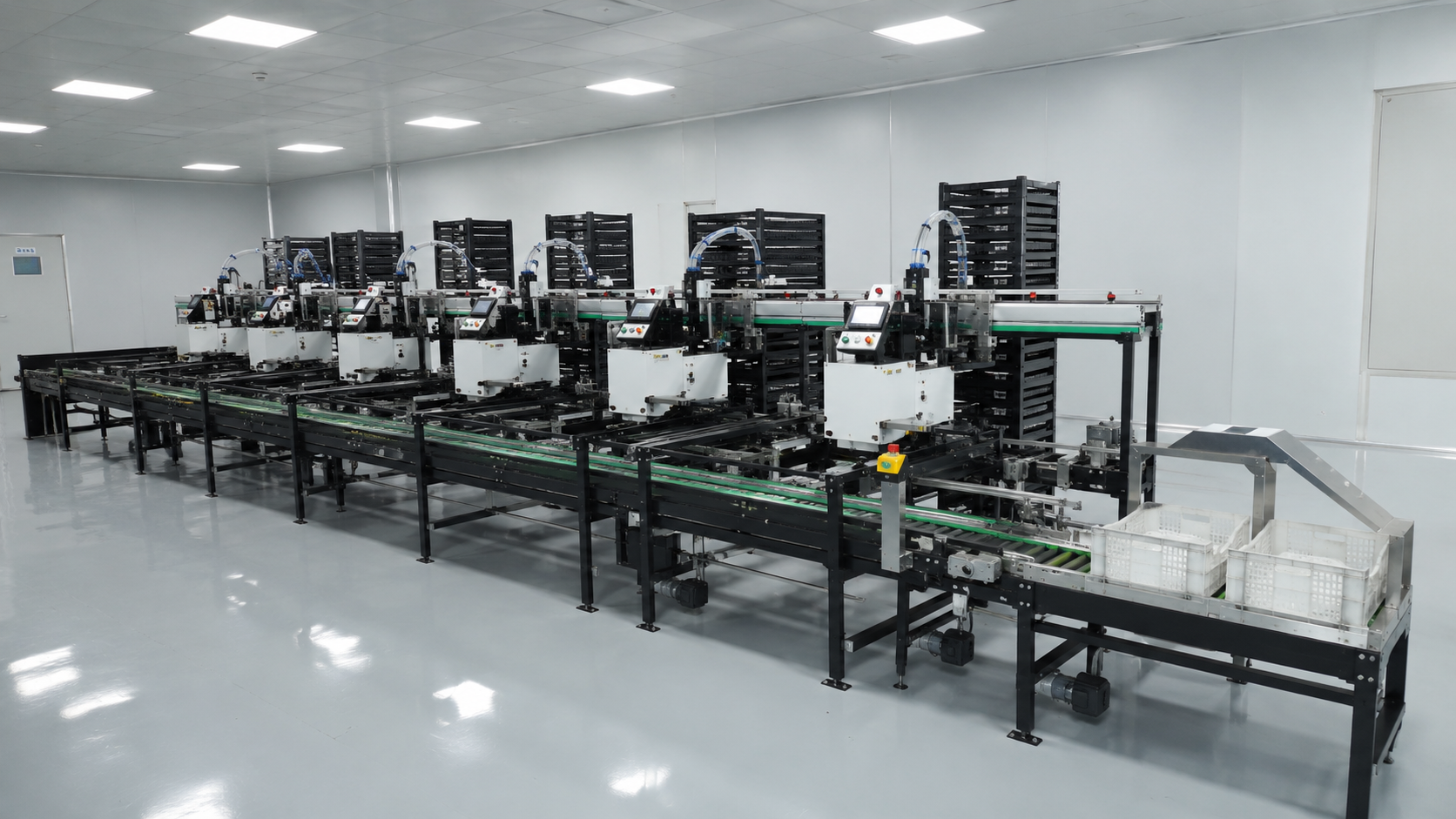
Jili Intelligent publishes a conveying and stacking line designed to connect day-old chick treatment with box loading, conveying, and stacking. In a real project, the agreed box information and line boundary determine the configuration.
The Pickup Area Is Still Occupied
This is the scene that a smooth demonstration often skips. A completed stack is ready, but the trolley, pallet position, or dispatch route is not available. More full boxes are arriving.
The layout should answer where the completed stack waits, how an occupied discharge is detected, which upstream zone pauses first, and who owns the alarm. A small pickup delay should not force operators to create an unsafe bypass or move boxes through an unplanned route.
Recovery needs its own sequence. Once the pickup area is clear, the system should release the completed stack and reduce the queue in a controlled way. Restarting every conveyor at once may simply recreate the blockage.
One Box Is Misaligned During a Busy Period
Use an agreed safe test to create a representative exception. Watch the full response: detection, controlled stop, alarm message, operator access, removal or correction, reset, and restart.
Time matters, but clarity matters more. A slightly longer recovery that every trained operator understands may protect more production than a complex sequence known only by one technician. Ask what information the control panel provides and what the maintenance team needs to diagnose repeated stops.
Production Ends, but the Journey Is Not Finished
The remaining boxes must be cleared. Guides, transfers, and the area under the conveyor need access. Removed parts need a defined location, and the machine must return to an approved condition before the next startup.
Measure the entire interval from final production clearance to sanitation release and restart readiness. A fast stacker can still reduce available production time if the layout makes clearing and cleaning unnecessarily difficult.
The supplier should show how the delivered equipment is accessed and cleared. The hatchery should confirm that the chick box stacking machine, protected components, and procedures are compatible with its approved sanitation program.
What the Supplier Needs From You
Send box drawings and photographs, new and worn samples, empty and full operating weight, labels and accessories, stack pattern, maximum stack, arrival rhythm, dispatch method, room layout, floor restrictions, cleaning method, and connected equipment.
If several box types must run, state which ones require automatic handling and how often changeover occurs. "Standard chick box" is not enough information for reliable mechanical design.
Where Jili Intelligent Fits
Jili Intelligent's stacking equipment sits within a broader hatchery range that includes chick transfer, infrared treatment, vaccination, conveying, and complete automation. This matters when the stacker's arrival rhythm and stop behavior must be coordinated with upstream processing.
The proposal should still define the precise boundary. Depending on the project, the supplier may cover loading, conveying, accumulation, stacking, controls, and integration, while dispatch vehicles, storage, or other parts of the box loop remain with the customer.
Frequently Asked Questions
Can one chick box stacker handle multiple box sizes?
Possibly, after geometry, weight, orientation, guides, sensors, adjustments, stack patterns, and changeover have been reviewed and tested for every approved type.
Is stack height the main purchasing criterion?
No. Stable infeed, box condition, discharge space, safe exception handling, operator access, cleaning, and integration often decide whether the system works during a real shift.
What should be tested before acceptance?
Test representative boxes, normal and uneven arrivals, an approved misalignment or rejection scenario, occupied discharge, stop and restart, clearing, and sanitation access.
Approve the Complete Box Journey
A chick box stacking machine earns its place when the full box reaches it reliably, the completed stack leaves on time, exceptions are understandable, and the area returns to a clean, ready condition within the planned window.
Send Jili Intelligent your box samples, stack rules, arrival pattern, layout, dispatch route, cleaning constraints, and expected interfaces through the contact page. Ask the proposal to follow one box from loading through completed-stack pickup.