


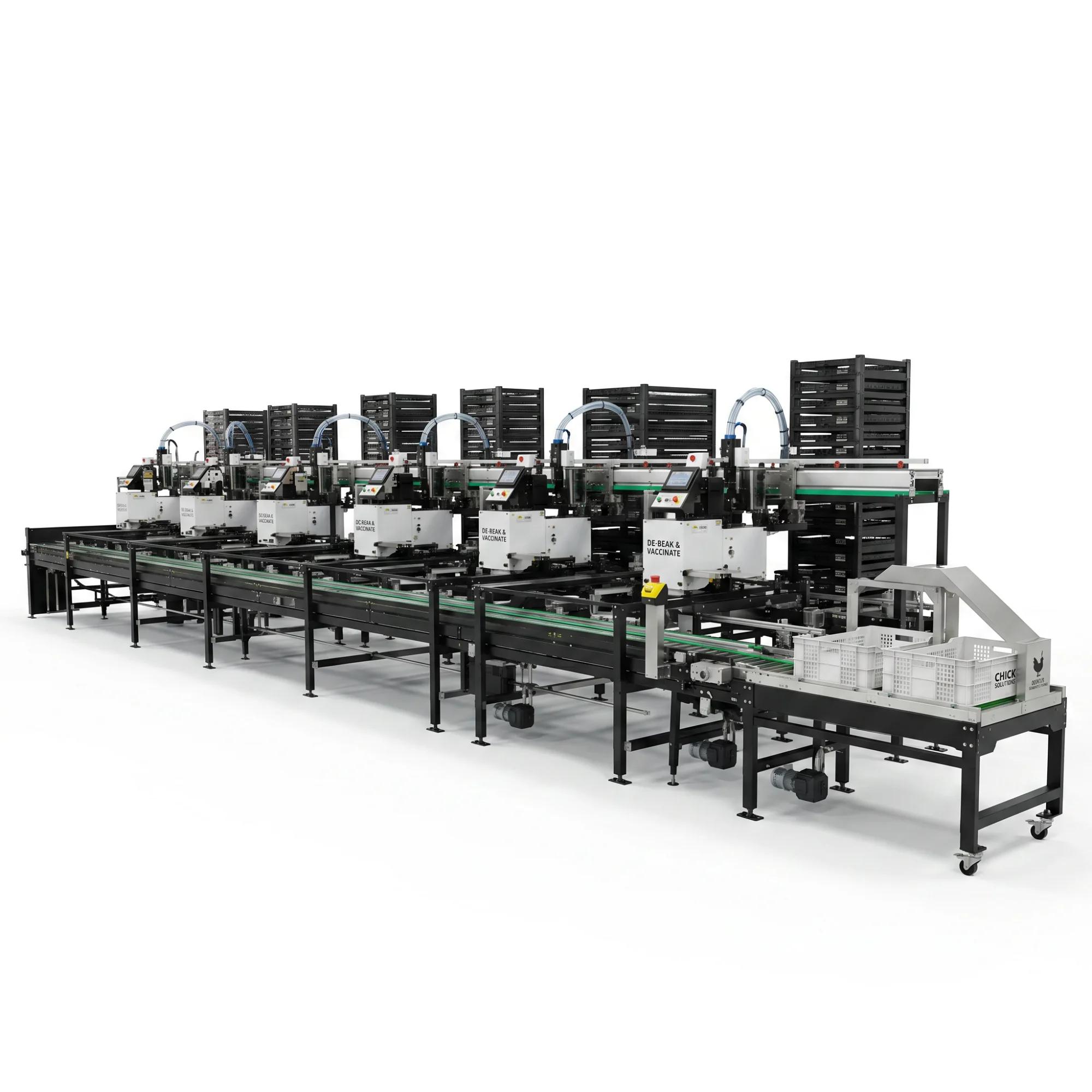
A chick conveying and stacking system layout can look convincing when every arrow points forward and every box arrives on time. The more useful review starts late in the shift, when the last dispatch pallet is still empty, full boxes are approaching the stacker, an earlier delay has reduced available space, and the team needs to decide what can keep moving.
This 4 PM queue is not a disaster scenario. It is a realistic way to see whether the proposed layout gives people enough visibility, space, access, and control to finish the day without turning one delay into several hidden problems.
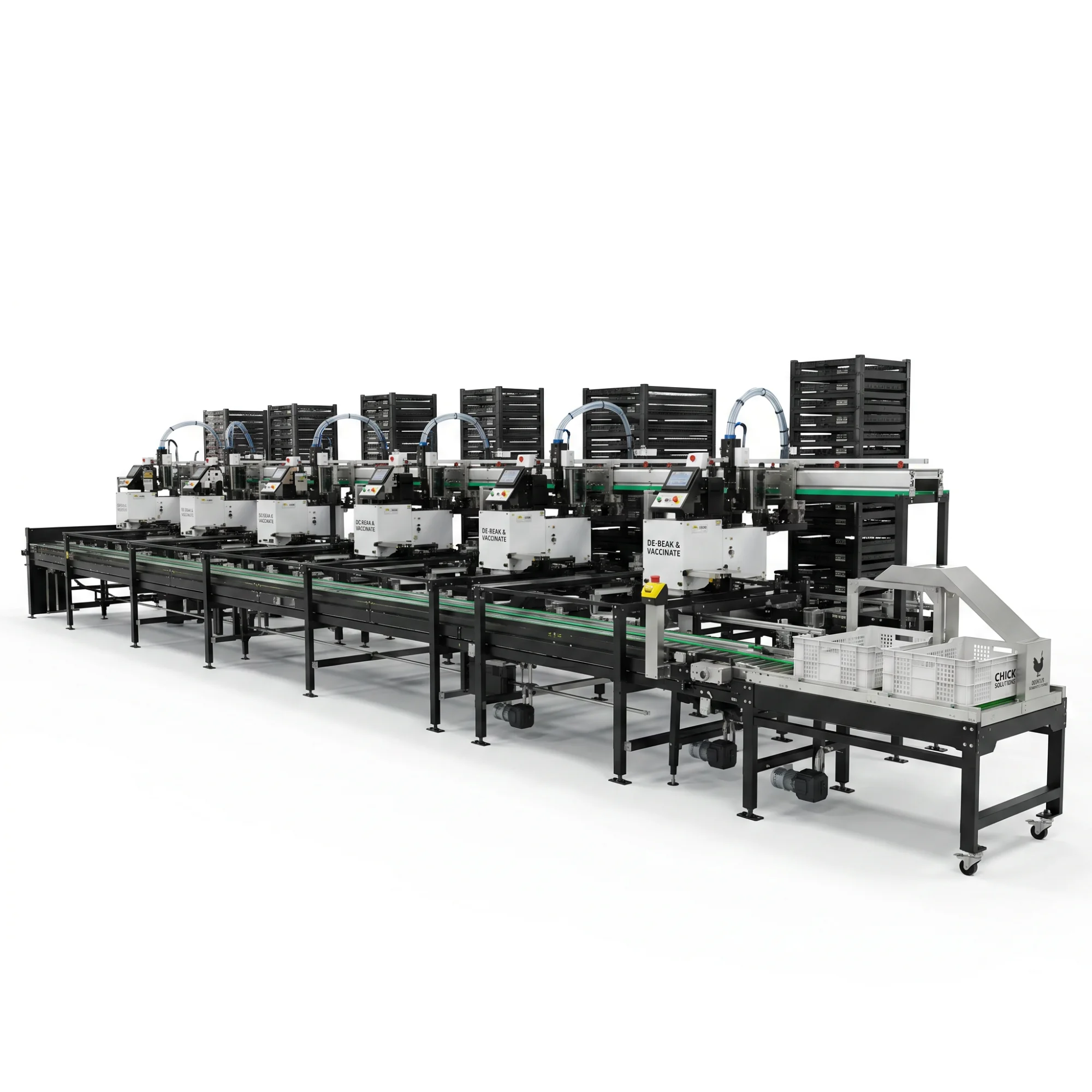
Start at Dispatch, Where the Missing Pallet Should Be
Walk to the planned dispatch point and look upstream. If pickup is late, where can completed stacks wait? How many can wait without blocking inspection, traffic, doors, fire routes, sanitation movement, or access to the stacker? Who can see the situation, and who decides when upstream flow must slow or pause?
Jili Intelligent presents connected hatchery equipment through JuliSense products. The final arrangement should be built around the customer's box dimensions, stack rules, room conditions, production rhythm, transport method, and destination requirements.
A dispatch delay is a layout test
The drawing should show more than the normal pickup point. Mark the approved waiting area, maximum practical accumulation, traffic direction, and the boundary beyond which production changes. A small empty rectangle on the plan can be more valuable than another meter of conveyor.
The last full stack has a different risk
At the end of the shift, a partial or final stack may not behave like the repeated stacks used during a demonstration. Define how it is completed, identified, released, moved, and recorded.
Trace the Queue Backward Through the Stacker
Now move upstream from the empty pallet. Which box is waiting to enter the stacker? Which one is still being inspected? Which one is arriving on the conveyor? Backward tracing reveals whether each section has a clear purpose or merely stores delay.
In a chick conveying and stacking system layout, every buffer should have an operating rule. A buffer without a visible limit can become a place where the line continues because no one is certain when to stop it.
Mark what the stacker controls
Identify the signals that indicate ready, occupied, waiting, blocked, full, paused, and fault conditions within the selected control scope. Operators need a plain-language understanding of these states, not only a code that technicians recognize.
Mark what the stacker cannot control
Pickup timing, damaged boxes, local traffic, customer inspection, and manual decisions may sit outside the machine. Put these external dependencies on the same drawing so the project team can assign owners.
The Queue Has Three Different Kinds of Space
Space for normal flow, space for recovery, and space for people are not interchangeable. Normal-flow space keeps the system moving. Recovery space allows a controlled response to a blockage or delay. People space supports inspection, cleaning, maintenance, supervision, and safe movement.
A credible chick conveying and stacking system layout gives each type of space a visible location and a clear operating reason.
The OSHA machine guarding overview provides general reference material for protecting people from machine hazards. The final design must follow the applicable standards, risk assessment, local requirements, and the supplier-customer safety responsibilities for the destination.
Normal-flow space answers a timing question
How quickly do boxes arrive, how long does each downstream action take, and how much ordinary variation exists? Use representative peaks and changes, not only an average hourly number.
Recovery space answers an exception question
Where does work wait when the stacker, dispatch route, or a downstream decision is unavailable? The answer should remain visible and controlled.
People space answers an ownership question
Who must inspect, clear, clean, maintain, observe, or release the area? Draw those actions at human scale, including doors, panels, removable parts, guarding, tools, and temporary equipment positions.
Put the 4 PM Queue on the Chick Conveying and Stacking System Layout
Use colored notes or a simple table to reconstruct one late-shift moment:
| Position | What is happening at 4 PM? | Decision owner |
|---|---|---|
| Dispatch | Pickup pallet is not yet available | Logistics or production owner |
| Completed stack | Released but waiting | Quality and dispatch roles |
| Stacker | Finishing the current stack | Authorized operator |
| Pre-stacker buffer | Near its agreed limit | Line supervisor |
| Inspection point | One box needs review | Quality or production owner |
| Upstream conveyor | More full boxes are arriving | Line control owner |
The table turns the layout into a shared decision map. It also helps buyers ask whether control signals, waiting locations, communication, and restart authority are included in the project.
Do not hide manual recovery
If a box must ever be removed, repositioned, or rerouted, show where and how the authorized action occurs. Confirm guarding, access, lifting or handling needs, and the conditions required before normal operation resumes.
Do not hide the partial stack
Ask how the selected configuration handles end-of-batch and end-of-shift conditions. A system should not be judged only by the middle of a long, steady run.
Cleaning Changes the Meaning of Every Arrow
During production, arrows show product movement. During cleaning, the same area may need people, tools, water management, removed components, waste handling, and inspection access. Overlay the sanitation route on the production drawing.
This overlay lets the chick conveying and stacking system layout support two real modes instead of one ideal production picture.
JuliSense describes project support on its service page, including design, integration, commissioning, training, and after-sales discussions. Project-specific deliverables should be defined in the quotation or contract.
Look under and beside the line
Review visibility, reach, collection points, floor interfaces, conveyor supports, control cabinets, stacker access, and areas that may be shadowed by boxes or guards. Sanitation and maintenance should perform this walk together.
Plan the clean release route
Name who inspects the area after cleaning, what evidence is required, how removed parts are confirmed, and how the line status is handed back to production.
Test the Layout With Four Clocks
A useful factory or site test should compare the box-arrival clock, stack-completion clock, dispatch clock, and human-response clock. The clocks will not always align. The layout and controls should help the team see and manage the difference.
For general machinery risk assessment and risk reduction, ISO 12100 is a useful reference. Apply the relevant requirements to the final equipment, interfaces, operating modes, people, and location.
Create one late pickup
Use an agreed demonstration in which the dispatch resource is temporarily unavailable. Observe accumulation, information, upstream response, and the path back to normal work.
Create one inspection hold
Hold one representative box at the approved inspection or exception point. Confirm that its identity and status remain clear and that it does not quietly rejoin released flow.
Create one end-of-shift finish
Run the final boxes, complete or manage the last stack, clear the route, and hand the area to the next responsible team. The closing sequence often reveals more than the first ten minutes.
Ten Questions Buyers Should Ask Around the Drawing
Where can completed stacks wait?
Show the approved location, practical limit, release status, traffic route, and decision owner.
What sets the line rhythm?
Identify the real constraint under representative conditions, including inspection, stack completion, pickup, and upstream arrivals.
How is a full buffer shown?
Confirm the selected visual or control indication and the agreed upstream response.
What happens to a damaged box?
Use a separate, controlled exception route with identity, ownership, and a next action.
Can people reach the line during normal work?
Map operator, supervisor, quality, sanitation, and maintenance access without assuming that production will stop for every ordinary observation.
What happens during a stacker stop?
Define current work, upstream response, waiting positions, communication, recovery authority, and restart checks.
Are box dimensions confirmed?
Provide representative dimensions, features, variation, loading condition, and stack rules before design and testing.
How is the final partial stack handled?
Agree the operational method, identification, release, movement, and record for the selected system.
What belongs in acceptance evidence?
Include representative runs, stops, buffers, exception handling, cleaning access, controls, training, and open-item closure.
How can JuliSense review a project layout?
Send the room drawing, box details, expected flow, stack rules, dispatch method, interfaces, and known constraints through the JuliSense contact page.
Let the Late Queue Improve the Early Design
A chick conveying and stacking system layout becomes credible when it explains the 4 PM queue as clearly as the first smooth run of the morning. Dispatch space, visible buffer limits, exception routes, cleaning access, and decision ownership make the system easier for customers to evaluate and operate.
JuliSense can use the late-shift map to connect equipment choices with the real room. The goal is not to eliminate every delay. It is to make each delay visible, controlled, and recoverable before the empty pallet becomes the center of the shift.