


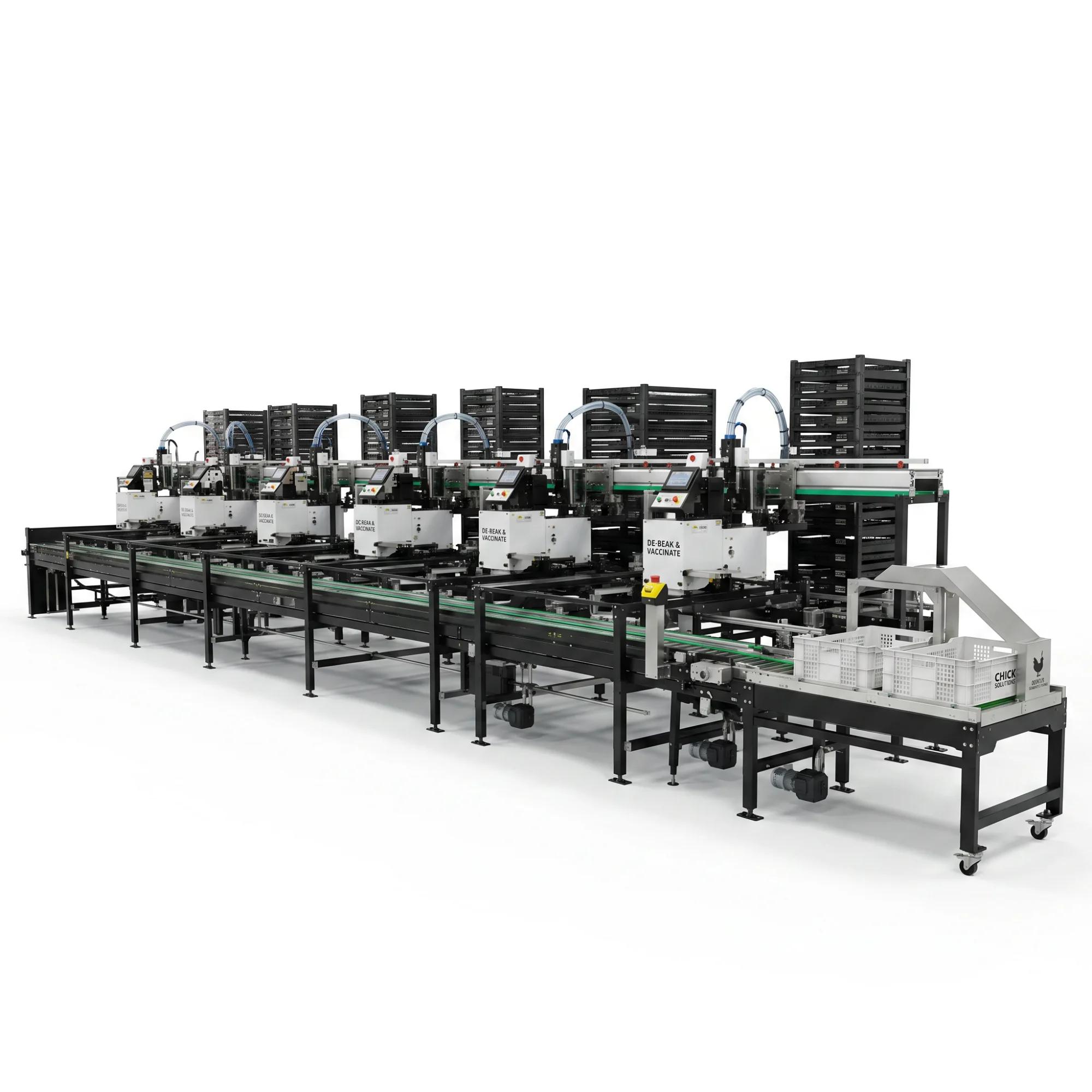
A chick conveying system communicates through more than screens and counters. At transfers, curves, accumulation points, drives, frames, and release positions, changes in rhythm can prompt useful questions. Plan a listening walk with seven marked stops.
Sound is not a diagnosis and should never encourage unsafe access. It is an observation that maintenance and production can connect to position, load, state, visible evidence, and approved inspection.
Before Listening, Define the Safe Route
Use the approved floor plan, operating instructions, risk assessment, and site rules. Mark permitted observation positions, hygiene boundaries, traffic, restricted areas, communication, and the person leading the walk.
Jili Intelligent presents conveying and stacking equipment through JuliSense. Final layout, load, speed, interfaces, guarding, controls, and operating conditions should be confirmed for the customer project.
Give every stop a location code
Use the same identifier on drawings, labels, controls, maintenance records, training, and the walk sheet.
Record the operating context
Note date, shift, representative load, route, staffing, recent work, current line state, surrounding equipment, and any approved temporary condition.
Stop One: Entry Rhythm
Listen to how crates or other approved carriers arrive and are accepted. Pair the rhythm with visible spacing, presentation, operator intervention, and upstream release.
During a chick conveying system audit, irregular entry sound may simply reflect planned batch variation. Record the condition before interpreting it.
Count repeated corrections
Note each re-presentation, adjustment, wait, or request for help. These actions may explain the sound and the true labor requirement.
Compare startup with steady flow
The first minutes can include preparation and correction that disappear later. Keep both observations.
Stop Two: The First Transfer
Transfers reveal alignment, guide condition, carrier variation, speed relationship, accumulation pressure, and interface ownership. Observe from the approved position without reaching into equipment.
Match sound to one visible event
Timestamp the sound and record which item, position, signal, and movement occurred. A general “noisy transfer” note is difficult to investigate.
Ask who owns both sides
Name upstream and downstream responsibilities for normal flow, blocked release, inspection, and restart.
Stop Three: Accumulation
Listen at the controlled buffer while observing occupancy, spacing, contact, release pattern, status information, and operator response.
Confirm the buffer rules
State its purpose, maximum occupancy, time or operating limit, owner, escalation, and downstream release condition.
Avoid treating noise alone as acceptance evidence
Use approved measurements, inspection, manufacturer information, and project criteria. Sound supports a question; it does not replace evidence.
Stop Four: Curve, Lift, or Change in Direction
Changes in direction may concentrate mechanical and flow effects. Record carrier presentation, speed, guides, visible movement, structure, and surrounding access.
For machinery risk assessment and risk reduction, ISO 12100 provides a general framework. Relevant laws, standards, risk assessments, and site procedures apply to the installed system.
Observe from two approved states
Where the test plan permits, compare an empty or low-load observation with agreed representative flow. Keep conditions clearly labeled.
Check the service envelope later
Do not open or access equipment during production observation. Plan any inspection under the approved maintenance and isolation procedure.
Stop Five: Drive and Support Structure
Maintenance may listen for a change from the established, documented baseline while observing permitted indicators. The finding should trigger an authorized check, not an improvised adjustment.
Build a baseline during commissioning
Record approved operating conditions, location, visible state, relevant measured data, and observations. A phone recording without context is weak evidence.
Link the baseline to maintenance documents
Reference the applicable inspection, lubrication, tension, alignment, fastener, or component procedure supplied or approved for the system.
Stop Six: Downstream Handoff
Observe whether the downstream system accepts work at a consistent rhythm or creates cycles of blocking and release. Pair sound with signals, buffer occupancy, and operator communication.
The chick conveying system may be functioning correctly while a downstream decision limits flow. Keep interface time separate from conveyor movement time.
Freeze one approved interruption
Use a safe simulation or controlled scenario permitted by the test plan. Record position, signals, current work, operator information, buffer state, permitted response, and restart authority.
Ask both roles to explain recovery
Differences between upstream and downstream explanations reveal a status, training, controls, or responsibility gap.
Stop Seven: Final Release
The route ends only when the customer-approved item or carrier has reached its defined release point with status understood. Observe staging, stacking where applicable, documentation, dispatch, and the next interface.
Listen after movement stops
An approved observation during idle state may reveal surrounding equipment or building sources that were incorrectly attributed to the conveyor.
Confirm what remains energized or active
Use the documented state and site procedures. Do not infer safety from silence.
Turn Sounds Into Inspection Requests
Use a disciplined record: location, timestamp, operating condition, observation, visible event, comparison with baseline, immediate permitted response, owner, and required follow-up.
| Sound-walk note | Useful next evidence |
|---|---|
| Change at one transfer | Alignment, guide, carrier, and interface inspection |
| Rhythmic change at accumulation | Occupancy and release timeline |
| New drive-area observation | Authorized maintenance checks and measurements |
| Sound only at high flow | Representative load and handoff evidence |
| Sound persists when idle | Source isolation under approved procedure |
Keep the language neutral
Write “repeated contact sound at T-03 during release” rather than declaring a failed component without inspection.
Give every request a closer
Define who reviews the evidence, which procedure applies, how the finding is classified, and what proves closure.
The U.S. Occupational Safety and Health Administration machine guarding resources offer another public reference for guarding awareness. The applicable local requirements and authorized site procedures govern the actual inspection.
Draw a Sound Map, Not a Noise Ranking
Place each observation on the controlled route drawing with location, time, state, and reference number. Avoid ranking locations by personal loudness impressions when no approved measurement method exists.
Layer the map with flow information
Add buffer occupancy, release pattern, representative load, and operator intervention. The chick conveying system map then connects sound to what the route was doing.
Mark what was not reproduced
An observation that disappears during a repeat run still belongs in the record with conditions and uncertainty. Do not invent a cause to make the map look complete.
Hold a Five-Minute Review at the Route End
Production states what changed in flow, maintenance identifies permitted follow-up, quality protects the record, and the supervisor assigns ownership. No one adjusts equipment merely to satisfy the walk.
Separate today from shutdown work
Some approved visual or data checks may occur during operation; other inspection needs controlled isolation and access. Put each action into the correct window.
Update the baseline carefully
Only replace the accepted baseline after authorized changes, comparable conditions, and documented review. This keeps the chick conveying system history useful across maintenance cycles.
Repeat the Walk After Cleaning and Maintenance
The sound environment and line state may change after access, cleaning, adjustment, part replacement, or reassembly. Repeat the same marked route under comparable approved conditions.
JuliSense outlines commissioning, training, and support discussions on its service page. Project documents should state the actual maintenance information, training, parts, and support scope.
Confirm restoration before production
Check tools, parts, guarding, area clearance, documentation, machine state, upstream and downstream readiness, and restart authorization.
Watch the first transfers
Assign an observer and define the evidence and stop condition before movement resumes.
Questions Buyers Can Ask During a Conveyor Review
Can sound prove a defect?
No. It can help locate and timestamp an observation that must be evaluated through approved inspection and evidence.
Who should join the walk?
Include production, maintenance, engineering, safety, quality, sanitation where relevant, and owners of upstream and downstream interfaces.
When should a baseline be recorded?
During commissioning and acceptance under clearly identified, agreed operating conditions, then maintained through controlled service records.
How can buyers discuss a route with JuliSense?
Use the JuliSense contact page to share the floor plan, carrier details, expected flow, interfaces, buffer rules, and service questions.
Listening Makes the Route Easier to Explain
A chick conveying system sound walk makes people slow down and connect position, state, flow, and responsibility. JuliSense can organize equipment and commissioning discussions around those seven stops. The value is not finding a dramatic noise; it is creating evidence that the customer team can understand and act on safely.