


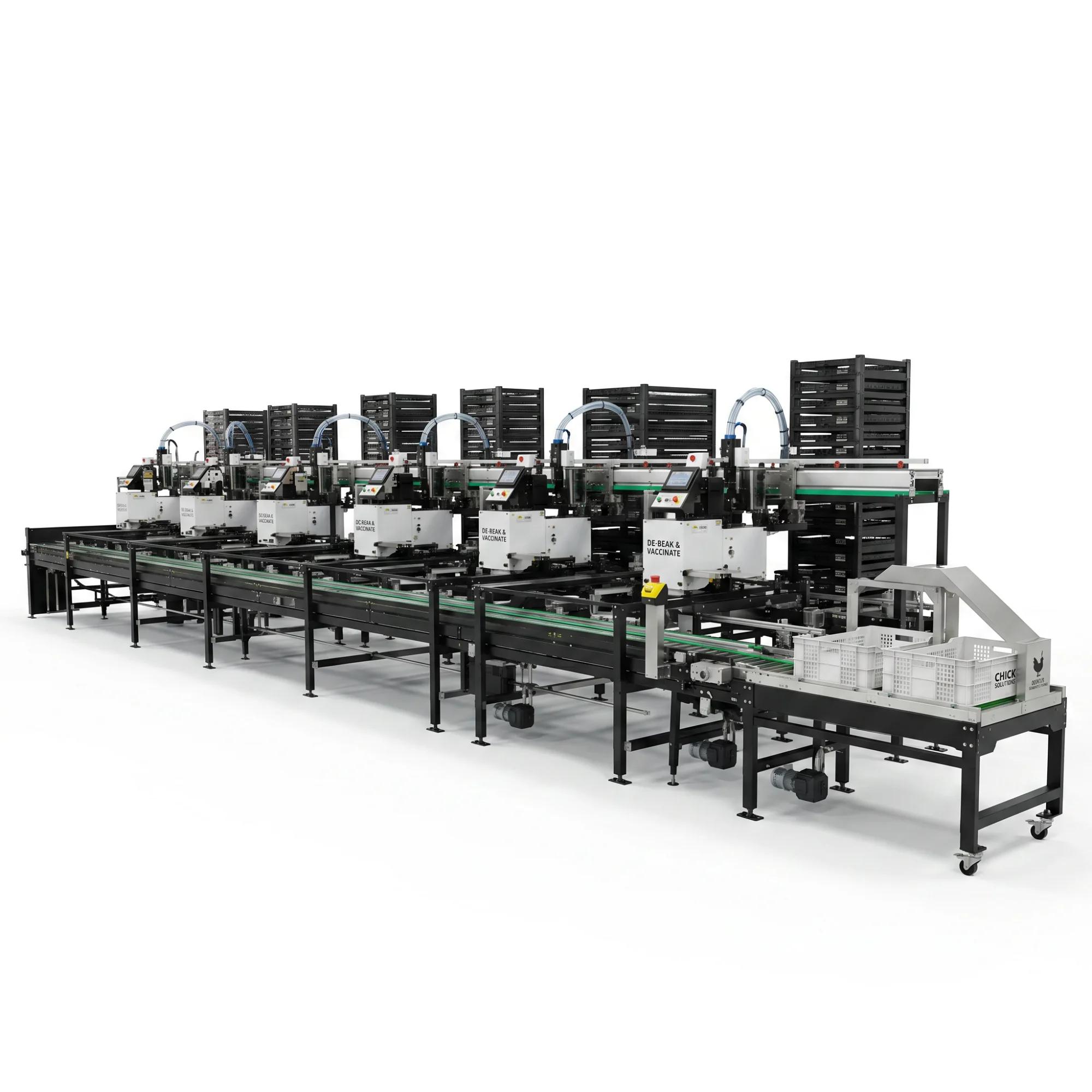
A chick crate conveying system recovery test should show more than whether a conveyor can move again. Prepare five sealed incident cards and open them one at a time: blocked release, missing downstream ready signal, crate presentation problem, access request, and restart after inspection.
Each card must be adapted to the actual risk assessment and approved test plan. The aim is to expose how people understand system state, protect current work, communicate, inspect, and authorize recovery.
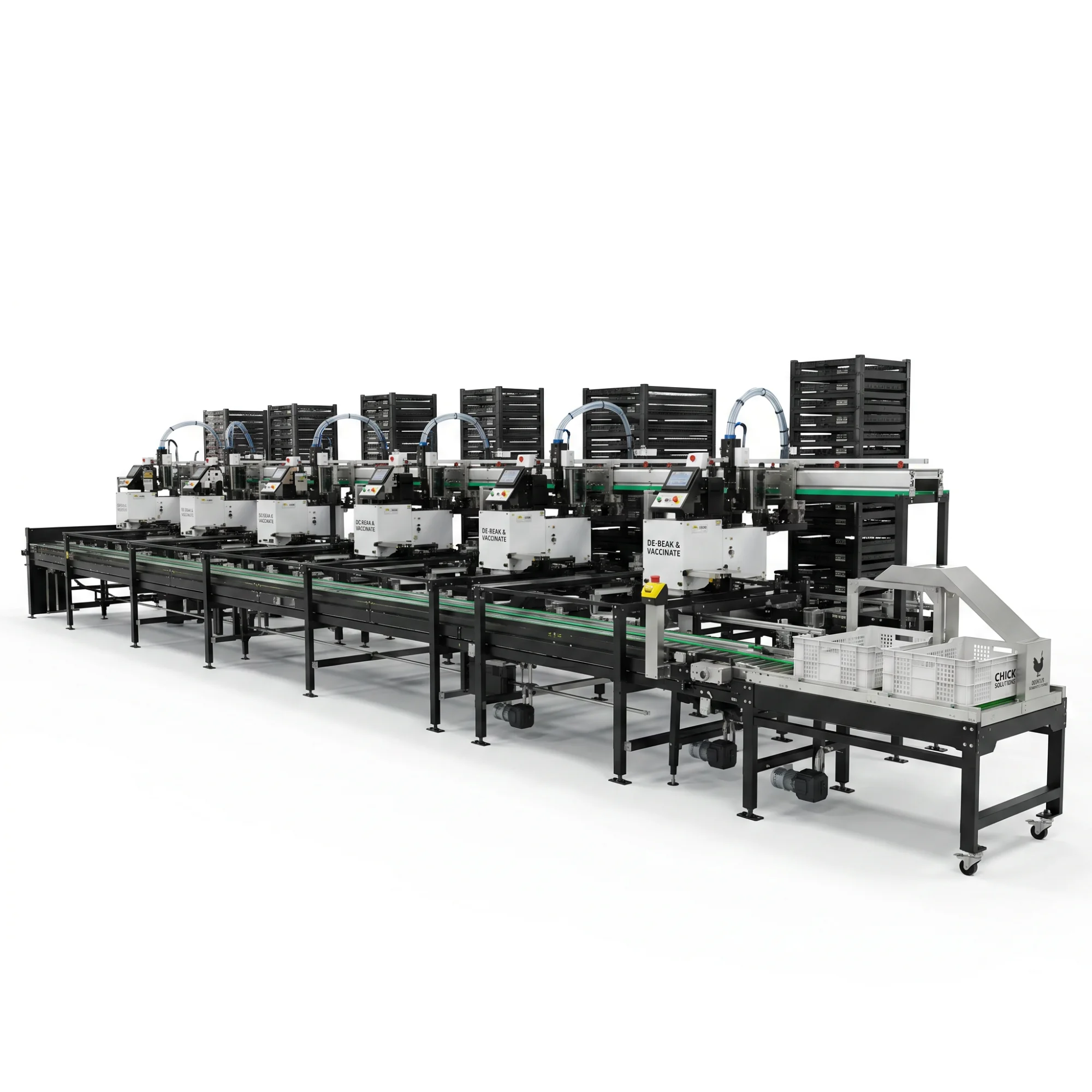
First Walk the Route With No Incident
Follow an empty or otherwise approved route from entry through every transfer, accumulation point, turn, lift, merge, inspection position, and release. Record ownership at each boundary and the information visible to the operator.
JuliSense presents Jili Intelligent conveying and stacking solutions for hatchery workflows. Final layouts, loads, speeds, interfaces, controls, and operating conditions should be confirmed for the project.
Number physical locations
Give every handoff and accumulation zone a short identifier that appears on drawings, controls, labels, test records, and training material. “The corner conveyor” is not precise enough during an incident.
Mark the observation points
Identify where production, maintenance, and supervisors can see the state without entering a restricted area or blocking normal work.
Card One: Downstream Cannot Accept the Next Crate
This card asks what happens when the release point is unavailable. The team should explain how the condition is detected, where crates accumulate, what limit applies, which information appears, and who controls the response.
During a chick crate conveying system recovery test, do not manufacture an unsafe blockage. Use the approved simulation or controlled method defined by the responsible engineering and safety teams.
Freeze before pressing reset
Record crate positions, signals, operator display, upstream state, downstream state, buffer occupancy, and active messages before anyone changes the condition.
Ask both sides to tell the story
The upstream and downstream owners should independently explain the same event. Differences reveal an interface, display, training, or authority gap.
Card Two: The Ready Signal Disappears
Physical space may be available while the control system correctly withholds transfer. The team should identify the missing condition, expected response, permitted checks, escalation route, and evidence required before restoring readiness.
For machinery risk assessment and risk reduction, ISO 12100 provides a general framework. Relevant destination standards, laws, risk assessments, and site procedures apply to the complete conveyor and its interfaces.
Separate diagnosis from authorization
Finding the cause does not automatically authorize movement. Name the person or role that confirms the system may progress to the next state.
Keep bypasses outside the test unless approved
Temporary overrides or bypasses require formal controls consistent with the applicable design, procedures, and risk assessment. They should never appear as an improvised shortcut to complete a demonstration.
Card Three: A Crate Reaches a Handoff Incorrectly
The third card examines detection and response to an approved presentation or alignment scenario. It should reveal where the crate is held, what the operator sees, how access is controlled, and whether neighboring equipment retains a clear state.
Define the protected work
Record the affected crate, nearby crates, any live process state, and the boundary that must remain still during inspection or correction.
Check the physical cause after the state is safe
Review guides, transitions, condition of the representative crate, loading assumptions, sensor view, accumulation pressure, and interface geometry within the authorized method.
Card Four: Maintenance Requests Access
A recovery design is incomplete if maintenance can diagnose the event only by reaching across equipment or asking production to improvise. The card follows the approved path from request to controlled access and return.
Walk the isolation and access boundary
Use the customer's procedures and the machine documentation. Confirm communication, responsibilities, access position, tools, removed items, housekeeping, reassembly, inspection, and release.
Measure the real service envelope
Open covers or service positions as permitted and compare them with adjacent equipment, walls, columns, traffic, stored items, and the posture required for the task.
The U.S. Occupational Safety and Health Administration machine guarding resources provide a useful public reference. Project decisions must follow the applicable local requirements and authorized site procedures.
Card Five: Restart After Inspection
The last card begins after the immediate issue has been addressed. It asks who confirms the route is clear, parts and guards are restored, current work is understood, upstream and downstream states agree, and production may restart.
This is the most important part of the chick crate conveying system recovery test because it joins technical recovery to operational authority.
Read the readiness call aloud
Use location identifiers and plain language. Each relevant role confirms its area or condition rather than relying on a general shout across the line.
Watch the first three transfers
Define who observes, what is checked, which evidence is recorded, and what condition would cause another controlled stop. Recovery is not complete at the first movement command.
Build a Five-Line Evidence Record
The record should be brief enough to complete during commissioning and precise enough to use later in training or troubleshooting.
For each chick crate conveying system recovery test, keep the facts, decisions, changes, and final approval together.
| Incident card | Evidence to retain |
|---|---|
| Blocked release | Positions, buffer limit, messages, ownership |
| Missing ready signal | Expected logic, permitted checks, authorization |
| Presentation issue | Protected state, access method, findings |
| Maintenance access | Control, tools, reassembly, inspection |
| Restart | Area confirmations, first transfers, release |
Timestamp decisions, not only alarms
Record when the event was noticed, when ownership was accepted, when access began, when checks finished, when restart was authorized, and when stable flow returned.
Attach the controlled references
Link the relevant drawing, location list, interface description, operating instruction, maintenance procedure, risk-assessment reference, training record, and open item.
Run the Cards With the Customer in Control
After supplier-led explanation, authorized customer personnel should lead the sequence. One operator narrates status and actions; maintenance explains access; the supervisor confirms communication and restart authority; quality records exceptions and evidence.
JuliSense outlines project discussion, installation, commissioning, training, and support on its service page. Exact responsibilities, attendance, language, test equipment, timing, and deliverables belong in the commercial agreement.
Do not coach through every silence
If the customer team cannot identify a state or owner without continuous supplier prompting, record the gap. That finding is more useful than a smooth but supplier-driven performance.
Repeat only after the change is clear
When a card reveals a problem, identify whether the correction affects design, controls, labeling, documentation, training, layout, or responsibility. Then repeat the relevant portion with the revision recorded.
Convert Results Into Handover Material
A chick crate conveying system recovery test should improve the material used after commissioning. Update the location map, event table, contact and escalation route, approved response, inspection checklist, restart confirmation, and training scenarios.
Which cards belong in routine training?
Use scenarios approved by the responsible customer teams that represent credible ordinary interruptions without encouraging unsafe intervention.
How long should each test take?
Set enough time to observe state, decisions, communication, access, and recovery. A fast result is not useful if the team skips evidence or authority.
What should be agreed before the supplier arrives?
Confirm the test plan, risk controls, participating roles, representative crates, surrounding equipment state, record format, stop authority, and acceptance criteria.
These agreements prevent the chick crate conveying system recovery test from becoming an improvised fault-finding exercise.
What information should a buyer send JuliSense?
Share the route, floor plan, crate specifications and condition assumptions, required flow, interfaces, buffer rules, control responsibilities, utilities, and expected acceptance evidence.
A Recovery Test Is Really a Shared Language Test
The value of a chick crate conveying system recovery test is not the drama of a stopped conveyor. It is the clarity of the response: everyone knows the location, state, protected work, allowed action, evidence, and person who authorizes movement.
JuliSense can organize equipment and commissioning discussions around those five cards. To review a project-specific conveyor route, use the JuliSense contact page and include the interfaces and recovery questions that matter to the customer team.