

Choosing chick handling equipment for hatchery projects is easier when the team walks the real route before comparing machines. Follow one representative batch from separation to the next approved process, then continue through boxing, conveying, stacking, and dispatch. Every handoff reveals a design question that a catalog cannot answer.
The route walk should not follow chicks alone. Containers, people, information, cleaning work, and exceptions move at the same time. A useful project map shows all five flows and where they compete for space, attention, or control.
Start at the First Uncontrolled Handoff
The first important point is often where a basket, tray, or incoming group becomes the responsibility of the chick-processing room. Record how it arrives, how identity is maintained, who releases it, what the operator must check, and where exceptions go.
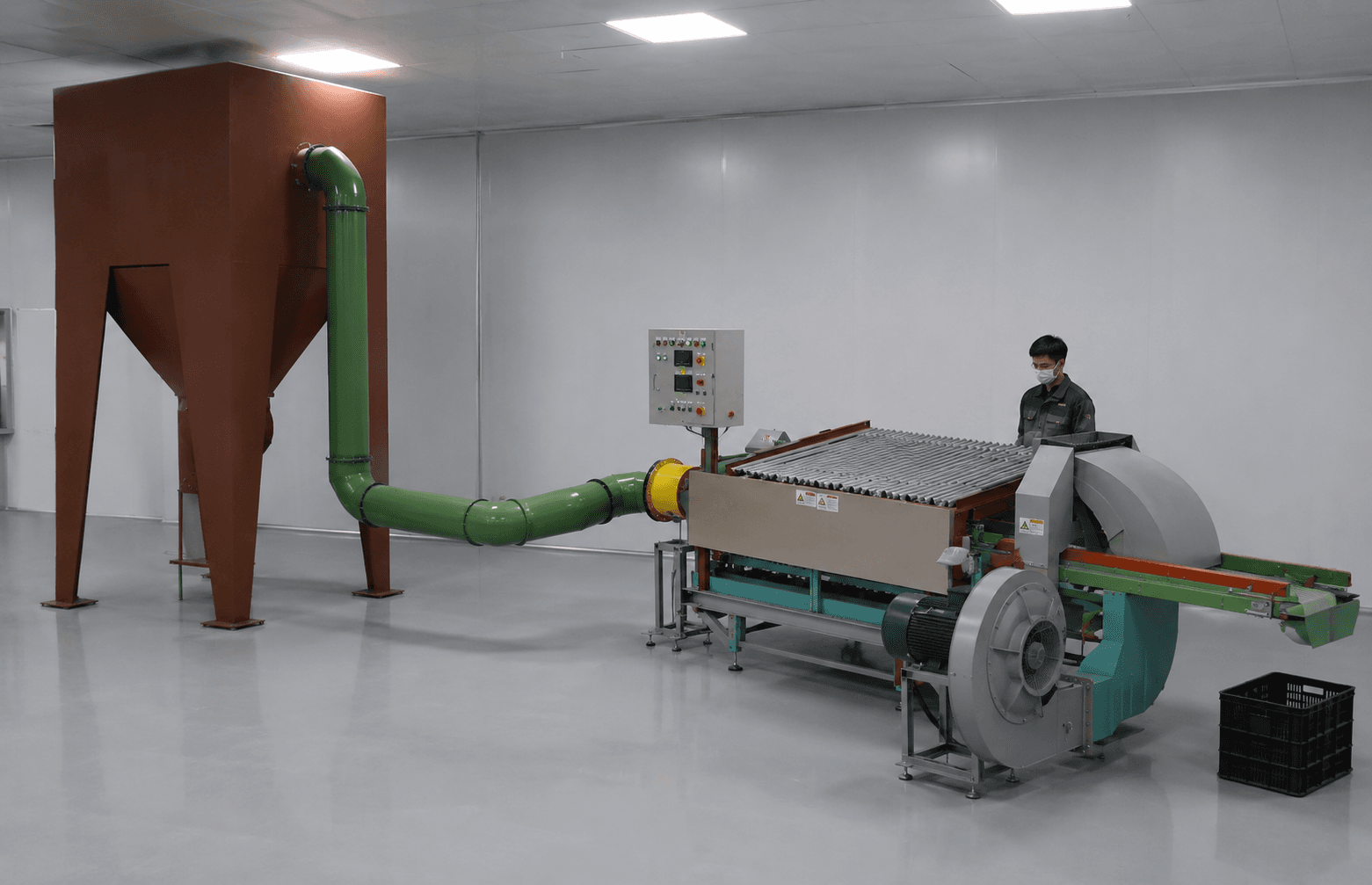
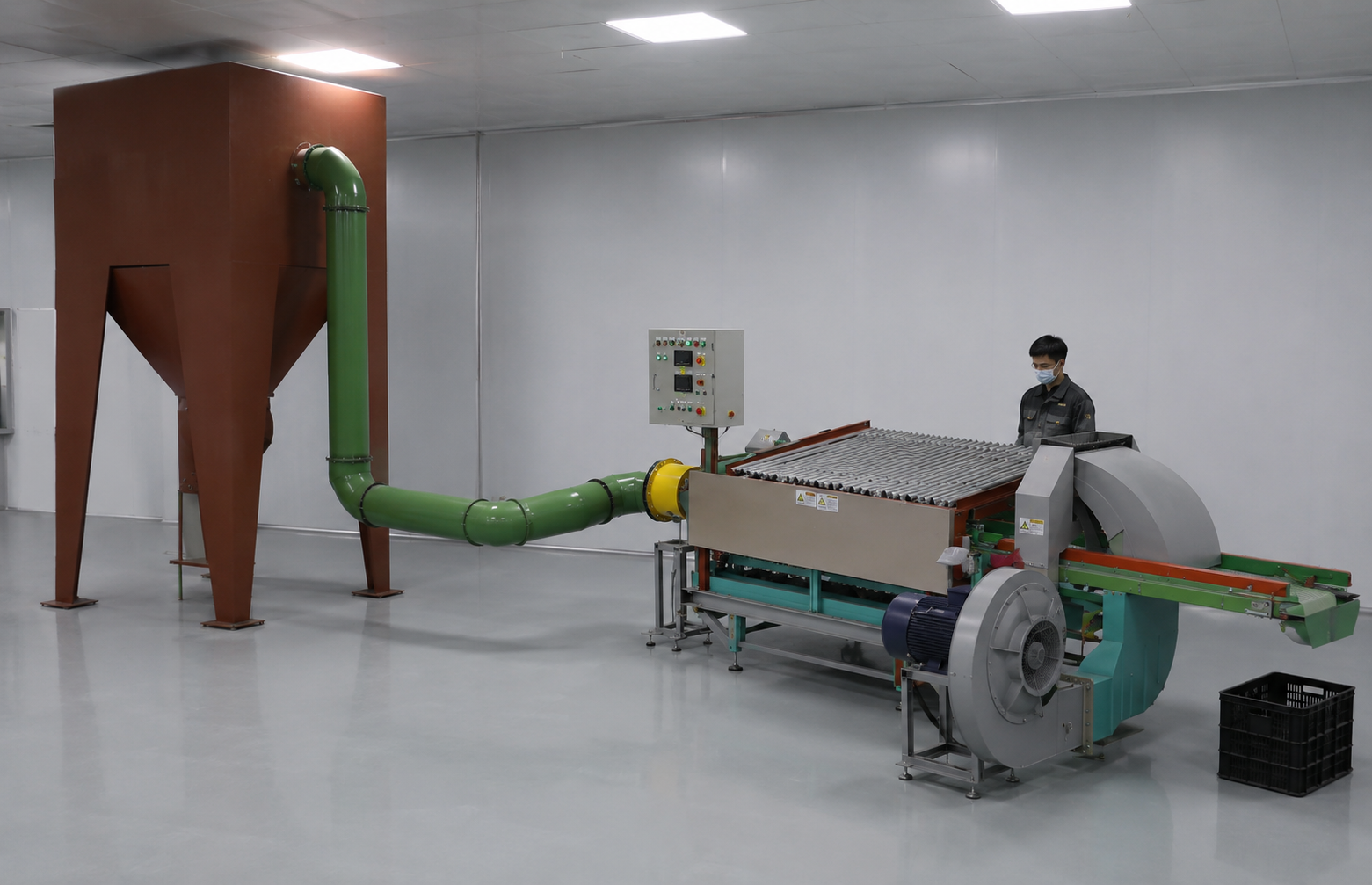
Jili Intelligent publishes a day-old chick picking and transfer machine. The equipment can support automated picking and transfer, but the project still needs to define incoming containers, approved handling, discharge, room layout, downstream readiness, and responsibility for unusual conditions.
When evaluating chick handling equipment for hatchery, begin with the handoff that currently creates waiting, repeated handling, unclear ownership, or inconsistent downstream supply. That point gives the equipment discussion a measurable purpose.
Flow 1: The Chick Route
Draw the chick route as a sequence of states rather than a line between machines. Mark arrival, separation, transfer, approved treatment or vaccination where applicable, checking, boxing, conveying, stacking, and dispatch.
At each state, ask:
- What condition allows the chick to move forward?
- What happens if the next station is not ready?
- Who can pause or redirect the flow?
- Which conditions require qualified technical review?
- How is the chick protected during a controlled interruption?
This route should reflect the customer's approved welfare and veterinary program. The supplier can explain equipment capability, but it should not make unsupported biological promises or define the customer's professional procedures.
The World Organisation for Animal Health Terrestrial Code provides internationally recognized animal-health and welfare standards. The final process must also meet applicable destination requirements.
Flow 2: The Container Route
Boxes, baskets, trays, and crates do not disappear when the chick moves. Record full and empty routes, orientation, accumulation, identification, cleaning status, stack rules, damaged-container handling, and the boundary with dispatch.
JuliSense offers a conveying and stacking line for connection with day-old chick processing. The proposal should state the included conveying, accumulation, loading, stacking, discharge, controls, and container assumptions.
A chick handling equipment for hatchery project can fail at the container interface even when the main machine performs correctly. Provide drawings, dimensions, samples, arrival variation, stack rules, and any damaged or mixed-container scenarios before the design is fixed.
Flow 3: The People Route
People need normal work positions, replenishment access, supervision, sanitation routes, maintenance clearance, and emergency movement. A narrow layout may shorten a conveyor while creating repeated crossing or blocking access to the equipment.
Walk the route with production, sanitation, maintenance, and engineering together. Ask each team to point out where it will stand, reach, place tools, remove parts, store supplies, and communicate during a stop.
Operator numbers should not be assumed from a drawing. Define the roles required for normal operation, peak periods, batch changes, exceptions, cleaning, and maintenance. Then confirm which roles are included in any supplier performance demonstration.
Flow 4: The Information Route
Physical automation without information ownership can create fast confusion. Decide what identity, count, approved program reference, status, exception, and release information must travel with the batch or container.
The information map should answer:
| Point | Information question |
|---|---|
| Infeed | What identifies the incoming batch and its approved route? |
| Processing | Which status or exception must be visible to operators? |
| Handoff | What confirms the next stage is ready and owns the work? |
| Boxing | What count, identity, or release information belongs with the box? |
| Dispatch | Which information must be retained or transferred? |
Confirm what the selected configuration records, displays, or exchanges. Do not assume that every data function exists simply because the equipment is automated.
Flow 5: The Cleaning and Maintenance Route
Cleaning and maintenance create movement in the opposite direction to production. Parts come off, tools enter, waste leaves, surfaces are inspected, and the station is released before work returns.
Map removal paths, clean and dirty areas, tools, parts storage, drying, access platforms, maintenance clearance, and lockout or site-control requirements. If a part can only be removed through an active production route, the layout needs further discussion.
For general machinery risk assessment and risk reduction, ISO 12100 offers a recognized framework. The installed project must also follow applicable laws, standards, and customer site requirements.
The JuliSense service page can support conversations about layout, integration, commissioning, training, and service. The final scope should state which procedures, documents, and support activities Jili Intelligent will provide.
Walk the Route Again During a Stop
Normal flow hides weak points. Repeat the route walk with one major station unavailable. Show where incoming work stops, where controlled accumulation exists, how the team communicates, which alternate route is approved, and who authorizes restart.
The stop map may change the choice of chick handling equipment for hatchery because it reveals the need for access, accumulation, isolation, or a different interface. It also helps the buyer distinguish essential project scope from optional future flexibility.
Do not create a bypass merely to keep production moving. Any alternate route must be technically appropriate, approved, documented, and compatible with the site's welfare, veterinary, quality, and biosecurity responsibilities.
Convert the Route Walk Into an RFQ
An effective RFQ includes more than target capacity. Send a marked layout, batch pattern, incoming and outgoing containers, approved process sequence, current waits, operator roles, information requirements, cleaning routes, stop scenarios, utilities, and future expansion goals.
This information lets a supplier configure chick handling equipment for hatchery conditions around a visible route instead of relying on a generic equipment package.
JuliSense focuses on intelligent automation equipment and integrated solutions for poultry hatcheries. The product range helps buyers see available modules, while the RFQ defines which modules and interfaces belong in the project.
Ten Route-Walk Questions
Where should the route walk begin?
Begin at the first handoff where the chick-processing room receives responsibility, identity, or physical control of the incoming batch.
Should the team follow only the chick route?
No. Map chicks, containers, people, information, and cleaning or maintenance movement because these flows interact.
How should peak periods be represented?
Map normal and peak patterns separately, including accumulation, operator roles, batch changes, dispatch pressure, and likely stops.
What container information does the supplier need?
Provide drawings, dimensions, samples, orientation, variation, stack rules, arrival pattern, damage scenarios, and cleaning status.
Who approves the handling procedure?
The customer's qualified technical owners approve the procedure. The supplier explains equipment functions, limits, and configuration.
What should happen when downstream equipment is not ready?
Define the controlled stop or accumulation point, ownership, communication, handling condition, maximum approved wait where applicable, and restart authority.
Why map operator routes?
Operator, sanitation, supervision, and maintenance access can reveal crossing, blocking, long reaches, unsafe positions, or insufficient clearance.
What data should move with the batch?
Define the identity, count, approved route, status, exception, and release information required at each handoff.
How should cleaning affect equipment selection?
Cleaning access, part removal, tools, dirty and clean routes, drying, inspection, and release should influence layout and interface decisions.
How can buyers request a route review?
Send the layout, process map, containers, observed waits, approved functions, stop scenarios, and destination through the JuliSense contact page.
The Route Is the Real Product Boundary
The right chick handling equipment for hatchery projects supports the complete route rather than optimizing one attractive machine in isolation. When chicks, containers, people, information, cleaning, and stops are mapped together, the buyer can see which modules and interfaces actually deserve investment.
Ask JuliSense to review the route before preparing the final equipment list. Jili Intelligent can then connect the relevant handling, treatment, conveying, stacking, and service discussions to the customer's real room and approved process.