


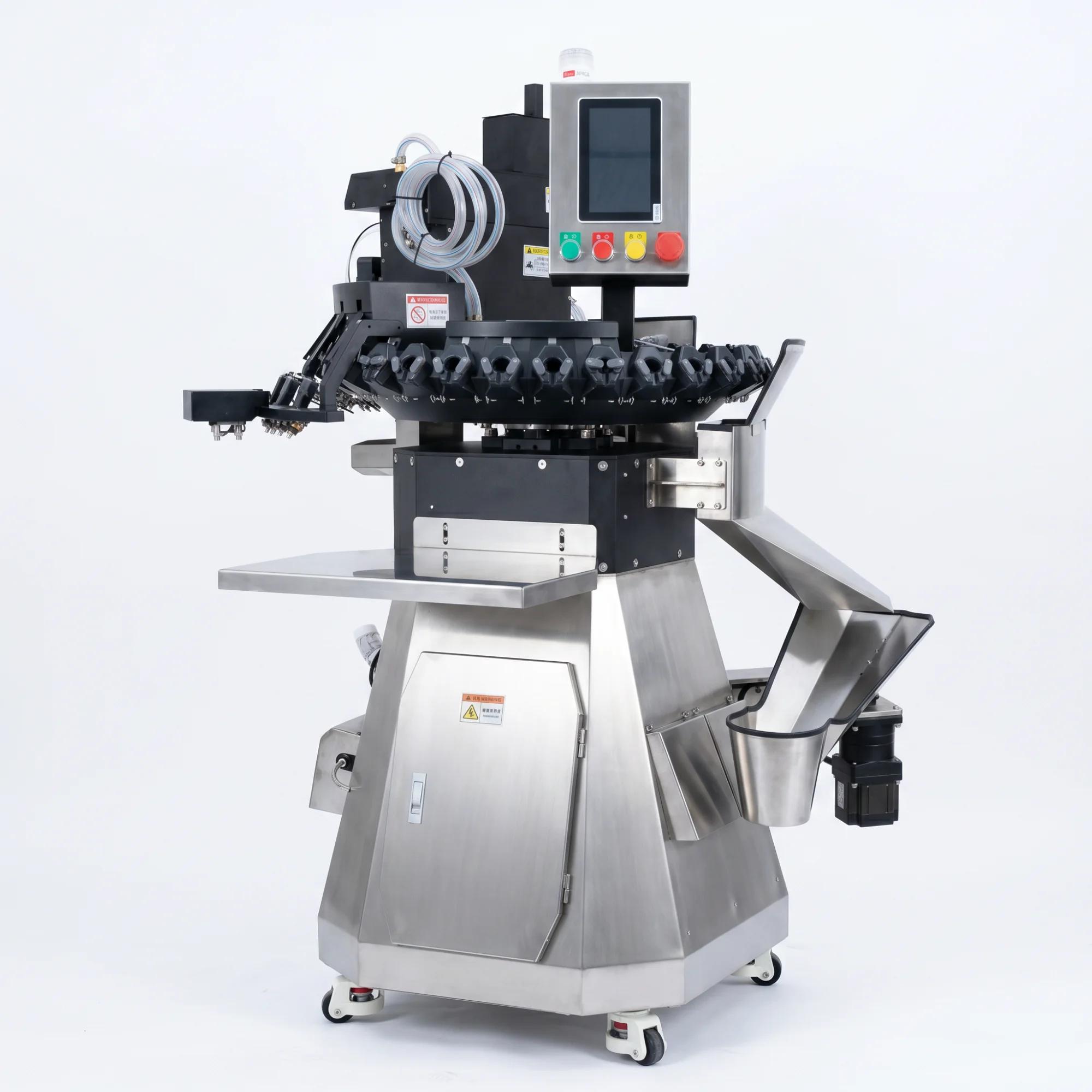
It is possible to buy a capable vaccinator and still create a difficult workstation. Chicks may arrive in uneven groups, operators may have to reach across one another, clean supplies may share space with used items, or crates may queue at the end of the line. None of those problems is solved by changing the injection setting.
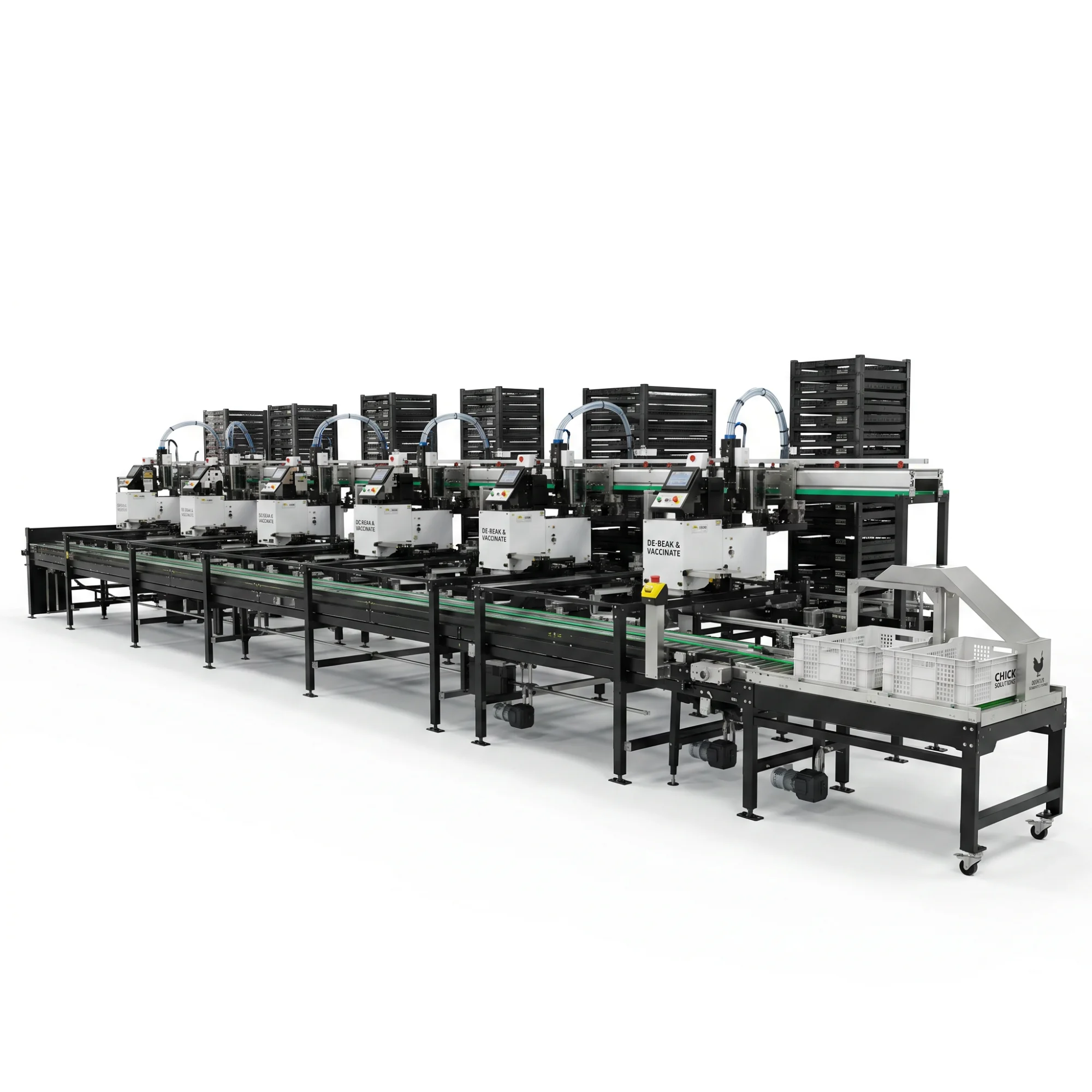
A chick handling and vaccination system should be designed as one operating sequence. The vaccination station matters, but so do presentation, operator position, buffers, conveying, replenishment, cleaning, crate movement, and the way the line behaves when one section pauses.
The veterinary procedure comes first. Vaccine choice, preparation, dose, route, and administration must follow the approved biological product instructions, veterinary direction, and applicable rules. Equipment planning begins after those requirements are defined.
Draw the Chick Route in Plain Language
Before discussing equipment, ask an operator to describe a normal batch from arrival to the next production step. Keep the first version simple enough to fit on one page.
For example:
- Chicks arrive from the previous process.
- An operator or handling device presents them to the station.
- The approved vaccination step is completed.
- The chick moves to inspection, counting, crating, or another treatment step.
- Full crates leave the station and empty crates return.
- Supplies are replenished and used items are removed.
- The station stops for changeover, cleaning, a fault, or the end of the batch.
Mark every handoff. A handoff is any point where responsibility, direction, speed, height, container, or control changes. Most line-integration problems appear at these boundaries rather than inside the main machine.
What Belongs Inside the System Boundary?
Different hatcheries will draw the boundary in different places. A focused replacement project may include only the vaccinator and a short connection. A new line may extend from chick presentation through treatment, conveying, crate loading, and stacking.
| Module | Question for the project team | Common planning risk |
|---|---|---|
| Chick presentation | How does each chick reach the operator or station? | Irregular arrival creates waiting or rushed handling |
| Vaccination | Which approved procedure must the equipment support? | Machine configuration is chosen before the procedure is fixed |
| Operator station | Where are hands, supplies, controls, and waste located? | Reaching and replenishment interrupt the work rhythm |
| Conveying | How does the next step receive chicks or crates? | Upstream and downstream speeds do not match |
| Buffer | What happens during a short stop? | Chicks or crates accumulate in an unsuitable area |
| Crate flow | How do empty and full crates move? | The operator becomes the transport system |
| Controls | Which device starts, stops, or blocks another module? | Each machine works alone but not as a line |
| Cleaning | What must be removed, reached, dried, and inspected? | Adjacent equipment blocks sanitation access |
JuliSense, the hatchery automation brand on this site, publishes a combined beak trimming and vaccination machine, day-old chick injection vaccinator, and conveying and stacking line. These products illustrate several modules that may be included. The quoted boundary should state exactly which of them are part of the project.
Vaccination Configuration Follows the Approved Procedure
Needle count, injection path, and station arrangement should not be selected because one option sounds more advanced. They should support the approved hatchery procedure with as little unnecessary complexity as practical.
Where one injection step is required, a single-path arrangement may be appropriate. Where the approved procedure calls for two separate injection steps at the station, a double-path configuration may be considered. The veterinarian and the biological product instructions define the procedure; the equipment supplier translates those requirements into a configuration.
Ask the supplier to identify:
- The exact offered vaccination configuration.
- Adjustable parameters and access permissions.
- The method for setup checks before production.
- Consumables and routine replacement items.
- Cleaning and changeover steps for each path.
- Alarm behavior and recovery after a stop.
- Documentation supplied for operator and maintenance teams.
For a closer comparison of two-path projects, review the JuliSense article on JuliSense.com about dual-needle chick vaccination machine integration.
Line Balance Is About Variation, Not One Speed Number
Brochures often show maximum output under stable feeding. A real hatch day includes batch starts, tray changes, replenishment, operator rotation, quality checks, cleaning, minor faults, and downstream pauses.
The useful question is not "How fast is the vaccinator?" It is "How does the complete line respond when arrival and departure are uneven?"
Record the following for several production cycles:
- Normal batch size and the largest batch.
- Time between batches.
- Number and duration of planned stops.
- Frequency of crate changes.
- Operator staffing by position and shift.
- Time spent waiting for upstream supply.
- Time spent waiting for downstream clearance.
- The longest acceptable accumulation at each buffer.
Use these observations to size the system. A faster core station may add little value if crates are unavailable or the downstream route is blocked.
Build a Sensible Stop-and-Recovery Sequence
Every line stops. Good integration makes the stop predictable and recovery clear.
Consider a downstream crate problem. Should the vaccination station stop immediately? Can a short buffer absorb the delay? Which operator receives the alarm? What must be checked before restart? Does the upstream conveyor continue feeding chicks into a blocked area?
The answers depend on the layout and approved handling practice, but they must be agreed. Ask for a cause-and-effect list that describes important events and the response of each connected module.
At minimum, discuss:
- Emergency-stop behavior.
- Guard or access-door events.
- Loss of utilities.
- Upstream starvation.
- Downstream blockage.
- Full-crate and empty-crate conditions.
- Operator pause and controlled restart.
- Alarm acknowledgement and reset permissions.
The existing chick conveying system layout guide provides additional questions for conveyor interfaces.
Operator Layout Deserves a Full-Scale Check
A drawing can show that equipment fits inside the room while hiding the fact that people do not fit around it. Mark the space needed for normal work, replenishment, crate handling, cleaning, maintenance, and emergency access.
Use tape on the floor or a simple full-scale mock-up. Place empty containers where supplies and used items would sit. Ask operators to walk through startup, a normal cycle, replenishment, a short stop, a fault response, cleaning, and shift handover.
Watch for details that are easy to miss on a screen:
- One person blocks another while changing supplies.
- A door or guard opens into an aisle.
- A crate must be lifted around the machine.
- The control screen is hidden from the working position.
- Clean and used items cross the same route.
- Maintenance access requires moving another module.
Small layout changes are inexpensive before fabrication and disruptive after installation.
Cleaning Has to Follow the Same Route as Production
Sanitation teams need their own process map. It should show the order in which the station is cleared, disassembled where required, cleaned under the approved program, inspected, dried, reassembled, and released.
Ask who is responsible for each boundary between the vaccinator, conveyor, work surface, crate area, and floor. If two suppliers provide adjacent modules, confirm that no gap, ledge, cover, or inaccessible space is left outside both cleaning instructions.
The equipment manufacturer should explain materials, access, removable parts, utilities, and compatibility information for the offered equipment. The hatchery's approved sanitation program determines cleaning agents, contact times, verification, and release. The manufacturer's quality-control information can be reviewed alongside the project-specific cleaning and inspection documents.
Plan Changeovers Before Choosing the Layout
A system that handles one fixed program may be arranged differently from a line that changes between chick types, batches, procedures, or packaging patterns.
List everything that changes:
- Machine settings.
- Vaccination path or related accessories.
- Consumables and supply containers.
- Crate type or orientation.
- Labels, counts, or production records.
- Operator instructions.
- Cleaning level and release checks.
Then measure the space and time needed. Changeover work should not depend on temporary storage in an aisle or on unlabeled items placed beside the station.
What to Test Before Shipment
The factory test cannot reproduce every hatchery condition, but it should prove the agreed functions and interfaces.
A practical FAT may include:
- Startup and controlled shutdown.
- Operator interface, language, and access levels.
- Normal movement through connected modules using representative test items.
- Upstream starvation and downstream blockage.
- Alarm, stop, reset, and restart behavior.
- Guard and emergency-stop functions.
- Changeover steps that can be demonstrated safely.
- Access for cleaning and routine maintenance.
- Document, spare-parts, and software-backup review.
- Punch-list ownership and closure evidence.
Site acceptance should then address the installed utilities, final interfaces, operator training, local workflow, and agreed commissioning checks.
RFQ Information That Produces a Better System Proposal
Send the supplier more than a target output. Include:
- Installation country and site conditions.
- Chick program and veterinarian-approved equipment requirements.
- Normal and peak hatch-day volumes.
- Batch pattern, operating window, and shifts.
- Current process map and desired future process.
- Room plan, doors, columns, drains, and clear heights.
- Existing upstream and downstream machines.
- Crate types, dimensions, and movement method.
- Utilities and local electrical requirements.
- Controls, interface, language, alarm, and data expectations.
- Cleaning and sanitation constraints.
- Training, commissioning, spares, and support scope.
- Required factory and site acceptance activities.
Ask the quotation to separate standard equipment, options, conveyors, controls, guarding, packing, freight, installation, commissioning, training, spares, and exclusions.
Frequently Asked Questions
Does an integrated line always improve output?
No. Integration helps when it removes a real bottleneck or reduces awkward transfers. If the constraint is batch scheduling, crate availability, cleaning time, or downstream handling, adding conveyors alone may not improve the complete shift.
Can an existing vaccinator be connected to a new conveyor?
Potentially. The project team must review height, presentation, speed range, controls, guarding, stop behavior, access, and cleaning boundaries. Supply drawings and operating details for an interface review.
Should the vaccination station control the whole line?
Not automatically. Control ownership depends on the process and risk assessment. The important point is a documented sequence that defines which module responds to each event.
How large should a buffer be?
There is no responsible universal size. Use observed stop duration, arrival variation, chick-handling requirements, available space, and the approved operating procedure. The buffer must solve a defined problem without creating another one.
What should the veterinarian review?
The veterinarian should define or approve the vaccination procedure and equipment-related requirements. The supplier should confirm how the proposed machine supports those requirements without selecting the biological product or treatment protocol.
Where JuliSense Fits the System
The JuliSense product range connects the two sides of this planning problem: treatment equipment and movement between stations. Its published products cover standalone injection vaccination, combined beak trimming and vaccination, and conveying and stacking, while the complete automation page presents a broader system view. This makes the brand relevant when a hatchery wants to discuss more than one isolated machine. The veterinary procedure remains outside the supplier's role, and the buyer should still confirm every included module, interface, control function, and service in the project proposal.
A Good System Makes the Work Easier to Repeat
The value of a chick handling and vaccination system is not found in the number of modules connected together. It appears when the approved procedure can be carried out with clear presentation, sensible operator positions, controlled stops, reachable cleaning areas, and a predictable route for chicks, supplies, and crates.
Send JuliSense the process map, room layout, batch pattern, vaccination equipment requirements, crate information, utilities, and desired project boundary through the contact page. Ask for a layout, interface list, stop-and-recovery sequence, FAT scope, and itemized quotation.
Reference Points
- USDA APHIS Veterinary Biologics provides regulatory information about veterinary biological products in the United States.
- WOAH international standards provide animal-health and welfare reference material. The installation country's requirements and approved product instructions remain controlling.
A Clearer Project Decision
A chick handling and vaccination system should have one visible process boundary. The chick handling and vaccination system needs a clear infeed and discharge. Review the chick handling and vaccination system with operators, technical owners, and maintenance. During FAT, the chick handling and vaccination system should show its stop and restart behavior. At shift change, the chick handling and vaccination system needs a readable status record. Before ordering, confirm the chick handling and vaccination system includes the required interfaces.