


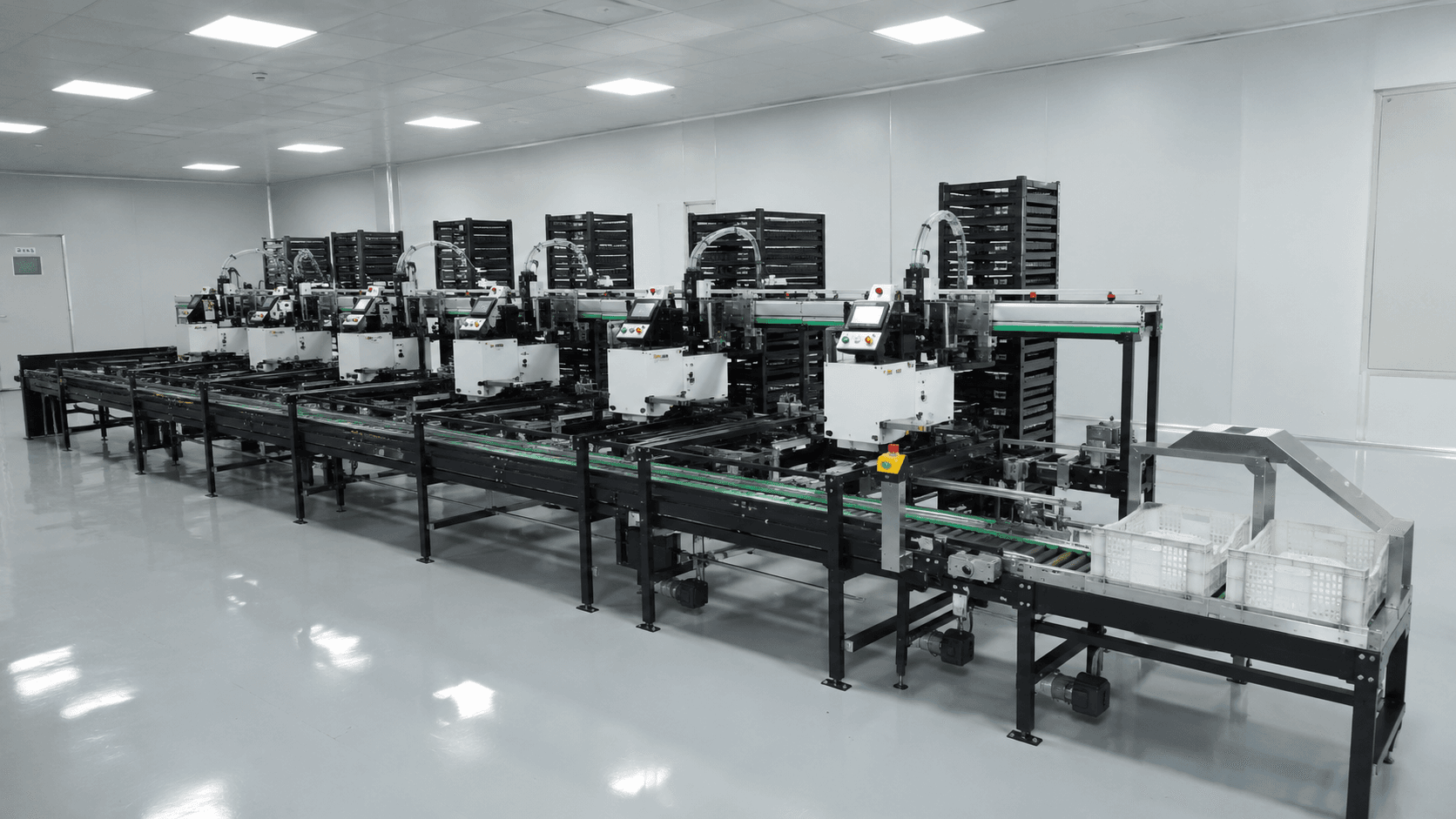
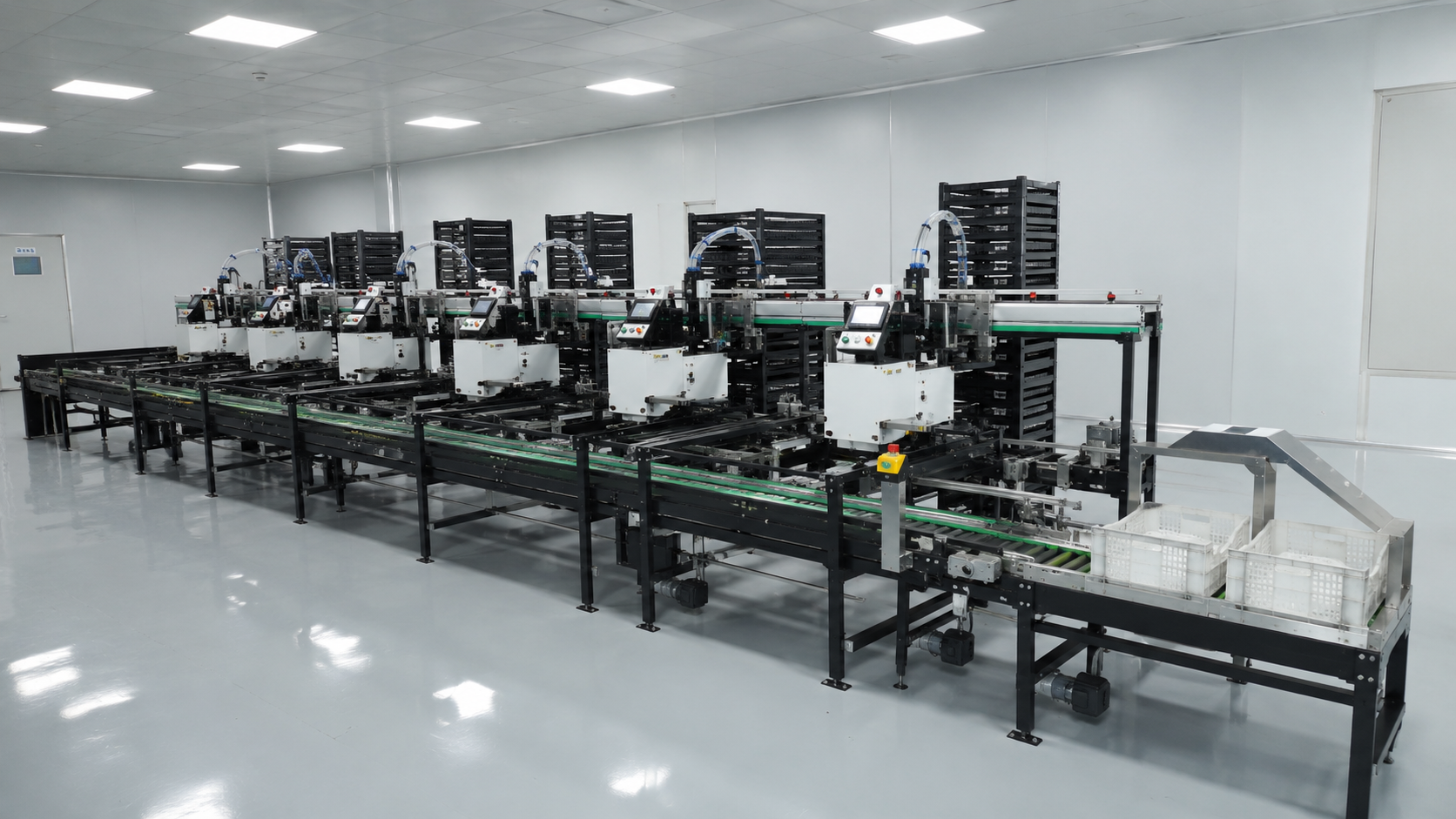
A chick picking and transfer machine is searched by hatcheries that want to reduce manual handling after hatching and make chick flow more predictable before downstream processing. The buying decision focuses on basket tipping, chick transfer, shell handling, boxing, and how the machine feeds the next station.
Jili material for automatic chick picking and transfer equipment references about 50,000-70,000 chicks per hour, 2-3 operators, about 8-10 seconds per basket tipping cycle, about 7.5 kW total power, and about 95% single-box chick accuracy. The matching product page is the Jili Day-Old Chick Picking and Transfer Machine.
Why Hatcheries Consider Picking and Transfer Automation
Manual chick picking and basket tipping can become a pressure point when daily chick volume increases. If the first handling stage is unstable, later beak treatment, vaccination, conveying, or boxing stations may wait or receive uneven flow.
Key Selection Criteria
- Confirm hatcher basket size and tipping method.
- Map egg shell, waste, and chick flow direction.
- Compare transfer output with downstream station capacity.
- Reserve space for 2-3 operators, cleaning, and maintenance.
- Prepare room drawings before asking for a final quotation.
Specification Snapshot
| Item | Reference from Jili material |
| Main function | Chick picking, transfer, basket tipping, shell handling, chick boxing |
| Capacity | About 50,000-70,000 chicks per hour |
| Operators | 2-3 operators |
| Single basket tipping | About 8-10 seconds |
| Power | About 7.5 kW |
| Single-box chick accuracy | About 95% |
How to Connect the Next Process
If the project includes downstream treatment or movement, buyers can compare the Jili Conveying and Stacking Line or Jili Complete Hatchery Automation Solutions. The transfer machine should be sized around the real output of the next station, the output shown on the specification sheet.
Common Buying Mistakes to Avoid
For a chick picking and transfer machine, the buyer's search intent is usually about high-volume handling before later processing. A weak quotation starts with a machine name only. A stronger quotation starts with hatcher basket size, tipping rhythm, shell handling route, chick boxing method, downstream flow, and the labor problem the hatchery wants to solve.
Buyers does not need to compare this equipment as if it were a vaccination or beak trimming station. Its value is in organizing chick movement at the start of the process. If transfer output is much higher than the next station, the line may still wait, so the downstream handoff matters as much as the headline capacity.
How to Turn the Search Into a Useful RFQ
Send photos or drawings of the current hatchery flow, hatcher basket dimensions, daily chick volume, shell handling method, and the next station after transfer. This information helps Jili discuss whether the transfer machine should work alone or connect with conveying, stacking, or a wider automation plan.
For buyer decision-making, this guide targets the questions buyers ask before contacting a supplier: how much flow the hatchery needs, where manual handling slows the line, and how the transfer point connects with downstream processing equipment.
Commercial Questions Buyers Often Ask
For chick picking and transfer machine, buyers need to connect machine capacity with the real hatchery flow. The important questions include hatcher basket size, tipping rhythm, egg shell handling, chick boxing method, downstream station speed, and how many operators will work around the transfer area. These details decide whether the equipment reduces handling pressure or only moves the bottleneck to another station.
A strong inquiry should include room photos, basket dimensions, daily chick volume, current manual process, shell and waste route, and the next process after transfer. With that information, Jili can discuss whether the transfer machine should operate alone or connect with conveying, stacking, beak treatment, or a wider automation plan.
FAQ
Where does a chick picking and transfer machine fit?
It fits near the start of day-old chick handling, before later processing, vaccination, conveying, or boxing steps.
What capacity does Jili material reference?
It references about 50,000-70,000 chicks per hour, depending on project configuration.
Why is downstream flow important?
A fast transfer machine can still create waiting if the next station is slower or poorly positioned.
What details improve an RFQ?
Send basket dimensions, daily volume, current manual process, floor plan, and downstream handling needs.
Which product page should this guide link to?
Use the Jili Day-Old Chick Picking and Transfer Machine page.