

A chick picking and transfer machine trial can look completely different depending on where the observer stands. The production manager watches flow. The welfare owner watches presentation and handling. Engineering watches interfaces. Maintenance watches access. Quality watches identity and records. Procurement watches whether the promised scope is actually present.
Give each observer a position before the trial starts. Then rotate them. When the group brings its notes together, the machine is judged as part of a real route rather than as a single moving mechanism.
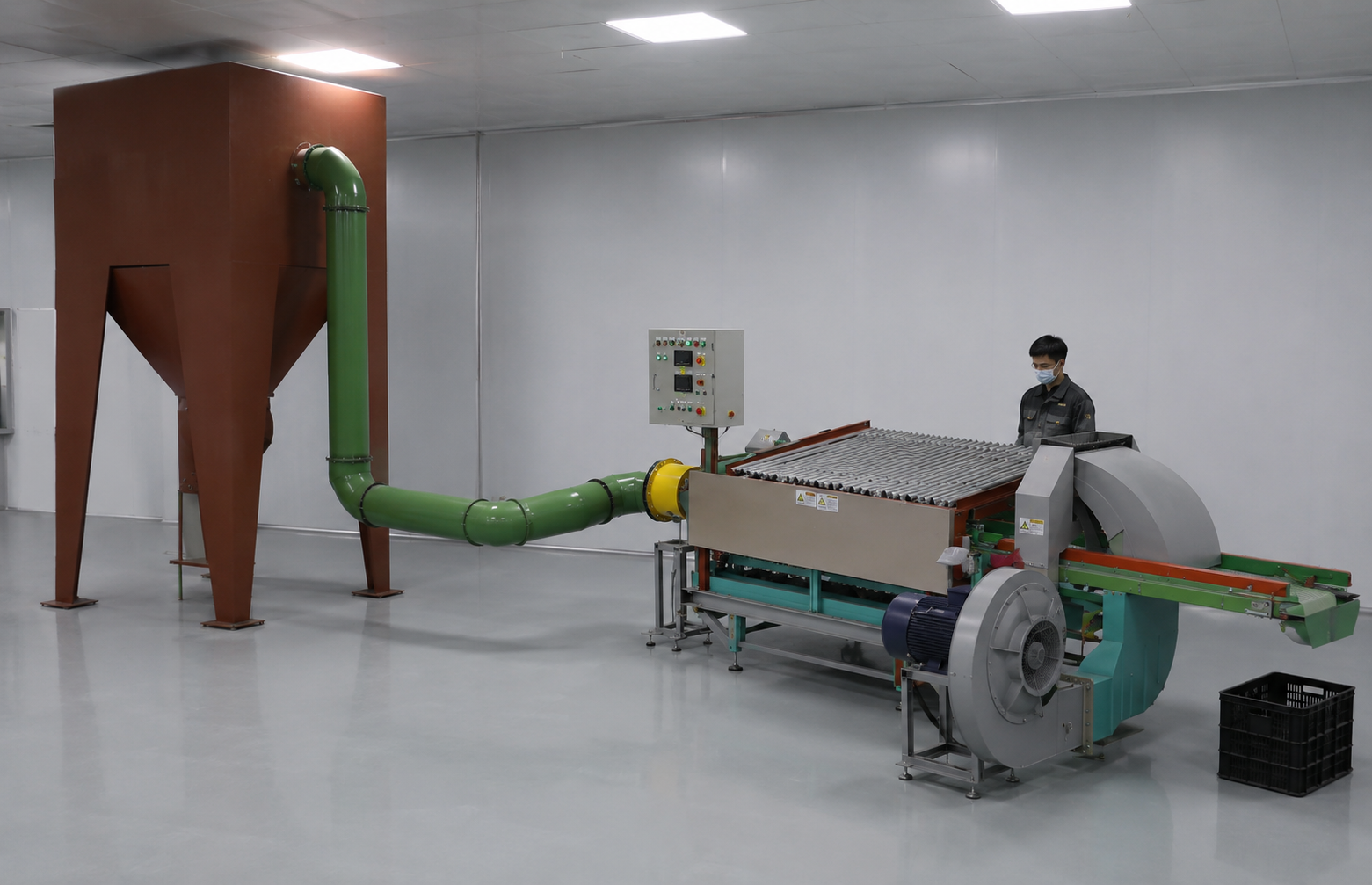
Observer One Stands Before the Machine
The upstream position shows how chicks and related handling units are presented to the equipment. Is the incoming flow representative? Does the operator need to correct orientation or spacing repeatedly? What happens after a brief upstream variation? Which checks occur before work enters the selected machine?
Jili Intelligent offers day-old chick handling and transfer equipment through the JuliSense product range. The final arrangement should follow the customer's approved welfare, production, sanitation, staffing, room, and destination requirements.
Count corrections, not only output
A system may maintain visible output because an operator quietly corrects many small issues. Record touches, re-presentations, waits, and repeated adjustments. These actions affect staffing, rhythm, and the apparent automation level.
Watch the first change
Include a representative container, batch, or operating transition permitted by the plan. The beginning of the change often reveals how much preparation and communication the normal process requires.
Observer Two Watches the Handoff
The handoff position connects upstream presentation to downstream transfer. This is where physical movement, control signals, timing, and responsibility meet.
This position helps the chick picking and transfer machine trial reveal whether one smooth motion is supported by a clear interface.
During a chick picking and transfer machine trial, ask the observer to describe exactly when ownership changes from one station or role to the next. If the answer is unclear, the project needs a better interface description.
Follow one chick route without touching it
Trace the intended path visually through the selected system. Note changes in orientation, support, waiting, and presentation. The customer's qualified welfare team should define the observations and acceptance criteria relevant to the application.
Follow one signal
Choose a ready, occupied, pause, or stop indication and trace what it means upstream and downstream. An interface is only useful when connected teams interpret the state consistently.
Observer Three Watches the Exception Point
Every project should have a defined route for work that should not continue normally. The exception point needs space, status, ownership, a next action, and protection from accidental re-entry into released flow.
The World Organisation for Animal Health Terrestrial Code provides internationally recognized animal-health and welfare references. Actual site procedures and criteria remain the responsibility of the customer's qualified owners under applicable requirements.
One exception should be planned
Use a representative, controlled example that the approved test plan permits. Observe how it is detected, communicated, routed, identified, recorded, and resolved.
The observer should watch the line response
An exception can affect more than one item. Does work continue, slow, wait, or stop? Where does current work remain, and who decides the next action?
Build the Chick Picking and Transfer Machine Trial as a Witness Route
Give every observer a small evidence card:
| Witness position | Evidence to capture |
|---|---|
| Upstream | Presentation, corrections, waiting, operator movement |
| Handoff | Physical transfer, state signals, timing, responsibility |
| Exception | Detection, separation, identity, owner, next action |
| Downstream | Placement, counting or routing, accumulation, release |
| Operator | Visibility, reach, permitted actions, escalation |
| Maintenance | Access, inspection, service position, parts information |
| Sanitation | Visibility, removal, tools, collection areas, reassembly |
After the run, ask observers to explain the same moment from different positions. Differences are useful. They show where information, training, or project ownership is incomplete.
Rotate observers before the second run
The production manager may notice an access issue from the maintenance position. Procurement may see an unpriced interface from the downstream position. Rotation prevents one department's view from becoming the whole acceptance story.
Bring notes together immediately
Do not wait until everyone travels home. Classify each observation as accepted evidence, clarification, open item, customer responsibility, or out-of-scope future improvement.
Observer Four Stands Downstream
The downstream observer watches where transferred work goes next. Is placement consistent with the agreed process? Can downstream equipment accept ordinary variation? Where does work wait during a short delay? Is identity maintained through the handoff?
JuliSense can discuss complete flows through its hatchery automation solutions. The project boundary should state which downstream equipment and interfaces are included.
A downstream pause belongs in the trial
Use an agreed controlled pause. Record current positions, the upstream response, information visible to operators, decision authority, and restart checks.
The end of the batch is not an afterthought
Follow the final part of the representative batch. It may create partial containers, different accumulation, an altered rhythm, or a handover to another role.
Observer Five Watches the Operator, Not the Machine
The operator's hands, eyes, and walking path reveal hidden work. How often does the person leave the normal position? Which information requires turning away? Are supplies, controls, and exception locations arranged clearly? Can another trained operator understand the same state?
For general machinery risk assessment and risk reduction, ISO 12100 is a useful reference. Apply the relevant requirements to the final machine, surrounding line, operating modes, people, and destination.
Ask the operator to narrate one minute
The explanation should include what the operator sees, what action is permitted, what is being checked, and which condition requires escalation. Plain language exposes ambiguous states quickly.
Ask a second operator to take over
A planned handover shows whether the process depends on one experienced person. Observe status communication, current work, settings, supplies, open issues, and restart ownership.
Observer Six Returns After Production Stops
Maintenance and sanitation often see the equipment after the most visible demonstration is over. Their review should include access, visibility, removal, tools, service positions, collection areas, reassembly, inspection, guarding, and the transition back to production.
Their evidence gives the chick picking and transfer machine trial a full lifecycle view from operation to the next approved startup.
The JuliSense service page describes design, integration, commissioning, training, and after-sales discussions. Exact service deliverables and commercial terms should be confirmed for each project.
Record access with the machine in the correct state
Do not infer access from a drawing alone. Under the agreed safe condition, let authorized teams inspect the positions they will use and record any unresolved need.
Close the route with a release
Name who confirms reassembly, inspection, sanitation status, guarding, and readiness before the next approved production start.
Ten Questions for the Witness Team
What incoming variation will be represented?
Agree the material, container, batch, timing, and operating variation relevant to the customer's intended use.
Who defines welfare observations?
The customer's qualified welfare and veterinary owners should define and approve the applicable criteria and evidence.
How many operator corrections occur?
Record corrections and repeated handling alongside output, stops, and waiting. They reveal hidden labor and process sensitivity.
What happens at the main handoff?
Define physical transfer, timing, states, waiting position, responsibility, and the response to downstream unavailability.
Where do exceptions go?
Use a separate visible route with identity, owner, next action, and protection from uncontrolled re-entry.
Which stop will be demonstrated?
Choose a controlled scenario permitted by the agreed plan, risk assessment, and supplier instructions.
Can a second operator explain the state?
Use a role handover to test whether controls, training, and documents are understandable beyond one experienced person.
What do maintenance and sanitation need to see?
Review inspection points, access, removable parts, tools, collection areas, guarding, reassembly, and release responsibilities.
Which evidence belongs in acceptance?
Use the approved configuration, witness notes, run conditions, videos where allowed, training records, documents, and open-item closure.
How can buyers arrange a JuliSense discussion?
Send the current process, room layout, expected route, upstream and downstream interfaces, destination, and trial goals through the JuliSense contact page.
A Better View Comes From Moving Around the Route
A chick picking and transfer machine trial is more useful when observers move beyond the best viewing position. Upstream presentation, handoffs, exceptions, downstream flow, operator work, maintenance access, and sanitation release each reveal a different part of project fit.
JuliSense can use the witness route to organize a customer-led evaluation. The final decision should rest on evidence that multiple teams understand, not on one smooth sequence watched from one convenient place.