


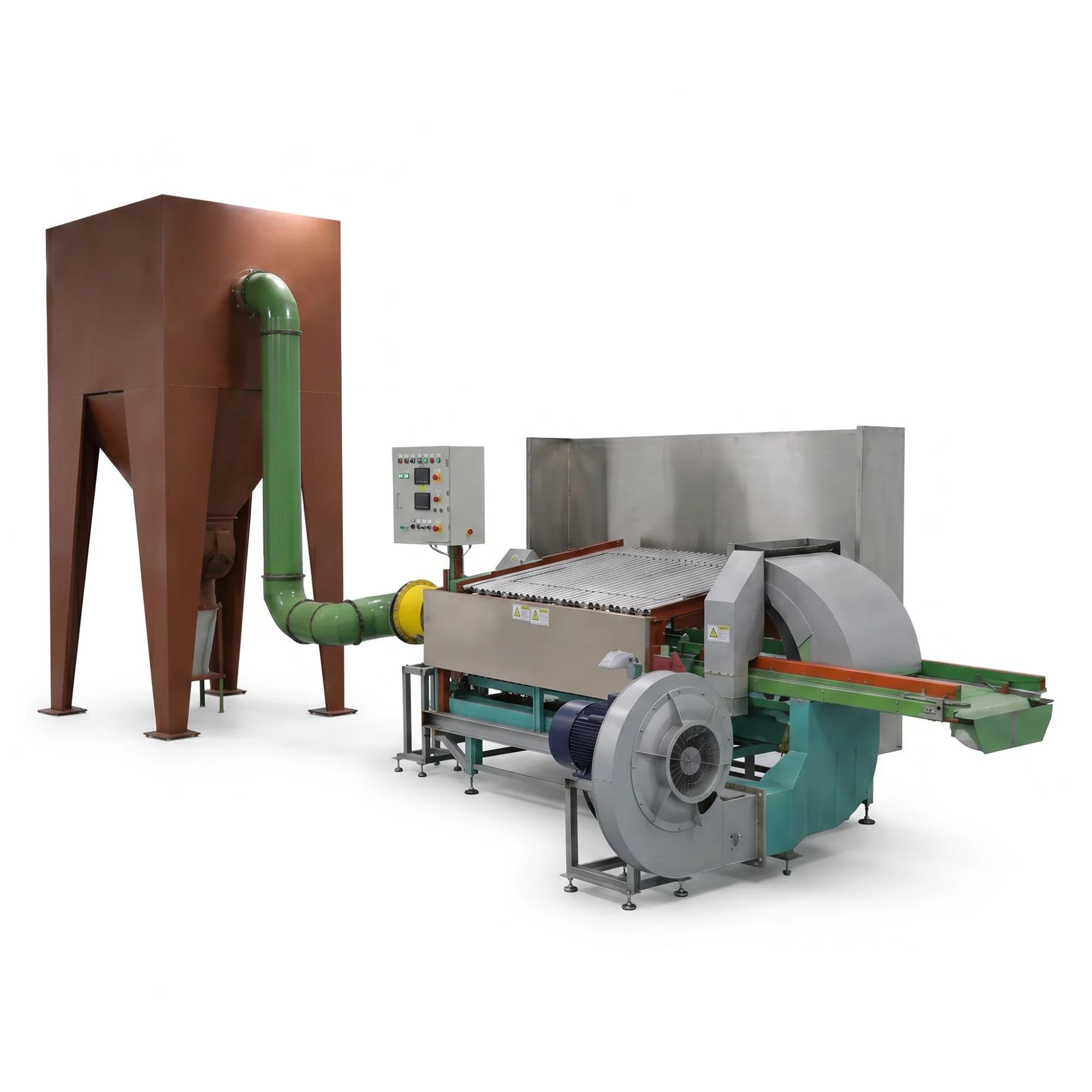
Two suppliers can look at the same hatchery and return quotations that differ sharply. One may include only the treatment stations. Another may include chick transfer, conveyors, crate handling, controls, factory testing, installation, and training. The totals are different because the projects are different.
There is no responsible universal chick processing line cost. The useful number is the cost of a defined line that can reach the site, connect to the building, pass the agreed tests, and enter production with trained people and the required spare parts.
Define the Production Outcome First
A line budget should start with what the hatchery needs to accomplish during a real shift.
Write down:
- Chick types and processes included.
- Normal and peak hatch-day volumes.
- Batch pattern and operating window.
- Current staffing and desired future staffing.
- Existing equipment to retain.
- New modules under consideration.
- Required product routes and crate flow.
- Cleaning and changeover expectations.
- Available room, utilities, and installation access.
- Planned expansion over the next project stages.
Do not begin with a target number of machines. Begin with the production route and the problem the investment must solve.
JuliSense, the hatchery automation brand on this site, uses its complete hatchery automation solutions page to show how separate modules can form a system. The final combination depends on the hatchery's process rather than a fixed package.
The Equipment Boundary Drives the Quotation
A day-old chick processing project may include only one treatment station or extend across collection, transfer, inspection, beak treatment, vaccination, conveying, counting, crate loading, stacking, and crate washing.
| Cost block | Possible contents | Scope question |
|---|---|---|
| Chick transfer | Collection, separation, presentation, transfer | Where does supplier responsibility begin? |
| Treatment stations | Beak treatment, injection, spray, or combined operations | Which approved processes and configurations are included? |
| Conveying | Chick and crate conveyors, turns, merges, and buffers | Which interfaces and lengths are in the price? |
| Crate handling | Loading, alignment, stacking, destacking, or return | Which crate types and stack patterns are supported? |
| Cleaning equipment | Crate washer and related handling | Are utilities and drainage included? |
| Controls | PLCs, operator interfaces, signals, alarms, and data | Is there one line control or several standalone panels? |
| Safety | Guards, access doors, emergency stops, and local review | Who supplies and verifies the final safeguarding? |
| Services | Engineering, FAT, installation, commissioning, and training | Which days, people, travel, and site tasks are included? |
Ask each supplier to mark inclusions and exclusions on the same process diagram. That one exercise can explain a large part of the price difference.
For module-level planning, buyers can review the day-old chick picking and transfer machine, the combined beak trimming and vaccination machine, the conveying and stacking line, and the automatic continuous crate washer. These pages help make the project boundary visible; they do not mean every line needs every module.
Capacity Changes More Than Machine Size
Higher required output may change the number of operator positions, parallel treatment stations, conveyor lanes, buffer zones, crate flow, control architecture, utilities, and room layout.
Capacity should be modeled around the peak operating window, not just the annual total. A hatchery with concentrated large batches may need a different arrangement from one with the same annual volume spread across more hours.
Provide:
- Largest batch and typical batch.
- Time available to complete each batch.
- Arrival pattern from the previous process.
- Planned stops, breaks, and cleaning periods.
- Changeover frequency.
- Staffing by shift and position.
- Crate supply and removal rate.
- Acceptable buffer and recovery assumptions.
Ask suppliers to state the assumptions behind their proposed capacity. A theoretical station rate is not the same as expected shift output.
Layout and Interfaces Create Engineering Cost
Straight lines in open rooms are easier to design and install than projects with columns, narrow doors, mixed floor levels, existing equipment, restricted ceiling height, long utility routes, or production that must continue during installation.
Engineering work may include:
- Site survey and measurement.
- General arrangement and interface drawings.
- Conveyor routing and support design.
- Operator and maintenance access review.
- Utility planning.
- Guarding and access design.
- Control sequence and signal definition.
- Installation staging.
- Local contractor coordination.
- Future expansion provisions.
Provide accurate site information early. A quotation based on a sketch may need significant revision after a detailed survey.
Standard Modules and Custom Work Should Be Separated
Customization is not automatically negative. A commercial hatchery may genuinely need a different height, route, crate interface, language, electrical standard, or connection to existing equipment. The buyer should understand which changes are standard options and which require project-specific engineering.
Ask the supplier to separate:
- Standard machine.
- Published or repeatable options.
- Layout-specific conveyors and structures.
- Electrical or control customization.
- New functionality.
- Customer-requested materials or components.
- Validation or documentation beyond the normal scope.
For each custom item, ask how it will be reviewed, tested, documented, and supported later. A small purchase-order change can create long-term spare-parts or software consequences.
Controls Can Be a Hidden Budget Difference
A set of machines with individual start buttons is not the same as an integrated line. Shared controls may coordinate start and stop sequences, buffers, alarms, recipes, counts, permissions, and production records.
Clarify whether the offer includes:
- Central or local operator interfaces.
- Signals between all connected modules.
- Cause-and-effect logic for stops and faults.
- User access levels.
- Alarm history.
- Production counting or batch records.
- Remote-support capability.
- Software backup and restoration files.
- Network hardware and site connections.
- Integration with third-party equipment.
Controls that are omitted from the first quotation may reappear later as site work or a change order.
Factory Testing Is an Investment, Not a Ceremony
Integrated equipment should be tested as a system wherever practical. Factory acceptance can identify control, alignment, access, and documentation problems before international shipping.
A stronger FAT scope may require temporary assembly, representative crates, test fixtures, extra engineering time, buyer attendance, video records, and correction work. Those activities have a cost, but they can reduce site uncertainty.
Agree on:
- Functions and interfaces tested.
- Representative items used.
- Operating scenarios and fault conditions.
- Acceptance criteria.
- Documents reviewed.
- Punch-list process.
- Evidence required before shipping approval.
For a phased project, confirm whether each phase is tested alone or with temporary simulations of future modules.
Freight, Packing, and Import Costs Need Their Own Lines
Large equipment quotations may exclude export packing, inland transport, port charges, ocean or air freight, insurance, duties, taxes, customs services, storage, unloading, and local delivery.
The Incoterm defines important responsibilities but does not replace a detailed logistics plan.
Ask for:
- Number and type of packages.
- Packed dimensions and weights.
- Container or transport assumptions.
- Protection for sensitive components.
- Lifting and unloading requirements.
- Delivery point under the quoted Incoterm.
- Items excluded from freight.
- Expected documents for import.
- Storage requirements if installation is delayed.
Check whether the site can receive and move the largest package through the available doors and aisles.
Installation Cost Depends on the Responsibility Split
The equipment supplier, local contractor, and hatchery team may divide installation work. Unless the division is written down, each party may assume another is providing cables, piping, supports, lifting, tools, or labor.
Use a responsibility matrix for:
- Unloading and internal movement.
- Equipment positioning and anchoring.
- Mechanical assembly.
- Electrical cables and termination.
- Pneumatic and other utility connections.
- Network connection.
- Guard installation.
- Local inspection or permitting.
- Consumables used during commissioning.
- Waste removal and final cleaning.
- Travel, accommodation, visas, and local transport.
Also define the condition the site must reach before supplier personnel travel. Waiting days can become a significant unplanned cost.
Commissioning and Ramp-Up Are Different Activities
Commissioning proves that the installed equipment and interfaces work. Ramp-up brings the line into stable production with real staff, batches, cleaning routines, and maintenance practices.
A quotation may include one but not the other.
Discuss:
- Number of commissioning days.
- Shifts covered.
- Operator and maintenance training.
- Production support during initial batches.
- Performance checks and their assumptions.
- Open-item closure after startup.
- Remote support after the team leaves.
- Additional day rates and travel rules.
Training should use the final machine, documents, and local operating roles. A classroom presentation alone does not prepare the team for stops, cleaning, and recovery.
Spare Parts and Consumables Belong in the Initial Budget
The first operating period should not depend on an emergency international shipment.
Separate the parts list into:
- Consumables used during normal production.
- Commissioning spares.
- Recommended operating spares.
- Critical long-lead components.
- Locally sourceable standard parts.
- Special tools and diagnostic items.
Ask for quantities, part numbers, lead times, storage requirements, and replacement guidance. Avoid buying a generic spare-parts percentage without knowing what is included.
Compare Total Ownership Questions, Not Invented ROI
It is reasonable to compare long-term operating implications, but avoid a payback claim built on weak assumptions.
Model the factors the hatchery can support with evidence:
- Labor positions and shifts affected.
- Planned maintenance hours.
- Consumables.
- Utility demand.
- Cleaning time.
- Expected spare-parts use.
- Technical support and travel.
- Production losses during planned and unplanned stops.
- Expected service life and upgrade path.
Use ranges and sensitivity cases. A low initial price can carry higher operating or support costs, while a larger integrated project may be unnecessary if a focused module removes the actual constraint.
Build a Bid Comparison Table
Place supplier proposals into the same headings:
- Process boundary.
- Equipment modules.
- Capacity assumptions.
- Layout and custom engineering.
- Controls and data.
- Guards and safety scope.
- Factory testing.
- Documentation.
- Packing and freight.
- Installation and local work.
- Commissioning and ramp-up.
- Training.
- Spares and consumables.
- Warranty and support.
- Schedule, payment, and exclusions.
Do not force every difference into one adjusted total immediately. First understand why the scopes differ and decide which scope the hatchery actually needs.
Information to Send With the RFQ
For a useful quotation, provide:
- Installation country and project site.
- Current process and desired process map.
- Chick programs and approved equipment requirements.
- Normal and peak volumes, batches, shifts, and operating window.
- Existing equipment retained or removed.
- Scaled room plan and installation access.
- Crate and tray drawings or samples.
- Utilities and local electrical requirements.
- Controls, language, alarm, data, and interface requirements.
- Cleaning, sanitation, and maintenance constraints.
- Required factory and site tests.
- Installation, commissioning, training, and ramp-up expectations.
- Preferred Incoterm and destination.
- Spare-parts policy and required support period.
- Planned future phases.
Frequently Asked Questions
What is the average chick processing line price?
An average is rarely useful because line boundaries vary widely. A single treatment station, a partially connected line, and a complete automated system are different investments. Define modules, capacity, layout, controls, services, and destination before requesting a price.
Which module usually costs the most?
It depends on the line. Core treatment equipment, conveying, crate handling, controls, customization, logistics, or site work can dominate different projects. Ask for an itemized proposal.
Is a turnkey quotation always more expensive?
Its first total may be higher because more interfaces and services are included. Compare the cost and risk of buyer-managed integration, local contractors, testing, and responsibility gaps before deciding.
Can the project be divided into phases?
Yes, if the first phase reserves the space, utilities, controls, and interfaces needed for later expansion. Ask the supplier to show the future connection points on the layout.
What information most improves quotation accuracy?
A clear process boundary, peak batch data, scaled site layout, crate details, existing-equipment interfaces, utilities, local requirements, and a written service scope remove many assumptions.
How JuliSense Fits the Budget Discussion
JuliSense's published range lets buyers discuss a processing-line budget module by module. JuliSense.com shows chick transfer, beak treatment, vaccination, conveying and stacking, crate washing, and complete automation. These categories clarify the project boundary, while configuration, layout, services, destination, and responsibility still determine the quotation.
Make the Budget Match the Line You Intend to Operate
Chick processing line cost becomes useful only after the project boundary is visible. Buyers should know which modules are included, how capacity is modeled, who owns each interface, what is tested, how the equipment reaches the site, and what it takes to begin stable production.
JuliSense provides equipment for chick transfer, treatment, vaccination, conveying, stacking, and broader hatchery automation. Send your process map, batch data, layout, crate information, utilities, installation country, desired modules, and service expectations through the contact page to request an itemized proposal.
Reference Points
- ICC Incoterms rules explain internationally used trade terms. The sales contract should identify the selected rule and named place.
- OSHA Machine Guarding provides general workplace machine-safety information. Local legal and site requirements still apply.
A Clearer Project Decision
Chick processing line cost is comparable only when the route is defined. The chick processing line cost model should separate equipment and site work. Review chick processing line cost with operations, engineering, and finance together. Ask how chick processing line cost changes when a module or interface changes. A useful chick processing line cost review includes testing, training, spares, and ramp-up. Before comparing chick processing line cost, review ISO 12100 and FAO poultry guidance.