


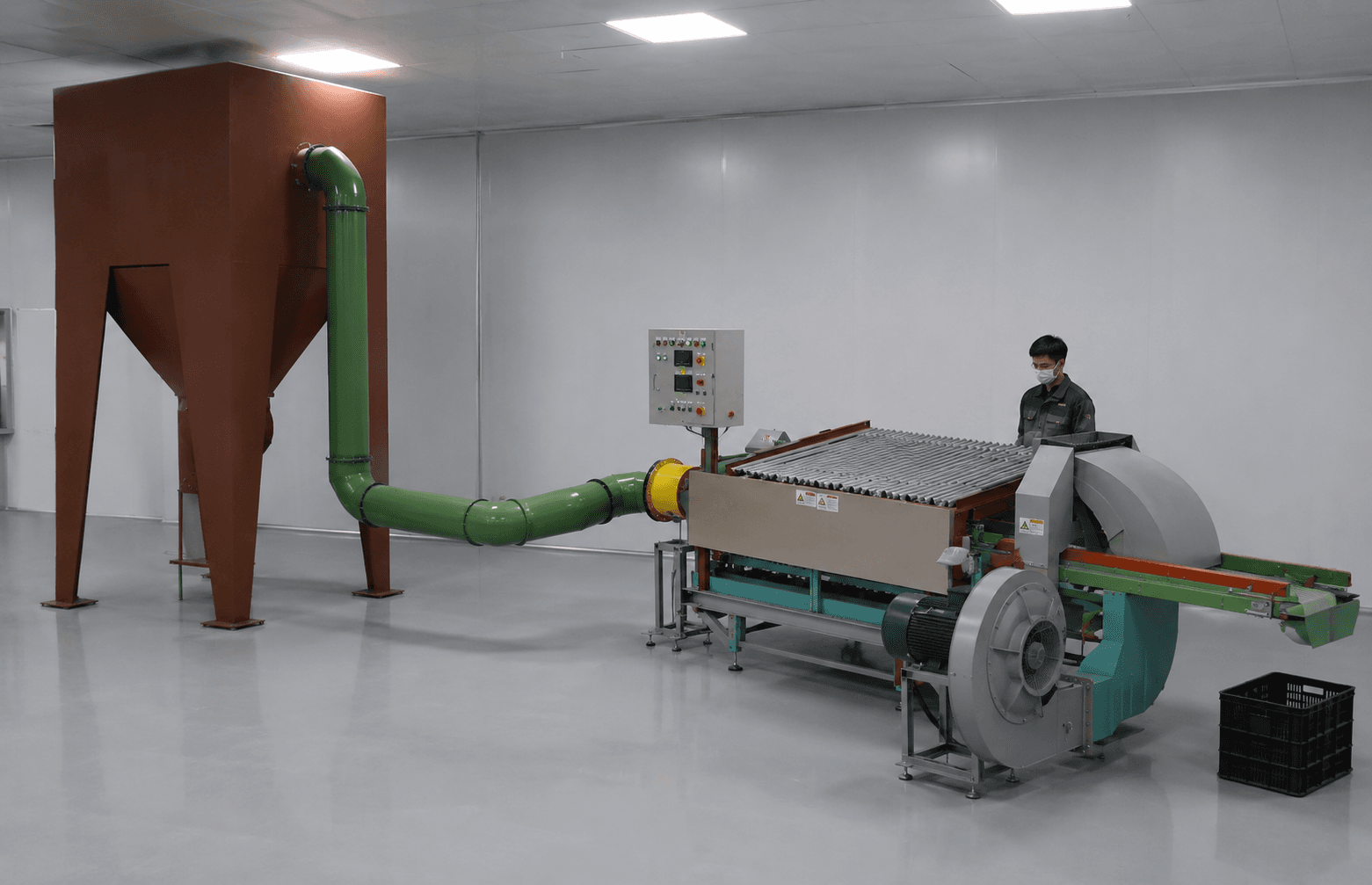
A chick separator and transfer machine is not judged only by what happens inside the equipment. Its value depends on four handoffs: how a batch arrives, how the hatchery defines separation, how chicks move onward, and how the next stage receives them.
Follow one representative batch through those handoffs before approving a layout. The journey exposes handling risks, operator work, container interfaces, stop behavior, and responsibilities that a product photograph cannot show.
Handoff One: A Real Batch Reaches the Infeed
The ideal demonstration begins with evenly presented, consistent containers. A working hatchery may deliver batches in bursts, with normal variation in trays, boxes, timing, and upstream clearance.
Measure the arrival pattern in short intervals. Identify container dimensions, orientation, weight, condition, and how the operator knows a unit is ready to enter. If several container types are used, provide samples and state which ones must run automatically.
The equipment should be designed around the approved presentation. It should not depend on operators correcting every orientation or spacing problem by hand. At the same time, no machine can compensate indefinitely for damaged containers or undefined upstream work.
Handoff Two: Separation Must Mean Something Specific
The word "separator" can hide different customer expectations. The hatchery must define what is being separated, at which point in the process, under which approved criteria, and what happens to exceptions.
Do not let the equipment supplier infer these decisions from a keyword. Production and the responsible animal-care team should describe the current method and desired flow. The supplier then explains what the proposed equipment can mechanically handle, what remains an operator decision, and how each output is identified and routed.
This protects both sides. The hatchery does not buy an assumed function, and the supplier does not make a biological or operational claim outside the agreed equipment scope.
Handoff Three: Transfer Must Preserve a Controlled Rhythm
After separation, chicks move toward treatment, vaccination, sorting, counting, box loading, or another approved stage. The transfer needs to deliver a rhythm that downstream equipment and operators can accept.
When the next stage pauses, the system needs a defined response. Where can incoming flow wait? Which area stops first? How does the operator see the affected zone? Once the problem is cleared, which module restarts first?
A larger buffer is not automatically safer. It may consume space, extend waiting, or hide a permanently slower downstream process. Buffering should be tied to measured short interruptions and an agreed recovery rate.
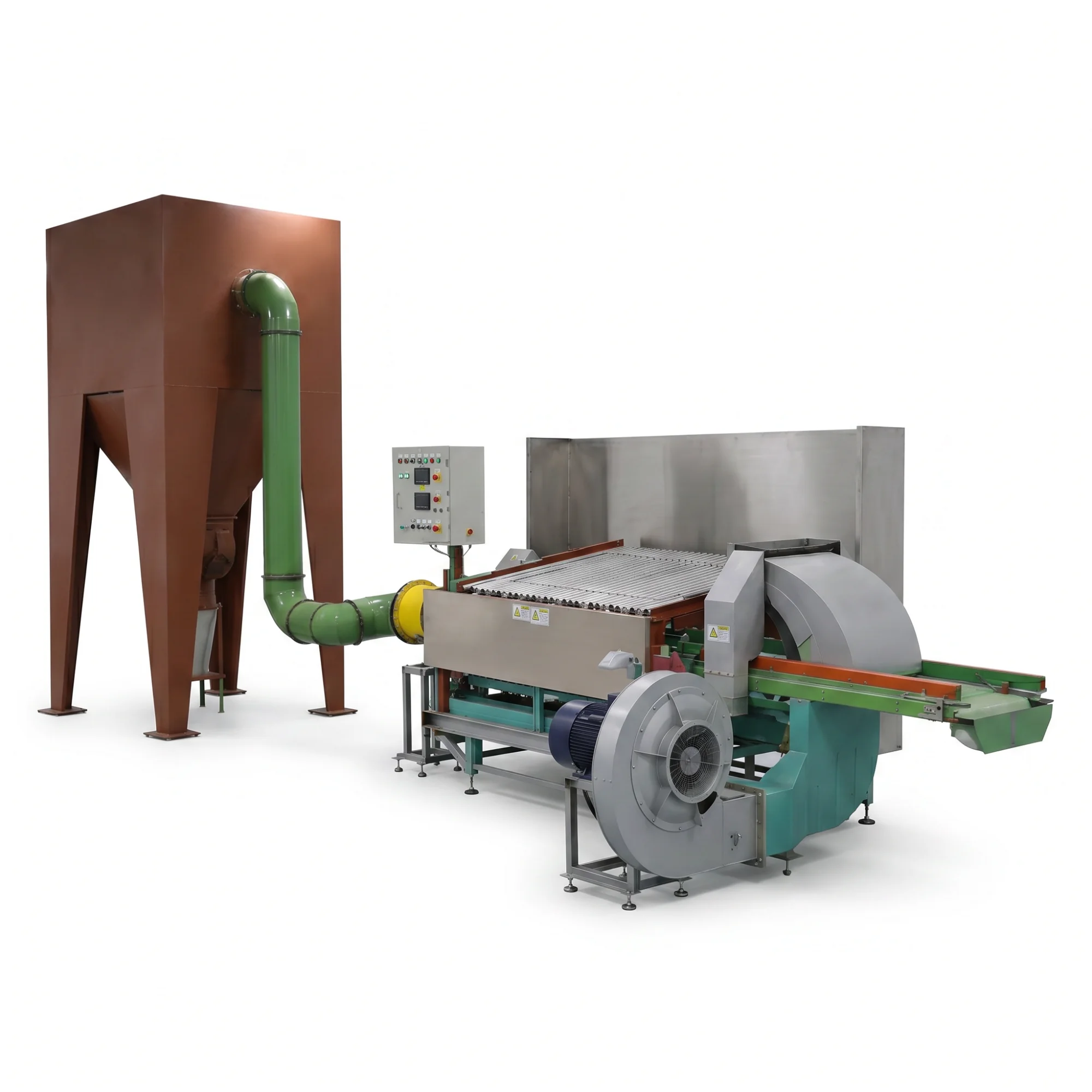
Jili Intelligent publishes a day-old chick picking and transfer machine for automated chick processing, picking, and transfer. The exact separation logic, infeed, outfeed, and connected stages still need to be defined in the project proposal.
Handoff Four: Downstream Must Confirm It Is Ready
A transfer is complete only when the next stage accepts responsibility. A clear ready/not-ready signal prevents the upstream area from continuing into a full or unavailable process.
For a chick separator and transfer machine, that downstream confirmation is part of the equipment job rather than an optional control detail.
Map the mechanical handoff and the information handoff together. The layout shows where chicks and containers move. The control sequence shows which signal authorizes movement, which alarm identifies a blocked area, and who owns recovery.
During factory acceptance, create an agreed downstream-not-ready condition and watch the complete cause-and-effect sequence. During site acceptance, repeat it with the real connected equipment and operators. Record the time needed to return to stable flow, not only the duration of the initial stop.
One Batch, Three Professional Views
Production sees timing, staffing, and throughput. Engineering sees containers, dimensions, controls, access, and utilities. The animal-care or responsible technical team sees approved handling conditions and exception decisions.
Review the same batch journey together. A route that is mechanically efficient may make observation difficult. A large accumulation area may help capacity on paper but conflict with the approved handling plan. An operator correction that seems simple may require repeated reaching or walking during every batch.
The design is ready when all three views can describe the same normal sequence and the same exception sequence.
What to Demonstrate Before Approval
Ask for representative containers and arrival spacing, normal operation, an approved misalignment or rejection scenario, downstream unavailable, clearing, restart, routine access, and end-of-batch cleaning preparation.
The test should identify which functions belong to the supplied equipment and which depend on customer procedures. It should also distinguish operator recovery from maintenance work and supplier support.
Where Jili Intelligent Fits
Jili Intelligent's product range connects chick picking and transfer with post-hatch treatment, vaccination, conveying, stacking, and broader automation. This supports a line-level discussion when the transfer cannot be designed in isolation.
The fit is strongest when the customer can provide real batch, container, layout, and downstream information. A generic request for "automatic separation" is not enough to define the correct configuration or acceptance test.
Frequently Asked Questions
Can a chick separator handle several tray or box types?
Possibly, after dimensions, geometry, orientation, weight, condition, guides, sensors, adjustments, and changeover have been reviewed and tested.
Is transfer capacity the same as complete-line output?
No. Complete-line output also depends on arrival peaks, separation work, downstream capacity, operators, stops, recovery, containers, and cleaning.
What should we send with the first inquiry?
Send batch data, the current separation method, approved handling requirements, container samples, room layout, upstream and downstream equipment, utilities, staffing, cleaning constraints, and expected supplier scope.
Approve All Four Handoffs
A chick separator and transfer machine should receive the real batch, support the defined separation job, deliver controlled flow, and stop or restart in coordination with downstream equipment.
Send Jili Intelligent your process map, batch arrivals, container information, layout, handling requirements, and connected equipment through the contact page. Ask the proposal and acceptance plan to follow one batch across all four handoffs.