


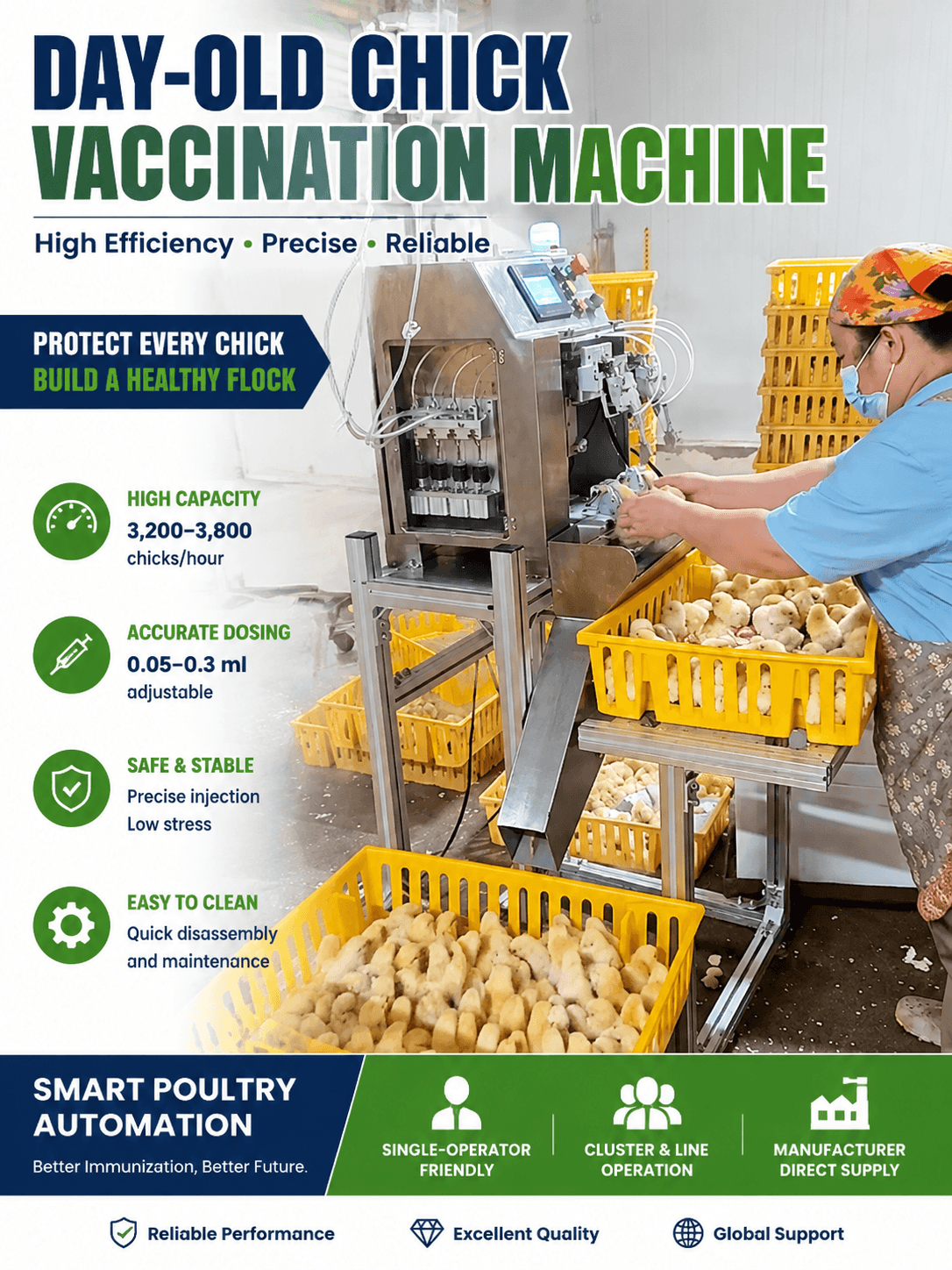
A chick vaccination machine acceptance test should include more than a smooth production demonstration. Normal operation proves that the planned sequence can run under controlled conditions. A carefully designed "failure day" proves whether people, controls, records, and responsibilities can respond when ordinary work does not follow the script.
This does not mean creating unsafe conditions or compromising the approved vaccination process. It means testing planned interruptions, missing inputs, role changes, unclear messages, and recovery steps before those events occur during real production.
First Agree on What Acceptance Means
Before selecting scenarios, identify the ordered configuration, intended application, approved process boundaries, staffing, containers, supplies, room assumptions, and supplier scope. The test cannot prove a project that has not been defined.
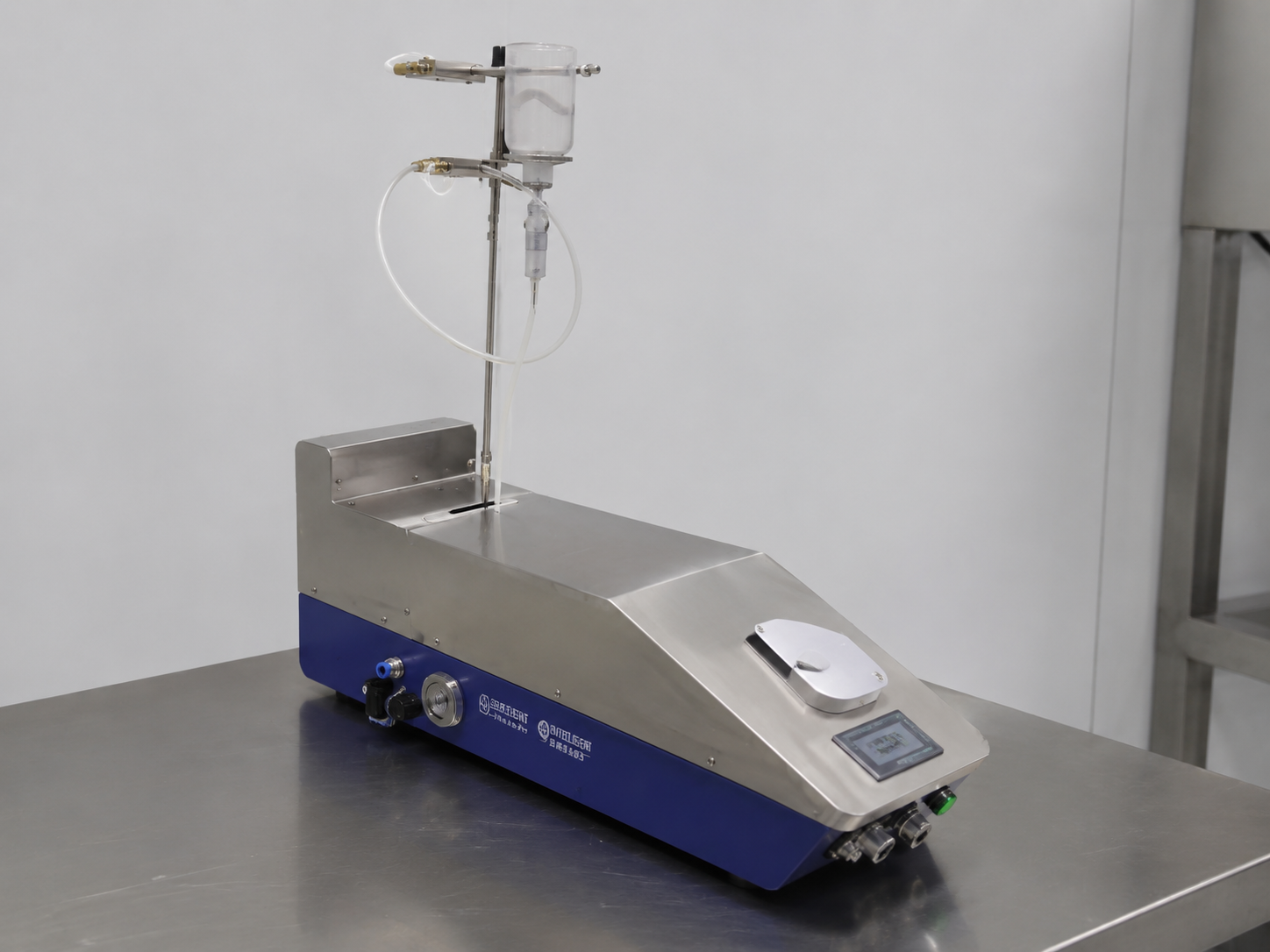
Jili Intelligent presents a day-old chick infrared beak trimming and vaccination machine and related equipment through JuliSense. Buyers should confirm whether the proposed vaccination function is standalone or integrated and which accessories, controls, and services are included.
Scene One: The Required Input Is Not Ready
The station is prepared, but a required input or container has not arrived at the agreed time. Observe whether the operator knows to wait, where work is protected, who is informed, and how readiness is reconfirmed.
This scene tests the upstream interface. It may reveal that staging, identification, communication, or role ownership is undefined. Record the response and decide whether the answer belongs in the layout, operating procedure, training, or project scope.
Scene Two: A Message Is Technically Correct but Operationally Unclear
Ask an authorized operator to respond to a representative message without help from the supplier's technician. Can the operator identify the current state and the permitted next action? Does the supervisor receive enough context? Can maintenance distinguish an operating issue from a technical fault?
The chick vaccination machine acceptance test should verify the agreed states, alarms, access levels, event information, and restart checks available in the selected configuration. A screen that displays data is not automatically a screen that supports a decision.
For machinery risk discussions, ISO 12100 provides a general framework for risk assessment and risk reduction. Final controls and procedures must reflect the machine, workstation, interfaces, and destination.
Scene Three: The Operator Changes Mid-Run
An operator change tests training and handover at the same time. The incoming operator should understand the active state, current batch context, supplies, recent events, open concerns, and who owns the next technical decision.
Observe whether the handover depends on memory or a repeatable record. If the new operator immediately needs informal coaching, identify whether the gap belongs to training, screen clarity, workstation design, or the handover method.
JuliSense can discuss training within the proposed service scope. The quotation should name the roles, content, documents, language, and completion evidence instead of saying only "operator training."
Scene Four: The Process Pauses for a Nontechnical Reason
Not every stop is a machine fault. Downstream unavailability, a late container, a supervisor check, or a planned quality hold can interrupt work. The test should show how the station pauses, how current work is handled, and what confirms readiness to continue.
This scene connects the machine to the room. It reveals waiting locations, communication, authority, container identification, and the boundary between a local pause and a wider production stop.
Scene Five: Cleaning Finds an Ambiguous Area
Ask sanitation to perform or demonstrate the agreed routine access. Then select one area that is difficult to see, remove, reach, inspect, or reassemble. The team should decide how the ambiguity will be resolved and documented.
A useful chick vaccination machine acceptance test evaluates the cleaning sequence, not just the visible material. Include tool control, temporary part placement, reassembly checks, visual inspection, drying assumptions, and release responsibility.
The JuliSense service page is a useful starting point for discussing commissioning, training, and support. The customer's sanitation, quality, and veterinary owners approve the actual site procedures.
Scene Six: The Supplier Is Asked for Evidence, Not Reassurance
At the end of each scenario, ask for the evidence that closes the issue: a drawing revision, screen description, training record, test result, manual section, parts list, responsibility statement, or agreed corrective action.
Use an open-item log with an owner, due date, evidence required, impact, and closure approval. A spoken promise during a busy test is difficult to manage later.
The World Organisation for Animal Health Terrestrial Code offers internationally recognized animal-health and welfare references. The customer's qualified owners must approve the applicable vaccination program and monitoring requirements.
Build a Test Day With Two Columns
Separate the test script into normal evidence and recovery evidence:
| Normal evidence | Recovery evidence |
|---|---|
| Preparation and release | Missing input or late container |
| Authorized program confirmation | Unclear message or alarm response |
| Representative operating sequence | Operator change and handover |
| Supply replenishment | Nontechnical production pause |
| Routine cleaning access | Ambiguous area and corrective action |
| Documents and training | Open-item ownership and closure |
This keeps the chick vaccination machine acceptance test balanced. The buyer sees both intended performance and the discipline needed when the process varies.
The final chick vaccination machine acceptance test record should also identify which observations are acceptance evidence, which remain training notes, and which require a commercial change before closure.
Do Not Let the Test Exceed the Contract
Acceptance is not a substitute for an undefined quotation. If the buyer expects a feature, interface, document, record, training session, or service that is not included, resolve the commercial boundary before the test.
Review the broader JuliSense product range, the company focus on About Us, and common project topics on the FAQ page. Then tie the test script to the ordered deliverables.
Ten Questions for the Acceptance Team
Should the test include maximum speed?
Only when the configuration, materials, staffing, conditions, method, duration, and pass criteria are agreed. Normal and recovery evidence remain necessary.
Who approves the vaccination program?
The customer's qualified veterinary or technical owners. The supplier explains equipment capability and controls within its scope.
What is a safe failure-day scenario?
Use controlled, preapproved interruptions that do not compromise welfare, safety, or the approved process, such as a late input or role handover.
Who should attend acceptance?
Include production, qualified technical owners, engineering, quality, sanitation, maintenance, procurement, and the supplier roles needed to close decisions.
What should be recorded for each scenario?
Record configuration, conditions, people, sequence, observed result, issue, owner, evidence required, due date, and closure approval.
Can a product video replace the test?
No. Video can support evidence, but it should be tied to the ordered configuration and a defined test method.
How should an operator change be evaluated?
Observe the handover of state, batch context, supplies, events, open concerns, and decision ownership without relying on informal coaching.
What cleaning evidence is useful?
Use the agreed sequence, access demonstration, removed-part control, reassembly check, inspection record, and responsibility for release.
When is an open item closed?
Close it only when the agreed evidence is received and the authorized owner confirms that the requirement is satisfied.
How can buyers plan acceptance with JuliSense?
Use the JuliSense contact page to share the application, configuration, room, expected scenarios, documents, training needs, and destination.
Test the Recovery Before You Need It
A strong chick vaccination machine acceptance test does not celebrate a perfect demonstration and ignore every interruption. It gives the buyer evidence that normal work, communication, recovery, sanitation, records, and commercial responsibilities have been considered together.
JuliSense can use a two-column test script to prepare a more relevant factory or site discussion. A planned failure day is valuable because it turns future surprises into present decisions.