


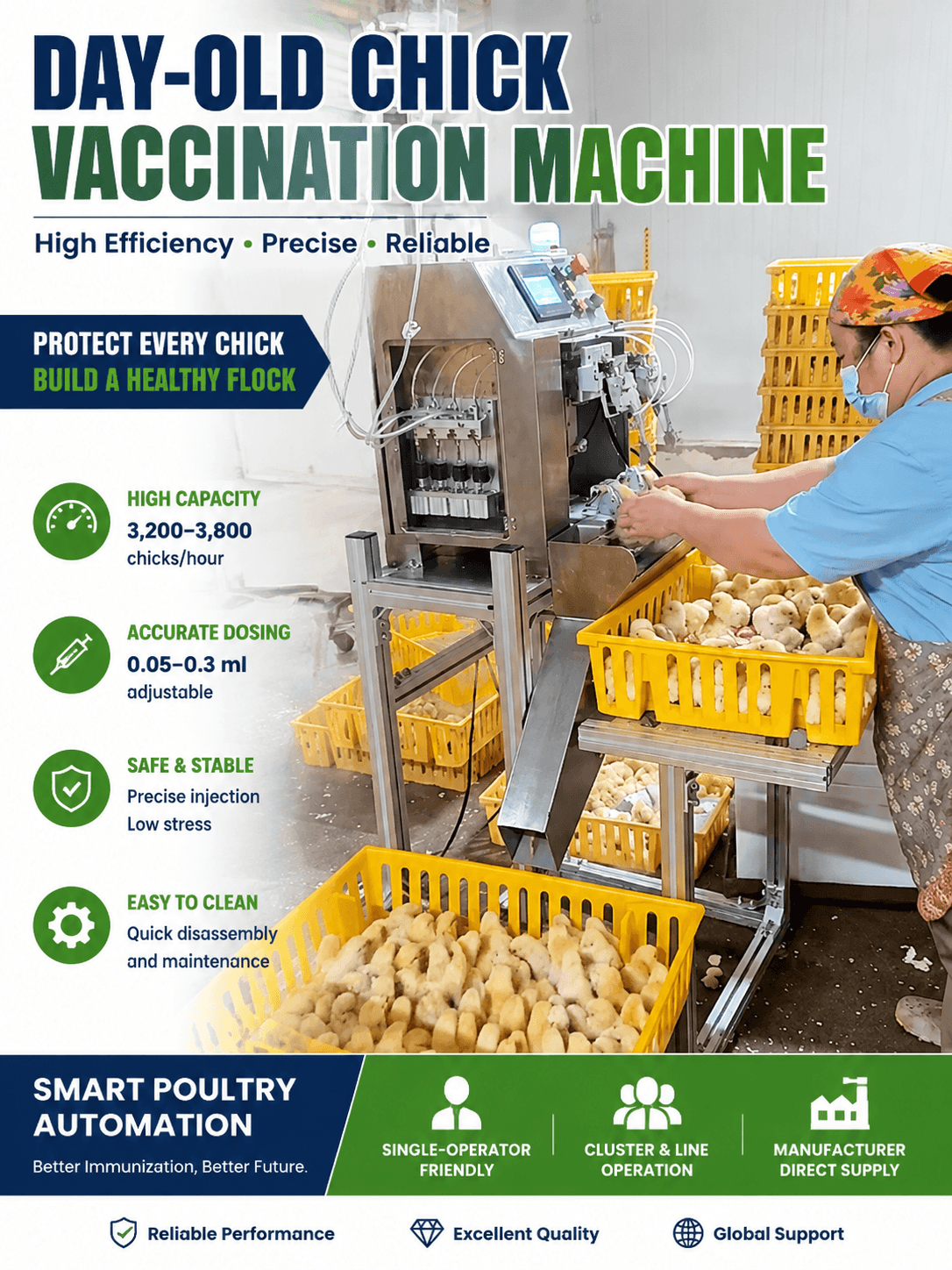
A chick vaccination machine handover can produce a thick folder while leaving the customer unsure about tomorrow morning. Create six cards that authorized customer personnel can hold and explain: protocol ownership, supplies and preparation, normal operation, exceptions, cleaning and inspection, and support.
The cards do not replace controlled manuals or customer procedures. They test whether the essential decisions have reached the people who own them.
Card One Names the Protocol Owner
The first card identifies the customer's qualified veterinary or animal-health owner, the applicable controlled protocol, approved materials, observation criteria, stop conditions, records, and escalation path.
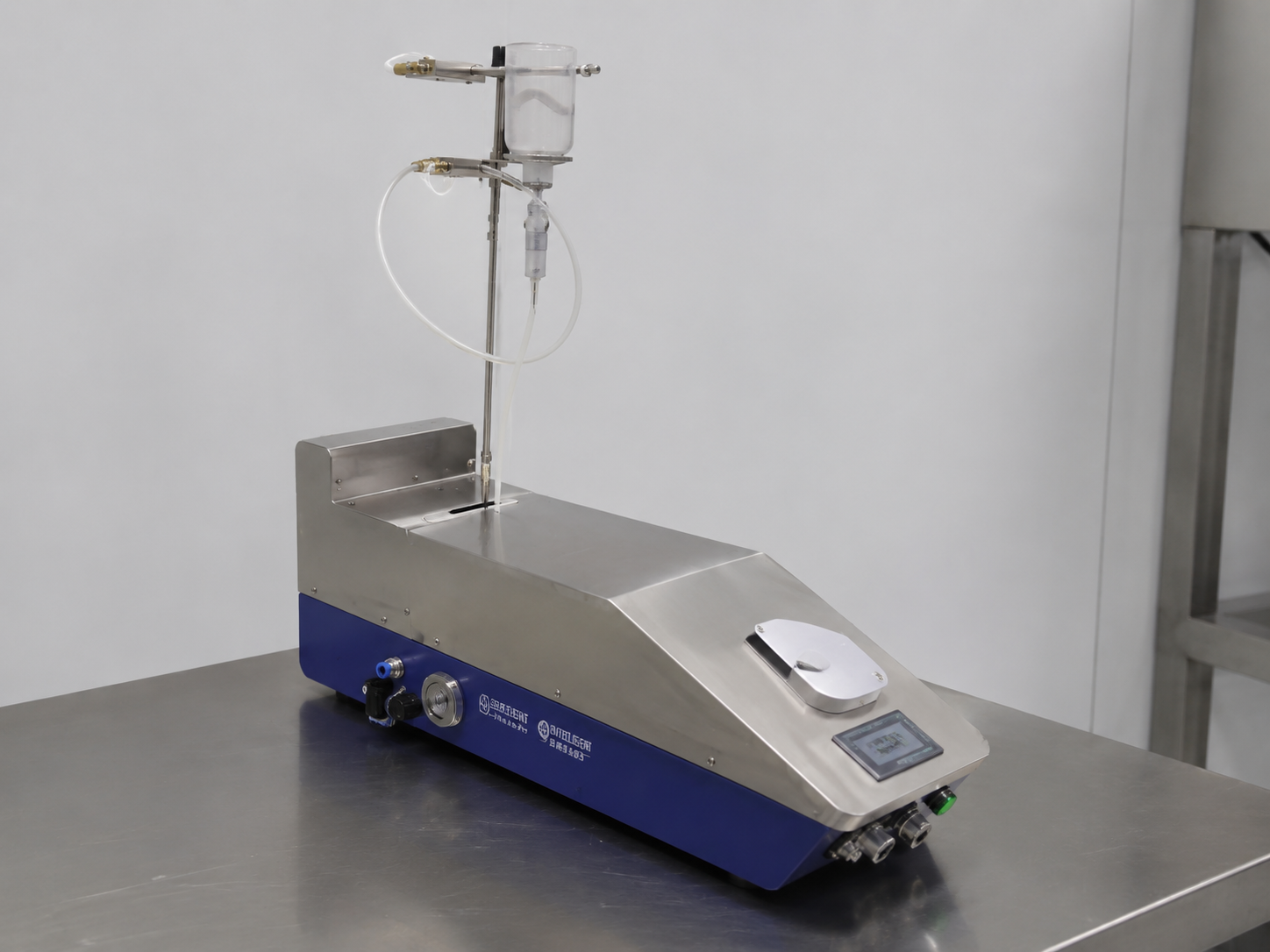
Jili Intelligent presents a day-old chick vaccination machine through JuliSense. The customer retains responsibility for professional protocols and approvals; the supplier demonstrates the agreed equipment scope.
Put the document reference on the card
Use the current customer-controlled reference and approval state. A handwritten trial setting should not quietly become a permanent instruction.
State what the supplier does not decide
Separate machine functions and training from clinical or veterinary decisions. Clear boundaries strengthen collaboration and prevent unsupported claims.
Card Two Follows Supplies to the Point of Use
The second card covers approved supplies, storage and handling under customer procedures, preparation responsibilities, identification, replenishment, waste or return, and what happens when an item is unavailable.
During a chick vaccination machine handover, follow the actual supply route rather than discussing it beside the equipment.
Mark the last responsible check
Identify who confirms the correct approved item, status, quantity, and readiness immediately before use.
Rehearse a delayed replenishment
Use a safe tabletop scenario to ask how work is protected, who is informed, what waits, and who authorizes continuation.
Card Three Describes Normal Operation in Plain Language
An authorized customer operator explains preparation, pre-start checks, presentation, routine observation, allowed actions, documentation, shift handover, and normal shutdown.
Ask for a teach-back
After supplier instruction, the operator leads the explanation without being prompted through every step. Silence and disagreement become training findings.
Count invisible work
Record walking, repeated touches, checking, replenishment, communication, and small corrections. These tasks affect staffing and line balance.
Card Four Opens the Exception Drawer
The exception card lists credible ordinary conditions approved for training: a pause, missing readiness, supply concern, presentation issue, status message, or request for technical help. It states visible information, permitted response, prohibited improvisation, escalation, and restart authority.
For machinery risk assessment and risk reduction, ISO 12100 provides a general framework. Relevant destination laws, standards, risk assessments, and site procedures apply to the final installation.
Freeze the state before recovery
Record current work, machine status, people, signals, and upstream or downstream condition before anyone clears the event.
Separate reset from restart
The person able to reset a control may not own the decision to resume the customer process. Put both roles on the card.
Card Five Belongs to Cleaning and Inspection
Sanitation and maintenance jointly explain approved access, removed parts, tools, cleaning boundaries, inspection, reassembly, guarding, area clearance, and release to production.
The chick vaccination machine should be understood after work as well as during work. Handover is incomplete if only the production state has been demonstrated.
Lay removed items on a shadow sheet
Use a labeled surface or other controlled method so parts, tools, and their return status remain visible during the exercise.
Name the final checker
Assign responsibility for cleanliness, completeness, inspection status, machine state, and release before the next startup.
Card Six Shows the Support Route
The last card tells the customer what information to collect, who to contact, expected communication channel, service scope, parts information, escalation, time-zone considerations, and how an open issue is closed.
JuliSense describes commissioning, training, and after-sales discussions on its service page. Exact response commitments, included services, parts, travel, remote support, and exclusions belong in the commercial agreement.
Write a useful first message
Include machine identification, configuration, site, date, operating state, event description, relevant message, current work, recent change, photographs or video where permitted, and actions already taken.
Define closure evidence
A reply is not necessarily closure. Agree whether the item needs a document, part, repeat demonstration, revised setting under authorization, training, or customer approval.
Pass All Six Cards Through Four Owners
Veterinary or animal-health ownership, production, engineering or maintenance, and quality should each read the cards from their own responsibility. No card should depend on an unnamed “someone.”
The World Organisation for Animal Health Terrestrial Code is an internationally recognized animal-health and welfare reference. The actual process must follow applicable destination requirements and customer-approved procedures.
Let quality challenge the evidence
Quality asks which controlled record supports readiness, training, exceptions, cleaning, and release. The answer should be retrievable after the commissioning team leaves.
Let production challenge the timing
Production tests whether preparation, breaks, replenishment, handover, cleaning, and exception handling fit the representative shift rather than an ideal demonstration.
Use the Cards During Three Runs
Run one is a dry function and role check. Run two uses agreed representative conditions. Run three follows an approved interruption through inspection and release.
Dry run checks language
Confirm labels, signals, responsibilities, communication, and documentation without claiming evidence about full production performance.
Representative run checks the working day
Agree inputs, staffing, duration, variation, observation points, stop conditions, and records before starting the chick vaccination machine run.
Recovery run checks authority
Observe who notices, who protects current work, who diagnoses, who checks, and who authorizes restart. Record coaching that was required.
Turn the Cards Into a Handover Index
Each card points to the controlled document, drawing, record, training evidence, and open-item register that contains the complete information.
| Card | Customer owner | Evidence |
|---|---|---|
| Protocol | Qualified animal-health role | Approved reference and criteria |
| Supplies | Production and quality | Identification and readiness record |
| Operation | Production | Demonstrated task and training record |
| Exceptions | Supervisor and engineering | Event and recovery evidence |
| Cleaning | Sanitation and maintenance | Inspection and release record |
| Support | Project owner | Contact, scope, and open-item log |
Keep revisions controlled
When the underlying process changes, update the card and its source document together. Remove obsolete cards from use.
Keep the words familiar
Use the customer's operating language and defined location names. The card should help during a shift, not sound like a contract summary.
Test the Cards on the Next Available Shift
Before final handover, give a clean set to authorized personnel who did not write them. Ask those users to locate the supporting document, explain one normal task, identify one boundary, and find the escalation route.
Record where the reader hesitates
Hesitation may reveal unclear wording, a missing location code, two competing records, or a responsibility that still depends on the visiting trainer. Improve the source material rather than coaching around the gap.
Return one card to its owner
Each customer owner signs or otherwise approves the controlled relationship between the card and its source. This final pass makes the chick vaccination machine handover easier to maintain after personnel or procedures change.
Questions Buyers Should Ask Before Handover
Who approves vaccination criteria?
The customer's qualified veterinary or animal-health owner approves the applicable criteria, materials, observations, and professional decisions.
What proves training worked?
Authorized customer personnel demonstrate assigned tasks, explain boundaries, and respond to agreed scenarios with evidence recorded.
What happens to open items?
Each item receives an impact, owner, due date, temporary control where applicable, required proof, and authorized closer.
How does a buyer request project information?
Use the JuliSense contact page to share the hatchery context, planned workflow, customer protocols, interfaces, schedule, and expected handover evidence.
Six Cards Make Tomorrow Morning Visible
A chick vaccination machine handover is credible when customer owners can explain normal work, limits, exceptions, cleaning, and support without leaning on the visiting technician. JuliSense can organize its equipment and service discussions around those six cards while customer teams retain their proper authority.