

A commercial hatchery automation equipment upgrade rarely starts on an empty floor. Existing machines still produce, operators have established routines, utilities follow old routes, and downtime has a business cost. Put every asset and interface on a four-box board: keep, move, connect, or replace.
The board forces the team to discuss the real brownfield project, including what must remain useful while the new system is introduced.
Photograph the Existing Shift Before Designing the Future One
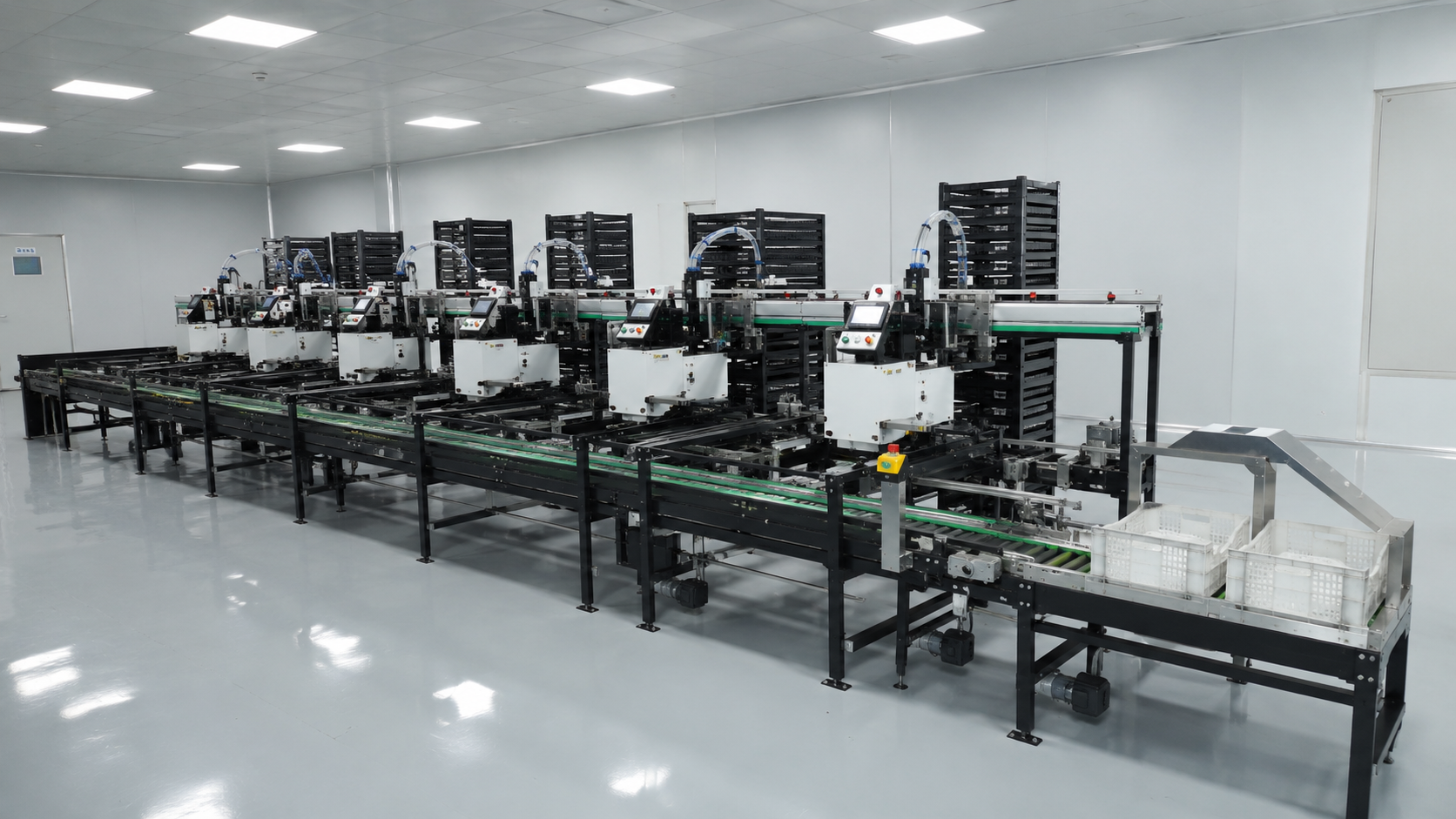
Walk the process during a representative operating window. Record arrival pattern, operator routes, equipment states, buffers, recurring corrections, cleaning access, maintenance access, quality decisions, and dispatch. A tidy drawing cannot replace direct observation.
Jili Intelligent presents integrated hatchery automation solutions through JuliSense. The useful project starts with the customer's existing constraints, desired outcomes, and verified interfaces rather than with a standard arrangement.
Record the unofficial work
Operators often use labels, carts, tables, staging areas, hand signals, and timing habits that never reached a process document. Some should be redesigned; others contain valuable operating knowledge.
Measure the operating envelope
Check walls, doors, columns, drains, utilities, ceiling height, access routes, equipment movement, service clearances, hygiene zones, and the space occupied during cleaning or maintenance.
Box One: Keep What Still Earns Its Place
An existing asset belongs in the keep box only when its condition, capacity basis, interfaces, safety, hygiene, maintainability, documentation, and remaining support are understood.
During a commercial hatchery automation equipment upgrade, “it still runs” is not enough. The equipment must fit the future workflow and acceptance basis.
Verify condition with evidence
Use maintenance history, observed behavior, available drawings, parts status, inspection results, and representative performance. Separate facts from familiarity.
Confirm the future duty
Define what the retained asset will receive, do, release, report, and require in the upgraded line. A changed upstream rhythm can expose a constraint that was previously hidden.
Box Two: Move Only After Drawing the New Routes
Moving equipment changes more than coordinates. It affects foundations, utilities, access, controls, guarding interfaces, material flow, operator travel, cleaning, maintenance, and emergency routes.
Price the invisible move
Include disconnection, preparation, lifting, transport, foundations, reconnection, inspection, testing, documentation changes, production protection, and contingency.
Draw open doors and service positions
The relocated footprint should include access panels, removable components, tool clearance, sanitation work, and the safe position of people, not just the closed machine outline.
Box Three: Connect at a Controlled Interface
Many upgrade problems occur at the boundary between existing and new equipment. Define the physical handoff, speed relationship, controls, status information, ownership, reject or hold route, and response when either side cannot accept work.
For machinery risk assessment and risk reduction, ISO 12100 provides a general framework. The final integration requires the relevant destination requirements, risk assessments, and authorized customer decisions.
Write an interface card
Each card states the upstream owner, downstream owner, transferred item, normal condition, signals, buffer limit, stop response, restart authority, drawing reference, and acceptance evidence.
Test both directions
Confirm what happens when the downstream side blocks and when the upstream side starves. The same interface may need different communication and recovery rules.
Box Four: Replace With a Defined Outcome
Replacement should solve a documented operating need: capacity under agreed conditions, reduced repeated handling, clearer state, better access, a support problem, an interface gap, or another measurable outcome.
Keep the outcome separate from the product name
Write the customer problem, representative conditions, acceptance question, and evidence first. Then compare configurations that may solve it.
Plan the removed asset
Define isolation, decommissioning, removal route, data or records, spare disposition, disposal or resale responsibility, and the date when the old function truly ends.
Put the Four Boxes on One Migration Timeline
The commercial hatchery automation equipment upgrade needs a transition story from the last accepted old-line batch to the first released new-line batch. Mark survey, design freeze, procurement, enabling work, delivery, shutdown, installation, interface testing, commissioning, training, release, and stabilization.
That timeline makes the commercial hatchery automation equipment upgrade understandable to teams that experience the same shutdown from different positions.
Protect the last old-line shift
State who decides that production may stop, how current work is completed or protected, which records are closed, and which utilities or interfaces may be changed.
Protect the first new-line shift
Define readiness, authorized operators, supervision, approved customer procedures, materials, staffing, open-item controls, stop criteria, support presence, and release evidence.
Decide What Can Be Tested Before Shutdown
Every check completed before the critical shutdown reduces uncertainty. Useful candidates include drawings, dimensions, utilities, controls architecture, interface simulations, configuration records, factory tests, document review, training preparation, lifting studies, and temporary protection.
JuliSense describes project communication, commissioning, training, and after-sales support on its service page. Buyers should place exact deliverables, timing, responsibilities, and exclusions in the agreed scope.
Build a pre-shutdown evidence pack
Include approved drawings, site measurements, risk and method documents as applicable, delivery status, tool and lifting readiness, interface cards, contact list, acceptance plan, and open-item register.
Reserve time for findings
Brownfield work often reveals a hidden condition after access opens. Define how the team assesses, approves, records, and schedules a change without losing control of the project.
Keep a separate contingency line in the commercial hatchery automation equipment upgrade register so an unexpected finding does not silently rewrite the baseline.
Keep Animal Health and Welfare Ownership Visible
Automation changes handling, timing, observation positions, escalation, and process responsibilities. The customer's qualified owners must approve applicable criteria and operating procedures.
The World Organisation for Animal Health Terrestrial Code provides internationally recognized animal-health and welfare references. The project must follow destination rules and customer-approved practice.
Rehearse the observer route
Confirm where authorized people can observe normal flow, exceptions, and recovery without creating an obstruction or crossing an inappropriate hygiene boundary.
Do not automate an unclear decision
If the current process depends on an undocumented judgment, define the owner, information, rule, and exception path before deciding how equipment or controls should support it.
Review the Board With Finance and Operations Together
Capital cost alone cannot show the business effect of downtime, temporary work, retained asset risk, civil changes, training, spares, ramp-up, or future support. Operations alone may not see the commercial consequences of adding scope late.
| Board box | Commercial question | Operating question |
|---|---|---|
| Keep | What risk and support remain? | Will it fit the future duty? |
| Move | What is the full relocation cost? | Can people access and clean it? |
| Connect | Who owns each interface? | How does it stop and recover? |
| Replace | Which outcome funds the change? | What proves the outcome? |
Carry contingencies openly
Give each contingency a trigger, allowance, decision owner, and impact. Hidden optimism does not make a shutdown shorter.
Define stabilization support
State how long enhanced support lasts, which data are reviewed, how issues are prioritized, who approves changes, and when the line moves into normal support.
Bring JuliSense a Brownfield Brief
Share the current process map, equipment list, drawings, representative operating data, known problems, available shutdown window, utilities, building limits, desired outcomes, and acceptance questions.
What is the first decision?
Agree what problem the upgrade must solve and how the customer will recognize improvement under representative conditions.
That decision gives every later commercial hatchery automation equipment upgrade choice a measurable reason.
Should every old machine be replaced?
No. Retention can be sensible when condition, duty, interface, support, safety, hygiene, and project economics are defensible.
What causes most late surprises?
Unverified dimensions, unclear interfaces, underestimated access, undocumented operator work, missing utilities, and decisions deferred until shutdown.
How can a buyer start?
Use the JuliSense contact page to request a project discussion covering the existing line, target workflow, equipment boundaries, site work, commissioning, training, and support.
Four Boxes Turn an Upgrade Into Decisions
A commercial hatchery automation equipment upgrade succeeds through controlled choices about what stays, what moves, what connects, and what leaves. JuliSense can help customers organize equipment and integration questions around that board. The final result should fit the live hatchery, the people who run it, and the evidence used to accept it.