


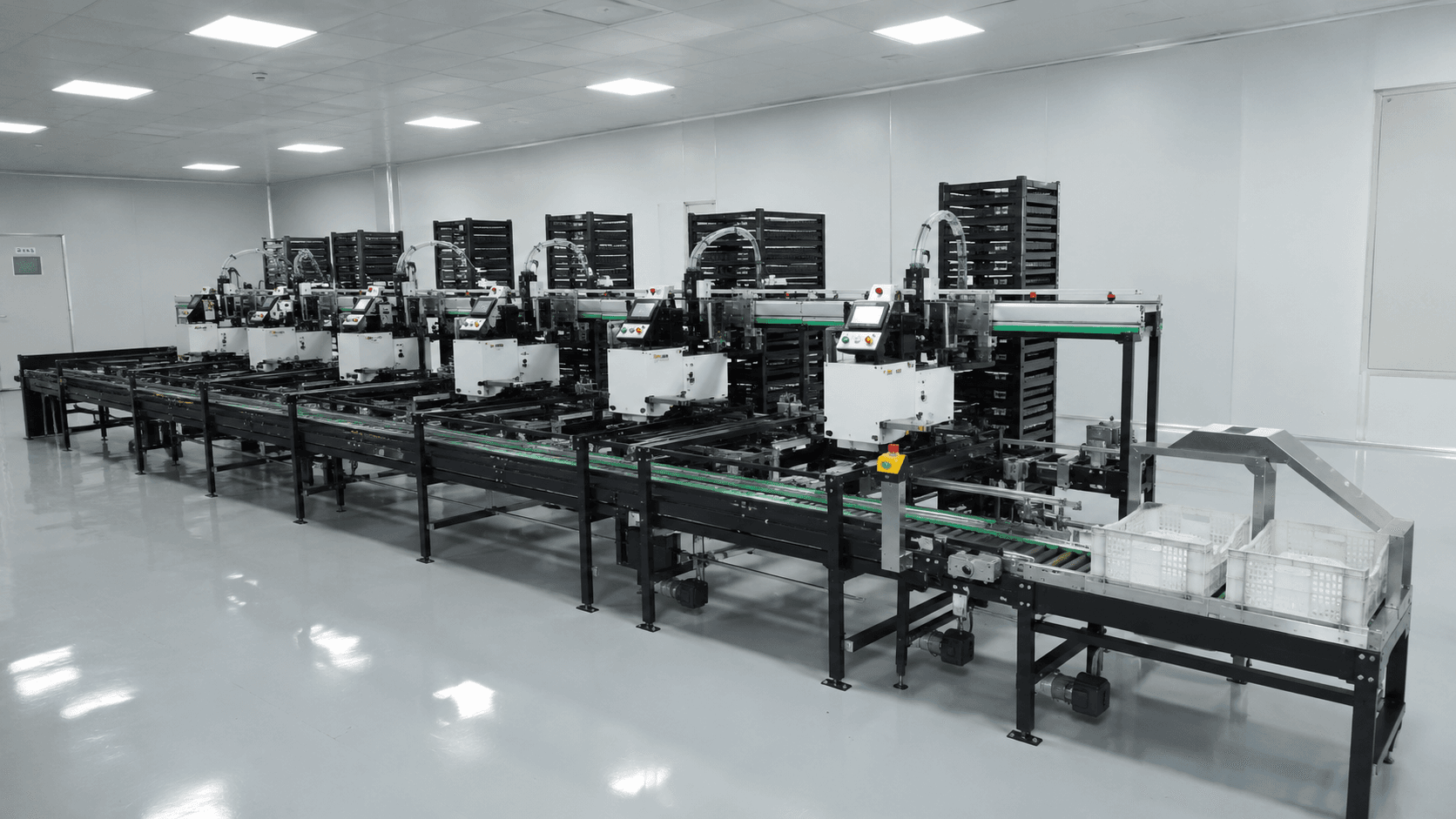
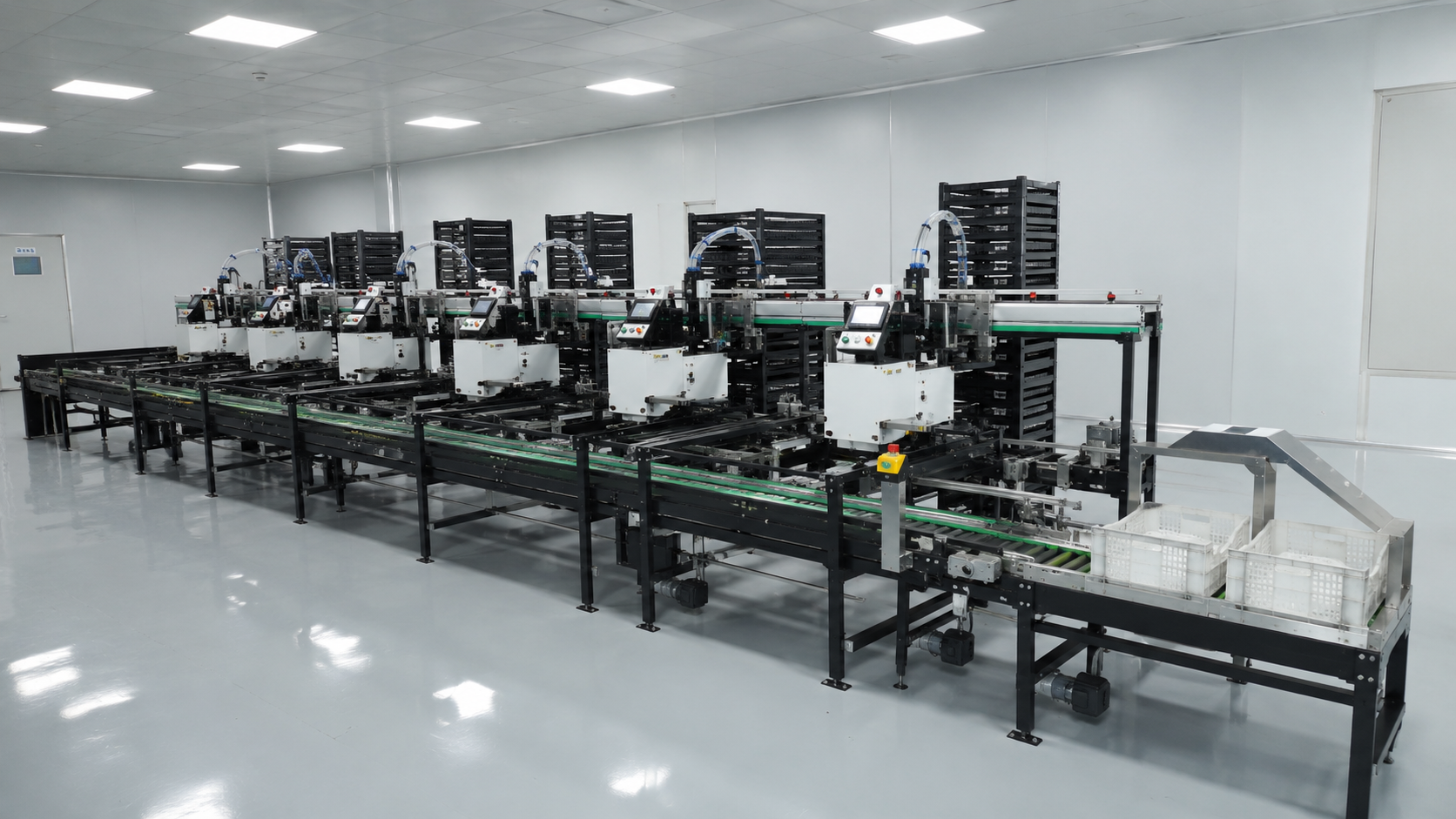
An automatic chick transfer system is usually considered when manual chick picking, basket tipping, and shell handling start to limit hatchery output. Buyers are not only comparing machines. They are looking for a cleaner way to move chicks from hatcher baskets into the next workflow without creating new bottlenecks.
The Jili Day-Old Chick Picking and Transfer Machine supports picking, transfer, basket tipping, shell handling, and chick boxing. Product material references about 50,000-70,000 chicks per hour, 2-3 operators, about 8-10 seconds per basket tipping cycle, about 7.5 kW power, and about 95% single-box chick accuracy.
Why transfer reliability affects the whole line
Transfer is an upstream process. If chicks arrive unevenly, downstream beak treatment, vaccination, conveying, stacking, or dispatch preparation may wait. If shells and waste are not removed clearly, operators spend more time correcting the work area.
A reliable automatic chick transfer system should balance output with downstream receiving capacity. For high-volume hatcheries, this is more important than choosing the machine with the largest number on a specification sheet.
What buyers should compare
- Hatcher basket size, weight, and tipping direction.
- Peak hourly chick volume and daily production rhythm.
- Shell, infertile egg, and waste handling route.
- Downstream equipment receiving capacity.
- Operator access for inspection, cleaning, and maintenance.
- Future connection with conveying, stacking, or automation modules.
Key comparison data
| Selection factor | Jili reference information |
| Main functions | Picking, transfer, basket tipping, shell handling, and chick boxing |
| Reference capacity | About 50,000-70,000 chicks per hour |
| Operators | 2-3 operators |
| Basket tipping | About 8-10 seconds per basket |
| Power | About 7.5 kW |
| Accuracy reference | About 95% single-box chick accuracy |
How to avoid a transfer bottleneck
Buyers should map the process before quotation: where baskets arrive, how chicks are separated, where shells go, and what equipment receives the chicks afterward. If the next station is slower, even a high-capacity transfer system can create waiting.
For connected movement after transfer, buyers can review the Jili Conveying and Stacking Line or Jili Complete Hatchery Automation Solutions. These pages help buyers plan transfer as part of the wider hatchery line.
What to send to Jili before quotation
Send basket photos, basket dimensions, daily chick volume, peak hourly target, current manual transfer process, room layout, shell route, and the equipment after transfer. This information helps Jili match the automatic chick transfer system to the real layout.
How buyers can judge long-term value
Long-term value comes from stable operation after installation. Buyers should ask how the system is cleaned, how shells are removed, how operators access inspection points, and what spare parts may be needed. If these questions are answered before ordering, the transfer area is easier to manage during peak production.
It is also useful to compare labor before and after automation. If the automatic chick transfer system reduces manual correction and keeps the next station supplied at a steady rhythm, the investment can support both labor planning and process consistency.
Questions to ask during supplier communication
Before confirming the order, buyers should ask how the transfer system handles different basket conditions, how operators clear shells safely, and how the machine can be inspected during daily operation. The supplier should also explain whether the first installation can leave space for future conveying or stacking modules. These questions help the buyer judge whether the proposal is built for a real hatchery workflow.
FAQ
What does an automatic chick transfer system do?
It helps move chicks from hatcher baskets into the next workflow while supporting transfer, shell handling, and chick boxing.
What capacity is listed in Jili material?
Jili material references about 50,000-70,000 chicks per hour depending on project configuration.
Why does downstream capacity matter?
The transfer station can still create waiting if the next process cannot receive chicks at the same rhythm.
What information improves proposal accuracy?
Basket dimensions, room layout, shell route, hourly output, and downstream equipment details are important.
How can buyers compare suppliers?
Compare layout fit, shell handling, operator access, maintenance access, support, and connection with the next station.