


A complete poultry hatchery automation solution should begin with the customer's room, flow, capacity, and operating decisions. Starting with a product catalogue often produces a line that looks impressive on paper but leaves awkward handoffs, missing utilities, or unclear ownership at the site.
Use a room-first map before asking for a final quotation. It helps JuliSense understand the project and gives the customer a clearer way to compare different proposals.
Draw the Room Before Choosing the Line
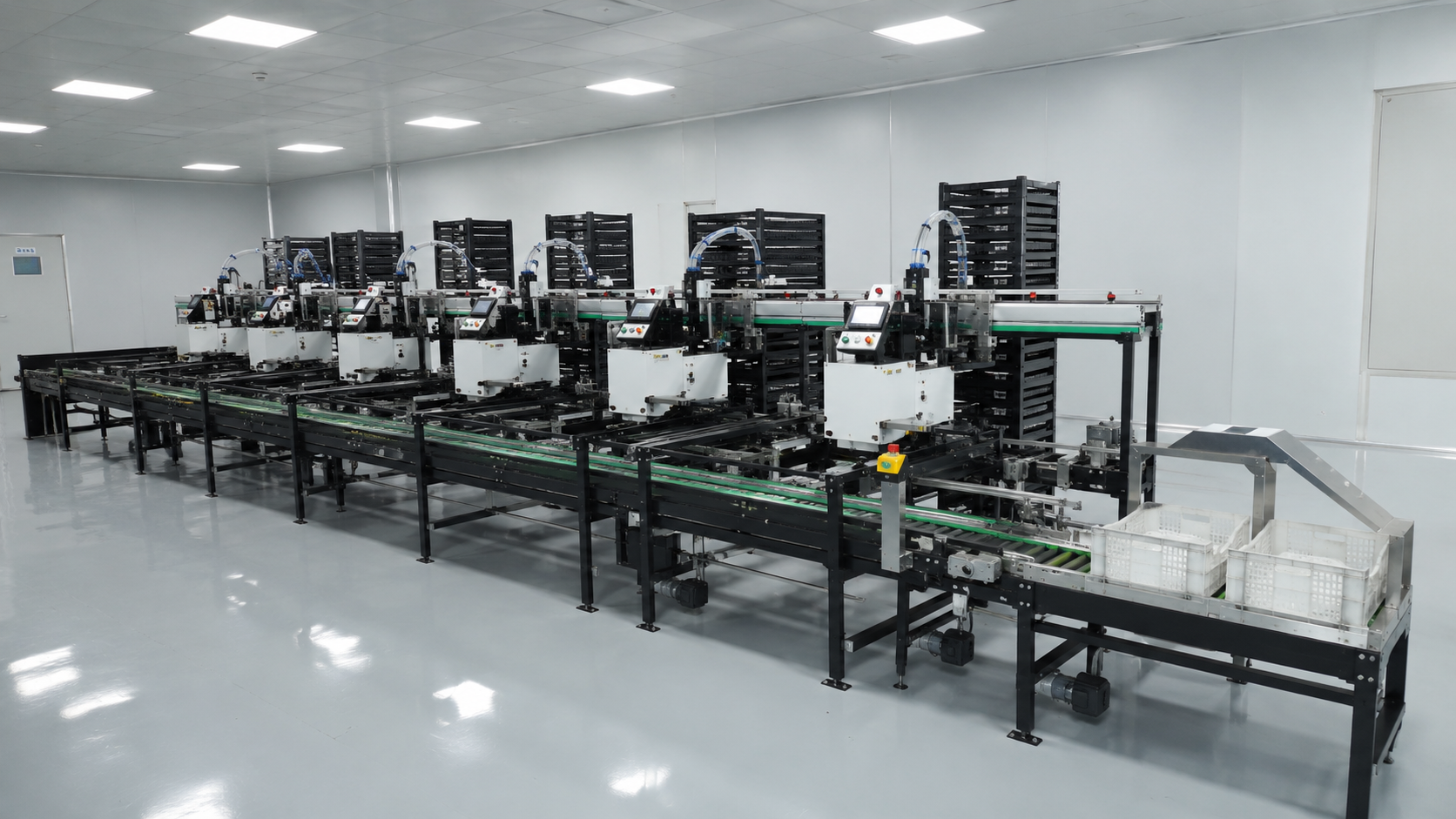
Share the available footprint, columns, doors, ceiling height, drainage, utilities, personnel routes, fire or safety boundaries, and the position of existing equipment. A layout is not only a drawing for machines; it is a map of people, product, cleaning, maintenance, and future change.
Jili Intelligent presents JuliSense products for day-old chick handling, infrared beak trimming, vaccination, conveying, washing, stacking, and related hatchery automation. The correct complete poultry hatchery automation solution depends on how those functions fit the customer's site.
Mark fixed constraints first
Highlight walls, columns, drains, access doors, utilities, and equipment that cannot move. Then mark the spaces needed for loading, unloading, inspection, cleaning, service, and emergency access.
Draw people as well as machines
Show operator standing positions, replenishment paths, supervisor sight lines, maintenance access, and cleaning routes. A layout that only shows machine footprints is incomplete.
Describe the Working Day in Seven Moments
Before specifying a line, describe the ordinary day: arrival or transfer, preparation, processing, vaccination, conveying, crating or stacking, cleaning, and handover. Add one representative changeover and one approved pause. These moments reveal requirements that a machine name cannot express.
Identify the decision at each moment
Who checks readiness? Who confirms batch identity? Who may stop? Who releases the next zone? Who records an exception? Put an owner beside each decision so the proposal can distinguish equipment capability from customer procedure.
Keep the handoff visible
Where one process ends and another begins, record the physical position, status signal, buffer, and responsibility. This is where a complete poultry hatchery automation solution either earns its value or creates future confusion.
Convert Capacity Into a Practical Scope
Capacity is more than a headline number. Confirm the working window, batch variation, staffing, breaks, replenishment, cleaning time, and planned growth. The same nominal capacity can require different equipment and buffers in different hatcheries.
Ask what the number includes
Does the stated output assume continuous feeding, ideal inputs, full staffing, no cleaning, or no downstream interruption? Record the conditions beside the target instead of using a number without context.
Include future interfaces carefully
If a customer may add sorting, spraying, conveying, packing, or data systems later, show the physical and control provisions that should be reserved now. Avoid buying a promise that is not represented in the current scope.
Separate the Solution Into Clear Layers
A useful proposal separates product modules, line interfaces, customer work, documents, training, installation, commissioning, and support. This makes it easier to compare two proposals and easier to see what remains open.
| Layer | Buyer question |
|---|---|
| Equipment | Which functions and models are included? |
| Layout | What space, access, and utilities are required? |
| Integration | Which signals and interfaces are supplied? |
| Documentation | Which drawings, lists, and records are delivered? |
| Site work | Who handles installation, utilities, and preparation? |
| Training | Which customer roles receive teach-back training? |
| Support | What service route and spare information are included? |
Keep exclusions readable
An exclusion is useful when it states the boundary and the customer action. Vague phrases such as “by others” hide risk and make an otherwise complete solution difficult to manage.
Check Biosecurity and Cleaning at the Design Stage
Cleaning routes, dirty-to-clean movement, removable parts, inspection points, and waste handling should appear in the planning conversation. Do not leave sanitation to the final week of installation.
The WOAH Terrestrial Code is a recognized reference for animal-health and welfare standards. The customer remains responsible for site procedures and destination requirements.
Test a post-run route
Ask where operators and maintenance teams stand after a representative run. Identify which components are removed, which areas are inspected, and who releases the station for the next production period.
Protect maintenance access
The shortest line is not always the easiest line to own. Preserve access for inspection, service, cleaning, and safe recovery before filling every available square meter.
Use Technical Confirmation as a Decision Gate
Before manufacturing, confirm model, capacity, materials, electrical details, control language, safety requirements, optional functions, interfaces, and customer-supplied inputs. A design meeting should close assumptions, not only review attractive renderings.
For machinery risk assessment and risk reduction, ISO 12100 provides a general framework. Apply relevant requirements to the selected system and destination.
Ask for a change log
Every change after technical confirmation should show the reason, impact, owner, approval, and affected document. This keeps the complete poultry hatchery automation solution aligned through manufacturing and installation.
Confirm acceptance evidence early
List the factory test, site test, operator demonstration, cleaning check, interface check, and open-item closure evidence required for acceptance. A late acceptance discussion usually exposes an early planning gap.
Why JuliSense Needs the Customer's Inputs
JuliSense's published project process covers inquiry, custom design, technical confirmation, manufacturing, testing, shipping, installation support, commissioning, training, and after-sales service. The quality of the result depends on the information shared at the beginning: capacity, layout, voltage, workflow, budget range, timeline, and automation goals.
Read the project support details on the JuliSense service page and prepare those inputs before requesting a proposal.
Send a useful first brief
Include the current layout, production window, poultry type, expected output, existing machines, utilities, operator roles, pain points, desired modules, and the evidence needed at handover.
Ask for the next decision
Instead of requesting a generic catalogue, ask which information JuliSense needs to confirm the next design gate. This creates a shorter and more useful conversation.
Buyer Questions Before the First Layout
Can the system be expanded later?
Ask which interfaces, space, utilities, and control provisions should be reserved now and which future functions would require redesign.
What belongs in the customer's scope?
Confirm utilities, civil work, drainage, upstream and downstream equipment, local compliance, operators, cleaning procedures, and site acceptance roles.
How do we compare two proposals?
Compare the same flow, conditions, evidence, interfaces, training, support, exclusions, and customer inputs rather than comparing only equipment names or headline capacity.
How do we start with JuliSense?
Use the JuliSense contact page to share the room plan, capacity, poultry type, automation goals, and expected project schedule.
Turn the Room Map Into a Project Brief
Before requesting a quotation, summarize the room constraints, target flow, poultry type, staffing, utilities, existing equipment, preferred modules, schedule, and acceptance evidence. This short brief gives the engineering team a usable starting point and helps the buyer compare later revisions.
Show the uncomfortable details
Include narrow aisles, difficult access, cleaning restrictions, seasonal capacity changes, language needs, local service expectations, and any equipment that must remain. These details often determine whether a complete poultry hatchery automation solution is practical.
Ask what is still unknown
The best first meeting ends with a list of missing inputs and the next technical decision. A complete poultry hatchery automation solution should reduce uncertainty step by step, not replace it with a polished drawing.
A Complete Solution Should Make the Customer More Certain
A complete poultry hatchery automation solution is valuable when its layout, scope, interfaces, cleaning route, acceptance evidence, and ownership are understandable before production begins. JuliSense can help develop that room-first plan while the hatchery keeps control of its procedures, priorities, and release decisions.