


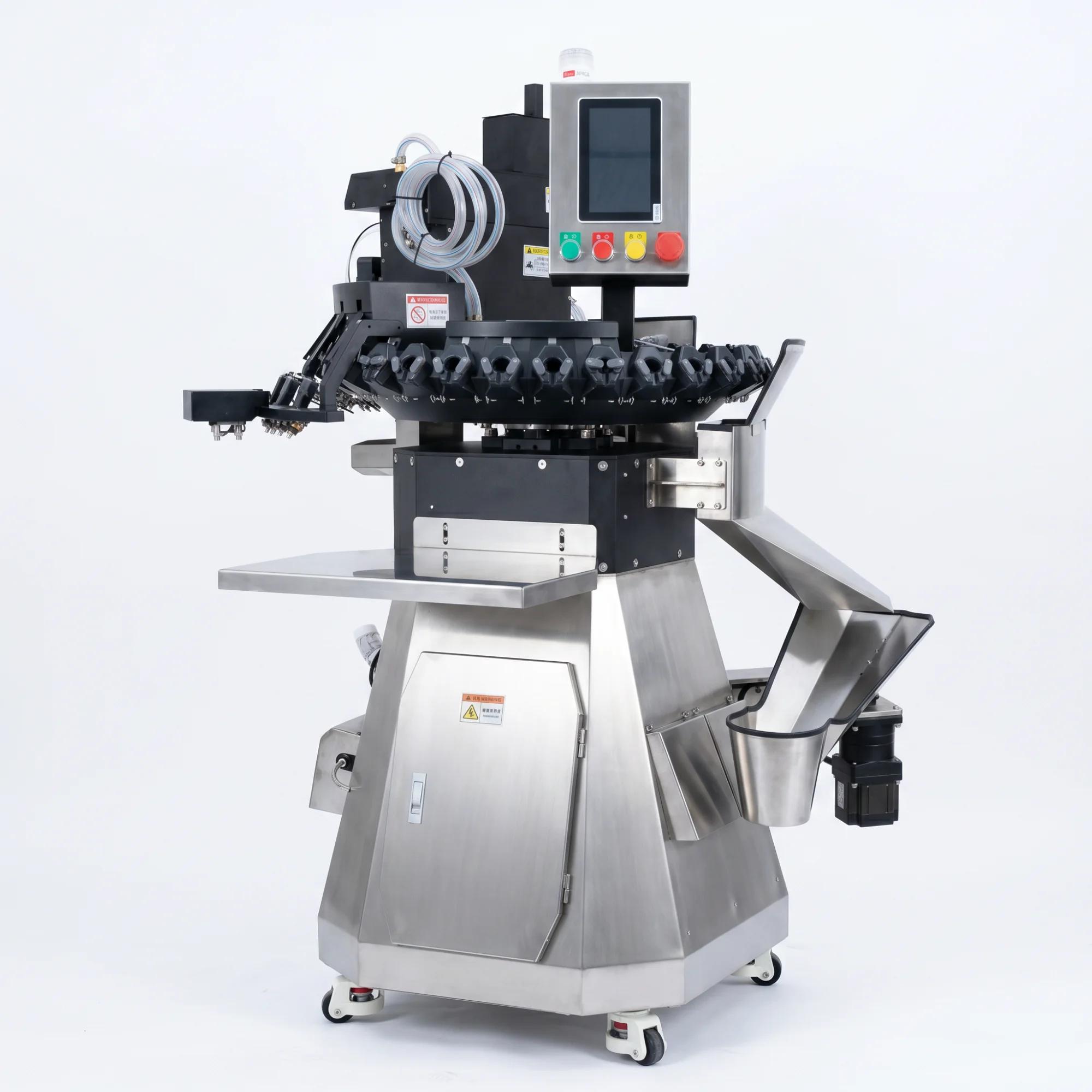
Selecting day old chick beak treatment equipment should not be left to one department. Production sees rhythm. Veterinary and welfare owners see process responsibility. Engineering sees interfaces. Sanitation sees access. Maintenance sees recovery. Procurement sees scope and risk.
When those teams meet only after a quotation arrives, the conversation becomes defensive. A better approach is a short roundtable before the specification is frozen. Give each function one question that can change the purchase decision.

Production Asks: What Will Control the Real Rhythm?
Production should look beyond a headline rate and ask what controls a representative operating window. Incoming containers, operator presentation, changes, replenishment, temporary waits, downstream availability, and supervision can all affect the rhythm.
Ask the supplier to separate machine capability from complete workstation performance. Then define the conditions under which any proposed rate will be discussed or tested.
Jili Intelligent presents relevant equipment within the JuliSense product portfolio. The selected configuration must be reviewed with the customer's actual batch pattern, staffing, room, and approved process.
Veterinary and Welfare Owners Ask: Who Approves the Process?
The supplier explains equipment capability, controls, adjustment boundaries, and available records. The customer's qualified owners approve the applicable veterinary or welfare procedure, settings, monitoring, and destination requirements.
That responsibility should be visible in meetings and documents. It prevents the operator from receiving informal instructions that were never technically approved.
The World Organisation for Animal Health Terrestrial Code provides internationally recognized animal-health and welfare standards. Buyers should also apply the local rules and approved procedures relevant to their operation.
Engineering Asks: Where Does the Equipment End?
Place the proposed day old chick beak treatment equipment on the site drawing and mark every boundary. Who supplies utilities, supports, guarding, connections, containers, network points, upstream flow, downstream flow, civil work, lifting, and installation labor?
An interface register can be short. It needs only a boundary, an owner, the required information, the confirmation method, and the date. That simple document prevents two parties from assuming the other will complete the same task.
ISO 12100 offers a general framework for machinery risk assessment and risk reduction. Engineering should connect the final risk review to the workstation, surrounding equipment, people, and destination requirements.
Sanitation Asks: Can We Prove the Station Is Ready Again?
Cleaning should be discussed as a complete cycle, not as a material statement. What is isolated? What is removed? Which tools are used? Where are parts placed? What remains difficult to see? How is reassembly confirmed? Who inspects and releases the station?
Ask sanitation to walk around the proposed footprint before layout approval. Access that looks acceptable on a drawing may become blocked by a wall, conveyor, container, guard, or utility connection.
JuliSense can discuss equipment access and service boundaries. The customer's sanitation and quality owners approve the site procedure and release method.
Maintenance Asks: What Happens During the First Unplanned Stop?
The team should rehearse a realistic technical conversation. The operator reports what is visible. The supervisor protects the process. Maintenance receives useful condition information. The supplier provides support within the agreed channel and scope.
For day old chick beak treatment equipment, the buyer should confirm alarm information, access permissions, routine inspection points, recommended spares, documentation, escalation routes, and the boundary between remote guidance and site service.
The JuliSense service page is a useful basis for defining commissioning, training, and after-sales needs. The quotation should state the actual support deliverables instead of relying on the word "service."
Procurement Asks: What Are We Really Buying?
Procurement should translate the six departmental answers into one scope table. The table should cover equipment, accessories, workstation elements, documents, tests, training, commissioning, spares, travel, site responsibilities, exclusions, and acceptance evidence.
| Scope question | Evidence to request |
|---|---|
| What is included? | Itemized configuration and deliverable list |
| What depends on the site? | Assumptions, utilities, layout, labor, and interfaces |
| What will be demonstrated? | Factory and site test methods with conditions |
| What will be handed over? | Drawings, manuals, records, training, and spares |
| What remains excluded? | Written exclusions and customer responsibilities |
The lowest visible equipment price may not represent the lowest project cost. Procurement needs comparable boundaries before it can make a meaningful commercial comparison.
Turn Six Questions Into One Decision Page
After the roundtable, write a one-page decision record with four sections: agreed, unresolved, evidence required, and owner. Attach it to the RFQ or supplier follow-up.
This helps JuliSense respond to the buyer's real operating questions. It also keeps day old chick beak treatment equipment from becoming a generic specification assembled from copied feature lists.
Before the page is approved, ask one person who did not attend the meeting to read it. If that reader cannot tell how the day old chick beak treatment equipment will be used, which process assumptions remain open, who owns each interface, and what proof is required, the record is not ready. This outside read is valuable because project teams often use familiar shorthand that a supplier, installer, new operator, or future maintenance person will interpret differently. Add the missing context while the discussion is still fresh, then attach the decision page to the next RFQ, drawing review, or quotation revision.
Buyers can review the company's focus on the About Us page and the dedicated day-old chick infrared beak trimming product page before the meeting.
Ten Questions the Roundtable Should Close
Which department should lead the purchase?
One project owner should coordinate the decision, but production, qualified technical owners, engineering, sanitation, quality, maintenance, and procurement should approve the parts they own.
Is a headline operating rate useful?
Yes, as an early reference. It becomes decision evidence only when the configuration, materials, staffing, conditions, method, and interruptions are defined.
Who approves treatment settings?
The customer's qualified veterinary or welfare owners. The supplier explains equipment capability and control boundaries.
What should engineering receive before layout freeze?
Request dimensions, access needs, utilities, loads, interfaces, guarding assumptions, controls boundaries, maintenance zones, and customer responsibilities for the selected configuration.
How should sanitation evaluate access?
Walk the physical or proposed station and test visibility, reach, removal, tool use, part placement, reassembly, inspection, and release.
What belongs in a stop-and-recovery discussion?
Include operator information, process protection, waiting work, escalation, troubleshooting boundaries, restart authority, and event records where available.
Are recommended spares enough for maintenance planning?
They are one input. The buyer should also consider local capability, lead times, planned inspections, support channels, criticality, and the final configuration.
What makes quotations comparable?
Use the same project assumptions and require each supplier to identify included items, optional items, site work, services, exclusions, and acceptance support.
Should the roundtable produce a long report?
No. A concise decision page is effective when every unresolved item has an owner and required evidence.
How can buyers arrange a JuliSense project discussion?
Use the JuliSense contact page to send the room plan, approved application, workflow, role list, expected evidence, and destination.
Let the Users Shape the Specification
The right day old chick beak treatment equipment specification comes from the people who will approve, operate, clean, maintain, support, and purchase the station. Their questions expose risks that a feature list cannot show.
JuliSense can use the roundtable record to prepare a focused configuration and quotation discussion. Six good questions are more valuable than six pages of generic requirements when they lead to clear evidence and ownership.