


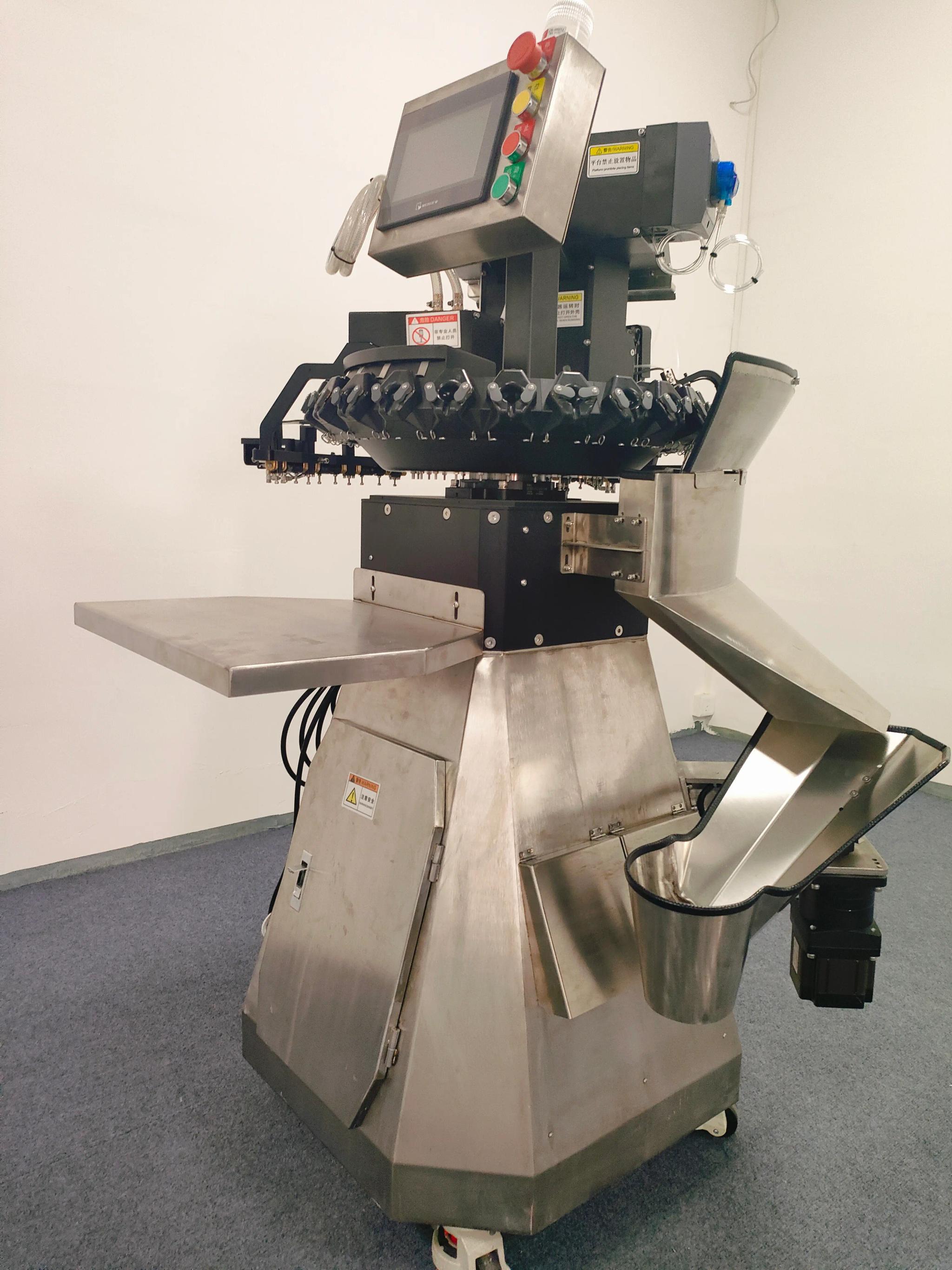
A day old chick beak trimming and vaccination machine should be evaluated as one working station, not as two product names joined in a quotation. The important conversation includes the approved application, operator reach, supply presentation, welfare ownership, records, controlled recovery, cleaning access, and the point where the customer accepts the result.
Following one station from the project brief to the next-shift handover gives veterinary, production, engineering, quality, and procurement teams a shared way to judge fit. It also makes the supplier's boundary easier to see.
Start With the Approved Application, Not the Machine Name
The first question is what the customer's qualified animal-health and production owners need the station to support. Confirm the applicable procedure, inputs, observations, records, stop conditions, and release authority before discussing speed or layout.
Jili Intelligent presents integrated day-old chick equipment through the JuliSense product portfolio. The ordered configuration should be matched to the customer's procedures, room, staffing, utilities, line interfaces, destination requirements, and acceptance evidence.
Separate professional decisions from equipment functions
The machine can present, position, control, or record selected functions. It does not replace the customer's veterinary, welfare, regulatory, or production decisions. Write those responsibilities into the project brief so a feature discussion does not become an unsupported process promise.
For a day old chick beak trimming and vaccination machine, this boundary is especially important because the integrated station may bring several customer-owned decisions into one work area.
Give procurement a visible scope
The quotation should distinguish the integrated machine, accessories, controls, interfaces, documentation, training, commissioning, recommended spares, customer-supplied items, and exclusions. A combined product name is not a complete scope.
Question One: Can an Operator See the Whole Station?
Walk the route from chick presentation through each approved operation and onward transfer. Mark where the operator stands, reaches, looks, replenishes, confirms identity, records an event, and calls for help. A compact station may save floor space while creating hidden work if the team must repeatedly turn, walk, or ask another person to confirm status.
Trace one normal batch
Use a representative batch and observe preparation, presentation, routine checks, handoff, and end-of-run reconciliation. Record walking, waiting, repeated touches, changeover, and communication instead of judging only the visible machine cycle.
Ask for a teach-back
After supplier instruction, an authorized customer operator should explain the station's normal state, allowed actions, boundaries, and handoff in plain language. Hesitation is useful evidence about access, labels, training, or missing documents.
Question Two: Which Inputs Stay Identifiable?
An integrated station can bring together approved materials, batches, containers, records, and customer procedures. Follow one input from controlled preparation to its point of use. Ask who releases it, how its identity is confirmed, where it waits, and what happens if a required item is not ready.
Watch one replenishment
Include a controlled replenishment in the evaluation. Observe temporary placement, identity checks, operator reach, communication, and the return to normal work. This reveals more about the station than a demonstration with every supply prepared in advance.
The same question applies when comparing a day old chick beak trimming and vaccination machine with separate workstations: ask which responsibilities are actually simplified and which remain with the hatchery team.
Keep the station's records in context
Confirm which records the selected controls create and which records remain part of the customer's quality, batch, or animal-health system. Do not assume that a screen or counter replaces a controlled site record.
Ask how those records will be reviewed when the day old chick beak trimming and vaccination machine changes shift, batch, or approved configuration.
Question Three: Who Owns the Welfare and Release Decisions?
The customer must name the qualified role that owns welfare observations, approved criteria, stop decisions, and release. Production, quality, engineering, and procurement may contribute evidence, but responsibility should not be left to an unnamed supervisor or visiting technician.
The World Organisation for Animal Health Terrestrial Code provides an internationally recognized animal-health and welfare reference. Actual decisions must follow applicable destination requirements and customer-approved procedures.
Put boundaries beside the controls
Mark which actions are permitted to the operator, which require a supervisor, which require qualified animal-health ownership, and which require technical support. Clear boundaries help the customer use the equipment responsibly after handover.
Make a stop understandable
Before a trial, agree what signal or observation protects current work, who is notified, what state is preserved, and who authorizes the next step. The exact application and criteria belong to the customer's approved plan.
Question Four: What Happens When the Station Pauses?
Normal movement can make an integrated station appear self-explanatory. A planned, safe pause is more revealing. Ask what happens to current chicks, prepared supplies, downstream transfer, records, and people when one part requires attention.
For machinery risk assessment and risk reduction, ISO 12100 provides a general framework. Apply the relevant requirements to the final configuration, interfaces, and destination.
Separate reset from restart
The person who can reset a control may not own the decision to resume the customer process. Record both roles, the checks required before restart, and the evidence that closes the event.
During a day old chick beak trimming and vaccination machine review, write the restart boundary in the acceptance record rather than leaving it as an informal instruction.
Include surrounding equipment
If the station connects to conveying, counting, transfer, or crate handling, the recovery story must cross those interfaces. A local reset that leaves the next zone uncertain is not a complete recovery plan.
Question Five: Can Teams Clean and Inspect It Without Guesswork?
Follow the station after a representative run. Identify approved access, removable components, tools, inspection points, guarding boundaries, cleaning responsibilities, reassembly checks, and release authority. Sanitation and maintenance should review the same access map even when their tasks differ.
Mark the end-of-run state
Record what is retained, reconciled, removed, cleaned, inspected, or left open. The next shift should be able to see whether the station is ready, waiting for a check, or under an approved hold.
Keep maintenance evidence close
The project folder should link the configuration reference, access drawing, inspection record, training evidence, and open-item register. A clean station still needs a controlled handover.
Question Six: Does the Trial Resemble a Working Day?
An effective evaluation includes preparation, normal operation, one replenishment, a controlled pause, a handoff, end-of-run reconciliation, cleaning access, and customer-led explanation. Use representative operators and realistic timing rather than relying only on a supplier demonstration team.
Use three evidence passes
The first pass confirms roles, signals, and documents without making production claims. The second uses agreed representative conditions. The third follows a planned pause through inspection, communication, and release.
Keep assumptions visible
Write down the room, utilities, staffing, inputs, procedures, interfaces, and records supplied by the customer. A trial result is meaningful only within the conditions that were actually agreed and observed.
This keeps a day old chick beak trimming and vaccination machine evaluation useful after the supplier team leaves the site.
Question Seven: What Will the Next Shift Receive?
Handover should leave the customer with a clear station status, configuration reference, operating ownership, cleaning and inspection route, support path, training evidence, and open-item treatment. The visiting team should not be the only place where the answer lives.
JuliSense describes commissioning, training, and after-sales support on its service page. Exact response commitments, included services, parts, travel, remote support, and exclusions should remain in the commercial agreement.
Write a useful support message
Include machine identification, configuration, site, date, operating state, event description, relevant message, current work, recent change, and permitted photographs or video. This gives the service team evidence instead of a vague request for help.
Close each open item with proof
An email reply is not always closure. Agree whether an item needs a document, part, revised drawing, repeat demonstration, authorized setting change, training, or customer approval.
A Practical Comparison Table for Buyers
| Station question | Evidence to request | Customer owner |
|---|---|---|
| Application | Approved scope and criteria | Animal-health and production roles |
| Operator view | Teach-back and representative run notes | Production and training |
| Input identity | Preparation and replenishment record | Quality and production |
| Pause and restart | State, escalation, checks, release | Supervisor and engineering |
| Cleaning | Access map and inspection record | Sanitation and maintenance |
| Scope boundary | Configuration, interfaces, exclusions | Procurement and project lead |
| Handover | Training, support, and open-item index | Project owner |
Use the same table when comparing supplier demonstrations. The goal is not to reward the smoothest presentation; it is to compare what each supplier proved, what the customer supplied, and what remains an assumption.
Questions to Ask JuliSense Before a Project Review
Can the integrated station be adapted to our room and line interfaces?
Share the floor plan, adjacent equipment, utilities, staffing, workflow, and expected handoff conditions. The selected configuration should be confirmed against the actual site.
Which parts of the application remain customer-controlled?
Ask for a clear list covering approved procedures, animal-health decisions, records, inputs, staffing, cleaning release, and destination requirements.
What should the customer bring to a trial?
Bring the agreed representative inputs, procedures, roles, acceptance questions, interface information, and record expectations. This keeps the test connected to the intended working day.
How do we start a detailed conversation?
Use the JuliSense contact page to share the hatchery context, planned workflow, room information, integration needs, destination, and trial questions.
One Station Makes the Decision Easier to Explain
A day old chick beak trimming and vaccination machine becomes easier to evaluate when the customer follows one station through application, operator work, inputs, welfare ownership, recovery, cleaning, trial evidence, and handover. JuliSense can organize the equipment discussion around those visible questions while the customer retains authority over its procedures and release decisions.