

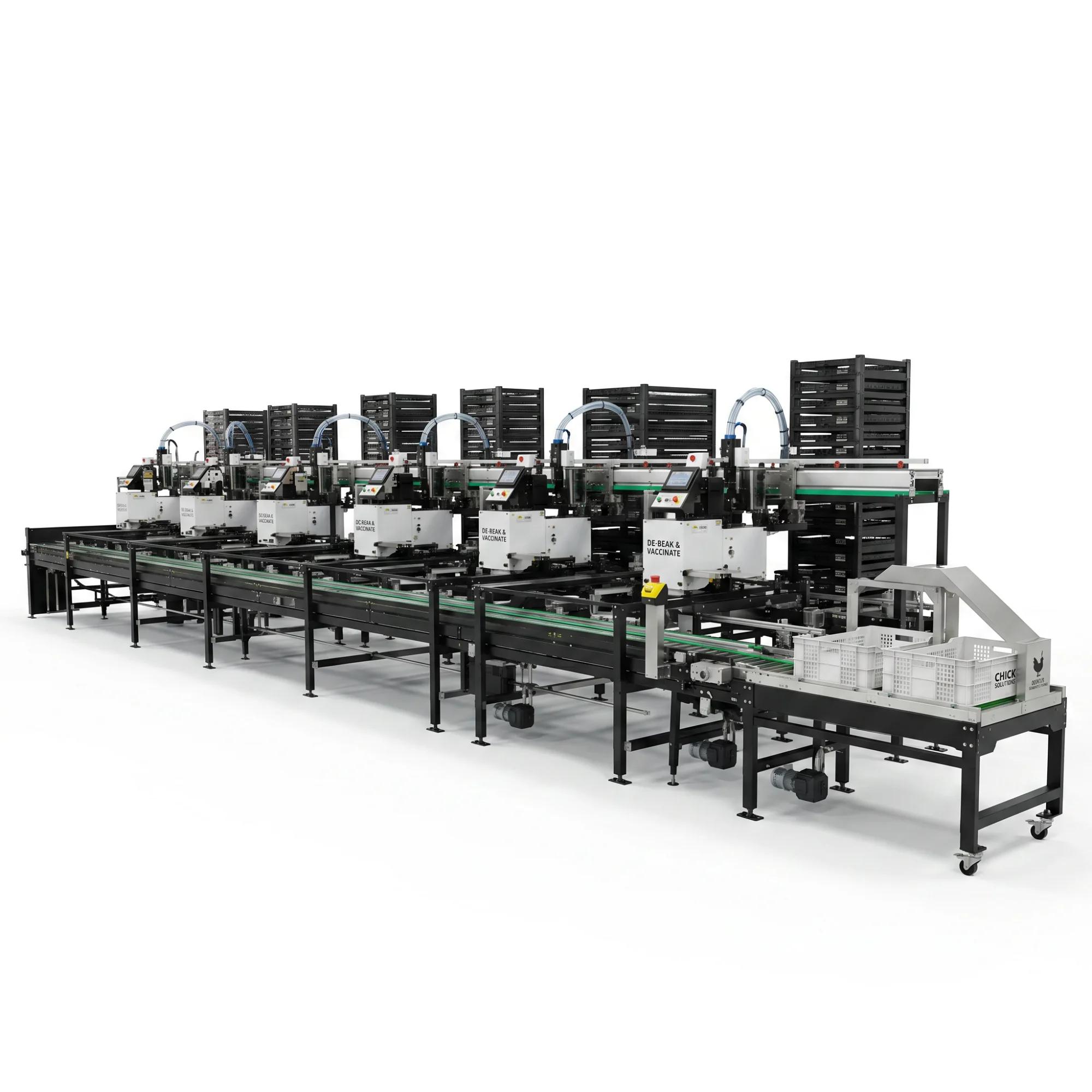
A day old chick conveying system should make the work between processing stations easier to see and control. It should not turn a short manual problem into a long automated one. Before discussing conveyor length or speed, walk the proposed route with production, maintenance, cleaning, and engineering. Give each person red tags and ask them to mark a place where flow, access, ownership, or recovery is unclear.
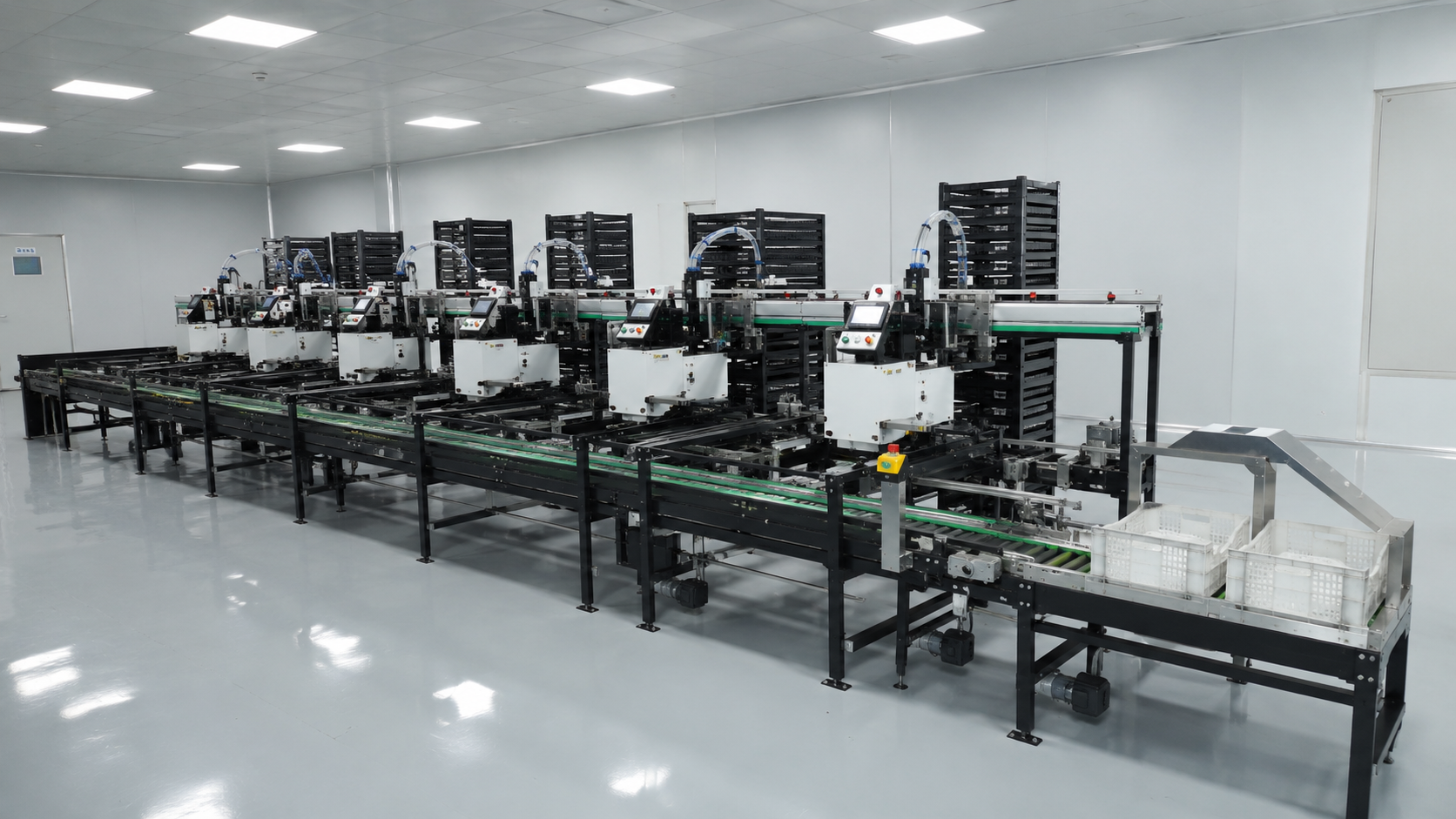
JuliSense provides conveying and stacking equipment within wider hatchery automation projects. This route-walk method helps a buyer describe the actual room and operating day before asking JuliSense for a layout or quotation.
Tag 1: Where the Conveying Route Begins
The first tag belongs at the release point. Define what arrives, how it is identified, who confirms readiness, and what condition allows movement. A conveyor cannot correct an unstable release pattern by itself.
Record the peak, not only the average
Write down normal and peak arrival intervals, batch sizes, container types, planned pauses, and the behavior of the upstream station. A short surge may matter more than an hourly average.
Name the release owner
Decide whether an operator, an upstream machine, or a line controller authorizes release. Put the decision on the interface list. The first boundary of a day old chick conveying system should never depend on an unwritten habit.
Tag 2: Corners, Crossings, and Visibility
Place a tag at every corner and every crossing with people, trolleys, crates, supplies, or cleaning equipment. These points affect visibility, guarding, access, and the time needed to recover from a stopped load.
Look at the room in three dimensions
A top-view drawing may hide overhead obstructions, columns, floor changes, door swings, drainage, and maintenance removal space. Ask for elevations and clearances beside the plan.
Test the operator's line of sight
An operator should understand whether the next zone is available without leaning across equipment or walking around a guard. If a signal is required, define what it means and who may respond.
Tag 3: Every Machine Handoff
The handoff is where mechanical position, container geometry, speed, sensors, controls, and operating ownership meet. Review each transfer as a small contract between two zones.
Write the normal handshake
State which zone requests movement, which confirms availability, when the load is considered transferred, and which system records the event. JuliSense can then discuss the control boundary with the surrounding equipment.
Rehearse a refused handoff
Ask what happens when the receiving zone is unavailable. The day old chick conveying system may stop, accumulate, divert, or wait for a controlled action. The choice needs a stated limit and a safe restart sequence.
For machinery risk assessment and risk reduction, ISO 12100 provides a general framework. Apply the requirements relevant to the final installation and destination.
Tag 4: Buffers and Full Zones
A buffer is useful when it absorbs a known short difference between processes. It becomes a problem when it hides a permanently slow station or creates uncertainty about batch identity.
Give the buffer a purpose
Define capacity, maximum holding condition, identification method, release rule, and owner. Include what happens when the buffer reaches its limit.
Follow the last load during a stop
During design review, trace the loads already committed to movement. The day old chick conveying system needs a destination for each one. This exercise often reveals that the real constraint sits beyond the conveyor.
Tag 5: Cleaning and Maintenance Access
Repeat the route walk after the production shift. The people who clean, inspect, isolate, and maintain the line may need space that is invisible during steady running.
Draw access with tools in hand
Mark isolation points, removable parts, inspection positions, tool clearance, and the path for replacing a component. Confirm which surfaces and zones belong to the equipment supplier and which belong to the site.
Keep sanitation decisions with the hatchery
The supplier can explain materials, access, removal, and equipment limitations. The customer's approved sanitation program defines methods, agents, verification, and release. WOAH standards provide relevant international animal-health and welfare references.
Tag 6: Stacking, Staging, and Dispatch
The route is not complete when a load reaches the final conveyor. Follow it through stacking, identification, staging, and collection. A full dispatch area can block every upstream station.
Model a late collection
Assume the next team or vehicle is delayed. Define the maximum staging condition, warning, escalation, and controlled response. This is part of the capacity discussion for a day old chick conveying system.
Keep batch information attached to movement
Decide how identity and exception information follow the load without creating unnecessary manual recording. A visible, simple method is usually easier to audit at shift change.
What to Send JuliSense Before a Layout Review
Share a scaled room plan, photos where permitted, route direction, container drawings or samples, batch pattern, connected equipment, utilities, traffic, cleaning constraints, dispatch method, and desired project boundary. The JuliSense product portfolio and service page can help frame the equipment and support discussion.
What should the first drawing show?
Ask for equipment zones, movement direction, elevations, operator positions, access, interfaces, utilities, buffers, and exclusions. Do not accept a line that shows only conveyor centerlines.
How should factory testing be planned?
Use representative containers and test release, transfer, full-zone response, planned stop, restart, and basic operator information. Record open items with an owner and closure evidence.
When is the route ready for a quotation?
The day old chick conveying system is ready for a comparable quotation when the route, interfaces, responsibilities, site work, testing, installation, training, spares, and exclusions are visible.
Turn the Red Tags Into a Handover Pack
The route walk should end with a small set of controlled documents that remain useful after the design meeting. Start with the latest approved layout and elevations. Add the container or box data, interface schedule, control-zone map, equipment list, customer-supplied work, supplier-supplied work, utility points, and access requirements. Each document needs a revision, owner, date, and approval state.
The handover pack should also explain the operating scenarios used during review. Record normal release, temporary accumulation, a downstream stop, recovery, a late dispatch, shift change, and post-production access. For each scenario, identify the expected line state, operator message, authorized action, escalation route, and evidence needed to return to normal operation.
Do not let the test record become a list of machine functions without operating context. A motor can run and a sensor can switch while the complete handoff remains unclear. Ask the project team to witness movement through the actual sequence, including the points where one zone requests and another zone accepts a load.
Finally, add training and maintenance evidence. The pack should identify the people trained, the role covered, the scenarios practiced, the documents issued, open questions, spare-part references, and the support contact. This is where a day old chick conveying system becomes something the next shift can understand rather than a route known only by the commissioning team.
What should remain open at handover?
Only controlled items with an impact, temporary measure where needed, named owner, due date, required proof, and authorized closer. Anything that affects safe operation, approved process requirements, or an agreed acceptance condition should be resolved before release.
How should early production be reviewed?
Agree a short review window after startup. Bring stop records, operator observations, repeated manual corrections, dispatch delays, cleaning access findings, and maintenance questions. Separate warranty issues from training gaps and future improvements so each receives the right action.
Finish the Walk With Fewer Red Tags
A useful day old chick conveying system removes ambiguity at the physical and control handoffs. The goal is not to eliminate every red tag in one meeting. It is to turn each tag into an owned decision before fabrication and installation. Send JuliSense the route data through the contact page to discuss a project-specific layout and scope.