


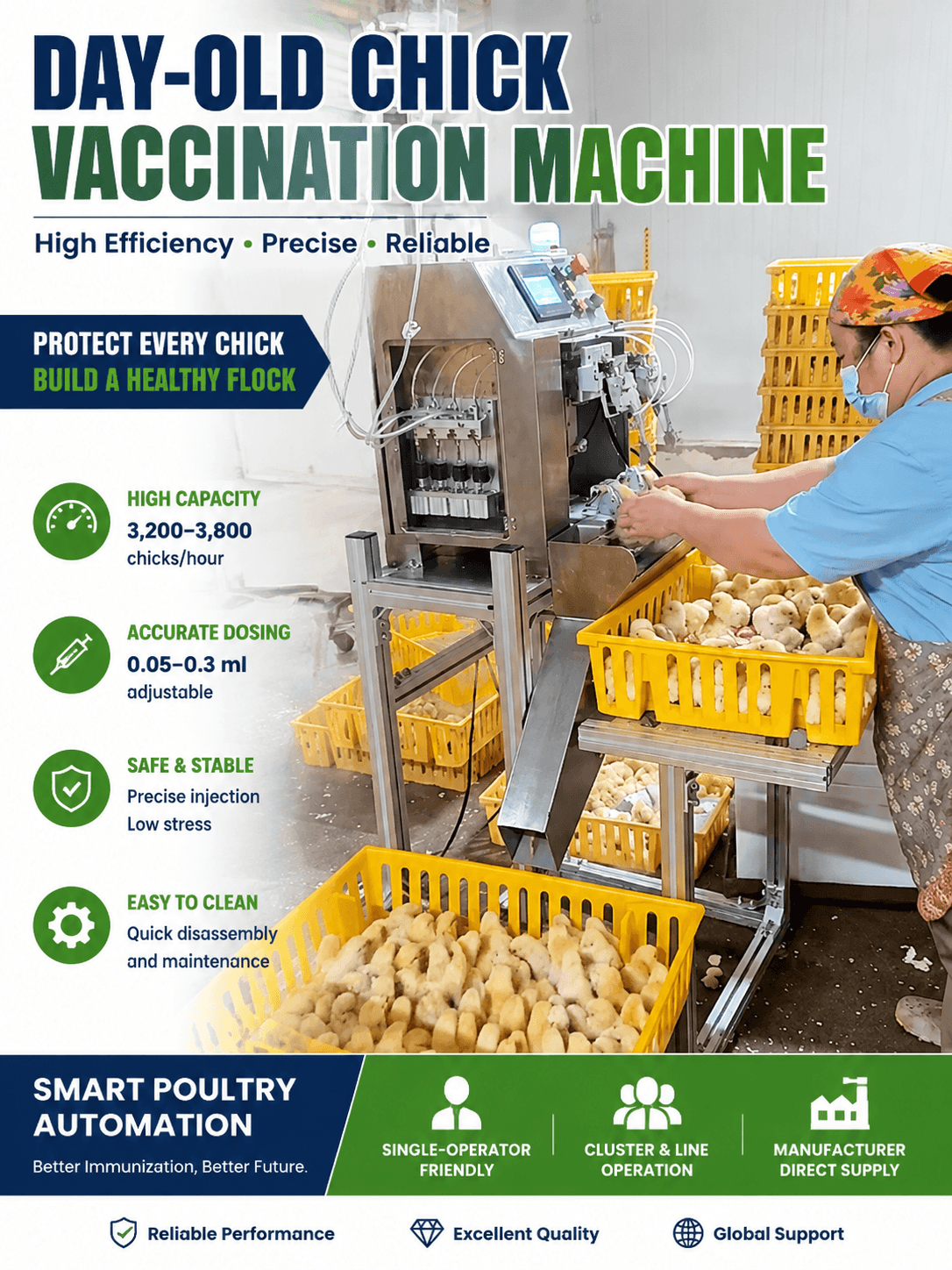
A day old chick injection vaccinator can look straightforward during a short demonstration. A real buying decision becomes clearer when the team follows an entire production day: preparation, start-up, operator rhythm, batch changes, controlled stops, cleaning, records, and handover.
This article is not a vaccination procedure. The hatchery's qualified veterinary or technical owner remains responsible for the approved program, vaccine handling, dose, route, monitoring, and response to exceptions. The equipment review asks a different question: does the station make the approved work easier to perform consistently and document clearly?
Before the First Chick Arrives
The production day begins before the machine runs. Watch how the room is prepared, how supplies move into the work area, and how the team confirms that the correct batch and approved program are ready.
An equipment discussion should define who may enter or change settings, where consumables are placed, how the station is released after preparation, and what the operator sees before starting. If these questions are left to informal practice, even a well-built machine can sit inside an unstable workflow.
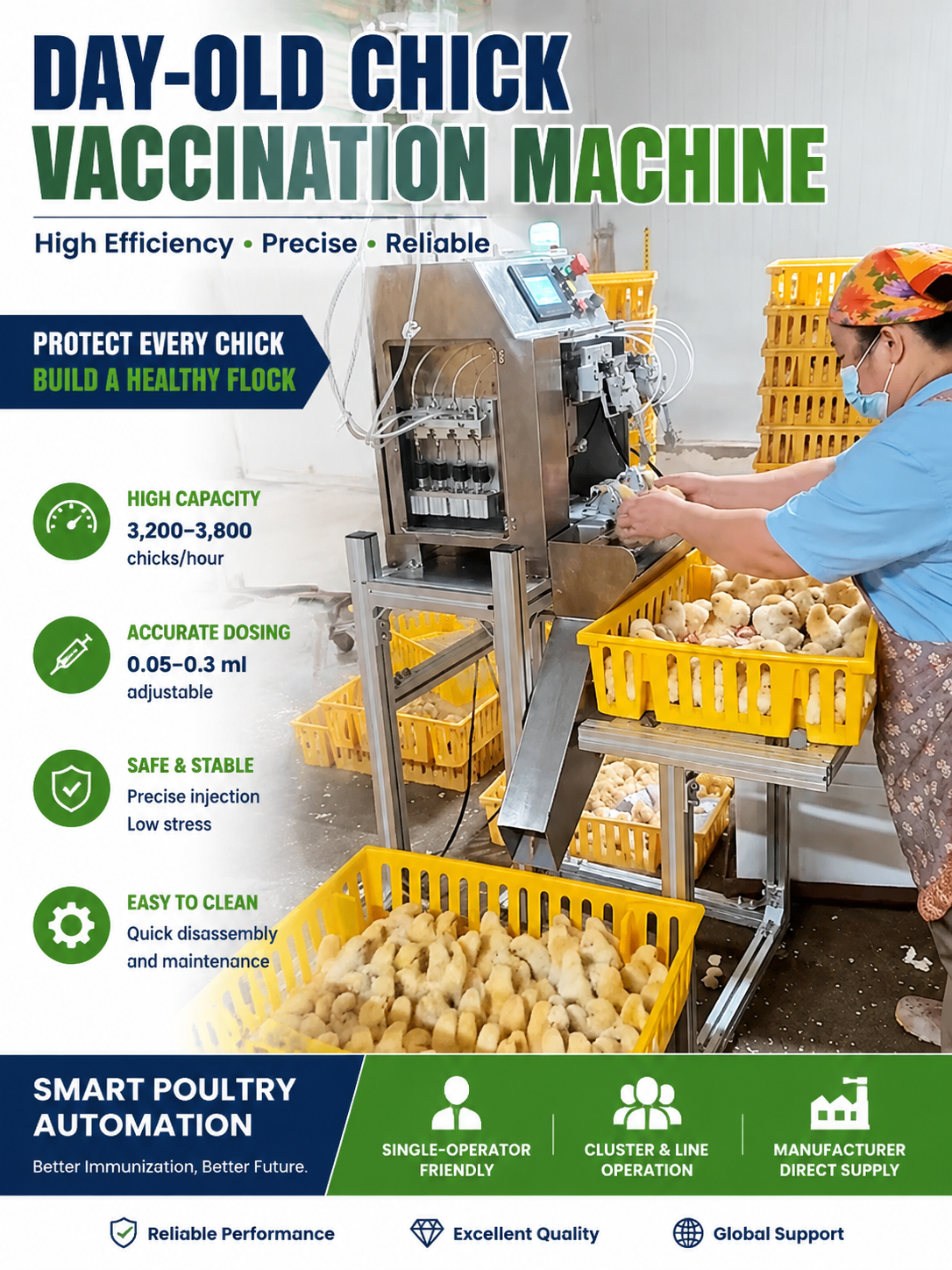
JuliSense lists a dedicated day-old chick injection vaccinator. Buyers should use the product page as a starting point, then review the exact selected configuration, accessories, documentation, and site interfaces in the quotation.
The First Ten Minutes: Look for Rhythm, Not Speed
When the shift begins, follow the people as closely as the counter. Is the operator position comfortable? Are the controls visible? Can supplies be reached without crossing another person's working area? Does the station create a clear inbound and outbound path?
The best early observation is often a small pause. A pause can reveal unclear positioning, a difficult reach, an awkward handoff, or a question about the next action. Record those moments. They are more useful than a single headline rate because they show whether the work can remain repeatable as operators change.
When evaluating a day old chick injection vaccinator, ask to observe more than one operator if possible. A station that depends on one experienced person's personal technique may require additional design, training, or work-instruction support.
Mid-Shift: What Happens When the Batch Changes?
Every hatchery has changes. A new flock, program, batch, operator, supply lot, or schedule can affect the work around the equipment. The project team should map which changes require technical approval, which require a documented operator action, and which require maintenance support.
A simple change record can contain:
- what changed and why;
- who approved the change;
- which machine configuration or work instruction applies;
- what must be checked before restart;
- what record proves the change was completed.
This is also where the buyer should ask how access is controlled. Customer-approved settings should not be treated the same as normal operator actions. Separating those permissions improves training and reduces avoidable variation.
The Controlled Stop Tells the Truth
Smooth running shows only one condition. Ask the supplier to demonstrate or explain a controlled stop, an interrupted supply, and an unavailable downstream handoff. Observe what the operator sees, where chicks wait, how the cause is identified, and how the station is released again.
The installed machine must be reviewed as part of the wider working area. ISO 12100 describes a general machinery risk-assessment and risk-reduction approach. The buyer's engineering and safety teams should confirm the standards and local requirements that apply to the final installation.
A supplier does not need to promise that every interruption disappears. A stronger answer shows how common interruptions are detected, contained, recorded, and recovered without confusion.
The End of the Batch: Cleaning Access Becomes Visible
A glossy product image cannot show the full sanitation experience. At the end of a batch, ask which parts are removed, where they are placed, which surfaces are difficult to see, how reassembly is confirmed, and who releases the station for use.
Sanitation and maintenance teams should attend this review. They often identify access, drainage, tool, storage, and verification questions that production may not notice during normal running.
The day old chick injection vaccinator quotation should name the supplied cleaning and maintenance information. It should also clarify which procedures are provided by the equipment supplier and which remain part of the customer's approved biosecurity and veterinary program.
Handover: The Record Should Explain the Shift
At shift handover, the next team should not have to reconstruct what happened from memory. The project should define the records that matter: batch identity, approved program reference, operator, start and stop events, exceptions, cleaning release, maintenance action, and open items.
The USDA APHIS Defend the Flock resources emphasize practical, ongoing biosecurity across poultry operations. Vaccination decisions should likewise remain inside a planned veterinary program rather than being reduced to a machine setting. Buyers should follow their veterinarian, vaccine supplier, regulations, and approved internal procedures.
Equipment records should support that governance. They should not replace it.
What a Useful Demonstration Should Include
Instead of asking only for a running video, ask the supplier to structure the demonstration around the production day:
A useful day old chick injection vaccinator demonstration should connect each scene to an operator decision, approval boundary, or piece of evidence.
- preparation and release;
- normal operation with the intended operator arrangement;
- a batch or approved-setting change discussion;
- a controlled stop and restart;
- cleaning access and reassembly;
- example records and alarm information;
- maintenance points and spare-part discussion.
Jili Intelligent can use this agenda to connect product evidence to the customer's workflow. JuliSense's broader service information can then be translated into a project-specific plan for testing, commissioning, training, and support.
Who Should Join the Purchase Decision?
Production can judge operator rhythm and batch flow. The veterinary or technical owner can protect the approved program. Quality can review records and traceability. Sanitation can evaluate access. Maintenance can review service points and spares. Engineering can check utilities and interfaces. Procurement can make sure the commercial scope reflects those decisions.
If one group selects the day old chick injection vaccinator alone, important questions usually arrive late. A short cross-functional review before quotation is less expensive than redesigning the work area or responsibility plan after delivery.
Frequently Asked Questions
Is an injection vaccinator selected only by hourly capacity?
No. Capacity matters, but the decision should also cover approved application, handling, operator rhythm, change control, stops, cleaning, records, training, and support.
Who approves vaccine dose and route?
The hatchery's qualified veterinary or technical owner should approve the program in line with the vaccine supplier's instructions and applicable requirements.
Can one machine support different programs?
That depends on the selected configuration and approved process. Ask the supplier to explain change boundaries, permissions, documentation, and any required components.
What should a factory acceptance test cover?
It should cover the agreed configuration and test plan, including normal functions, stops, controls, access, documents, and open-item handling.
Should operators attend factory testing?
When practical, operator participation can reveal workflow and training questions early. Technical, engineering, or maintenance representatives may also be useful.
What information is needed for a quotation?
Provide the approved application, chick and batch information, work schedule, room layout, utilities, operator plan, adjacent equipment, destination, and service needs.
How should cleaning requirements be discussed?
Ask for removal points, access, tools, reassembly checks, supplied instructions, and the boundary between machine guidance and the customer's sanitation procedure.
What spare parts should be considered?
Request a configuration-specific recommendation for commissioning and routine spares, then review it with maintenance and procurement.
Can the station be integrated into a processing line later?
Potential integration should be planned early. Confirm product flow, controls, utilities, space, data, and responsibility for future modifications.
Does JuliSense provide support after delivery?
JuliSense describes installation, commissioning, training, and support capabilities. The exact scope, location, timing, and commercial terms should be written into the project agreement.
Turn One Production Day Into a Better RFQ
A day old chick injection vaccinator should make the approved vaccination workflow easier to run, review, and support across many production days. The strongest RFQ describes the complete day, including the moments when the process changes or stops.
Share your approved program boundary, batch pattern, room, operator plan, utilities, required records, and support expectations with Jili Intelligent through the JuliSense contact page. Ask for a configuration review, product evidence, and a production-day demonstration plan.