


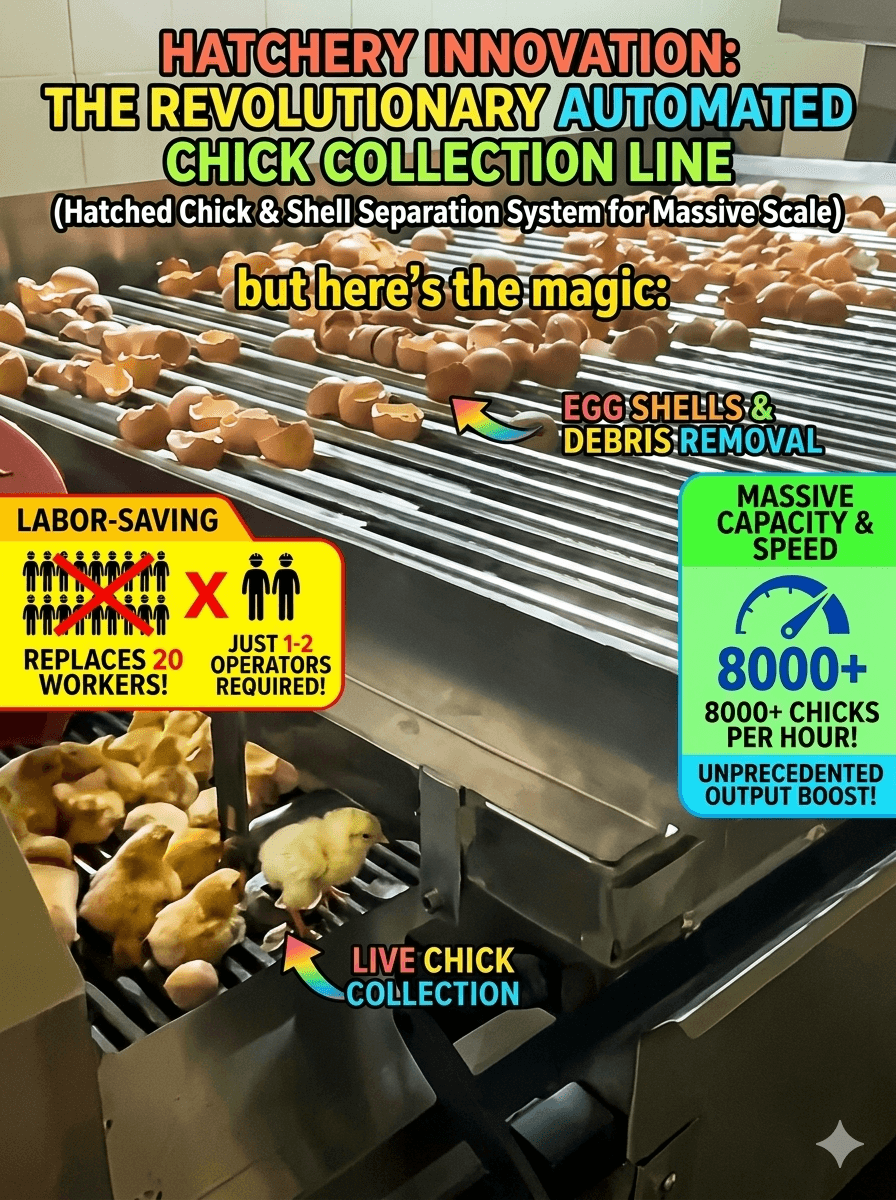
A day old chick processing equipment line balance is not proved by adding the rated capacities printed beside separate machines. Give one representative batch a colored token and carry it from arrival to dispatch. Each time the token stops, write the reason, owner, duration, current work, and next decision on a traffic-light board.
The token turns a long process into a story that production, engineering, quality, welfare, and procurement can all challenge.
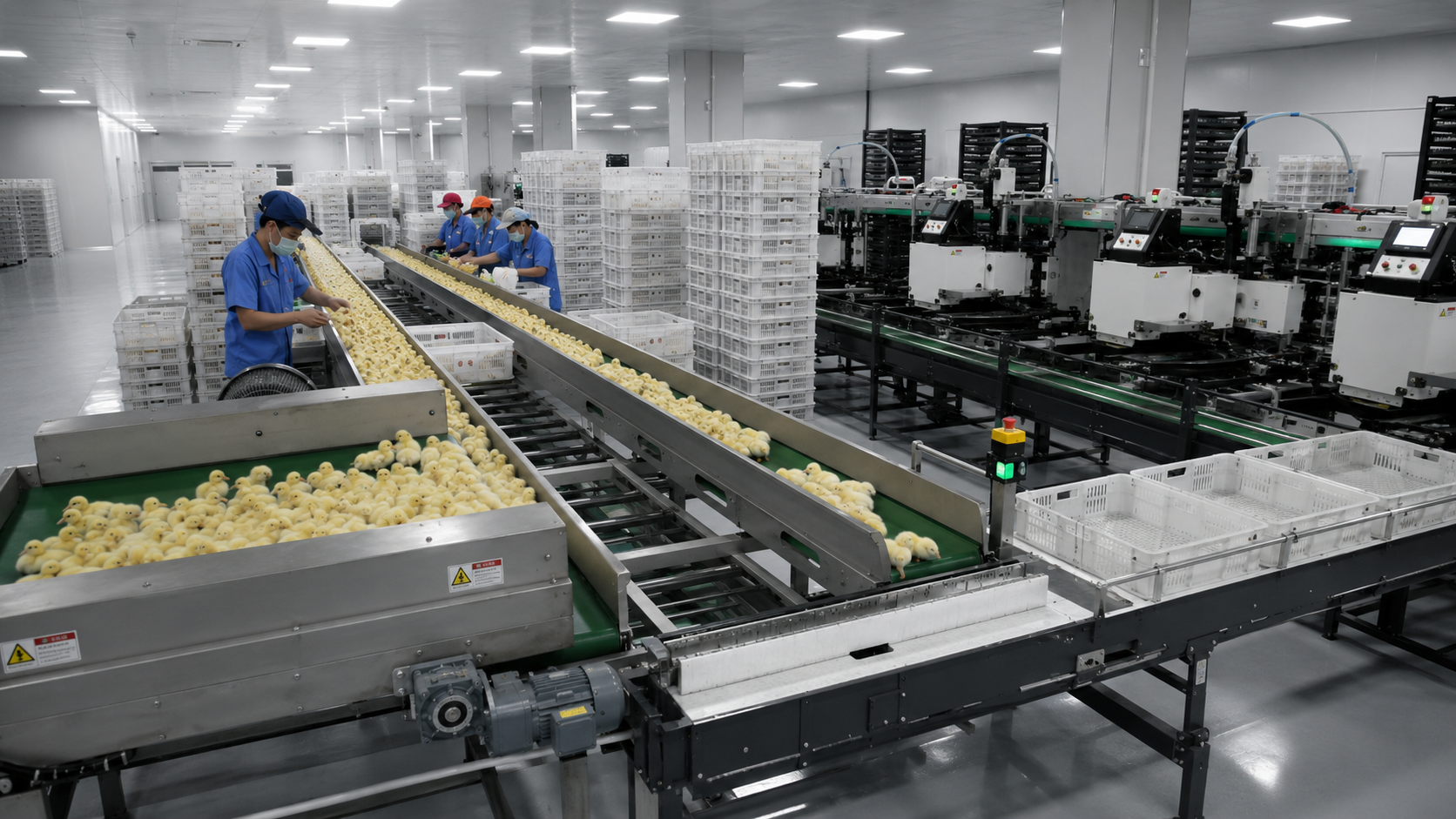
Give the Token a Real Identity
Define the representative batch before drawing conclusions. Record its size, source context, arrival pattern, customer-approved handling requirements, containers, planned route, staffing, and expected destination. A convenient sample can make almost any line look smooth.
Jili Intelligent presents integrated day-old chick processing equipment through JuliSense. Buyers should confirm the final equipment combination, capacity basis, interfaces, and process ownership for their project.
Choose an ordinary difficult batch
Do not select only the cleanest or easiest condition. Use normal variation that the hatchery expects and can manage, without deliberately creating an unsafe or unauthorized trial.
Set the clock rules
Agree when timing begins, what counts as productive movement, when a wait starts, how overlapping work is recorded, and who validates the notes.
Station One: Arrival Sets the Rhythm
The first station often determines whether the rest of the line receives a stable flow or a series of surges. Record unloading, identification, staging, release, and the handoff into processing.
During a day old chick processing equipment line balance review, ask whether arrival variability is absorbed intentionally or simply pushed downstream.
Separate planned staging from waiting
Planned staging has a location, limit, duration, owner, and release rule. Waiting is what happens when one of those elements is missing.
Observe the first ten minutes
Startup behavior can be different from steady operation. Note incomplete staffing, supply preparation, initial checks, communication, and the first correction made by an experienced operator.
Station Two: Count Touches, Not Just Output
At every processing position, count repeated touches, re-presentation, turning, lifting, walking, documentation, replenishment, and requests for help. Hidden work explains why a station with adequate nominal capacity can still constrain the shift.
Put operator work beside machine time
Use two columns. One records equipment movement; the other records human work required to keep that movement reliable. The comparison prevents labor from disappearing inside a machine-rate claim.
Protect qualified oversight
The customer's animal-health and welfare owners should define applicable observations, limits, and stop criteria. The World Organisation for Animal Health Terrestrial Code provides internationally recognized references, while destination requirements and customer procedures govern the actual operation.
Station Three: A Buffer Is a Decision
A buffer is not merely spare floor space. It has a purpose, capacity, time limit, status rule, escalation point, and owner. Without those decisions, a buffer can hide an unstable handoff until it overflows.
Draw the traffic light
Mark green when the batch moves under the agreed condition, amber when it waits inside a controlled rule, and red when ownership, limit, information, or recovery is unclear.
Read the board in both directions
A downstream queue may begin with an upstream surge, while an upstream hold may be caused by a downstream release decision. Trace each red or amber event backward and forward before assigning a cause.
Station Four: Test the Handoff, Not the Machines Alone
Integrated performance lives between stations. Confirm physical alignment, container or product presentation, speed coordination, signals, status visibility, reject or hold routes, and the authority to pause or resume transfer.
For general machinery risk assessment and risk reduction, ISO 12100 offers a framework. Relevant standards, laws, risk assessments, and site rules apply to the complete installed system.
Freeze one handoff safely
During an agreed controlled interruption, record where the token is, what each adjacent station reports, what the operator can see, what work is protected, and who directs recovery.
Watch for starvation and blocking
Starvation means a station cannot work because the expected input is unavailable. Blocking means it cannot release completed work. Both conditions deserve a timestamp and an upstream/downstream explanation.
Station Five: Dispatch Can Become the Real Constraint
The token is not finished when the last machine cycle ends. Follow identification, inspection or release, container movement, staging, paperwork, communication, and departure from the processing area.
The day old chick processing equipment line balance must include the final customer decision and physical exit, not stop at the final powered station.
Give dispatch a maximum hold rule
Define how much may wait, for how long, under whose supervision, with what status information, and what action follows when the limit is approached.
Include the next destination
A well-balanced internal line can still create congestion at loading, vehicle preparation, documentation, or another customer-controlled interface.
Read the Board After a Full Operating Window
At the end of the agreed observation period, group delays by address rather than by opinion. Useful addresses include arrival, station work, replenishment, handoff, controlled buffer, quality decision, exception route, cleaning access, and dispatch.
This gives the day old chick processing equipment line balance a common vocabulary for delays that several teams may otherwise describe differently.
| Board color | Meaning | Required action |
|---|---|---|
| Green | Flow matched the agreed condition | Keep the supporting evidence |
| Amber | A controlled wait occurred | Confirm limit, owner, and recovery |
| Red | State, responsibility, or route was unclear | Change scope, layout, method, or training |
Look for repeated small amber events
One two-minute wait may be harmless. The same wait ten times per hour can control the shift. Frequency and accumulated effect matter.
Do not average away the sequence
An hourly average cannot show a twelve-minute queue followed by twelve minutes of starvation. Keep the event order beside the totals.
Change One Variable at a Time
When the team finds a constraint, test one change before moving several controls, staffing assumptions, buffer limits, or arrival patterns together. Otherwise, the result cannot show which decision helped.
Start with ownership and information
Some delays do not require faster equipment. A visible status, clearer release rule, prepared replenishment, or named exception owner may remove the wait.
Recheck the day old chick processing equipment line balance after that low-cost change before adding equipment or buffer space.
Recheck the neighboring stations
Improving one location can move the queue elsewhere. Repeat the token route through the next handoff and dispatch before accepting the change.
Convert the Token Route Into a Buyer Specification
Use the observed story to define representative conditions, required interfaces, buffer rules, staffing assumptions, evidence, controlled-stop scenarios, and acceptance questions. JuliSense discusses project planning, commissioning, training, and support on its service page.
The specification should state what the expected capacity includes and excludes. It should also explain the basis of any throughput figure rather than presenting a universal promise.
Which data should a buyer share?
Share batch pattern, planned volume, workflow, building constraints, operating hours, staffing, customer-controlled protocols, existing equipment, utilities, cleaning method, and dispatch requirements.
Can nameplate capacity prove balance?
No. Separate ratings do not prove coordinated arrivals, handoffs, buffers, operator work, recovery, and final release under representative conditions.
A buyer should ask how the day old chick processing equipment line balance will be demonstrated and which customer-controlled conditions form the test basis.
Who should observe the token?
Include production, engineering, quality, qualified welfare or veterinary ownership, sanitation, maintenance, project management, and supplier interface owners.
How can JuliSense support the review?
Use the JuliSense contact page to share the process map and request equipment, layout, interface, commissioning, and support information for the proposed line.
One Token Keeps the Whole Line Honest
A day old chick processing equipment line balance becomes understandable when one real batch is followed without skipping waits, handoffs, decisions, or dispatch. JuliSense can help organize the equipment and interface discussion around that route. The result should be a line the customer can explain and operate, not merely a sum of attractive machine speeds.