


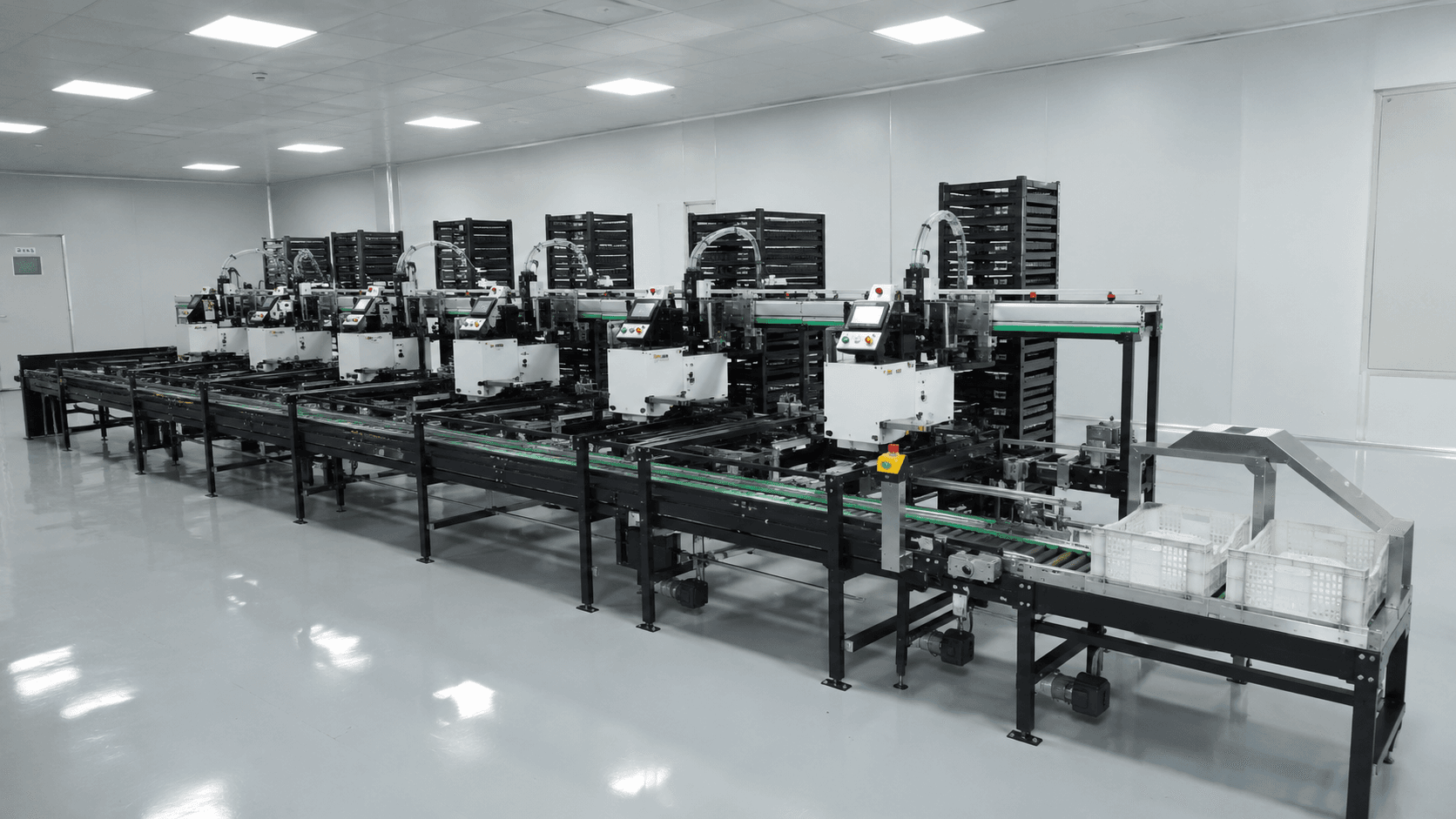
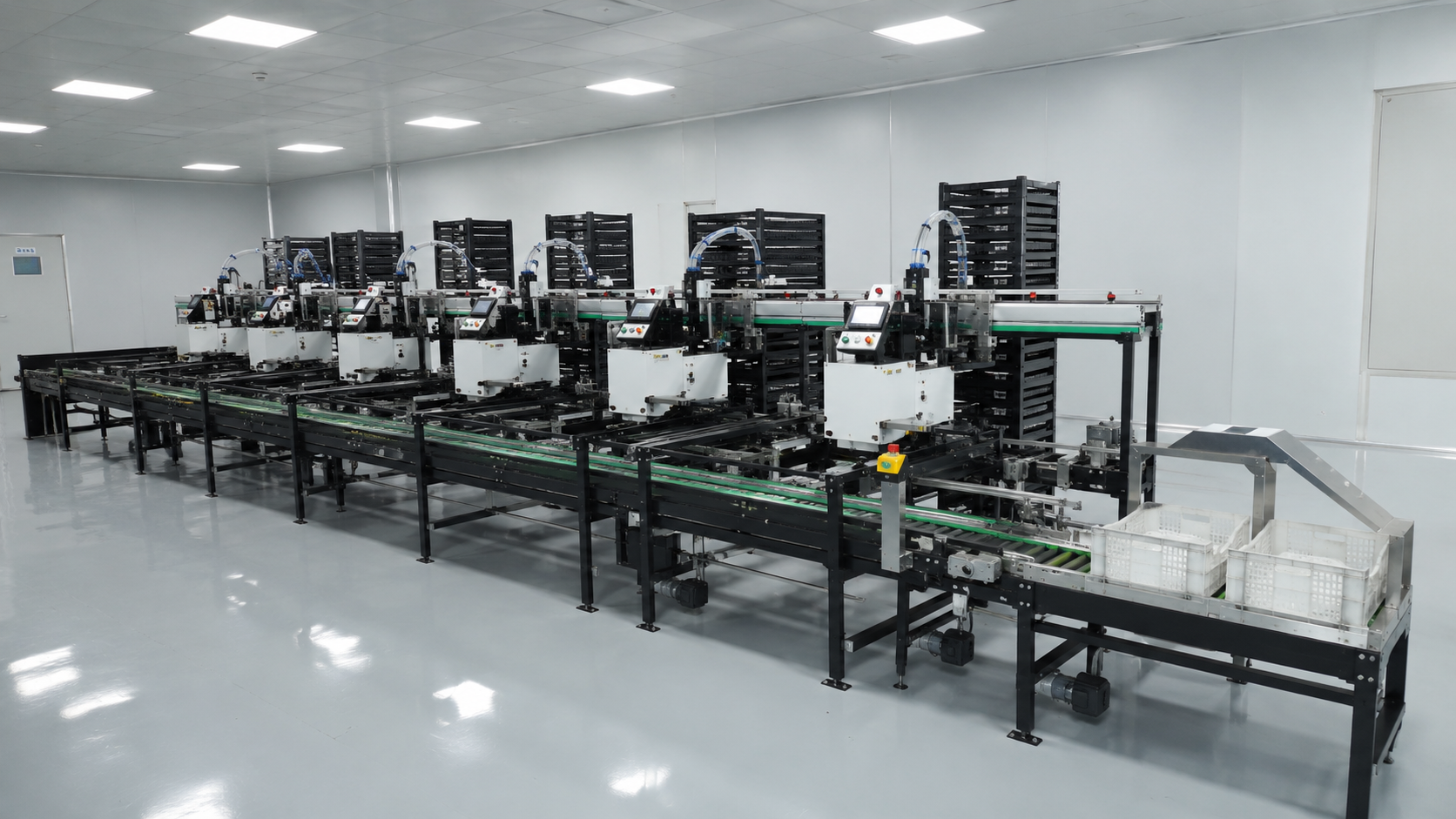
day-old chick transfer machine is searched by hatcheries that want to improve high-volume day-old chick handling after hatching. The buyer is usually looking for a better way to manage basket tipping, chick transfer, shell handling, boxing, and the handoff into downstream processing.
Jili material for automatic chick picking and transfer equipment references about 50,000-70,000 chicks per hour, 2-3 operators, about 8-10 seconds per basket tipping cycle, about 7.5 kW total power, and about 95% single-box chick accuracy. Buyers can review the Jili Day-Old Chick Picking and Transfer Machine.
Search Intent Behind day-old chick transfer machine
This is a high-intent commercial keyword. Buyers are preparing to compare equipment for a real hatchery flow, so the article must answer capacity, operator, layout, waste handling, and downstream connection questions.
Where the Machine Fits
The machine belongs at the start of chick handling, before later beak treatment, vaccination, conveying, stacking, or boxing stages. Stable transfer flow helps later stations work with a more predictable input.
Key Planning Data
| Planning factor | Jili reference information |
| Main work | Picking, transfer, basket tipping, shell handling, chick boxing |
| Reference capacity | About 50,000-70,000 chicks per hour |
| Operators | 2-3 operators |
| Single basket tipping | About 8-10 seconds |
| Power | About 7.5 kW |
| Single-box chick accuracy | About 95% |
Buyer Checklist Before RFQ
- Prepare hatcher basket dimensions and current manual process.
- Map egg shell, waste, and chick flow direction.
- Compare transfer output with downstream station capacity.
- Plan operator access, cleaning route, and maintenance space.
- Share room drawings or photos for an accurate layout discussion.
Related Product Links
The main product is the Jili Day-Old Chick Picking and Transfer Machine. If movement after transfer is also part of the project, buyers can review the Jili Conveying and Stacking Line or Jili Complete Hatchery Automation Solutions.
Commercial Questions Buyers Often Ask
For day-old chick transfer machine, buyers need to connect machine capacity with the real hatchery flow. The important questions include hatcher basket size, tipping rhythm, egg shell handling, chick boxing method, downstream station speed, and how many operators will work around the transfer area. These details decide whether the equipment reduces handling pressure or only moves the bottleneck to another station.
A strong inquiry should include room photos, basket dimensions, daily chick volume, current manual process, shell and waste route, and the next process after transfer. With that information, Jili can discuss whether the transfer machine should operate alone or connect with conveying, stacking, beak treatment, or a wider automation plan.
Decision Points Before Final Selection
For day-old chick transfer machine, the final decision should connect machine output with the next stage of chick handling. Buyers should compare basket tipping rhythm, shell route, chick boxing flow, operator positions, and whether downstream treatment or conveying can receive the transfer output smoothly. This prevents the project from moving the bottleneck from one station to another.
FAQ
Where does this machine fit in a hatchery?
It fits near the start of day-old chick handling, before downstream processing or conveying.
What capacity is referenced in the material?
Jili material references about 50,000-70,000 chicks per hour.
Why does downstream flow matter?
A fast transfer section still needs a downstream station that can receive the output smoothly.
What should buyers send for quotation?
Send basket dimensions, daily volume, current process photos, floor plan, and downstream handling requirements.
Which product page matches this keyword?
Use the Jili Day-Old Chick Picking and Transfer Machine product page.