


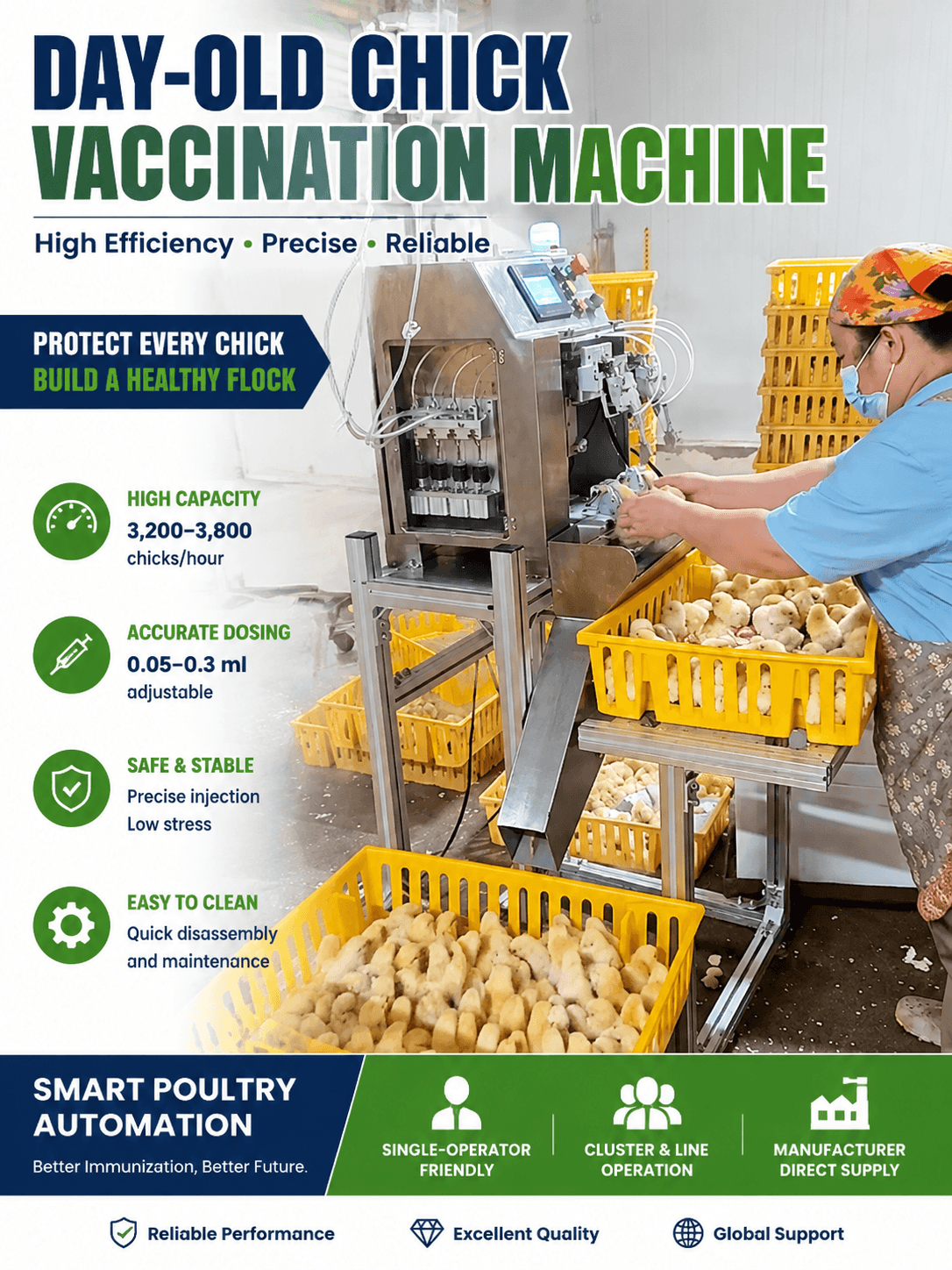
Buying a vaccination machine for a day-old chick room usually starts with a short request: capacity, price, delivery date, and a machine photograph. The better request starts with the work behind those numbers. A useful day old chick vaccination equipment buying guide helps a hatchery compare the approved application, chick presentation, preparation flow, interruptions, records, cleaning, acceptance, and service—not just the injection moment.
This matters because two quotations can show similar output while asking the production team to do very different work. Use the guide below to create an RFQ that a supplier can answer clearly and that your operators, technical team, sanitation team, and procurement team can review together.
Start With the Job, Not the Machine Name
Before contacting suppliers, write one plain-language description of the job. State the chick age, flock or batch pattern, approved vaccination application, operating window, current handling method, downstream handoff, room limitations, and the result the project should improve.
For example, the requirement may be to make a repeated vaccination station easier to staff during the morning peak, reduce avoidable handling, keep batch identity visible, and give the technical team a controlled restart process. That is more useful than saying “we need an automatic vaccinator.”
Separate the biological decision from the equipment decision
The hatchery’s qualified veterinary or technical owner defines the approved program, application, verification, and release criteria. The equipment supplier should explain how the proposed configuration supports that approved work. It should not replace the customer’s professional program with a generic promise about results.
Include the applicable procedure, injection route, approved consumables, batch identification method, and verification responsibility in the RFQ. If vaccine preparation, warming, mixing, or transfer is part of the same controlled process, show those handoffs as well.
The Seven-Box RFQ Scorecard
Ask every supplier to answer the same seven boxes. A response can be short, but it should identify the proposed configuration, assumption, owner, and evidence for each box.
Box 1: Application and configuration
Ask what the equipment is configured to do for your approved application. Request the injection arrangement, needle or applicator configuration, adjustable parameters, operator controls, guarding, change parts, consumables, and any options that affect the quoted scope.
Do not accept a family-level product name as the complete answer. The quotation should make it possible to tell whether the proposed day old chick vaccination equipment buying guide comparison is looking at the same application, the same number of operators, and the same accessories.
Box 2: Chick presentation and operator work
Ask the supplier to describe how chicks arrive, how they are presented, what the operator can see, and what happens when the rhythm changes. A rated output only becomes useful when the presentation method, posture, reach, supply access, and training assumptions are visible.
Invite two or three operators to review a drawing or demonstration. Ask them to mark where they stand, where they place trays or containers, where they look for status, and what they do after a pause. Their notes often expose hidden work that a product brochure cannot show.
Box 3: Preparation and supply handoffs
Map the route from approved preparation to the injection point. Identify who releases the material, how it is labelled, how it reaches the station, how the equipment indicates readiness, and what happens if the next batch is delayed.
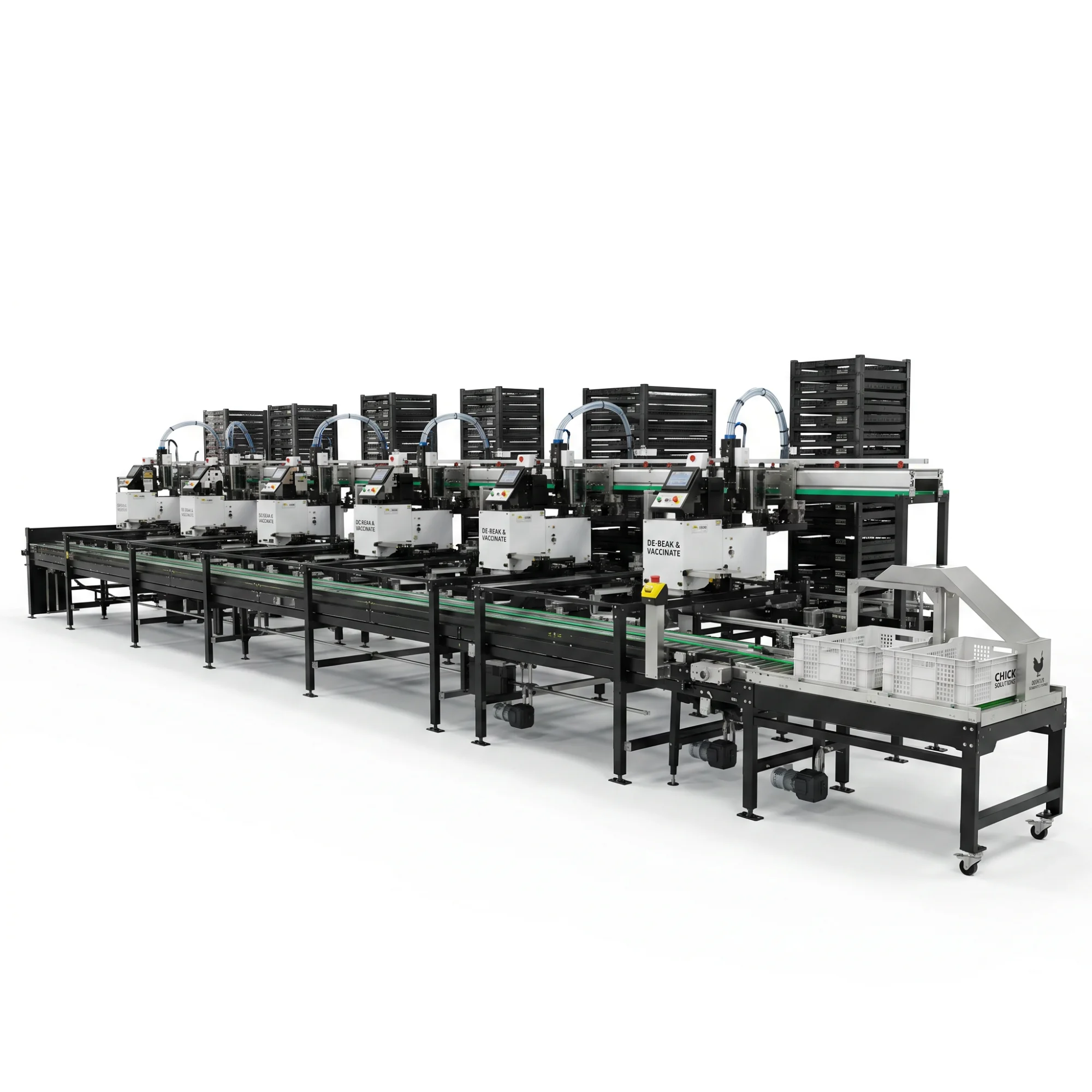
JuliSense presents equipment for day-old chick handling, vaccination, connected processing, and wider hatchery automation. Review the relevant JuliSense products together with the actual room and process boundary. A nearby preparation device is not automatically an integrated solution; the controls, containers, records, cleaning, and responsibilities still need to be defined.
Box 4: Interruption and restart behavior
Include at least three realistic interruptions in the RFQ: a supply pause, a downstream-not-ready condition, and a machine alarm requiring attention. Ask what stops, what remains identified, what the operator sees, who may intervene, and who authorizes restart.
A strong supplier answer will distinguish operator actions from maintenance or technical-support actions. It will also explain how affected chicks or batches are held, reconciled, and released according to the customer’s approved procedure.
Box 5: Records and traceability
Decide which records are needed for production, technical review, quality, and service. Typical fields may include batch identity, setup confirmation, start and finish, interruptions, corrective actions, parameter changes, maintenance events, and release.
Ask which information is stored in the machine, which belongs in the hatchery’s system, and which remains a controlled manual record. Avoid collecting data merely because the controller can display it. The useful question is whether the record helps someone make a decision or investigate a repeated issue.
Box 6: Cleaning, access, and release
Ask the supplier to mark contact areas, removable parts, inspection points, tools, utilities, drainage assumptions, and access needed for cleaning and maintenance. Then ask the hatchery’s sanitation and maintenance teams to walk the proposed sequence.
JuliSense can explain equipment materials, access, and limitations. The hatchery remains responsible for approved cleaning agents, contact times, verification, biosecurity, and release. Relevant international animal-health context can be reviewed through WOAH standards; the site’s approved procedures govern the actual work.
Box 7: Acceptance and service
Ask for a draft factory and site acceptance outline before you compare the final price. It should identify representative inputs, normal operation, planned stops, alarms, restart, records, connected interfaces, training, open items, and closure evidence.
Also ask what support is included after installation: response route, remote or on-site boundaries, spare-parts information, documentation updates, training refreshers, and escalation. The JuliSense service page can be reviewed alongside the project-specific support scope.
How to Compare Three Quotations Without Losing the Plot
Put the quotations into one comparison sheet with four columns: included, assumed, customer-supplied, and still open. This simple separation prevents a low equipment price from hiding missing utilities, controls, change parts, installation, training, validation support, or production-transition work.
Score each quotation against the seven RFQ boxes, but do not turn the decision into a mechanical total. Mark every critical input as confirmed, provisional, or unknown. An unknown room dimension, peak rhythm, interface behavior, or cleaning requirement should become a follow-up action before approval.
Use a “show me” rule for important claims
If a supplier says the machine is easy to clean, ask to see the access and release sequence. If the claim is stable output, ask to see representative presentation, a planned pause, and restart. If the claim is easy integration, ask for the mechanical, electrical, control, data, utility, and responsibility boundaries.
For the installed arrangement, ISO 12100 provides a general framework for machinery risk assessment and risk reduction. The final project still needs the applicable destination requirements and customer approvals.
Questions to Ask Before the Purchase Order
Use these questions in the supplier meeting:
- Which exact application and configuration are included in the quotation?
- What operator presentation method and staffing pattern are assumed?
- What happens to the machine and affected batch during a short interruption?
- Which parameters can operators change, and which require authorized technical review?
- What cleaning, inspection, and reassembly tasks must be completed before release?
- Which documents, drawings, records, spare parts, and training materials are delivered?
- What is tested at the factory, what is tested on site, and how are open items closed?
- Who owns utilities, installation, line interfaces, software access, and local compliance work?
- What support route should the customer use after commissioning?
A supplier that answers these questions directly makes the commercial decision easier to explain internally. A supplier that only repeats headline capacity leaves the real project work for later.
When a Standalone Station Is the Better First Move
Not every hatchery needs a fully connected line on day one. A standalone or partially integrated station may fit when the surrounding flow is stable, the project is staged, the room favors independent operation, or the customer wants to validate one bottleneck before expanding.
The important condition is that future interfaces are not hidden. Reserve practical space, utility routes, control capacity, documentation, and responsibility boundaries if a later connection is likely. Review the complete hatchery automation solutions context while keeping the current purchase scope explicit.
Where JuliSense Fits in the Buying Conversation
JuliSense supports discussions around hatchery equipment, day-old chick processing, vaccination-related stations, conveying, stacking, and integrated automation. The right scope depends on the customer’s approved application, room, batch pattern, operators, utilities, records, sanitation program, and future plan.
Before requesting a proposal, share the process map, representative batch pattern, layout, operator positions, connected equipment, cleaning boundary, required records, destination, and timing. The JuliSense company profile and FAQ page provide useful background, while the exact configuration and responsibilities should be confirmed in the project response.
Frequently Asked Questions
What is the most important detail in an RFQ?
Describe the approved application and the complete work around it: chick presentation, preparation, interruptions, records, cleaning, staffing, and acceptance. A target capacity alone is not enough.
Should I compare a poultry vaccination machine by rated output?
Rated output is one input, not the decision. Compare it with actual presentation, operating window, staffing, supplies, downstream availability, cleaning, and restart behavior.
Do I need to include vaccine preparation equipment?
Include it when preparation is part of the approved workflow or creates a repeated handoff problem. Ask the supplier to define interfaces and customer responsibilities rather than assuming two adjacent machines are one system.
What should be demonstrated before acceptance?
Demonstrate the agreed configuration, representative operation, a planned interruption, alarm and restart behavior, records, cleaning access, documentation, training, and connected interfaces that are within the agreed test boundary.
How can I request a project-specific quotation from JuliSense?
Send the approved application, batch pattern, room layout, operator plan, utilities, connected equipment, records, cleaning requirements, destination, and schedule through the JuliSense contact page.
Build the RFQ Before You Buy the Equipment
The best day old chick vaccination equipment buying guide is the one that helps the customer and supplier discuss the same work. Make the configuration, operator role, interruption logic, records, cleaning, acceptance, and service boundary visible before comparing prices.
When those details are clear, JuliSense can respond to the actual hatchery project rather than a vague machine request. That gives your team a more useful basis for selection, a cleaner path to commissioning, and a stronger starting point for future automation.