


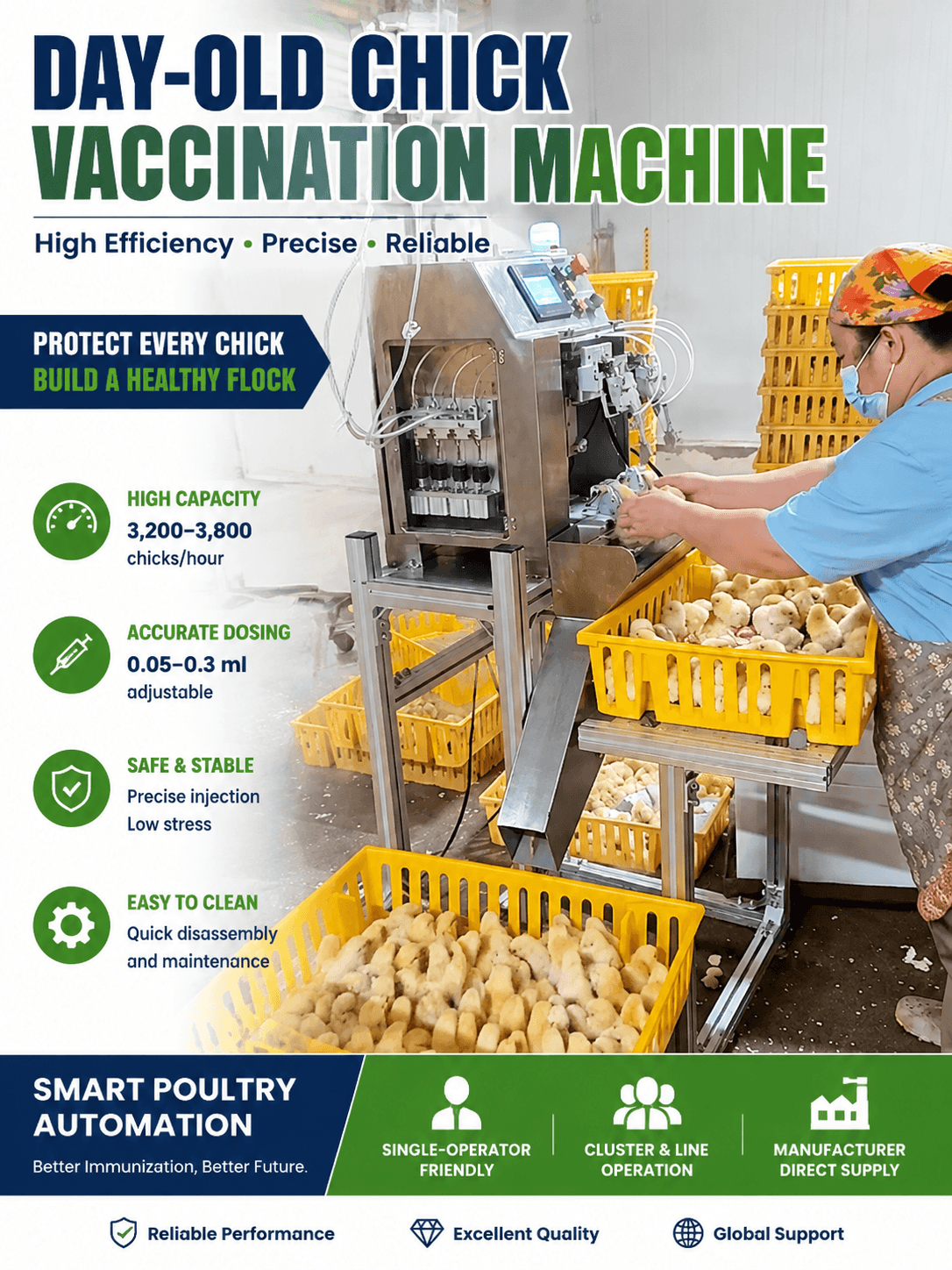
A day old chick vaccination machine rarely works in a world where every batch is identical. Flock details, vaccination programs, staffing, room conditions, cleaning windows, and record requirements can change. The purchase decision should therefore ask a simple question: when one condition changes, what else must be reviewed?
This Jili Intelligent change matrix helps technical, production, and procurement teams discuss those connections before a quotation becomes a purchase order. It does not replace the customer's veterinary approval or product instructions.
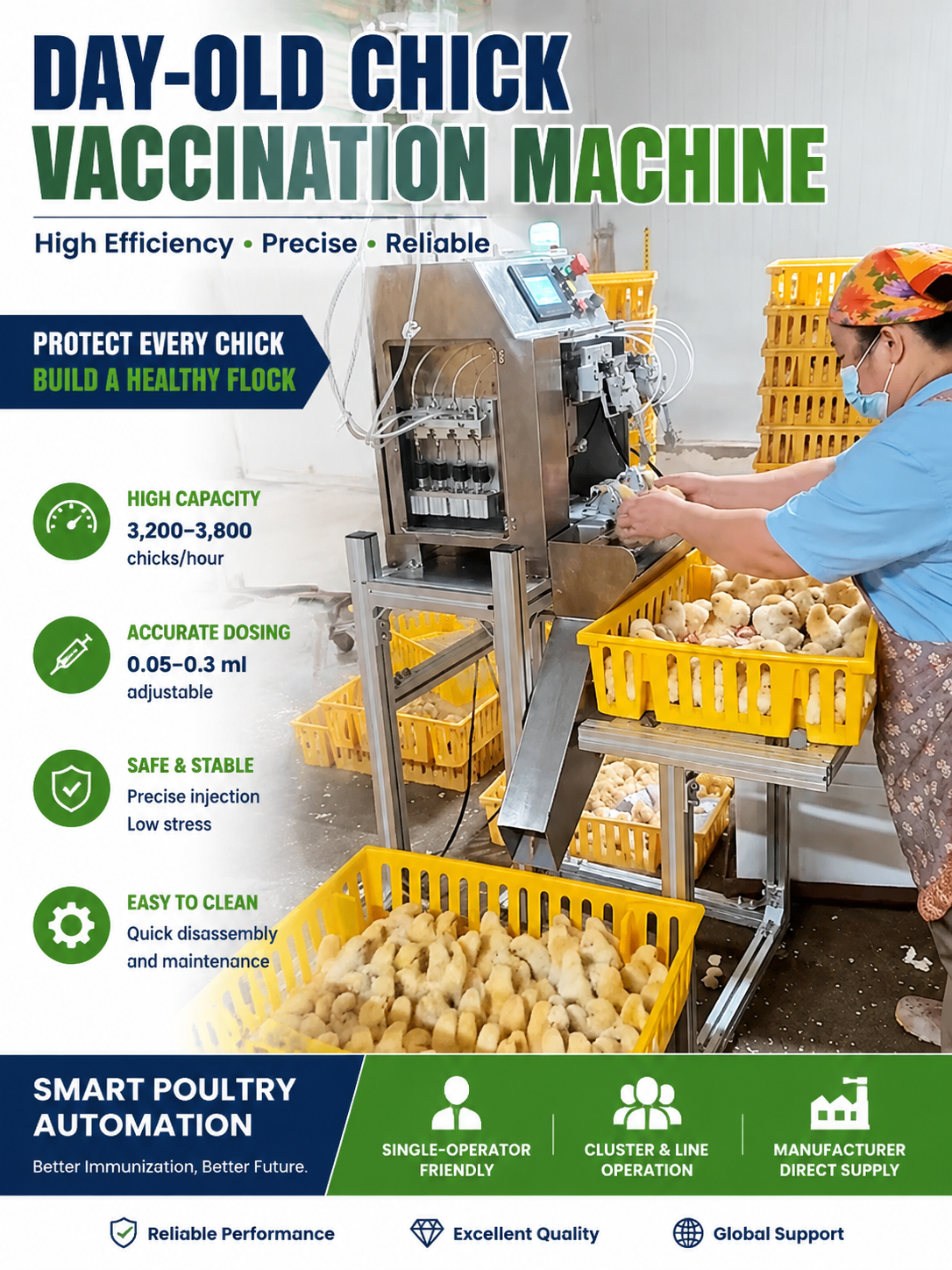
Change 1: A Different Flock or Bird Profile
When the bird profile changes, technical owners should confirm whether the approved application and handling method remain valid. Production should then review operator positioning, pace, observation points, and exception handling.
The supplier needs the customer-approved requirements, not a request to choose the biological procedure. Equipment evaluation should focus on whether the offered configuration can support the defined process consistently and whether any mechanical change requires formal approval.
Change 2: A Different Vaccination Program
A program change can affect preparation, product handling, supplies, traceability, cleaning, and the sequence of work. Create a line in the matrix for each affected step and assign an owner.
Jili Intelligent offers a day-old chick injection vaccinator as well as related hatchery equipment. Buyers should confirm whether they need a standalone injection station, a combined configuration, or integration with conveying and other processing modules.
The equipment quotation should state the offered mechanical scope. The customer's technical team should approve the application, consumables, product handling, and release procedure.
Change 3: A Larger or More Uneven Batch
A larger batch does not only test rated speed. It tests replenishment, staffing, queue control, break coverage, downstream availability, and the ability to recover after a stop.
Draw the arrival pattern in short time blocks. Mark normal flow, peaks, planned pauses, and the points where work may accumulate. This reveals whether the project needs additional handling space, a different operator arrangement, or a defined holding route.
When reviewing a day old chick vaccination machine, compare usable shift output under stated assumptions rather than treating one speed figure as a guarantee.
Change 4: A New Operator or Shift Team
New operators expose unclear instructions. Build role-based training around startup, normal running, supply replacement, exception recognition, stop recovery, cleaning handoff, and record completion.
Supervisors need different information: permission boundaries, trend review, recurring alarms, change approval, and escalation. Maintenance needs inspection points, wear items, adjustments, backups, and spare-parts identification.
Ask the supplier which training materials are included, in what language, and whether site-specific revisions are part of the project.
Change 5: A Different Room or Line Position
Moving the station can change infeed, discharge, operator access, maintenance access, sanitation access, utilities, guarding, and control interfaces. A compact footprint on a drawing may still leave poor working space.
Place the machine on the real layout and draw people, materials, chicks, waste, and cleaning movements. Mark the path used during a stop. Then assign supplier, customer, and local-contractor responsibilities for every interface.
Change 6: A Shorter Cleaning Window
If the cleaning window becomes shorter, do not simply ask the team to work faster. Observe disassembly, placement of removed parts, access to contact areas, reassembly, inspection, and release.
Record the time and the causes of delay during a trial. The result may point to access changes, better staging, clearer tools, revised work allocation, or a different production schedule.
Jili's quality-control information can support supplier discussions, while the project documents should define the exact acceptance and sanitation boundaries.
Change 7: A Stronger Traceability Requirement
Traceability may require batch identification, operator records, supply records, exception notes, cleaning release, and approval history. Decide which information is created by the equipment, which is entered by people, and which belongs in another customer system.
Do not assume that every record must be automated. First define what decision the record supports and who will review it. Then ask for the simplest reliable interface.
Frequently Asked Questions
Can one machine cover every vaccination program?
That should not be assumed. The customer must approve the application, and the supplier should confirm the mechanical configuration against the stated requirements.
Why include cleaning in a change matrix?
Cleaning affects availability, labor, access, release, and the next batch. A shorter or more demanding sanitation requirement can change the project scope.
What belongs in the RFQ attachment?
Include the approved application, batch pattern, room layout, utilities, adjacent equipment, staffing, cleaning expectations, records, destination, and service requirements.
Make Change Visible Before It Becomes Downtime
A suitable day old chick vaccination machine should support the hatchery when normal operating conditions change, not only during one ideal demonstration. The matrix turns those changes into clear technical, operational, and commercial questions.
Send Jili Intelligent your approved requirements, batch data, layout, utilities, records, and project schedule through the contact page. Ask for a configuration review that shows assumptions and responsibilities clearly.