


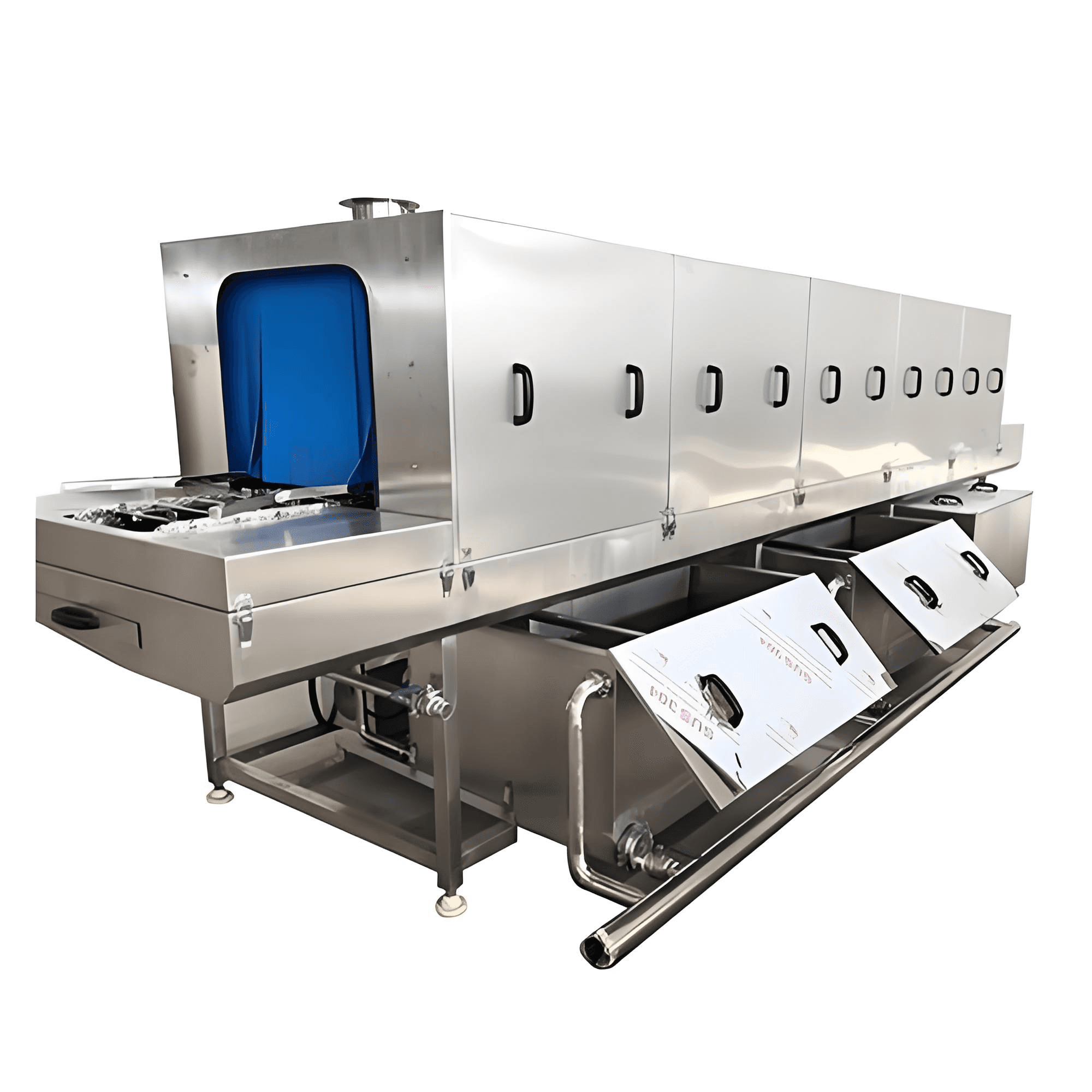
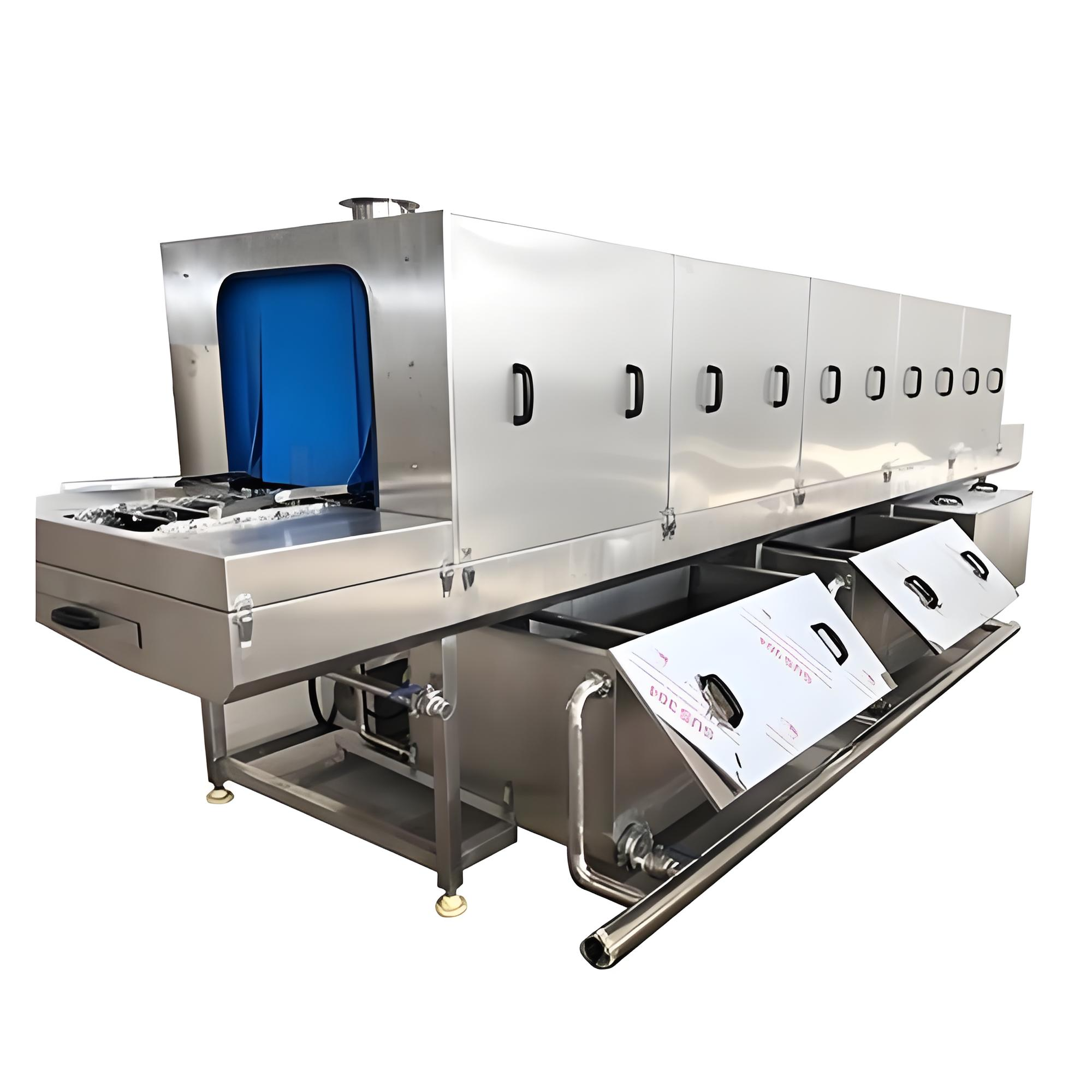
A chicken crate washing machine becomes important when manual crate cleaning starts to limit the return flow of clean crates. Poultry facilities need crates to be washed, drained, inspected, and returned at a predictable rhythm. If that loop is slow, production staff spend more time waiting or correcting the process.
Jili offers the Automatic Continuous Crate Washer for focused washing needs and the Poultry Crate Washing System with Inverting and Liner Placement for larger connected workflows. The right choice depends on crate size, soil level, water and drainage conditions, throughput, and whether crates need additional handling after washing.
Why manual washing becomes difficult to scale
Manual washing can work at small volume, but it often becomes inconsistent when production increases. Operators may spend more time loading, rinsing, clearing residue, and moving crates than expected. Water management and drainage can also become harder to control.
An automated chicken crate washing machine helps buyers organize washing as part of the crate return workflow rather than treating it as a separate cleaning task.
What changes with automated washing
- Crate flow becomes easier to organize.
- Operators spend less time on repetitive manual washing.
- Filters, nozzles, and drains can be planned for routine access.
- Clean-crate return becomes easier to match with production demand.
- Connected systems can add inverting, liner placement, or conveying.
- Maintenance routines become more visible and repeatable.
Buyer planning table
| Planning factor | What to confirm |
| Crate details | Photos, dimensions, material, weight, and stacking style |
| Soil condition | Residue type, pre-rinse need, and cleaning standard |
| Throughput | Crates per hour and shift schedule |
| Utilities | Water, drainage, heating, power, and floor space |
| Maintenance | Nozzle, filter, drain, and residue collection access |
| System scope | Washing only or washing with connected handling |
How to choose between washer and system
A focused washer may be enough when the facility only needs continuous crate cleaning. A larger system may be more useful when the workflow also requires inverting, liner placement, organized discharge, or return-crate handling. Buyers should make this decision around the full crate loop.
A well-planned chicken crate washing machine setup should reduce manual correction, improve access for cleaning, and keep clean crates available for the next production step.
What to send before quotation
Send crate photos, dimensions, soil level, daily crate volume, hourly target, current washing method, available utilities, and room layout. This helps Jili recommend the right washer or connected washing system.
How buyers can reduce operating risk
Operating risk is lower when the crate washing area is planned around real crate flow. Buyers should confirm where dirty crates arrive, where clean crates leave, how operators access filters and nozzles, and how residue is removed during the shift. These details affect daily labor more than the washer appearance.
It is also useful to share crate photos, damage conditions, and soil level before quotation. A crate with heavy residue or irregular stacking may need a different handling plan than a clean, uniform crate. Jili can give a more accurate recommendation when these details are known early.
How to plan the crate return area
The washing machine is only one part of the crate return area. Buyers also need space for dirty crates, clean crates, inspection, loading, unloading, and maintenance access. If these areas are too tight, operators may spend extra time moving crates by hand. A better layout lets crates move in one clear direction and keeps cleaning points accessible during daily operation.
FAQ
What is a chicken crate washing machine used for?
It is used to wash poultry crates and support a more predictable crate return workflow.
When is a larger washing system needed?
A larger system is useful when washing must connect with inverting, liner placement, conveying, or organized return handling.
What information should buyers prepare?
Prepare crate photos, dimensions, soil condition, throughput target, utilities, and room layout.
Why does maintenance access matter?
Good access makes filters, nozzles, drains, and residue areas easier to inspect and clean.
Which product pages are relevant?
Buyers can compare Jili Automatic Continuous Crate Washer and Jili Poultry Crate Washing System based on system scope.