


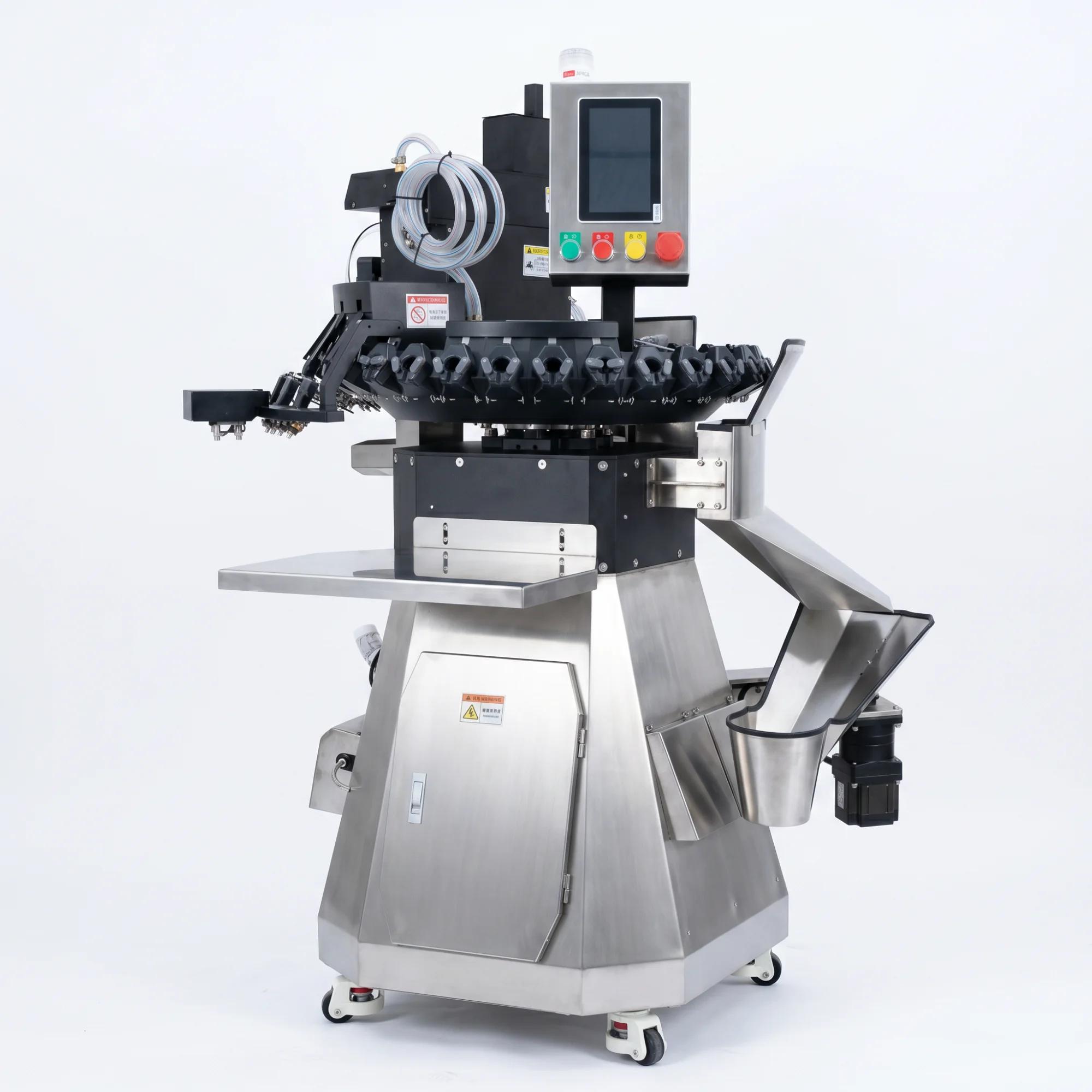
A combined beak trimming and vaccination system is relevant when a hatchery wants to reduce repeated handling between two important day-old chick processes. Instead of moving chicks through separate manual steps, the buyer can plan one controlled station for infrared beak treatment, vaccination support, counting, monitoring, and operator inspection.
The Jili Day-Old Chick Infrared Beak Trimming and Vaccination Machine is designed for one-day-old yellow-feather chicks, layers, and ducklings. Product material describes single- or double-needle vaccination support, visual window settings, automatic counting, automatic compartmentalizing, needle disinfection, vaccine shaking, infrared lamp current monitoring, cooling-water monitoring, vaccine flow monitoring, and alarms.
Why hatcheries move from separated work to integration
Separated manual stations can work for smaller or simpler workflows. As production grows, however, each handoff can create waiting, handling stress, operator variation, and extra inspection work. A combined system helps reduce those handoffs and gives the team one place to manage beak treatment and vaccination quality.
Integration is most valuable when the workflow problem is clear. If the hatchery only needs infrared beak treatment, a dedicated beak trimming machine may be enough. If vaccination must happen in the same flow, a combined station becomes a stronger fit.
Best applications for a combined system
- Hatcheries that need beak treatment and vaccination in one day-old chick process.
- Projects requiring single- or double-needle vaccination support.
- Operations with labor pressure between separate manual stations.
- Lines that need clearer counting, alarms, needle disinfection, and monitoring.
- Facilities planning downstream conveying or stacking after the integrated station.
Planning data for early project discussions
| Selection factor | Jili reference information |
| Applicable chicks | One-day-old yellow-feather chicks, layers, and ducklings |
| Main process | Infrared beak treatment plus vaccination support |
| Reference capacity | About 3,800-4,200 chicks per hour |
| Operator requirement | Usually one trained operator |
| Monitoring functions | Needle disinfection, vaccine flow, lamp current, and cooling-water checks |
What to include in an RFQ
Prepare chick type, vaccination method, single- or double-needle requirement, hourly output target, treatment depth expectation, room layout, current manual steps, and downstream handling plan. These details help Jili understand whether the integrated machine should stand alone or connect with conveying and stacking equipment.
Buyers should also ask how startup inspection is handled. Vaccine shaking, needle disinfection, lamp monitoring, water pressure and temperature checks, and vaccine flow alarms are useful only when operators understand how to respond to them.
Risks to check before layout approval
The most common risk is treating integration as a simple speed upgrade. A combined station changes the workflow. Buyers should check operator access, cleaning route, spare parts, consumables, alarm response, waste handling, and the first-week inspection plan before approving the final layout.
When downstream movement is required, the Jili Conveying and Stacking Line can be reviewed as a connected product. This keeps the process clear: integrated treatment and vaccination first, then organized movement after the station.
How integration supports buyer confidence
A well-planned combined system gives managers more visible control over two sensitive processes. It helps standardize operator work, reduce unnecessary handoffs, and make the quotation more specific. For buyers comparing suppliers, the strongest proposal will explain the full process, not only the machine appearance.
Questions that improve the final proposal
Ask the supplier to explain how chicks are positioned, how vaccination dose is monitored, how alarms are handled, what cleaning points operators must reach, and how the station can connect with downstream conveying. Clear answers make it easier to compare proposals on workflow value instead of only model names.
A practical combined beak trimming and vaccination system should make the process easier to inspect, easier to train, and easier to connect with downstream handling equipment.
FAQ
What is a combined beak trimming and vaccination system?
It is an integrated hatchery station that combines infrared beak treatment with vaccination support for day-old chicks.
When is a combined system better than a single beak trimming machine?
It is better when vaccination needs to happen in the same workflow as beak treatment.
What capacity is referenced in Jili material?
Jili material references about 3,800-4,200 chicks per hour for the integrated unit.
What monitoring functions matter to buyers?
Needle disinfection, vaccine flow, infrared lamp current, cooling-water condition, counting, and alarms all support operation control.
What should be prepared before asking for a quote?
Prepare chick type, vaccination requirement, target output, room layout, current workflow, and downstream equipment plan.