


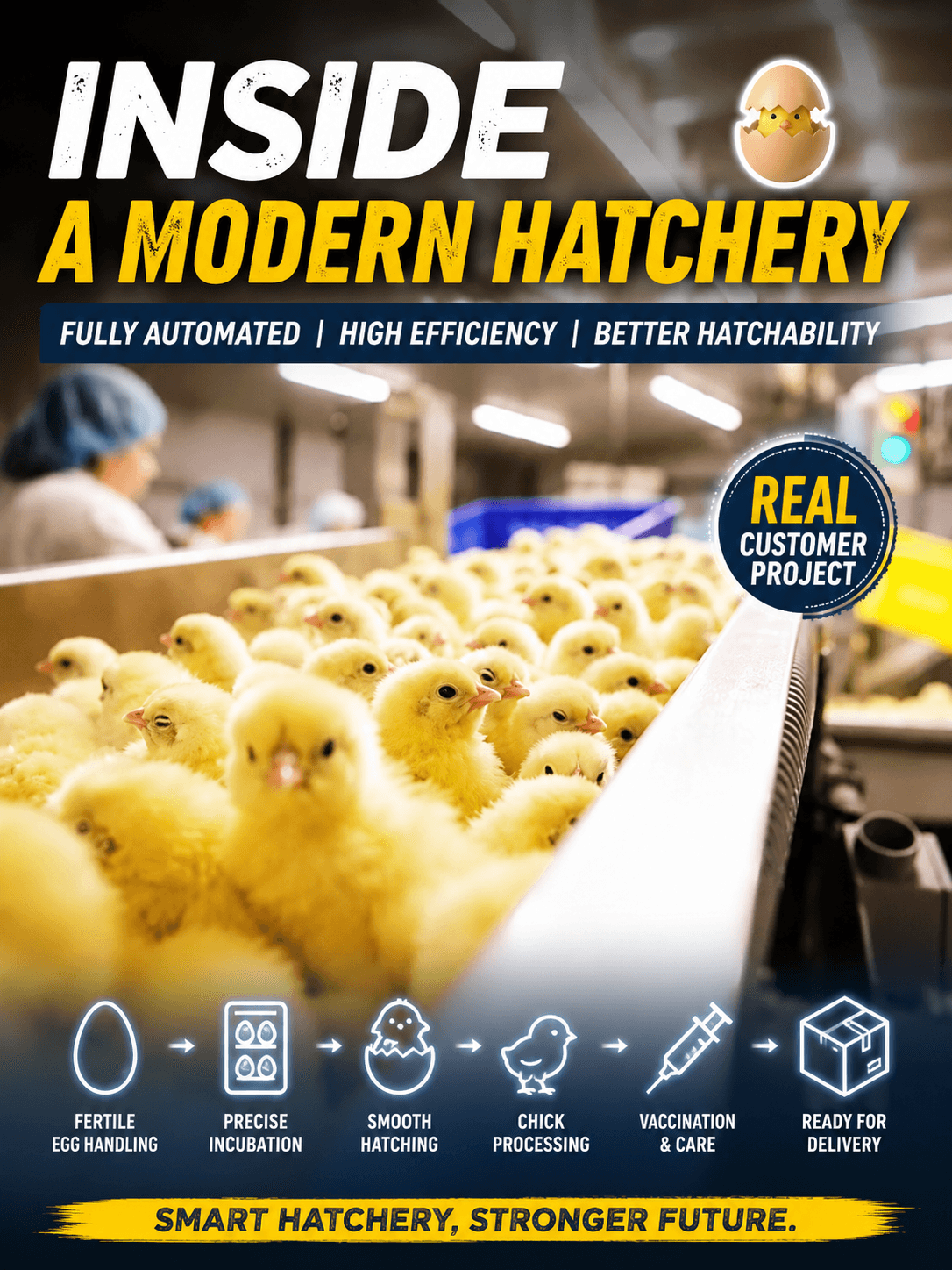
A hatchery automation site survey should turn a working building into reliable project evidence. It is not a quick photo tour and it is not a sales presentation. The useful result is a shared record of flow, dimensions, interfaces, utilities, access, sanitation, people, and unresolved decisions. That record helps a hatchery compare proposals without asking suppliers to guess.
JuliSense uses site information to discuss standalone equipment, connected modules, and complete hatchery automation solutions. The following field notebook keeps the visit focused on facts that influence layout, responsibility, schedule, and startup.
Before 08:00: Prepare the Evidence Pack
Send the current room drawing, process description, production calendar, equipment list, utility information, container details, and known constraints before the visit. Mark documents as confirmed, approximate, or historical so nobody mistakes an old drawing for an as-built condition.
Choose people who know different shifts
Include production, maintenance, sanitation, engineering, and project ownership. A day-shift manager may know the plan, while a technician knows which door is blocked during repair and a sanitation lead knows where hoses and mobile equipment must pass.
Agree what the survey will not decide
The visit collects evidence. It does not automatically approve capacity, final safety measures, local code compliance, or commercial scope. Record who will decide each open item and the date required.
08:00: Walk the Product Route Forward
Start where the relevant trays, baskets, chicks, boxes, or other loads enter the proposed automation boundary. Follow every transfer to the final release point. Note batch identity, operator actions, waiting, manual corrections, reject handling, and the reason for every buffer.
Time peaks and interruptions
Hourly averages can hide short surges. Record the largest normal batch, arrival interval, planned breaks, cleaning pauses, changeovers, and downstream collection pattern. Describe what happens when one station stops for five minutes.
Photograph context, not isolated machines
Where site policy permits photography, include nearby columns, doors, drains, guards, traffic lanes, and ceiling conditions. Give each photo a location and viewing direction. This makes the hatchery automation site survey usable after the team leaves.
09:30: Walk the Same Route Backward
Begin at dispatch and work upstream. The reverse walk exposes full-zone conditions, rejected loads, delayed collection, return paths, and decisions that are easy to miss when everyone follows the normal direction.
Trace the last committed load
At each handoff, ask where a load already in motion can safely wait if the next zone becomes unavailable. Record the maximum condition, warning, owner, and restart rule instead of writing only “buffer required.”
Mark every ownership boundary
Identify existing equipment, local contractors, building work, customer controls, and proposed JuliSense supply. A boundary needs mechanical dimensions, electrical signals, control behavior, utilities, approval, and a named owner.
For machinery risk assessment and risk reduction, ISO 12100 provides a general framework. Applicable requirements still depend on the final machine, installation, and destination.
11:00: Measure the Room in Three Dimensions
A flat layout is not enough. Confirm working heights, floor changes, door openings, columns, beams, overhead services, drainage, platforms, cable routes, and maintenance removal space. Note which dimensions were measured and which still require confirmation.
Draw access envelopes
Show operator positions, emergency access, cleaning routes, tool clearance, component removal, and mobile equipment paths. A machine may fit geometrically while leaving no practical way to inspect or replace a part.
Check unloading and installation paths
Follow the route from delivery vehicle to final position. Record lifting limits, turns, thresholds, temporary openings, floor capacity information, storage, packaging removal, and production shutdown windows. These facts can change installation planning and quotation scope.
13:30: Audit Utilities at the Point of Use
List electrical supply, compressed air, water, drainage, network, ventilation, and any other relevant utility at the actual connection area. Record available specification, isolation, route, distance, ownership, and evidence still required.
Separate availability from suitability
An outlet or air line in the room does not prove that it is suitable for the proposed load. The customer and qualified local parties should confirm capacity, quality, protection, and applicable installation requirements.
Give every connection an identifier
Use the same identifier on the plan, photo log, utility schedule, and open-item list. A disciplined hatchery automation site survey prevents “the connection near the door” from becoming a costly misunderstanding.
15:00: Repeat the Walk for Cleaning and Maintenance
Ask sanitation and maintenance teams to describe the room when production is stopped. Note approved cleaning methods, water movement, removable parts, isolation, inspection, storage, waste routes, and the sequence for releasing equipment back to production.
Keep biological controls site-specific
JuliSense can explain equipment materials, access, disassembly, and limitations. The hatchery remains responsible for its approved biosecurity and sanitation program. WOAH standards offer relevant international animal-health and welfare references.
Ask for the awkward maintenance task
Do not review only daily checks. Choose a larger component, sensor, belt, or guarded area and walk through isolation, access, tools, removal path, lifting, replacement, test, and return to service. This reveals space that production drawings often omit.
16:00: Close the Notebook With Decisions
End the visit around one marked-up plan and one action register. Classify each item as confirmed, assumption, customer action, supplier action, local contractor action, or joint decision. Attach evidence and due dates.
What should be in the survey report?
Include the process route, measured layout, elevations, photo log, utility schedule, equipment register, interface list, traffic and access notes, sanitation constraints, installation route, production windows, risks, assumptions, and open decisions.
When is the information ready for concept design?
It is ready when the main route, project boundary, critical dimensions, utility basis, interfaces, workload, access, and decision owners are visible. Remaining assumptions should be explicit and controlled.
The JuliSense product portfolio helps teams identify likely modules, while the service page frames project support. For a broader route, review complete hatchery automation solutions.
Convert the Notebook Into a Quotation Brief
Within two working days, hold a short review with the people who joined the walk. Resolve conflicting notes, attach dimensions to the correct plan revision, and rank unanswered items by their effect on equipment selection, price, safety review, and schedule. The output should be short enough for procurement to use but detailed enough for engineering to challenge.
Add a confidence column
For each critical input, record confirmed, provisional, or unknown. Explain the evidence behind the rating. A measured door opening may be confirmed, while future production growth may remain provisional until management approves the forecast. The hatchery automation site survey then shows where a supplier should provide an option instead of one fixed answer.
Request assumptions beside the price
Ask each supplier to state the workload, layout revision, utility basis, interface ownership, customer work, installation window, test scope, and exclusions used in its proposal. During comparison, place those assumptions beside the commercial total. A lower price based on a narrower boundary is not necessarily a lower project cost.
Keep the notebook alive through concept review. When a dimension, route, or responsibility changes, update the source record and identify affected drawings and decisions. This preserves the value of the hatchery automation site survey after the first quotation meeting.
Turn Site Facts Into a Better First Proposal
A well-run hatchery automation site survey reduces invisible allowances and makes supplier responses easier to compare. It also gives operations a voice before a layout becomes expensive to change. JuliSense can review the evidence pack, identify missing interfaces, and discuss an appropriate next design step.
Send the room plan, workload, photos where permitted, equipment list, destination, and target schedule through the JuliSense contact page. The best first conversation starts with the real room rather than an idealized rectangle.