


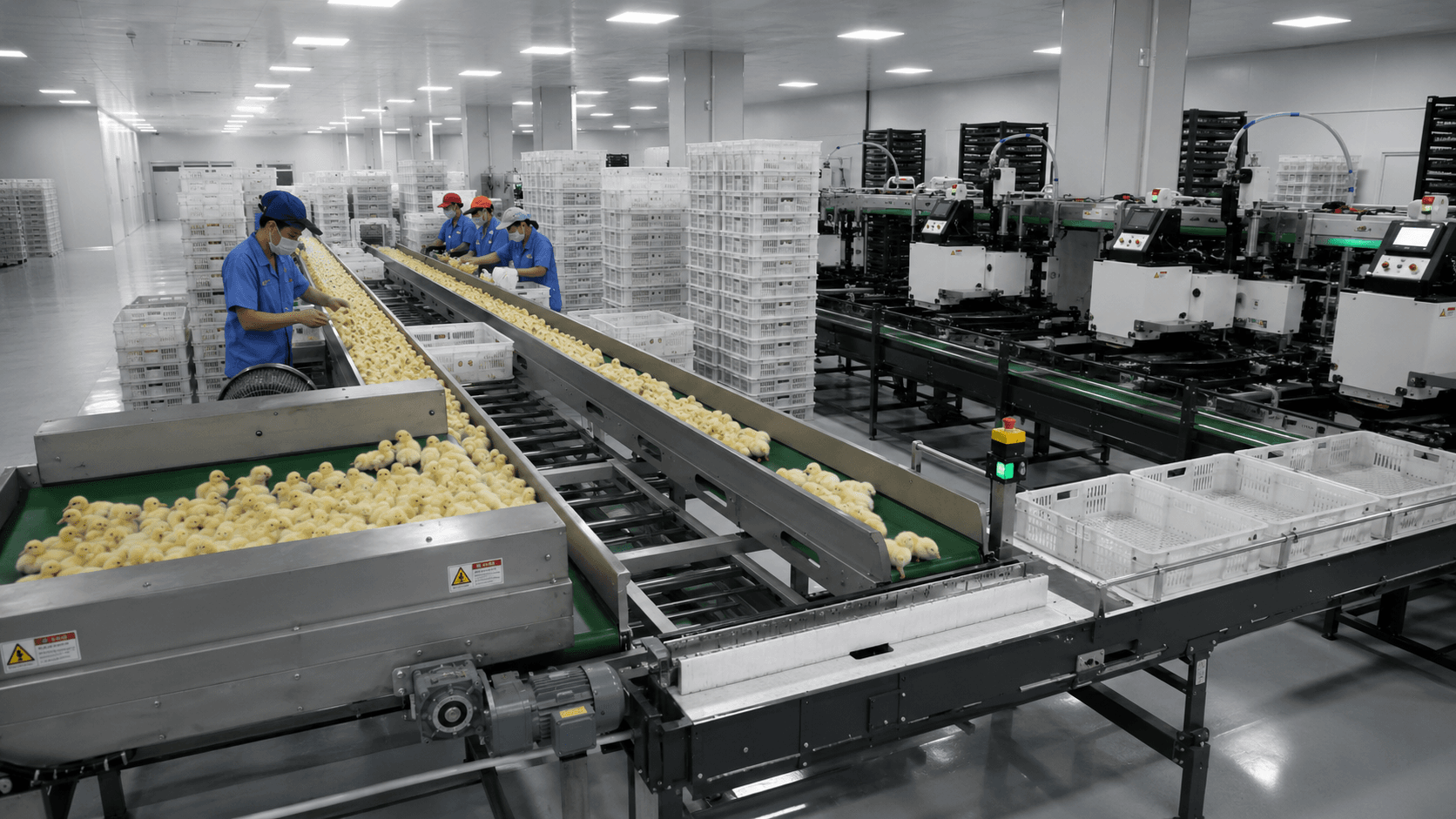
Hatchery automation system commissioning is easier to control when the team can see its gates. Use five: site ready, dry checks complete, representative flow ready, recovery understood, and customer handover ready. Each gate needs an owner, evidence, open-item rule, and release decision.
This avoids turning commissioning into one crowded startup day where installation, training, troubleshooting, and acceptance compete for the same hour.
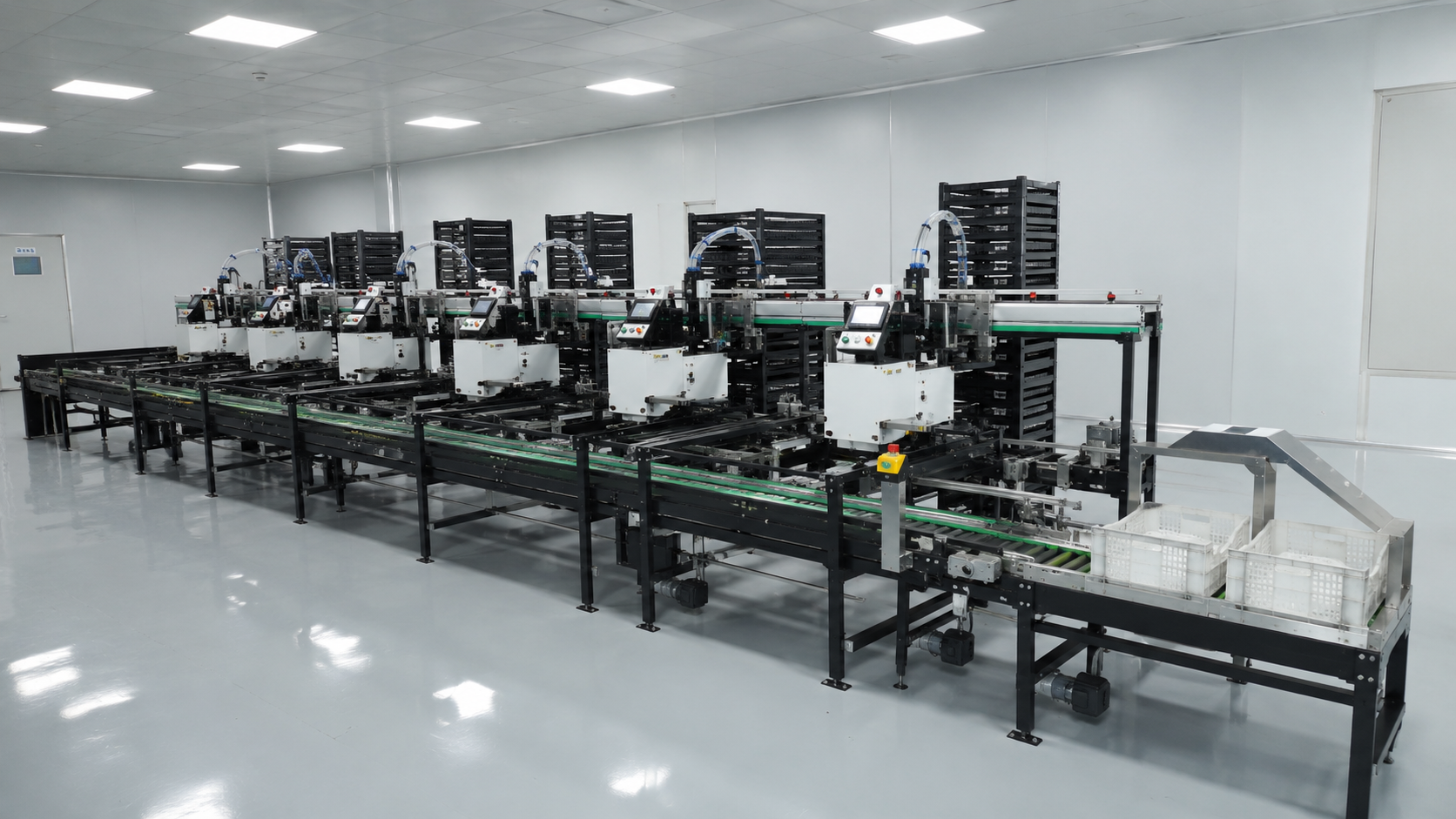
Gate One: Site and Interface Readiness
Confirm floor, access, utilities, safety boundaries, hygiene zones, surrounding equipment, lifting or installation route, drawings, controls interfaces, customer-supplied items, and responsible contacts.
JuliSense presents integrated hatchery automation solutions. Final configuration, site requirements, capacity basis, interfaces, and services must be confirmed in the project documents.
Record what is not ready
An open site item needs impact, owner, target date, temporary control where applicable, and evidence required before the next gate.
Walk the installation route
Verify the route for equipment, parts, tools, people, waste, and later service access. A delivery route that works once may still fail during maintenance.
Gate Two: Dry Checks Without Production Pressure
The second gate checks signals, controls, guarding interfaces, status visibility, roles, communication, access, records, and permitted basic functions without claiming full production performance.
For machinery risk assessment and risk reduction, ISO 12100 provides a general framework. Apply relevant local and customer requirements to the complete installation.
Define what dry checks prove
Write the boundary of evidence: function, signal, movement, access, or communication. A dry check should not silently become a capacity or clinical acceptance claim.
Let the customer repeat the status
Ask production, maintenance, and quality roles to explain a displayed state and next action. Different answers reveal a training or interface issue.
Gate Three: Representative Flow
Agree inputs, batch pattern, staffing, operating duration, ordinary variation, observation criteria, downstream readiness, stop conditions, and record format before the representative run.
During hatchery automation system commissioning, keep waits, corrections, replenishment, quality decisions, and customer-controlled interfaces in the record.
Count the work around the machines
Output alone cannot show walking, handling, communication, documentation, cleaning, or supervisor decisions required to keep flow stable.
Keep animal-health ownership visible
The customer's qualified welfare or veterinary owners approve applicable criteria and professional decisions. The World Organisation for Animal Health Terrestrial Code provides internationally recognized references, while destination rules and customer procedures govern operation.
Gate Four: Recovery and Controlled Stop
Choose a safe interruption allowed by the test plan and risk assessment. Freeze current work, state, signals, buffers, people, and communication before inspection or recovery.
Assign separate roles
Name who notices, who protects work, who diagnoses, who checks the area, and who authorizes restart. A reset button does not define all five responsibilities.
Watch the first transfers after restart
Record the first agreed movements, observer, acceptance condition, and what would trigger another controlled pause.
Gate Five: Customer Handover
The final gate connects equipment, documents, training, cleaning, maintenance, open items, support, and release authority. Customer personnel should lead a teach-back of normal work and an approved exception.
JuliSense describes commissioning, training, and after-sales support on its service page. Exact scope, timing, attendance, language, deliverables, and exclusions belong in the contract.
Build a handover index
Point from each gate to drawings, configurations, checklists, run records, training evidence, maintenance information, spare details, and open-item closure.
Keep conditional release visible
If the line is released with conditions, state the condition, temporary control, owner, date, impact, and final proof.
Put the Five Gates on One Wall
| Gate | Owner | Release evidence |
|---|---|---|
| Site ready | Project and site team | Verified layout, utilities, interfaces |
| Dry checks | Engineering and quality | Function and status records |
| Representative flow | Production and qualified owners | Agreed run evidence |
| Recovery | Supervisor and engineering | Stop/restart record |
| Handover | Customer project owner | Training, documents, open-item closure |
Review the wall daily
The status should show what changed, which item blocks a gate, and who decides the next action. A color without an owner is decoration.
Keep revision control simple
Use one date, one document reference, and one source of truth for each gate. Remove obsolete copies from team circulation.
Add a Gate for the Customer's Working Day
The five technical gates become more useful when the team checks them against a real shift. Add expected startup, replenishment, break, handover, cleaning, late-shift support, and dispatch conditions to the commissioning map.
Review what happens outside the demo window
Ask who is present early, who remains late, which specialist is unavailable, which records close at shift end, and how an open item travels to the next day. Hatchery automation system commissioning should prepare the customer for that whole rhythm.
Make support part of the gate
At each stage, identify the contact route, evidence to send, expected response boundary, and temporary control if the next decision cannot be made immediately.
Rehearse Gate Movement With Real People
Give each gate card to its owner and ask them to state readiness, evidence, open items, and next action. Then ask the receiving owner to repeat the decision before the card moves.
Stop a card when evidence is missing
An amber status should not become green because a schedule is tight. Record the missing proof, impact, owner, and decision date.
Keep the map customer-readable
Use site names, station codes, and operating language. The team should understand the map during a shift without translating supplier shorthand.
What the Commissioning Map Does Not Promise
It does not promise a universal installation duration, throughput, welfare result, or support response. It defines how the project will collect evidence and who may decide at each stage.
Carry limits into handover
Keep test conditions, exclusions, customer inputs, temporary controls, and unresolved assumptions attached to the final index.
Common Commissioning Questions
How long should commissioning take?
It depends on scope, interfaces, site readiness, agreed tests, training, and open items. Use gates to expose the work instead of promising a universal duration.
Can a factory run replace a site run?
No. Factory evidence proves agreed factory conditions; site commissioning must address the installed environment and customer interfaces.
What should a buyer prepare first?
Share layout, utilities, process flow, staffing, approved procedures, surrounding equipment, records, schedule, and acceptance questions.
How can a buyer request a project plan?
Use the JuliSense contact page to discuss configuration, interfaces, commissioning, training, and support.
Visible Gates Make a Better Start
Hatchery automation system commissioning becomes easier to manage when every stage has a clear owner and evidence. JuliSense can organize equipment and service discussions around the five-gate map, while the customer retains authority over site release, welfare, procedures, and final acceptance.
Which gate usually exposes the most work?
Site readiness and customer handover often reveal the broadest responsibility boundaries, while representative flow and recovery reveal how the installed system behaves. Treat every gate as evidence collection for hatchery automation system commissioning, not as a formality before the next meeting.
What should happen when a gate stays amber?
Keep the item visible, state the impact and temporary control, name the owner, set the decision date, and identify the proof needed to release the gate. A schedule pressure should not turn missing evidence into an unqualified green status.
The gate owner should also state which customer role receives the next update and where the current hatchery automation system commissioning record is stored.
How should the map be used after handover?
Use it as a reference for service, training refresh, controlled changes, and future improvement reviews. It should preserve the limits and evidence basis of the original commissioning rather than become a forgotten project poster.