


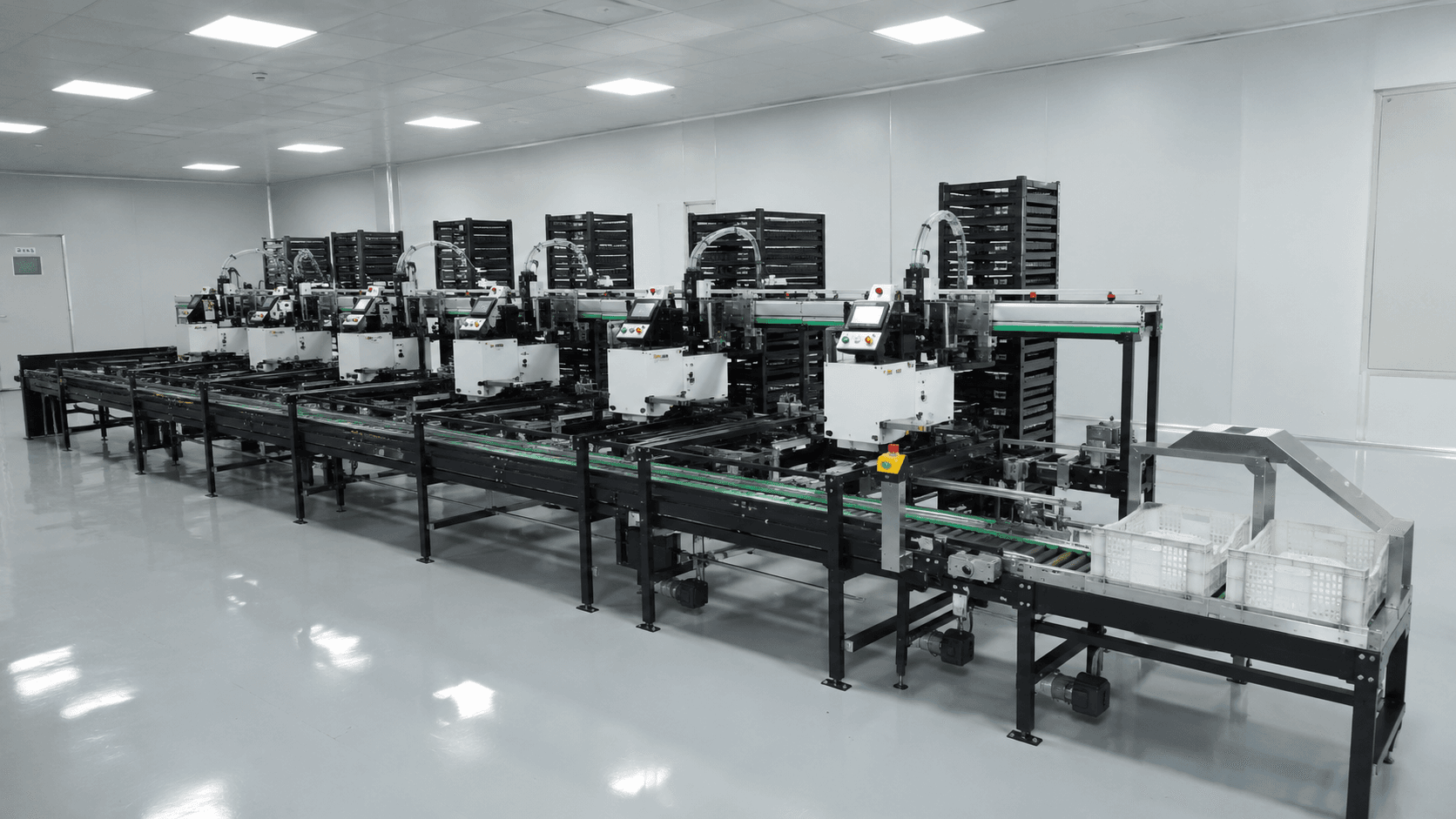
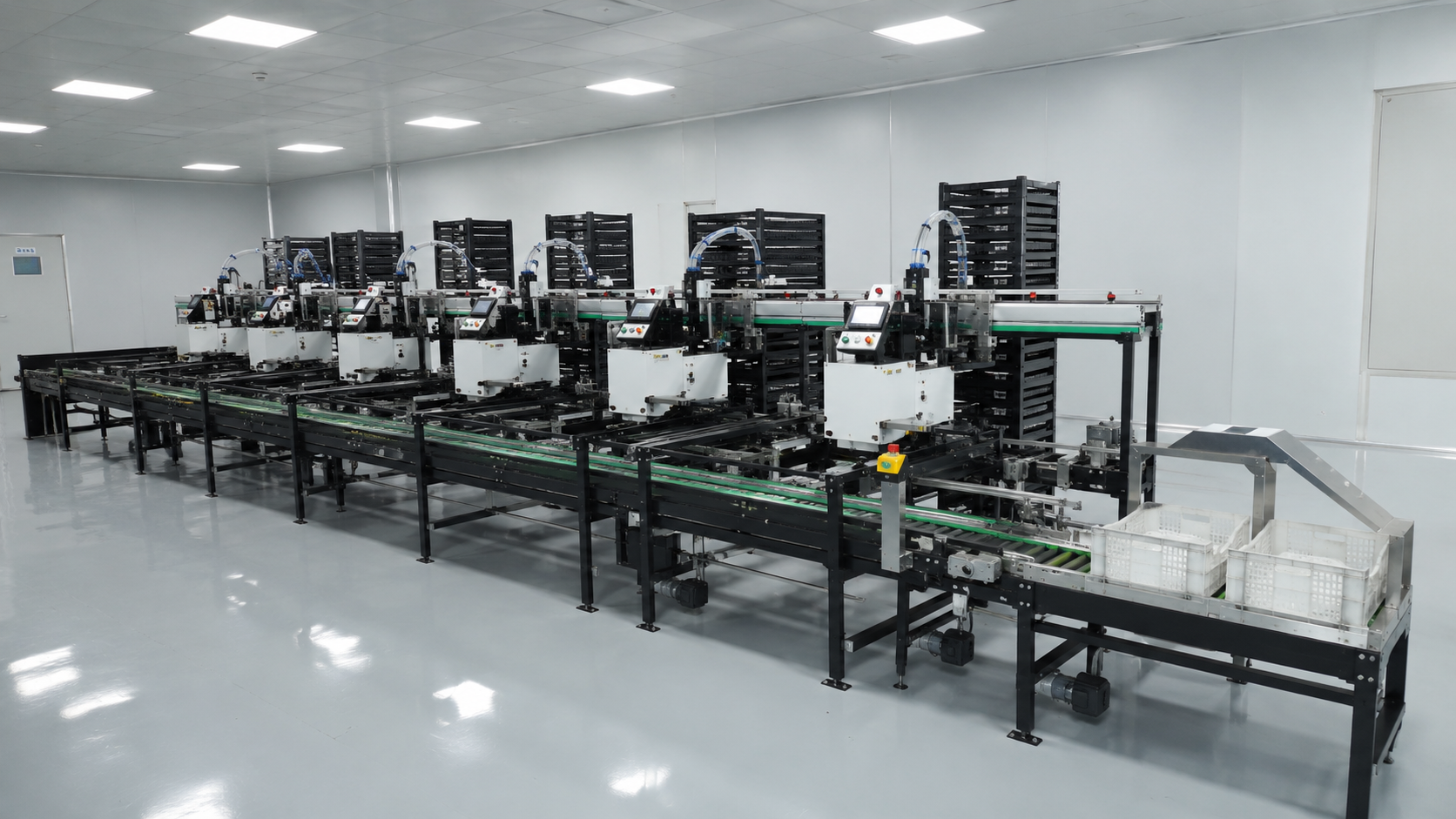
A hatchery beak trimming vaccination line is a commercial search term with clear buyer intent. The buyer is usually comparing how to connect day-old chick handling, infrared beak treatment, vaccination, conveying, and stacking without creating new bottlenecks.
Jili equipment can support this type of project through the integrated infrared beak trimming and vaccination machine, picking and transfer machine, conveying and stacking line, and complete hatchery automation solution. The right combination depends on chick volume, process order, room layout, and operator plan.
Search Intent: What Buyers Need to Decide
Buyers searching this keyword are not looking for a single machine name. They need to understand which modules belong in the line, which station sets the real capacity, and how to plan a quotation that avoids wrong images, wrong equipment scope, or a line that does not match daily production.
Core Modules in the Line
| Module | Role in the hatchery line |
| Picking and transfer | Moves chicks from early handling into the next processing flow |
| Integrated beak trimming and vaccination | Combines infrared beak treatment with single- or double-needle vaccination support |
| Conveying and stacking | Organizes movement and downstream handoff after treatment |
| Complete automation planning | Connects modules, operators, cleaning access, and future expansion |
Key Planning Criteria
- Define the current bottleneck before choosing modules.
- Compare capacity station by station, not only the whole line.
- Confirm chick species, hourly output, vaccination type, and treatment requirement.
- Map room layout, handoff direction, operator reach, and cleaning path.
- Plan startup training and spare parts before installation.
How to Build a Useful RFQ
A strong RFQ should include current workflow photos, room drawings, daily chick volume, target automation stage, existing equipment, and the process order. This lets Jili match product modules to the real hatchery flow instead of quoting a vague equipment package.
Common Buying Mistakes to Avoid
A hatchery beak trimming vaccination line is not a single machine purchase. Buyers using this keyword are usually comparing how different modules work together, so the buyer guide must answer line-planning questions: where chicks enter, where beak treatment and vaccination happen, how output is transferred, and where operators inspect quality.
The most common mistake is using one capacity number for the whole project. Picking and transfer equipment, integrated treatment equipment, and conveying equipment can have different output limits. A line that ignores those differences may create waiting, extra handling, or difficult cleaning access even if each machine is suitable on its own.
How to Turn the Search Into a Useful RFQ
Prepare a process map, target hourly volume, room dimensions, current bottleneck, vaccination requirement, beak treatment requirement, and future expansion plan. That gives Jili enough context to match modules to the real hatchery flow and build a quotation around buyer-focused buyer questions rather than a vague equipment list.
Decision Points Before Final Selection
For hatchery beak trimming vaccination line, the final decision should start with the current hatchery bottleneck. Buyers should compare module order, capacity at each station, operator access, cleaning route, startup training, and future expansion space. A useful quotation comes from a clear process map, not from a broad request for automation equipment alone.
FAQ
What is a hatchery beak trimming vaccination line?
It is a connected workflow that may include chick transfer, infrared beak treatment, vaccination, conveying, and stacking.
Which module is usually central?
The integrated infrared beak trimming and vaccination machine is central when both treatment and vaccination are required.
Can the line be built in phases?
Yes. Many projects start with the strongest bottleneck and leave space for future modules.
What causes poor line performance?
Wrong capacity matching, unclear handoff direction, limited cleaning access, or underplanned operator positions can reduce performance.
Which Jili pages should be linked?
Use the integrated machine, picking and transfer machine, conveying and stacking line, and complete automation solution pages.