


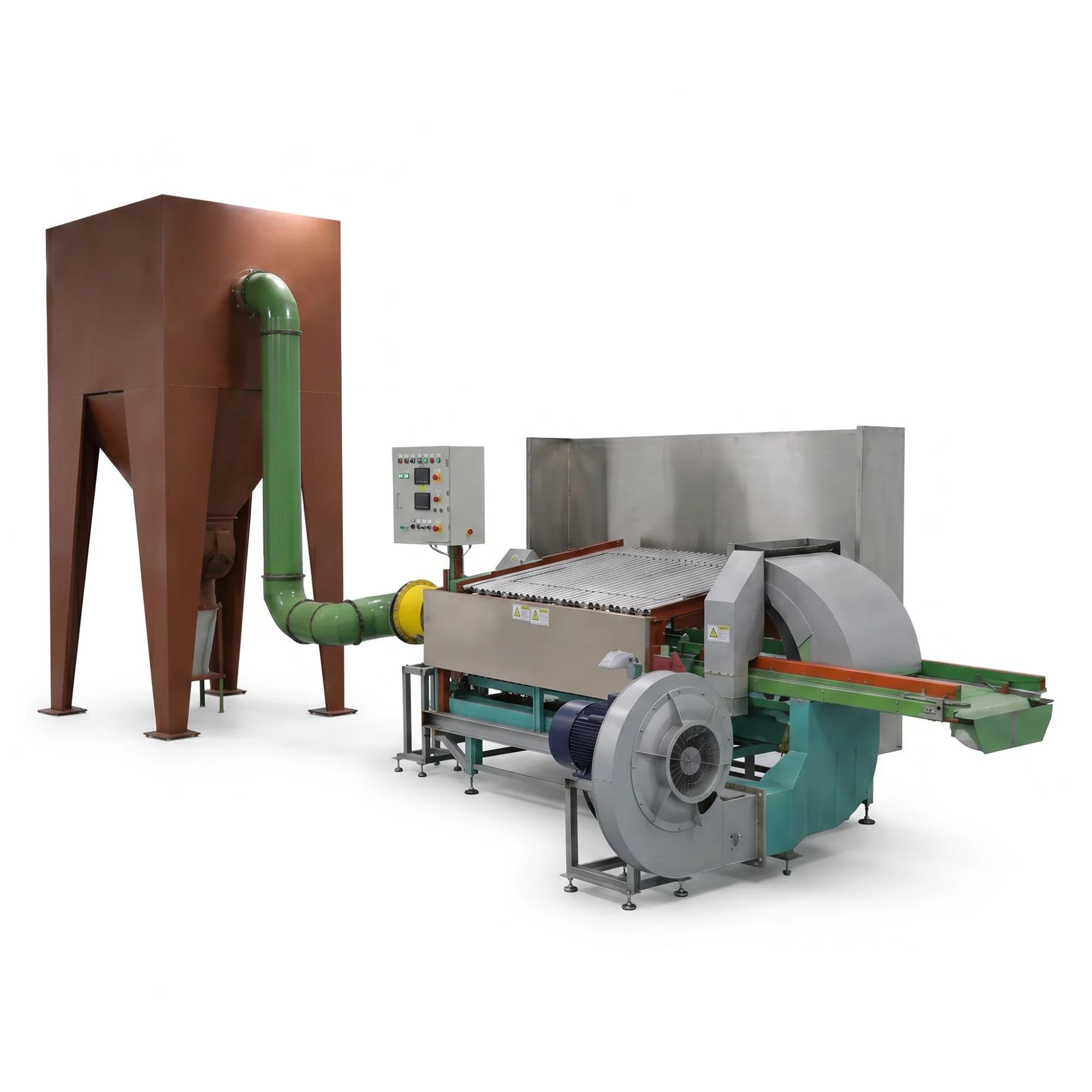
Chick transfer is easy to describe and difficult to design well. Chicks leave one stage, move through a transfer, and arrive at the next. Yet those ninety seconds can contain a sudden batch arrival, a full downstream area, an operator intervention, a damaged box, or a cleaning constraint that changes the entire workflow.
When selecting hatchery chick transfer equipment, review that short handoff from three perspectives at the same time: production flow, equipment behavior, and chick handling.
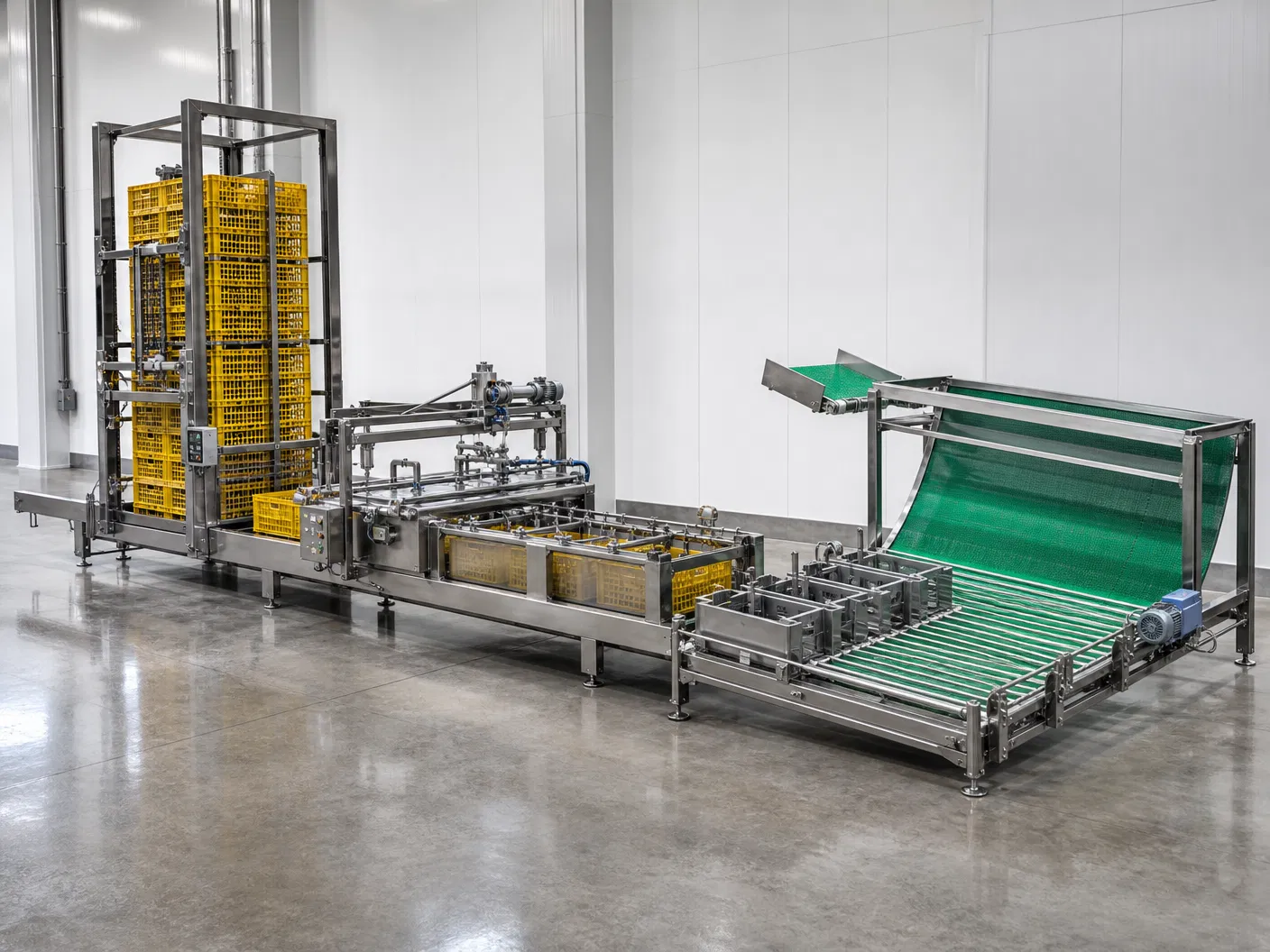
Second 0: The Batch Becomes Available
The transfer does not control when the preceding hatchery work finishes. Some batches arrive steadily; others arrive in a concentrated window. A line designed only around daily average volume may be overwhelmed for twenty minutes even though the total shift capacity appears sufficient.
Measure real arrivals in short intervals. Record batch sizes, gaps, peak periods, box or tray presentation, and the conditions that cause variation. This tells the supplier whether the transfer needs controlled accumulation, parallel handling, or a different operating rhythm.
The animal-care and production teams should also define acceptable handling conditions. The mechanical design must respect the hatchery's approved procedures rather than treat chicks as an abstract capacity number.
Second 15: The Transfer Receives Chicks and Containers
At this point, small mismatches become visible. A tray, box, or conveyor reaches the transfer in the wrong orientation. The next container is late. An operator corrects the presentation manually and the line rhythm changes.
Ask what the proposed equipment expects at the infeed: container type and geometry, orientation, height, arrival signal, and acceptable variation. Provide samples and drawings. If existing equipment is involved, share model information, photographs, controls, and the room layout rather than assuming the two machines will connect because their working heights look similar.
Jili Intelligent publishes a day-old chick picking and transfer machine within its hatchery automation range. The project still needs a precise interface definition for the customer's actual infeed and downstream process.
Second 35: The Downstream Stage Slows
Treatment, vaccination, sorting, counting, loading, or another downstream activity pauses briefly. The transfer now has a decision to make.
Where can incoming chicks wait under the approved process? How much temporary accumulation is acceptable? What signal tells the upstream stage to slow or stop? Which operator receives the alarm? A transfer system should not continue filling every available space until the hatchery has no orderly recovery route.
Draw the stop sequence before the layout is approved. Then draw the restart sequence. A controlled stop is only half of the design; the line must return to balanced flow without sending another surge into the same constraint.
Second 55: An Operator Needs Access
An exception has occurred. The operator needs to see the affected zone, understand the message, gain safe access, correct the approved condition, and restart.
Evaluate the equipment from the normal working position. Controls and machine state should be understandable to the people who use them. Access should be planned into the layout rather than created by moving boxes, hoses, or temporary platforms during a stop.
This is also where training becomes concrete. Ask the supplier to distinguish normal operator recovery from maintenance work and from conditions that require technical support. The manuals, alarm list, spare-parts information, and escalation path should reflect those roles.
Second 75: Flow Returns, but the Queue Has Changed
During the stop, upstream and downstream conditions changed. If every zone restarts at maximum flow, the transfer may face a second surge. A better recovery clears the limiting area first and releases accumulated work in a controlled sequence.
Factory testing can demonstrate the planned cause-and-effect behavior using agreed safe scenarios. Site testing then confirms that the real surrounding equipment, operators, and batch pattern behave as expected. Record not only the stop duration, but also the time needed to regain stable flow.
Second 90: Ask Whether the Handoff Improved the Workday
The transfer has delivered chicks to the next stage. The decision should now be judged by outcomes the hatchery can observe:
- Did the process reduce unnecessary manual movement?
- Is flow more stable during the busiest arrival window?
- Can operators identify and recover from normal exceptions?
- Are chicks handled according to the approved site procedure?
- Can cleaning and maintenance regain the area on time?
- Are the upstream and downstream responsibilities clear?
These questions prevent a narrow purchase in which the transfer mechanism works but the hatchery workflow does not improve.
The Layout Meeting Needs Three Voices
Production should bring arrival data, staffing, batch timing, and current delays. Engineering should bring dimensions, utilities, controls, access, guarding, and existing-equipment information. The animal-care or responsible technical team should bring approved handling conditions, observation requirements, and release criteria.
No single department can define the handoff alone. The result should be one layout and operating sequence that all three can recognize. That shared sequence becomes the acceptance reference for the hatchery chick transfer equipment.
Where Jili Intelligent Fits
Jili Intelligent supplies chick transfer equipment and related modules for infrared treatment, vaccination, conveying, stacking, and complete hatchery automation. This makes the company relevant when transfer performance depends on several connected stages.
A hatchery may still need only a focused transfer project. The useful proposal is the one that defines the current boundary, identifies customer responsibilities, and preserves sensible interfaces for future expansion.
Frequently Asked Questions
Is transfer capacity the same as complete-line capacity?
No. Complete-line output also depends on arrivals, downstream stages, operators, containers, stops, recovery, and sanitation. Ask the supplier to state the conditions behind each capacity figure.
Can new transfer equipment connect to existing hatchery machines?
Potentially. Mechanical, electrical, controls, container flow, operator access, cleaning, and emergency-stop coordination should be reviewed before the configuration is frozen.
What should a transfer equipment inquiry include?
Include bird and batch information, current process map, arrival pattern, tray or box samples, room layout, existing equipment, downstream requirements, utilities, cleaning constraints, destination, and service expectations.
Design the Handoff, Not Just the Transfer
Hatchery chick transfer equipment should make the next ninety seconds calmer, clearer, and more predictable. The best design begins with real arrivals, respects approved handling, coordinates connected stages, and gives operators an understandable recovery path.
Send Jili Intelligent your process map, peak arrival data, container samples, layout, connected equipment, cleaning constraints, and required project boundary through the contact page. Ask the proposal to include stop, recovery, and interface scenarios as well as normal running.