


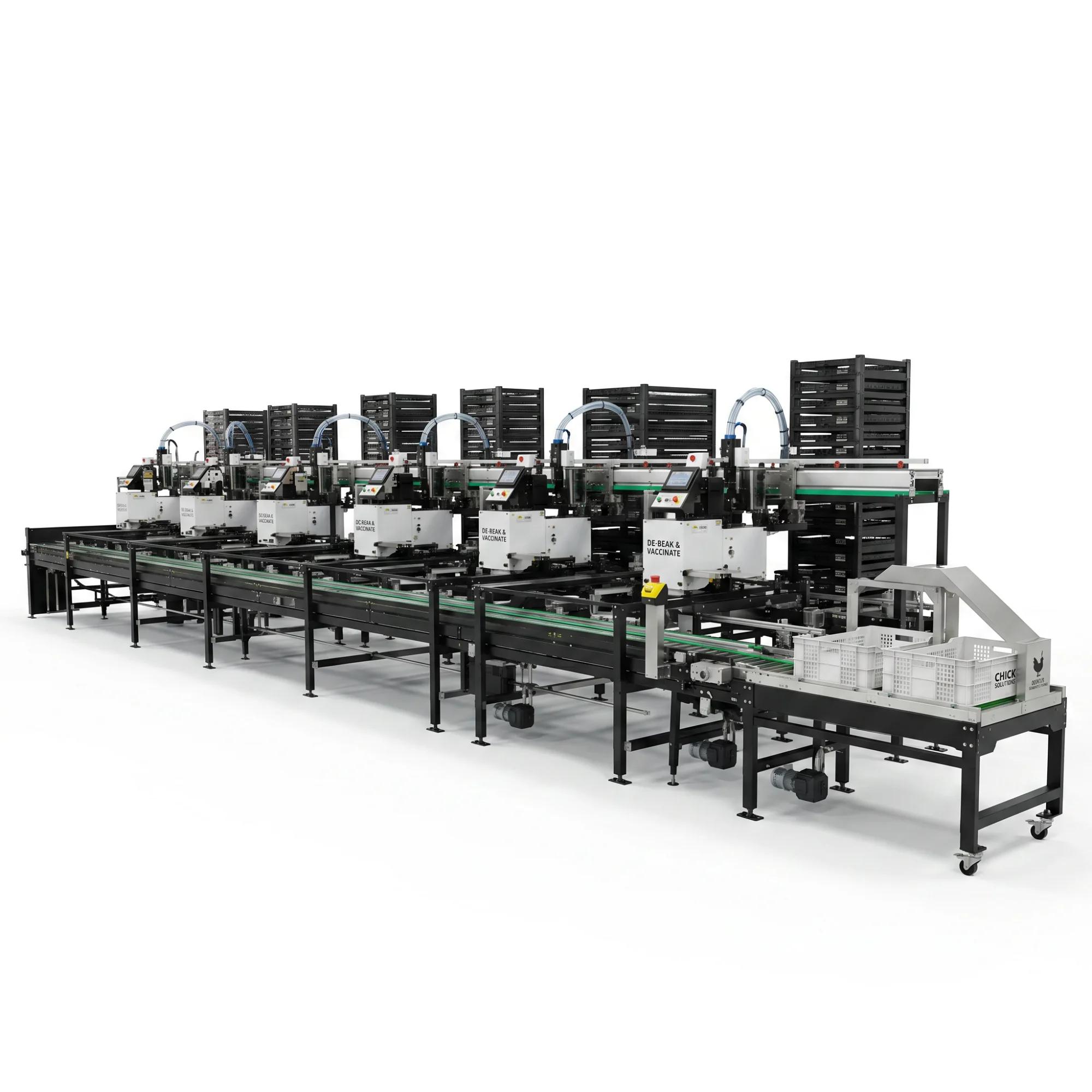
A hatchery conveying system should not begin with a long conveyor drawing. It should begin with the slowest handoff in the real process. That handoff determines where boxes wait, when upstream equipment must stop, how operators intervene, and whether the line can restart without confusion.
Designing backward from the bottleneck produces a more useful layout than connecting every machine with the same conveyor speed.
Measure Departures in Short Intervals
Hourly totals can hide unstable flow. A station may complete the planned number of boxes in one hour while producing them in waves that overwhelm the next stage.
Record arrivals and departures in five- or ten-minute intervals during a representative production window. Note planned pauses, replenishment, batch changes, container corrections, and the first place a queue becomes visible.
The slowest handoff may be chick presentation, treatment, vaccination, loading, labelling, stacking, dispatch, or the return of empty containers. Name it before selecting conveyor length or accumulation.
If measured data is not available, collect it before freezing the design. A few observed hatch days can prevent expensive assumptions from becoming steel and controls.
Follow the Queue Until Someone Touches It
Queues are not always bad. Controlled accumulation can protect a critical machine from a short downstream pause. The problem begins when operators must constantly move, straighten, relabel, rotate, or carry containers to keep the line running.
Follow the queue from the first waiting box to the point where someone intervenes. Record why the intervention occurs and whether it is caused by rate difference, container variation, layout, control logic, access, or an unclear operating rule.
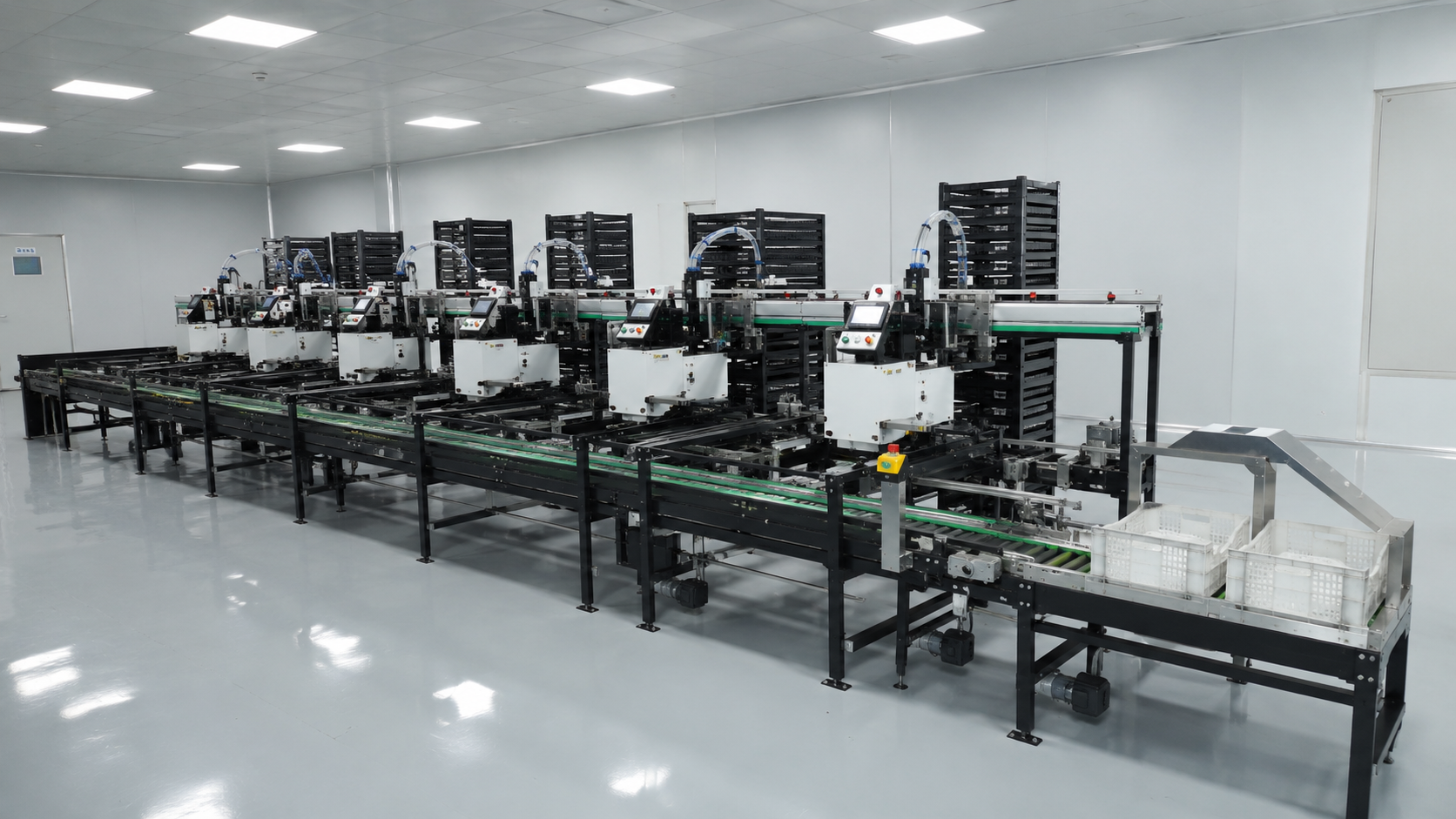
Jili Intelligent publishes a conveying and stacking line. The offered design should be reviewed with the customer's real boxes, stacking pattern, labels, lids, dispatch route, and available room.
Size Accumulation by Recovery Time
Accumulation should answer a practical question: how long can upstream work continue while the slow handoff recovers?
Estimate the normal arrival rate, peak short-interval rate, typical pause, longer acceptable pause, restart sequence, and the point at which upstream must stop. Then check whether the planned accumulation fits the room and the approved handling limits.
When planning a hatchery conveying system, state what happens when accumulation is full. Which machine stops first? Which status appears? Who responds? Where is the affected batch? What must be confirmed before release?
Extra conveyor is not automatically extra resilience. Poorly controlled accumulation can hide a growing problem and make restart harder.
Test the Real Container Population
A single new box is not representative of a working hatchery. Containers may vary through wear, repairs, labels, lids, moisture, stacking history, or small dimensional differences.
Provide samples from the actual population, including acceptable variation and known problem cases. Test orientation, transfer, spacing, detection, stopping, accumulation, stacking, and removal.
Define a route for damaged or unsuitable containers. The operator should be able to remove one without carrying it through the normal chick route or blocking maintenance access. Batch identity and status must remain clear.
Container evidence belongs in the factory test, not only in a discussion after site installation.
Protect Access on Both Sides of the Conveyor
Conveyors can make a room look orderly while quietly blocking people who need to clean, inspect, adjust, or maintain equipment.
Review operator reach, crossing points, emergency access, guard doors, electrical panels, sensors, drives, lubrication or inspection points, cleaning routes, and the space needed to remove components. Include the route used when one module is taken offline.
Jili also publishes complete hatchery automation solutions. A line-level concept should show equipment footprints and human access together. A narrow drawing that works only during normal production is not complete.
Ask production, sanitation, maintenance, and safety teams to walk the layout before approval.
Design the Stop Before the Restart
During a downstream stop, the line should enter a predictable condition. Operators need to know what is still moving, what is waiting, which batch is affected, and which action is allowed.
Then define restart order. Does the downstream stage become ready first? Is accumulated material released automatically or under operator control? How is spacing restored? What evidence confirms that batch identity and normal route are intact?
Include at least one downstream-not-ready test and one container exception in factory acceptance. Repeat them on site with the real room and team.
The goal is not a line that never stops. It is a line that stops clearly and returns to normal without improvised carrying or uncertain status.
Connect Transfer and Dispatch to the Same Flow Model
The conveyor cannot fix unstable input or unavailable dispatch. Review where chicks or boxes enter the route and where responsibility ends.
Jili's day-old chick picking and transfer machine can be discussed as an upstream handoff. Stacking and dispatch form the downstream handoff. The project should state container ownership, identification, release, and the route for full and empty boxes.
Follow one box through the complete loop. Then follow one empty space backward. The point where that space stops moving is often the true bottleneck.
Frequently Asked Questions
Should all conveyors run at the same speed?
Not necessarily. The design should support stable handoffs, spacing, accumulation, controls, and recovery. Matching nominal speeds does not guarantee balanced flow.
How much accumulation does a hatchery need?
Base it on measured short-interval arrivals, expected downstream recovery time, available room, container size, approved handling limits, and the defined upstream stop point.
What should be tested before shipment?
Test representative containers, normal transfer, peak arrival pattern, stopping, full accumulation, a damaged-container route, alarms, restart, access, controls, and agreed documentation.
Let the Slowest Handoff Shape the Line
The right hatchery conveying system is not the longest or fastest arrangement. It is the one that protects the bottleneck, makes accumulation visible, accepts real containers, preserves access, and restarts in a controlled sequence.
Send Jili Intelligent your layout, short-interval flow data, containers, slow handoffs, expected pauses, access needs, stacking pattern, and dispatch route through the contact page. Ask for the conveying concept to show the bottleneck and recovery logic, not only the normal arrows.