


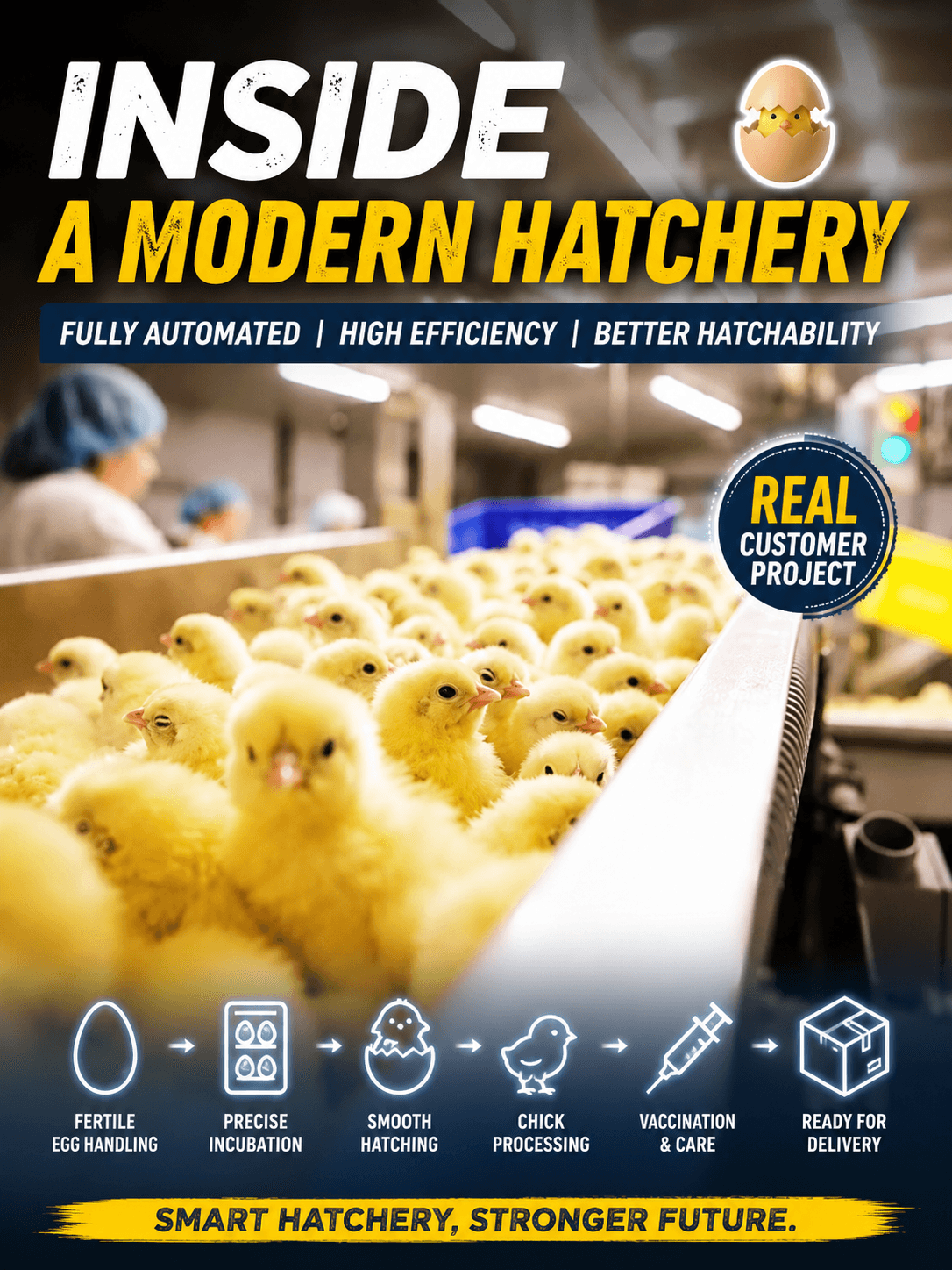
Searching for hatchery equipment for day old chicks often produces a list of machines. A working hatchery needs something more useful: a room map that shows where chicks, boxes, operators, information, and cleaned items move.
The map changes the buying question from “Which machine should we add?” to “Which handoff is creating extra handling, waiting, or uncertainty?” Five operating zones make that discussion practical.
Zone One: Receiving, Picking, and Transfer
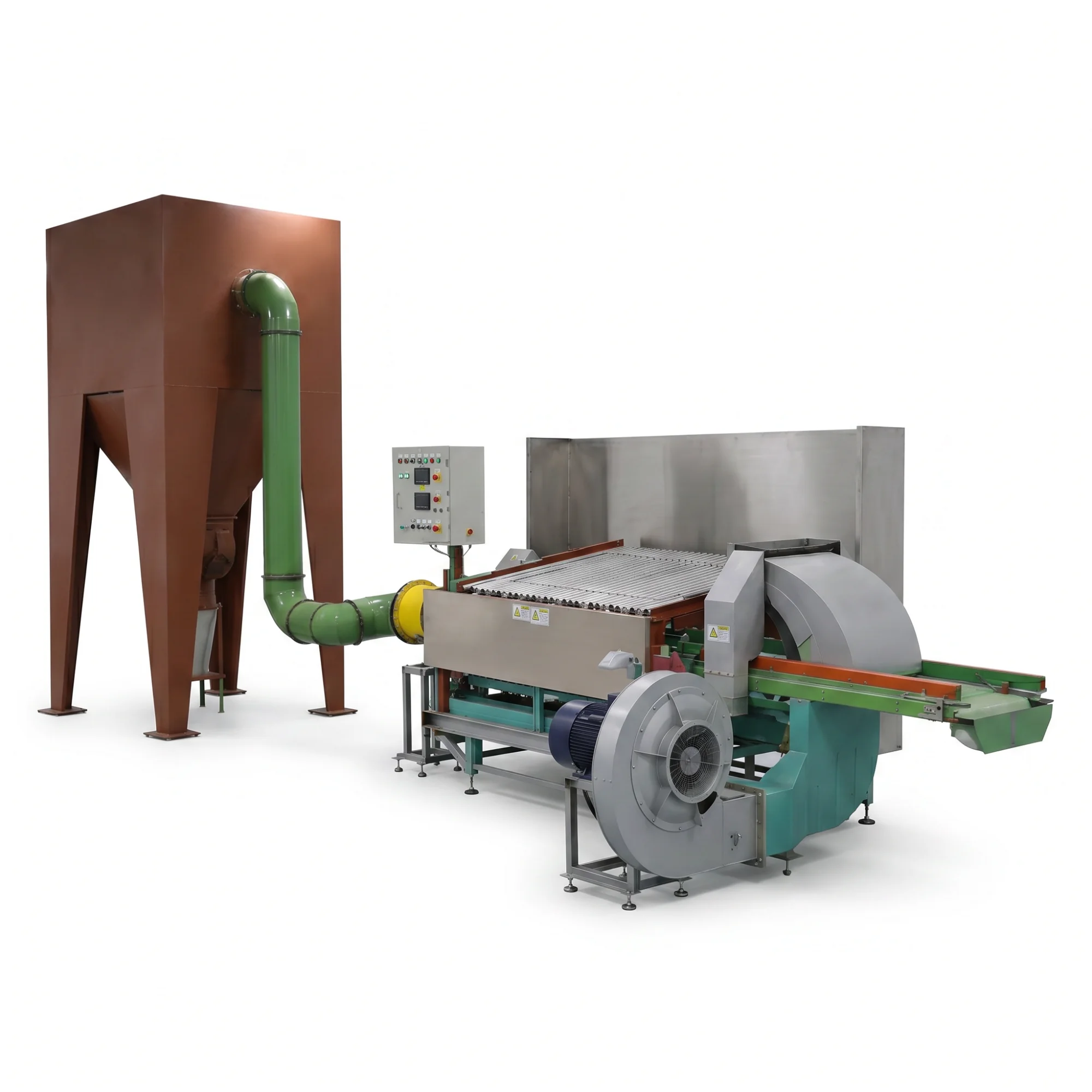
The first zone receives chicks from the hatch-side process and presents them to the next approved operation. Buyers should document container type, arrival pattern, operator tasks, separation needs, presentation method, and what happens when the next zone is not ready.
Uneven arrivals matter more than a daily average. A short peak can overload manual transfer, while a later quiet period leaves downstream equipment waiting. Measure arrivals in small time intervals and note every manual lift, correction, and temporary holding point.
Jili Intelligent publishes a day-old chick picking and transfer machine. Its project value depends on how the actual infeed and downstream handoff are defined.
Zone Two: Approved Treatment and Vaccination
This zone may include infrared beak treatment, injection vaccination, spray vaccination, or a combined station, depending on the hatchery's approved process. Equipment selection should follow the technical and veterinary requirements rather than a generic desire for more automation.
Map operator position, chick presentation, consumables, preparation, machine status, routine checks, stop recovery, and cleaning. If two jobs are combined, decide whether one interruption stops both and how affected batches remain identified.
Jili publishes a day-old chick infrared beak trimming machine, a day-old chick injection vaccinator, spray vaccination equipment, and a combined treatment and vaccination machine. The buyer should confirm the exact application and configuration in the project proposal.
Zone Three: Box Arrival, Loading, and Full-Box Release
Equipment planning often concentrates on the chick and overlooks the box. Empty boxes need to arrive in the correct condition and orientation. Full boxes need a clear release route. If either side pauses, treatment equipment may continue only until local space is exhausted.
Follow one box from storage or return through inspection, loading, conveying, stacking, dispatch, washing, and reuse. Mark every change of direction, height, owner, and status. These transitions are common sources of manual work and blocked flow.
The room map should show where operators can intervene without crossing the normal chick route or creating an unsafe temporary path.
Zone Four: Conveying, Accumulation, and Stacking
Conveying does more than move boxes between two coordinates. It coordinates timing. The design needs agreed infeed height, box dimensions, direction, accumulation rules, full-stack logic, pickup method, guarding, cleaning access, and response when dispatch is delayed.
Jili Intelligent's conveying and stacking line is relevant where treatment must connect with box handling. A proposal should show the line boundary and the behavior at each interface, not only the conveyor route.
When reviewing hatchery equipment for day old chicks, include the last full box in the acceptance test. Many line problems appear after processing is complete, when stacks wait for pickup or empty boxes cannot return.
Zone Five: Washing, Sanitation, and Return
Used crates or transport containers create a second flow that should not be drawn as an afterthought. Define dirty arrival, staging, washing, inspection, clean release, liner handling where applicable, storage, and return to production.
Jili publishes an automatic continuous crate washer and a crate washing system with inverting and liner placement. The appropriate scope depends on the site's containers, sanitation program, return pattern, utilities, layout, and clean/dirty separation.
Cleaning routes for the processing equipment should also appear on the room map. Maintenance doors, removable parts, drainage, and sanitation access need space when the line is stopped.
Draw Information Flow on the Same Map
Physical movement is only half the system. Add batch identity, equipment status, ready signals, alarms, quality records, and restart authority. A line can look connected in the layout while its operators still coordinate by shouting across the room.
Start with the decisions people need to make. Which batch is here? Which zone is ready? Where is the queue? Why did the line stop? Who can restart? Which items have passed cleaning release? Then decide which information belongs in machine controls, a line interface, the hatchery system, or a manual record.
Where Jili Intelligent Fits
Jili Intelligent's product range covers the main zones of post-hatch chick processing, making it possible to discuss individual modules and their interfaces within one room map. Its complete hatchery automation solutions can support a phased or integrated concept.
The customer should still provide real process data and approve the technical, veterinary, sanitation, and site requirements. The final proposal needs clear boundaries for equipment, utilities, controls, services, and acceptance.
Frequently Asked Questions
Does every hatchery need equipment in all five zones?
No. The map is a planning tool. Existing equipment or manual work may remain appropriate in some zones. Investment should solve a measured constraint and preserve a workable future interface.
What should be shown on the first layout drawing?
Show room dimensions, doors, columns, drains, utilities, current equipment, chick and box routes, operator positions, staging, maintenance access, dirty and clean flows, and dispatch pickup.
Can the project be automated in phases?
Yes. Define the future process and interfaces first, then install modules in an order that removes current bottlenecks without blocking later expansion.
A Room Map Turns a Machine List Into a Project
The correct hatchery equipment for day old chicks becomes clearer when every zone, handoff, operator route, container route, cleaning path, and information signal is visible. The room map gives production and procurement one shared picture of the work.
Send Jili Intelligent your process map, peak batch data, room drawing, containers, existing equipment, sanitation flow, utilities, and expansion plan through the contact page. Ask for a preliminary layout that shows both equipment and handoffs.