


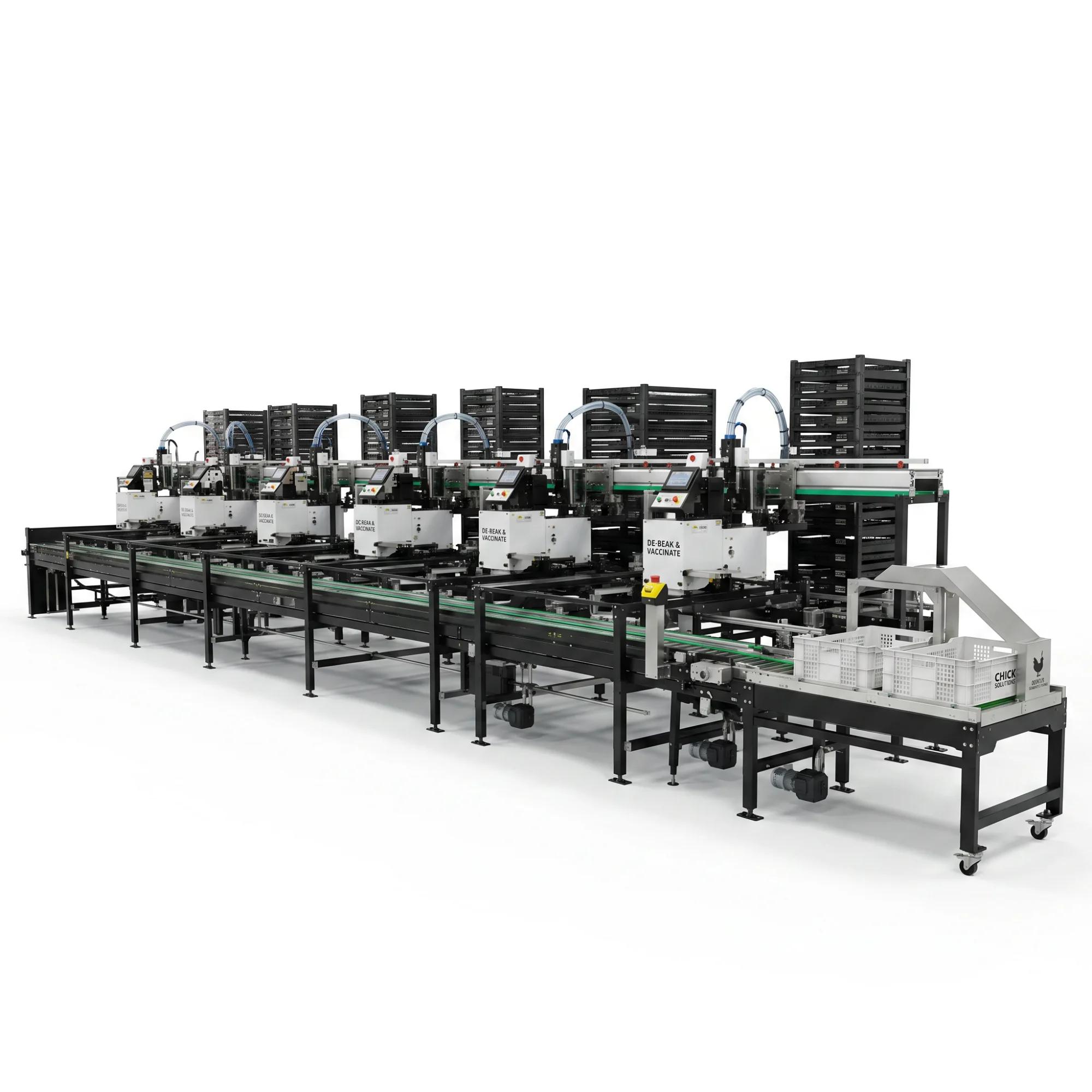
A hatchery equipment interface specification gives each connection a clear identity before equipment reaches the site. It records what crosses the boundary, who owns each side, what normal and abnormal behavior looks like, and how the connection will be approved and tested. Without that passport, small assumptions can survive until installation.
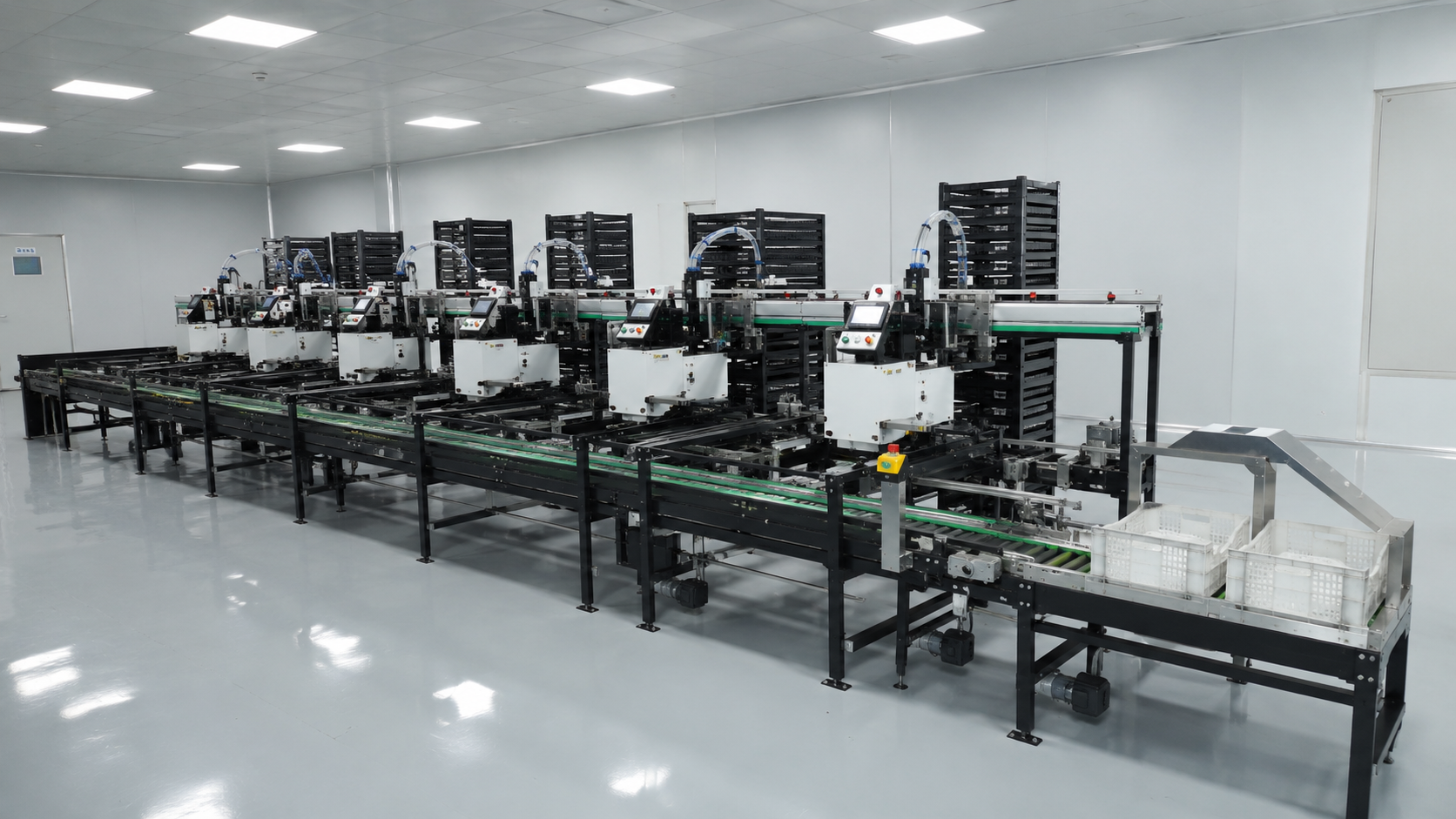
JuliSense can supply standalone hatchery equipment, conveying modules, and integrated solutions. A disciplined interface passport lets the customer, JuliSense, other suppliers, and local contractors work from the same handoff definition.
Passport Cover: Identify the Boundary
Assign a unique identifier, location, equipment on both sides, revision, owner, approvers, and required decision date. Place the identifier on the layout, electrical documents, control narrative, test plan, and action register.
Describe what crosses the line
The transfer may involve a tray, basket, chick box, chick, signal, status, batch record, power supply, compressed air, operator decision, cleaning boundary, or several of these together. Use exact names and drawings where dimensions matter.
State the operating states
Define available, request, transfer, complete, blocked, faulted, isolated, cleaning, maintenance, and any site-specific states. Make the permitted transitions readable to operators and engineers.
Page 1: Mechanical Fit and Transfer Geometry
Record working height, direction, alignment, datum, tolerances, load dimensions, weight range, center of gravity where relevant, surface, guides, gaps, supports, and adjustment. Note who supplies connecting pieces and who verifies the as-built position.
Use representative loads
Nominal dimensions may not show wear, deformation, stacking variation, labels, moisture, or damaged containers. Agree representative samples for design and factory testing, with acceptance limits owned by the customer.
Draw the rejected transfer
Show what happens when a load is out of position or the receiving zone is unavailable. The hatchery equipment interface specification should include detection, stop response, access, permitted correction, and restart.
Page 2: Electrical, Utility, and Network Connections
List supply requirements, protection, isolation, connector or terminal information, cable responsibility, compressed-air conditions, water or drainage needs, and network policy. Identify the source location and the point where supplier responsibility begins.
Verify at the point of use
Do not treat building-level utility information as final connection evidence. Qualified parties should confirm the available condition at the intended point and the requirements applicable to the installation country.
Separate mandatory and optional data
Define the minimum signals required for safe, controlled operation before discussing dashboards or broader data exchange. Record protocol, tag ownership, update behavior, cybersecurity review, and failure response for any approved connection.
Page 3: Control Handshake and Stop Behavior
Write the normal sequence step by step: request, permission, movement, detection, completion, and release. Then write the same sequence for full zone, timeout, sensor disagreement, emergency stop, planned stop, power loss, and restart.
Name the controller of record
For every action, identify which controller commands, which confirms, and which records. Avoid shared verbs such as “system stops” when several control panels and suppliers are involved.
Prevent automatic surprises
State when automatic restart is prohibited, what acknowledgment is required, what conditions must be rechecked, and who may authorize movement. Operators need predictable behavior more than clever logic.
ISO 12100 provides a general framework for machinery risk assessment and risk reduction. The final integrated system requires review for its actual configuration and destination.
Page 4: Safety, Access, and Sanitation Boundary
Record guarding interfaces, safe distances where applicable, emergency functions, isolation, access doors, shared zones, signage, cleaning access, drainage, and responsibility for closing gaps between supplied items.
Review the installed line, not separate machines
Two individually supplied machines can create a new trapping point, access restriction, or unclear stop zone when connected. The hatchery equipment interface specification should require an integrated review before acceptance.
Define sanitation ownership
JuliSense can provide equipment information relevant to access, materials, and removal. The hatchery defines approved agents, methods, frequency, verification, and release. WOAH standards offer relevant international animal-health references.
Page 5: Batch, Exception, and Operator Information
Decide what information must follow the physical load and what operators need at the boundary. Keep the method simple enough for shift changes, abnormal conditions, and manual recovery.
Design the exception record
For a blocked, rejected, or manually moved load, define identity, reason, location, action, owner, and return-to-flow rule. An exception process should not depend on one experienced person remembering the event.
Use language that fits the site
Agree terminology, symbols, labels, screen language, and training references. The same equipment state should have the same name in the interface passport, alarm list, work instruction, and acceptance test.
Page 6: Approval and Test Evidence
Give every passport an approval status: draft, supplier input required, customer input required, approved for design, approved for build, or changed. No critical boundary should quietly move into fabrication with blank fields.
Test one interface at a time
At factory testing, verify representative loads, normal handshake, full-zone response, stop, timeout, fault, restart, and records. At site, repeat the tests that depend on installed conditions or third-party equipment.
Control changes after approval
Record the requested change, reason, affected documents, cost and schedule impact, risk review, approvers, implementation evidence, and retest. The hatchery equipment interface specification remains useful only when its revision matches the line.
Use the Passport During Procurement
Attach the interface schedule to the request for quotation. Ask each supplier to confirm included connections, required inputs, exclusions, assumptions, tests, and documentation. This makes competing proposals more comparable.
What should be frozen first?
Freeze critical load geometry, working heights, route direction, ownership, utility basis, stop zones, and control handshake early. Less critical labels or reports can follow a controlled schedule.
Who owns the master register?
One project role should maintain identifiers, revisions, approval state, open actions, and test evidence across all suppliers. Ownership may sit with the customer or appointed integrator, but it must be explicit.
Review the JuliSense product range, conveying and stacking equipment, and project services while building the register.
Run a Paper Handoff Workshop
Print the route at a scale that leaves room for notes. Put one passport at every connection and ask the owners on both sides to walk through a normal load, full zone, planned stop, fault, cleaning handover, maintenance isolation, and restart. Capture every sentence that begins with “we assumed.”
Close contradictions in one master record
A controls narrative may say the upstream machine decides, while an electrical diagram implies the downstream controller owns permission. The workshop should identify the conflict, assign one decision owner, and update every affected document. The hatchery equipment interface specification is the index that points to those controlled details.
Link commercial exclusions to technical boundaries
If cabling, supports, adapters, guards, local panels, software changes, testing materials, or site labor are excluded, place the exclusion beside the relevant interface. Procurement can then see the work that remains instead of discovering it during installation.
Repeat the workshop after a major design change and before shipment. Use the current physical load and software revisions when possible. A signed hatchery equipment interface specification is evidence of an agreed boundary, but only an installed test confirms that the handoff behaves as designed.
Stamp the Passport Before Shipment
A complete hatchery equipment interface specification turns integration from a late-site discussion into a controlled project deliverable. It helps maintenance, operations, contractors, and suppliers understand the same boundary.
Send JuliSense your layout, equipment list, load details, interface schedule, destination, and project timing through the contact page. JuliSense can then respond against visible handoffs instead of hidden assumptions.