

A hatchery production line automation handover is not complete because the supplier can run the connected equipment. The customer must understand how to prepare, start, observe, pause, recover, clean, document, and escalate within the agreed operating scope.
Set aside one customer-led hour near the end of commissioning. Supplier specialists observe and intervene only under the agreed safety and test rules. The hour shows whether knowledge has moved from the project team into ordinary customer roles.
Minute 0: The Customer Decides Whether the Line Is Ready
The hour begins before any start command. Authorized customer roles review the site, utilities, guards, materials, containers, supplies, approved procedures, open items, and staffing required by the readiness plan.
This makes hatchery production line automation handover a customer readiness decision rather than a supplier performance.
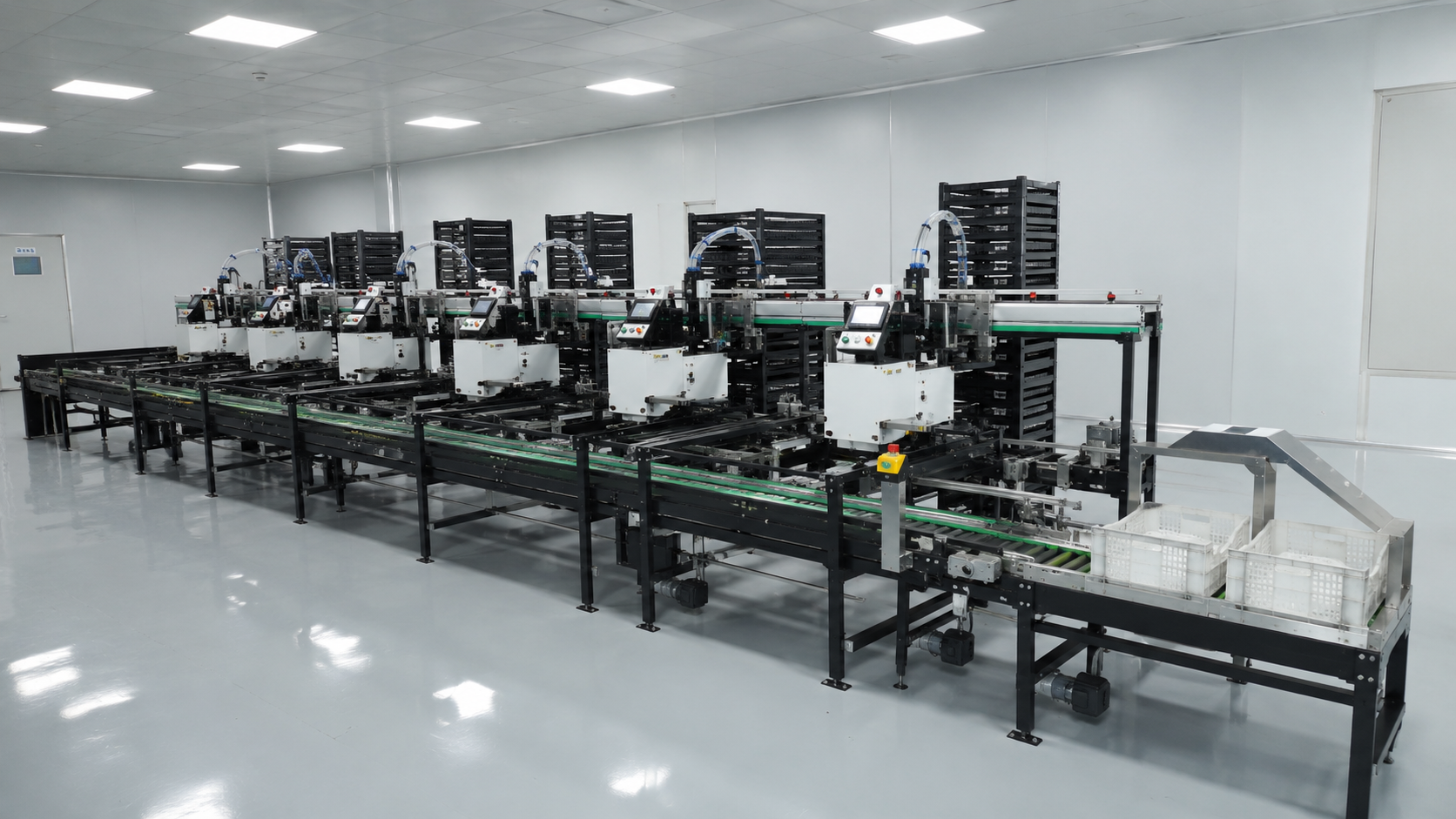
Jili Intelligent presents complete hatchery automation solutions through JuliSense. The customer-led hour should match the actual ordered modules, interfaces, and commercial scope.
Readiness should be visible
Use one board or record showing each required condition, owner, status, evidence, and release decision. Avoid relying on a visiting engineer's memory.
Open items need operating impact
The customer should know which open items prevent the hour, limit a function, affect documents, or can remain under an agreed closure plan.
Minute 10: The Customer Starts and Explains the States
During startup, ask the operator and supervisor to narrate normal, ready, waiting, paused, and fault information in plain language. They should know which actions are permitted and when escalation is required.
For a hatchery production line automation handover, successful startup means more than movement. It means the customer can explain why each module is ready and which upstream or downstream condition matters next.
Follow one physical handoff
Trace an item or container between two connected stations. Note orientation, waiting, signals, ownership, and what happens if the next station is unavailable.
Follow one information handoff
Trace batch identity, status, or another agreed record through the customer process and selected controls. Name what the automation provides and what remains outside its scope.
Minute 20: The Supplier Stops Answering First
Questions will appear. The operator should first use approved screens, labels, procedures, training material, and escalation routes. The supplier observes which information is hard to find or interpret.
For general machinery risk assessment and risk reduction, ISO 12100 offers a framework. The customer-led hour must follow the applicable risk assessment, supplier instructions, site procedures, and local requirements.
Silence is diagnostic, not punitive
If the team hesitates, record the gap without blaming the operator. The cause may be unclear wording, incomplete training, weak visual controls, or a responsibility that was never assigned.
A correct question can be good evidence
Operators should escalate matters outside their authority. The goal is not independent guessing; it is correct recognition of the boundary.
Build the Hatchery Production Line Automation Handover Hour
Give each ten-minute block a purpose:
| Time | Customer-led activity | Evidence |
|---|---|---|
| 0-10 | Readiness and startup | Release record, checks, state explanation |
| 10-20 | Normal connected flow | Handoffs, signals, operator observations |
| 20-30 | Planned local pause | Current positions, communication, recovery |
| 30-40 | Batch or workflow transition | Identity, settings, supplies, authorization |
| 40-50 | End-of-run and cleaning access | Clear-down, inspection, responsibility |
| 50-60 | Shift and support handover | Records, open items, contacts, next owner |
The exact timing can change. What matters is that the customer leads a representative sequence and retains understandable evidence.
Use ordinary customer roles
Include people who will operate, supervise, maintain, clean, and release the system, not only senior staff who attended every design meeting.
Give observers separate questions
Production watches flow. Engineering watches interfaces. Maintenance watches access. Sanitation watches cleanability. Quality watches identity and evidence. Procurement watches whether the ordered scope is present.
Minute 30: A Planned Local Pause Tests Ownership
Choose one controlled pause permitted by the agreed plan. Record where current work waits, what upstream and downstream modules do, what the operator sees, who communicates, and which checks allow restart.
The World Organisation for Animal Health Terrestrial Code provides internationally recognized animal-health and welfare references. Customer-qualified owners remain responsible for applicable veterinary, welfare, sanitation, and regulatory decisions.
Ask two shifts to explain the same pause
If practical, repeat the explanation with another trained team. Different interpretations show where the handover still depends on informal knowledge.
Separate local pause from line stop
Operators should understand which equipment pauses, which can continue, where work waits, and when a wider coordinated stop is required.
Minute 40: A Transition Tests the Details
Batch, program, container, supply, or product changes often combine several small responsibilities. The customer team should explain preparation, authorization, identity, approved settings, old-material removal, new-material confirmation, and record ownership.
Watch temporary placement
Supplies, tools, containers, and documents should have clear places during the change. Temporary clutter can create confusion and unnecessary walking.
Confirm who can change what
Access permissions and approval authority should match customer roles and the selected control scope.
Minute 50: Production Ends but Handover Continues
End-of-run work includes clearing current items, handling partial containers, reconciling supplies or records, moving to a safe state, opening authorized access, cleaning, inspecting, and preparing the next release.
JuliSense describes design, integration, commissioning, training, and after-sales discussions on its service page. Exact deliverables and service terms should be confirmed commercially.
Maintenance and sanitation share the room
Review removable components, guarding, visibility, reach, service positions, tools, collection areas, reassembly, inspection, and release on the same map.
Shift handover needs current status
The next team should receive equipment state, batch or workflow status, completed records, open issues, restrictions, and the decision owner for restart.
Minute 60: The Customer Knows Where Support Begins
The final discussion names which issues belong to the operator, supervisor, qualified veterinary or quality owner, local maintenance, engineering, or JuliSense support. It also confirms equipment identity, project references, contact route, and evidence needed for a useful support request.
Clear escalation is part of hatchery production line automation handover because ownership includes knowing when another role must act.
Test one parts question
Can maintenance identify a relevant item, locate the correct record, and use the agreed request channel without depending on a personal chat history?
Test one document question
Can the team find the current approved drawing, instruction, configuration record, training evidence, and open-item log?
Ten Questions Before the Customer-Led Hour
Who releases the line for the hour?
Name the authorized customer roles and readiness evidence required before startup.
Which modules and interfaces are included?
Use the approved equipment list, drawings, and interface register for the ordered system.
What may operators do without escalation?
Define permitted normal actions, protected settings, and the conditions requiring another role.
Which pause will be demonstrated?
Choose a controlled scenario allowed by the risk assessment, instructions, and test plan.
Where does current work wait?
Mark approved waiting positions and visible status during local or line-level interruptions.
Which transition represents real production?
Select an applicable batch, program, supply, or container change with customer ownership clear.
Who releases equipment after cleaning?
The customer's authorized sanitation, quality, maintenance, and production roles should follow the approved site method.
What should the next shift receive?
Provide current state, records, open items, restrictions, and restart ownership.
How is support requested?
Confirm equipment identity, project reference, issue evidence, contact channel, and commercial boundary.
How can buyers plan handover with JuliSense?
Share the line scope, customer roles, room, procedures, interfaces, training needs, and required evidence through the JuliSense contact page.
Let the Customer Own the Final Hour
A hatchery production line automation handover becomes credible when the customer can lead readiness, startup, flow, a controlled pause, a transition, cleaning access, and support escalation. The supplier's quiet observation reveals whether the system is understandable beyond the commissioning team.
JuliSense can use the customer-led hour as a handover framework. The goal is not to leave the customer alone; it is to make ownership clear before supplier-led operation ends.