


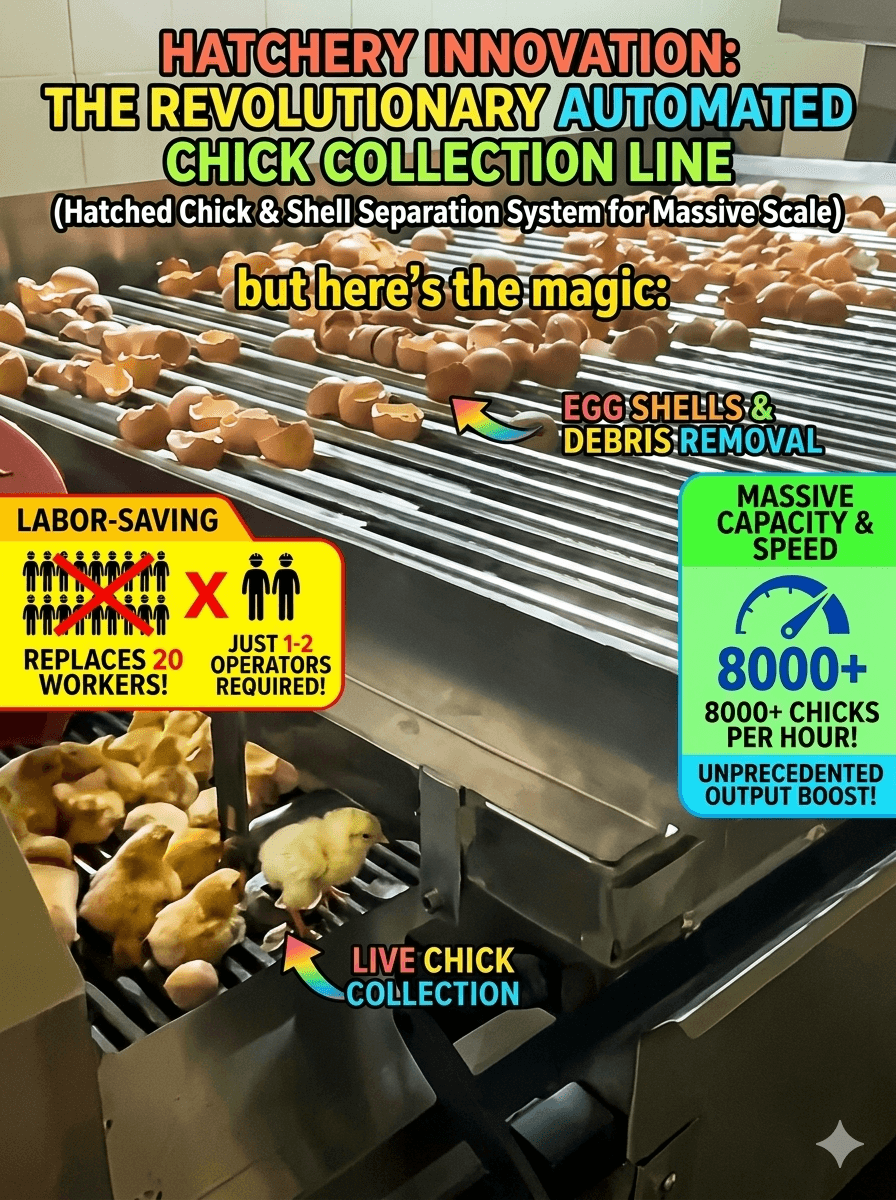
The most expensive automation mistake is not buying too little equipment. It is automating a process that nobody has clearly defined.
Effective hatchery production line automation begins with the flow of chicks, crates, people, information, cleaning, and recovery. Machines are selected after the bottlenecks and handoffs are visible. For many hatcheries, a phased project produces better decisions than trying to automate every task at once.
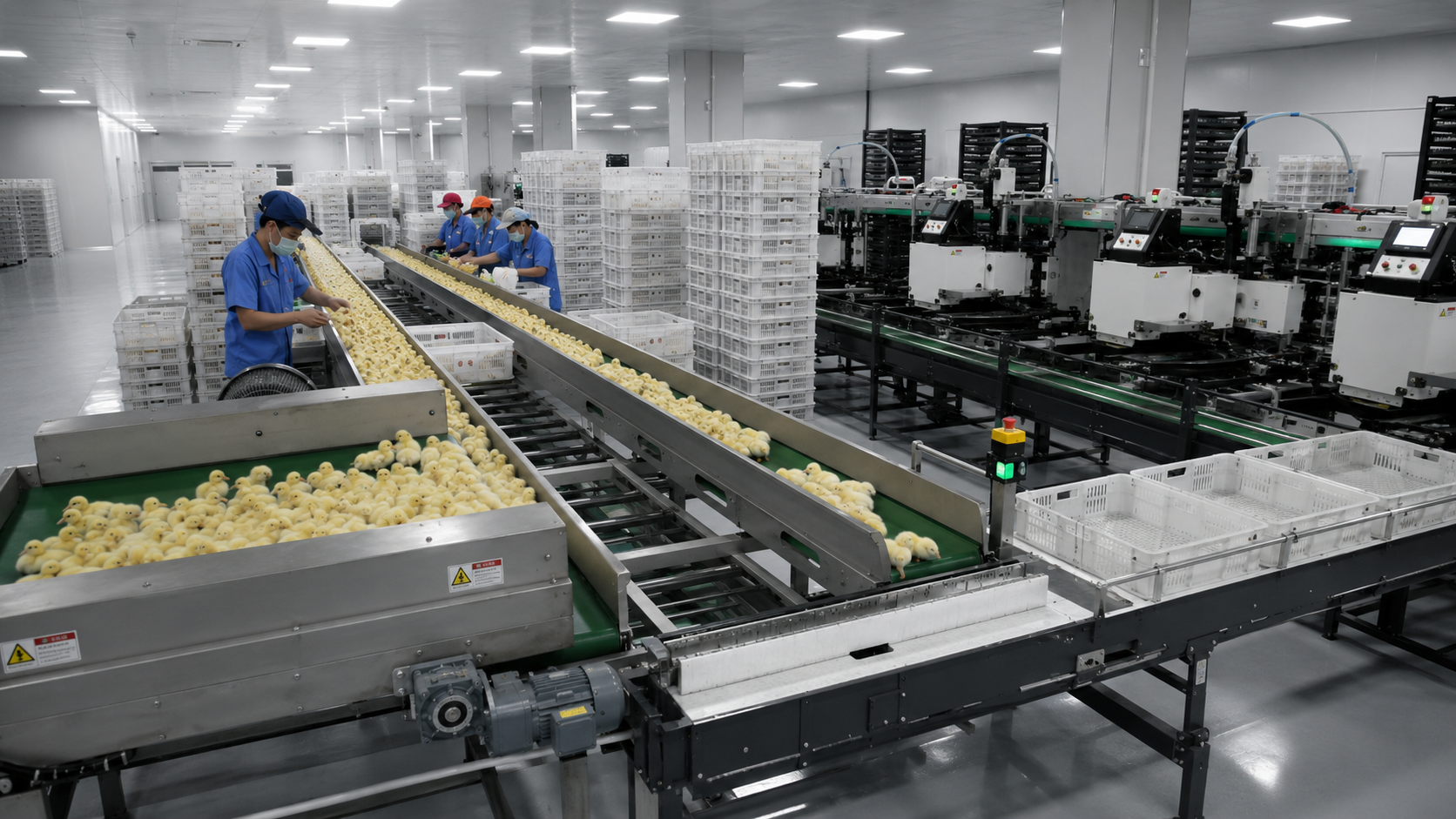
Before Phase One: Record the Day You Actually Have
Walk one normal batch from the hatcher area to its next destination. Record when work arrives, where it waits, who touches it, when crates change status, and what stops the flow. Repeat the observation during a busy period and during sanitation.
The aim is not to create a perfect industrial-engineering study. A simple timeline can expose the real constraints: chicks arrive in bursts, one operator walks repeatedly for supplies, empty crates appear late, a connected stage restarts slowly, or cleaning access extends downtime.
Use this evidence to write a project statement. For example: "Reduce manual transfers and stabilize flow between picking, treatment, vaccination, and crate loading without blocking sanitation access." That statement is more useful than "We want an automatic hatchery."
Phase One: Stabilize the Critical Work
The first phase should remove a defined source of variation while leaving the rest of the process understandable. A hatchery might automate chick picking and transfer, add a treatment or vaccination station, or improve crate conveying where manual movement repeatedly breaks the rhythm.
Choose the phase by customer value, not by how impressive the machine looks. Which change reduces unnecessary handling? Which handoff causes the most waiting? Which job is difficult to staff consistently? Which delay threatens the operating window?
At this stage, preserve visibility. Operators and supervisors should be able to see whether the new module is ready, stopped, waiting, or in fault. Measure arrival pattern, running time, planned and unplanned stops, replenishment, and recovery. Those records become the design input for the next phase.
Phase Two: Connect the Handoffs That Now Limit Output
Once one area becomes stable, its neighbors become easier to judge. The new bottleneck may be upstream presentation, downstream crate availability, or the controls between modules.
This is the moment to connect stages deliberately. Define what each module sends and receives, where short accumulation is acceptable, and what happens when a downstream area is not ready. A buffer should solve a measured temporary variation. It should not hide a permanently slower stage.
Jili Intelligent publishes equipment for day-old chick picking and transfer, infrared beak trimming, vaccination, and conveying and stacking. When several stages come from one supplier, interface responsibility can be easier to define, but the buyer should still require a line sequence, layout, alarm ownership, and acceptance criteria.
Phase Three: Scale the Line Without Losing Control
Expansion may mean more positions, parallel equipment, longer operating hours, or a new building. The third phase should use the evidence collected in phases one and two rather than return to catalogue capacity.
Model the busiest interval, not only the daily average. Include operator breaks, replenishment, crate supply, product change, cleaning, and ordinary stops. Ask what happens when one module pauses while the rest of the line is full. The answer determines whether the next investment belongs at the main processing station, a transfer, a buffer, crate logistics, controls, or sanitation access.
| Phase | Decision to make | Evidence that allows the next phase |
|---|---|---|
| Stabilize | Which task or handoff creates the clearest loss? | Arrival pattern, operator work, stop causes, cleaning time |
| Connect | How should critical modules exchange flow and signals? | Buffer behavior, restart sequence, interface test results |
| Scale | Where will future peak volume create the next constraint? | Batch-level capacity, recovery performance, line availability |
What Should Stay Human?
Automation is valuable where it makes the process more stable, visible, and repeatable. It is not automatically valuable where judgment, animal observation, exception handling, or site-specific approval remains essential.
Keep clear roles for operators and supervisors. People still need to recognize unsuitable conditions, respond to alarms, manage approved procedures, verify supplies, inspect crates, and release the system after cleaning or maintenance. A good design removes unnecessary motion without pretending that the hatchery can run without accountable decisions.
One Acceptance Test Cannot Answer Everything
Factory acceptance should confirm that the supplied configuration, controls, alarms, sequence, and agreed interfaces behave as specified. Include controlled interruptions and restarts, not only continuous running.
Site acceptance should test the installed line with the actual room, utilities, operators, batch pattern, crates, and surrounding equipment. Then conduct an operating review after the team has gained experience. The first week may reveal replenishment, access, or training issues that did not appear during a short hatchery production line automation acceptance run.
Where Jili Intelligent Fits
Jili Intelligent positions its work around stable, replicable, data-supported hatchery production rather than isolated machine supply. Its complete hatchery automation solutions bring together chick handling, treatment, vaccination, conveying, stacking, and related automation.
This breadth fits projects where several handoffs must be designed together. A phased approach is still valid: the customer can define the long-term line architecture while implementing the highest-value stage first. The quotation should make current scope, future interfaces, and exclusions visible.
Frequently Asked Questions
Must a hatchery automate the complete line at once?
No. A phased project can reduce risk when the long-term interfaces are planned from the beginning and each phase produces evidence for the next decision.
How do we choose the first automation stage?
Start with measured loss: repeated waiting, unnecessary handling, staffing difficulty, unstable flow, slow recovery, or sanitation constraints. Select the stage that changes the operating result, not merely the most visible machine.
What data should be collected before layout design?
Collect batch arrival patterns, process times, operator routes, stop causes, crate flow, cleaning sequence, room dimensions, utilities, and expected future volume.
Build the Roadmap Around Handoffs
Hatchery production line automation succeeds when each phase solves a real operating problem and prepares the next connection. Begin with the current workday, stabilize the critical task, connect the limiting handoffs, and scale with evidence.
Send Jili Intelligent your process map, batch data, room layout, current equipment, crate route, staffing, sanitation constraints, and expansion plan through the contact page. Ask for a phased concept that distinguishes the immediate project from the future line architecture.