


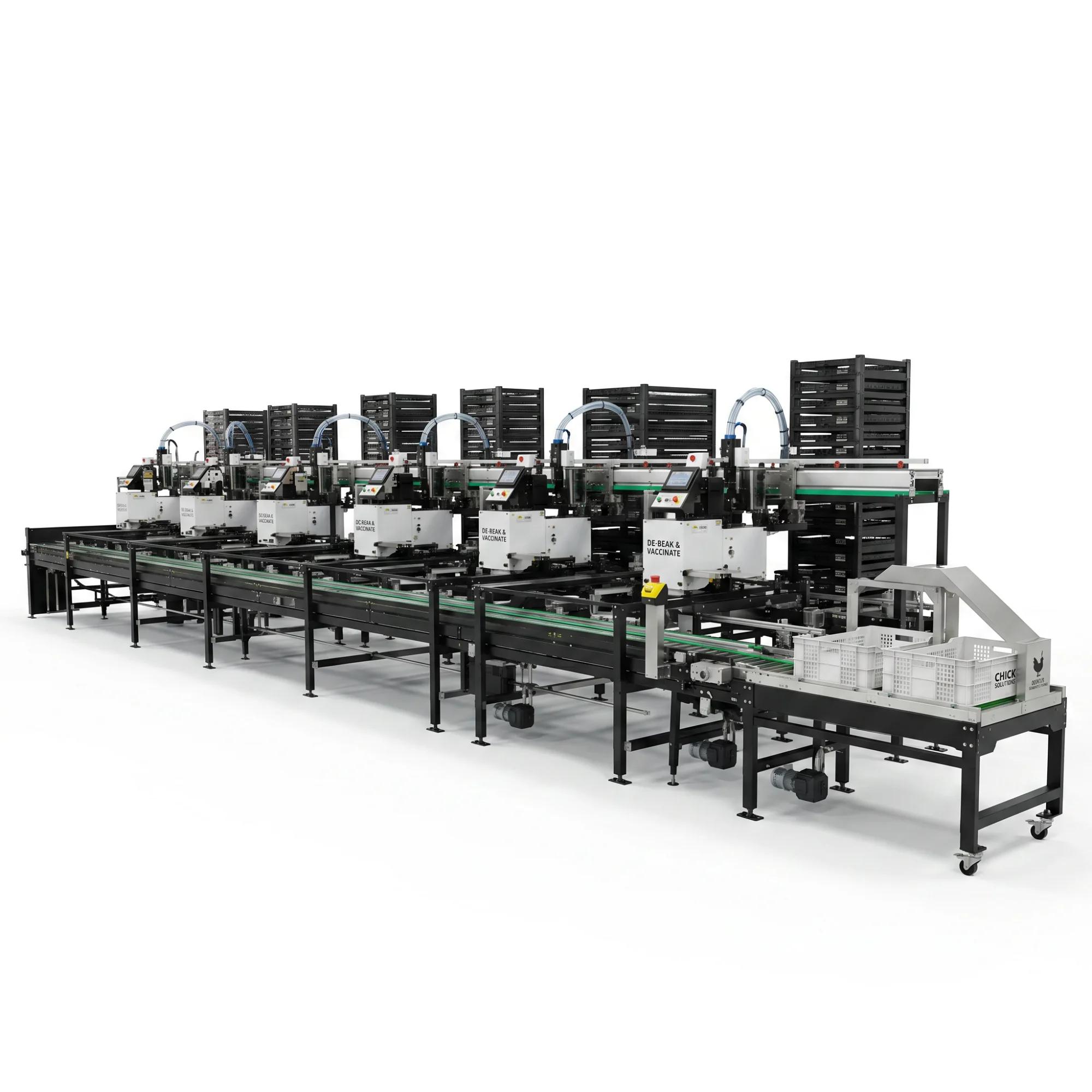
A hatchery stacking line is usually shown while boxes arrive steadily and completed stacks leave on time. The last full box of a batch tells a more useful story. It reaches the line when arrivals are changing, operators are closing records, dispatch may be late, and the room is preparing for cleanup.
Follow that box from loading to pickup. Its journey reveals whether the system handles real endings and interruptions, not only continuous production.
The Last Box Leaves the Loading Point
The journey begins with a full box and a clear status. The line should know that the box is ready to leave, while the operator should know that it belongs to the correct batch and route.
Define box dimensions, weight range, lid condition, orientation, labels, and any features that affect conveying. Representative samples should be used during project review and acceptance. A drawing alone may miss wear, flexibility, or small variations found in the working box population.
The infeed also needs a handoff rule. If loading stops, should downstream conveying empty the line? If conveying stops, where can the next full box wait without blocking the operator or chick flow?
The Box Enters Accumulation
Accumulation protects upstream work from short downstream delays, but it is not unlimited storage. The buyer should understand how many representative boxes can wait, how the system controls spacing, and what signal is sent before available space is exhausted.
Too little accumulation can make treatment or loading stop for every small dispatch delay. Too much can hide a persistent bottleneck and consume valuable room space. The right amount follows measured arrival variation and a defined recovery plan.
During acceptance, interrupt the stacking or pickup area and observe how the queue grows. The useful evidence is not simply that the conveyor stops. It is that the stop is orderly, visible, and recoverable without losing box identity or requiring improvised manual movement.
The Last Box Completes a Stack
The last box may complete a normal stack, create a partial stack, or arrive after the planned stack pattern has changed. Decide how each case is handled before commissioning.
Stack rules should state box orientation, stack height or count, stability requirements, partial-stack treatment, and the method used to release the completed stack. The final configuration must follow the actual box, transport, handling, and site requirements rather than a generic stack pattern.
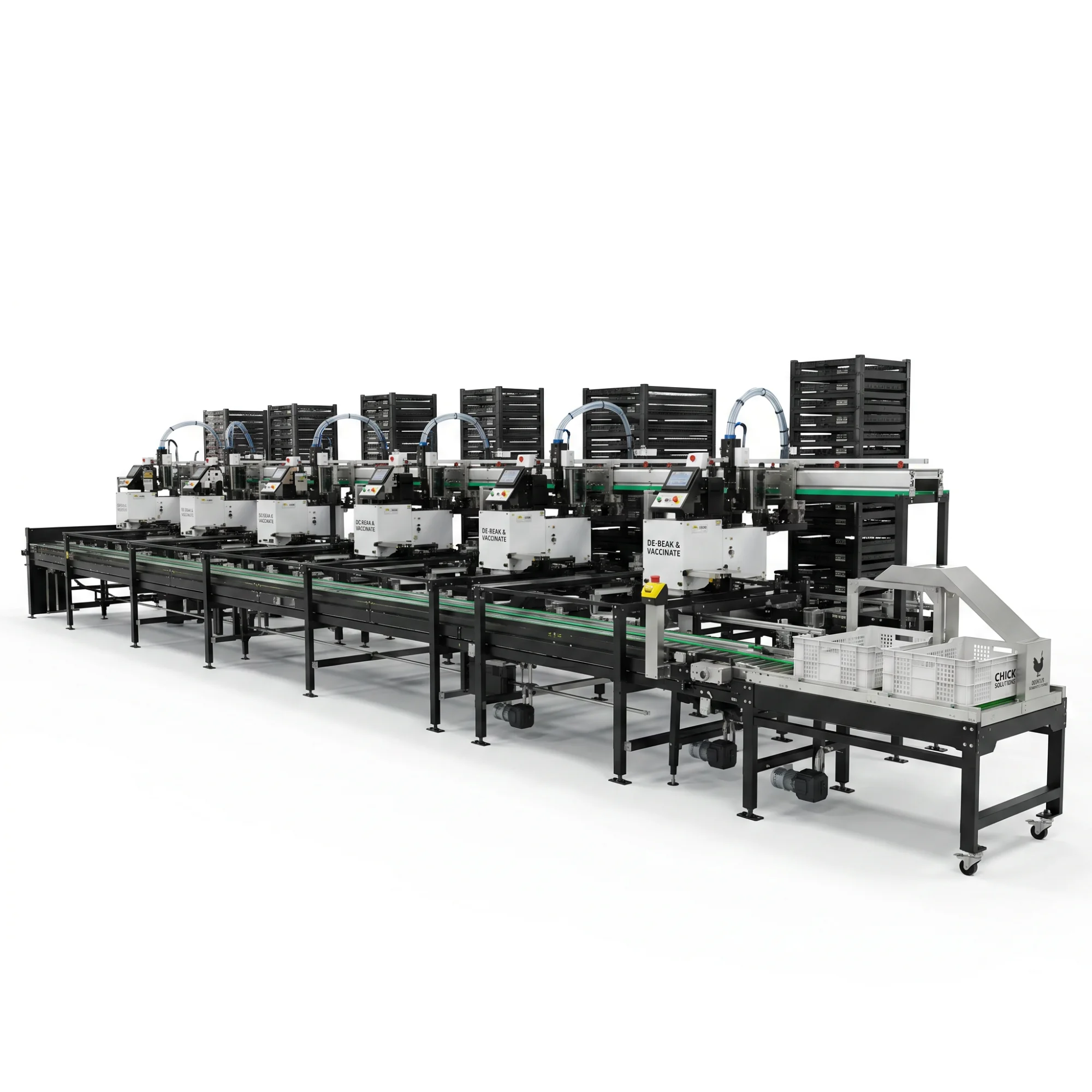
Jili Intelligent publishes a conveying and stacking line for connection with day-old chick processing. The project proposal should show infeed, conveying, accumulation, stacking, discharge, controls, guarding, and the boundary with customer dispatch handling.
Dispatch Is Late by Ten Minutes
Now test the condition that product videos rarely show. The completed stack is ready, but pickup is not.
Can the system form another stack? Where does it wait? Which upstream zones are warned? How long can normal work continue? What does the operator do when the planned buffer is full? Is there a safe manual recovery route, and who authorizes it?
For a hatchery stacking line, this short delay can determine the value of the entire project. A fast stacker that immediately blocks loading may improve one task while leaving the shift result unchanged.
Include logistics or dispatch staff in the layout review. Their pickup method, travel route, timing, and destination affect the stacking design even though they work after chick processing.
The Batch Ends With a Partial Pattern
Production endings are rarely as uniform as a continuous test. The last batch may leave a partial stack or a few boxes in accumulation. The control and operating procedure should make the closing sequence clear.
Ask the supplier to demonstrate batch-end behavior. How are remaining boxes released? How is a partial stack identified and handled? Which machine states are confirmed before cleaning? Can the line be emptied without carrying boxes through a route intended only for maintenance?
This closing sequence should be written into operator training. It is routine work, not an exception.
Cleaning Starts After the Box Leaves
Conveyors, guides, sensors, stacking areas, and guarding need appropriate access within the hatchery's sanitation program. The room layout should show how people reach the equipment and where removed items are placed.
The supplier should explain materials, access, precautions, and machine-specific maintenance. The hatchery defines approved sanitation methods, agents, verification, and release. Where box washing connects to the broader return loop, review dirty and clean routes separately from the full-box dispatch route.
Jili Intelligent also publishes automatic continuous crate washing equipment and wider complete hatchery automation solutions. These systems may share project information, but their clean, dirty, production, and dispatch flows should remain clearly defined.
Acceptance Should Include Three Endings
Ask for three end-of-batch scenarios during factory or site acceptance. First, complete a normal full stack and release it. Second, delay pickup until accumulation reaches the agreed warning condition. Third, end with a partial stack and demonstrate the closing procedure.
Record box identity, machine status, alarms, operator actions, recovery time, remaining material, and any manual intervention. These scenarios are short, but they show whether controls, layout, and operating instructions agree.
Where Jili Intelligent Fits
Jili Intelligent's conveying and stacking equipment is designed to connect day-old chick processing with box handling. The company also supplies upstream treatment, vaccination, transfer, and broader automation modules, which is useful when stacking performance depends on several connected stages.
The buyer should provide representative boxes, stack rules, arrival data, layout, pickup method, destination, cleaning constraints, and existing interfaces. Those inputs allow the proposal to describe a real system rather than a generic conveyor route.
Frequently Asked Questions
How much accumulation does a stacking line need?
It depends on measured box arrivals, pickup variability, available space, acceptable upstream interruption, and recovery strategy. Size it from real intervals and scenarios, not an arbitrary number of conveyor positions.
Should partial stacks be handled automatically?
Not always. The correct method depends on box, dispatch, batch, and site requirements. What matters is that the procedure, status, operator action, and safe route are defined.
What box information should be sent to the supplier?
Send drawings and representative samples, dimensions, weight range, materials, lids, labels, orientation, wear condition, stack pattern, pickup method, and any different box models used at the site.
Design for the Last Box, Not Only the First
The best hatchery stacking line remains controlled when the batch slows, pickup is late, accumulation fills, a partial stack remains, and cleaning begins. Following the last box exposes the practical details that determine whether stacking actually improves the shift.
Send Jili Intelligent your representative boxes, stack rules, peak arrival pattern, room layout, dispatch route, pickup equipment, cleaning requirements, and desired interfaces through the contact page. Ask the acceptance plan to include all three batch-ending scenarios.