


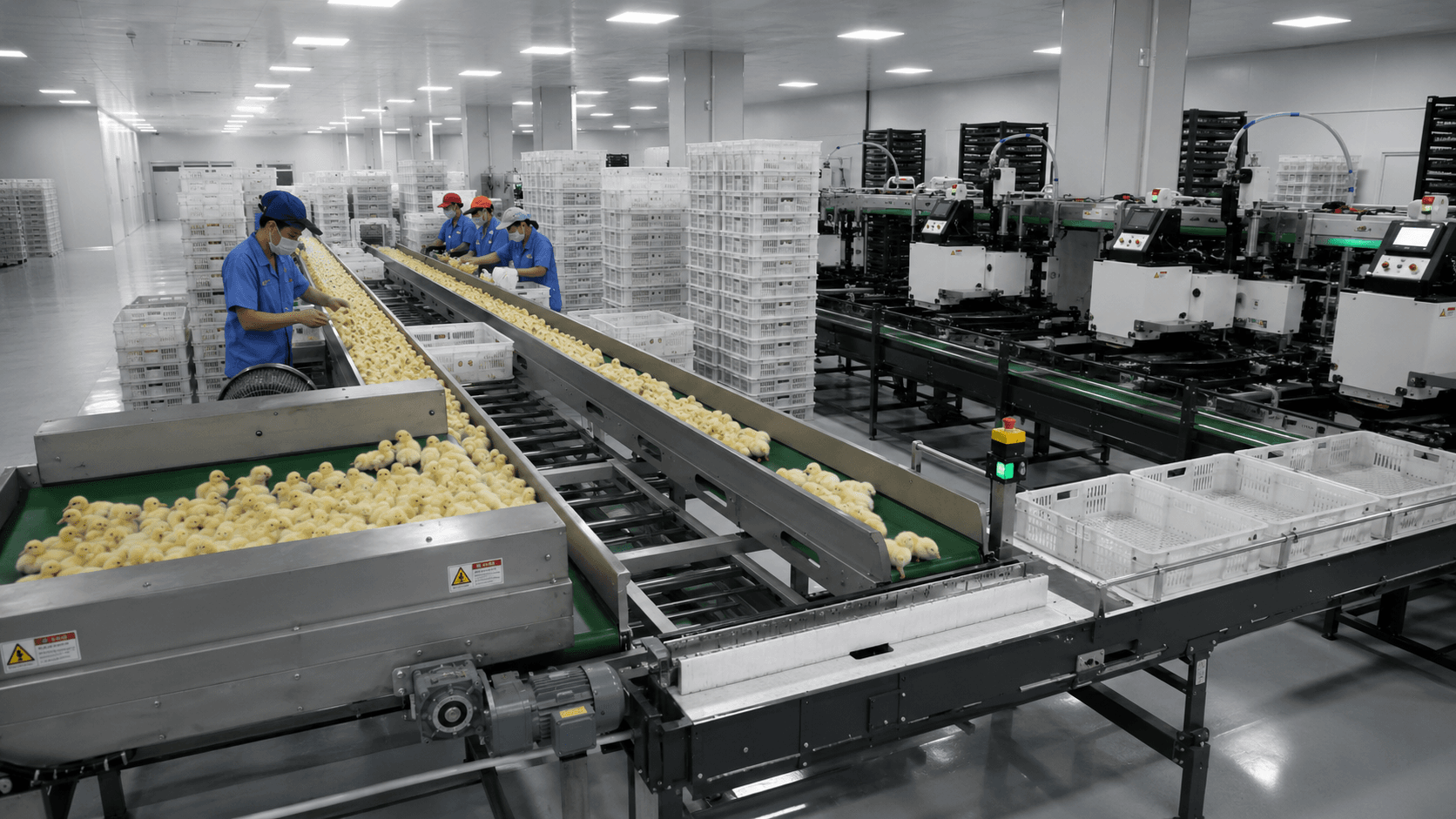
A high capacity chick processing machine bottleneck is not an abstract percentage. It has an address: a doorway at 8:10, a supply point before a batch change, a handoff where containers arrive unevenly, a full buffer when dispatch is late, or an operator station that loses visibility during a short peak.
Give every delay a location, time, trigger, visible symptom, owner, and recovery path. This address map helps buyers discuss usable capacity without turning the article into a machine specification.
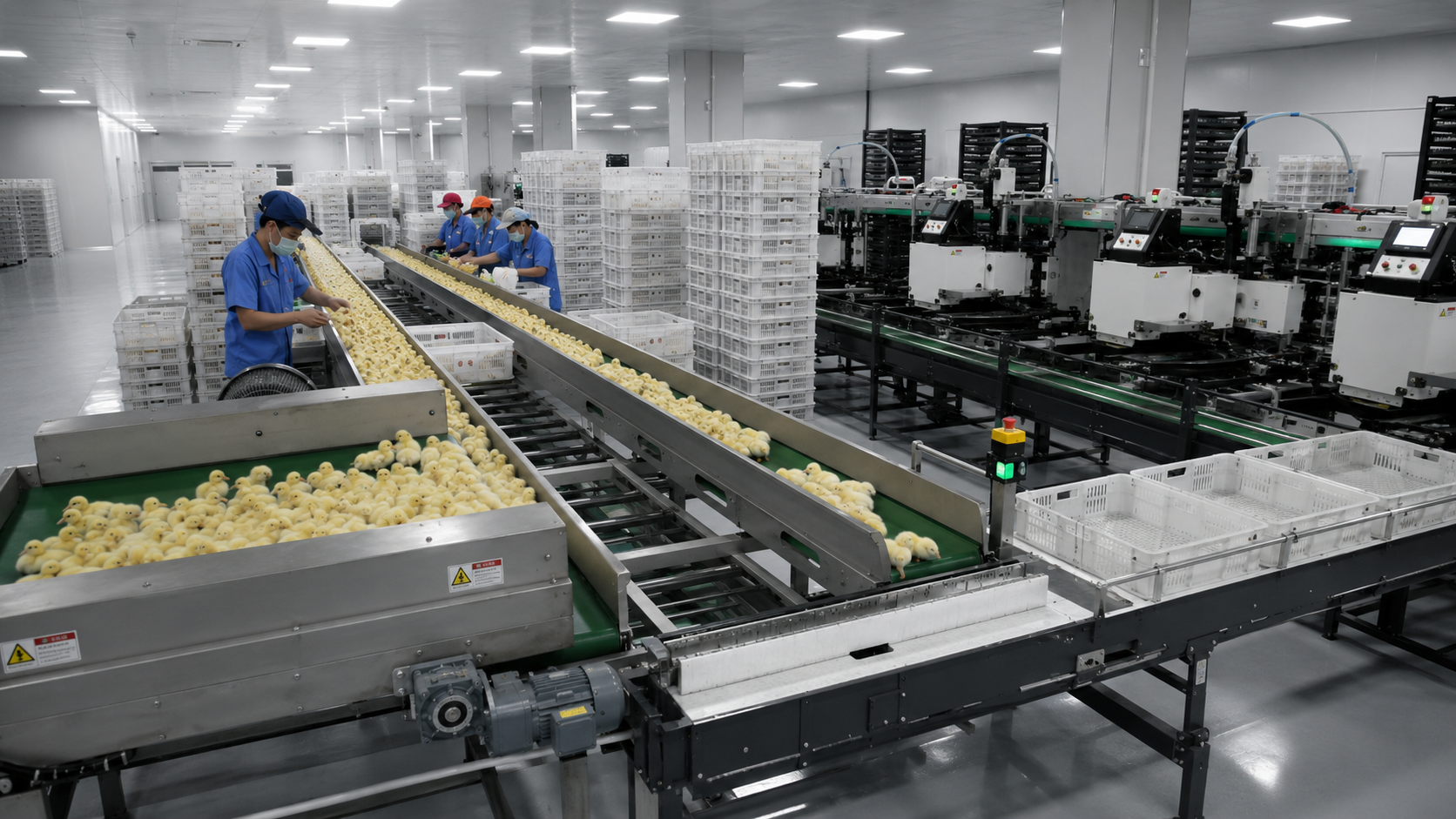
Address One: The Door Before the Line
Capacity begins before equipment receives work. Incoming containers, batches, supplies, people, and information must arrive in a form the line can accept. A narrow doorway, crossing traffic route, late batch release, or limited staging area can determine the first peak of the day.
At this address, the high capacity chick processing machine bottleneck may exist before the selected machine receives anything at all.
Jili Intelligent presents connected chick processing equipment through JuliSense products. The final solution should be designed around the customer's real room, workflow, peak pattern, staffing, and destination requirements.
Measure the arrival shape
An hourly average hides bursts. Record when work arrives, how much arrives together, how long it waits, and whether the next station sees a steady or uneven flow.
Mark the release owner
If production, quality, veterinary, or another authorized role releases work into the line, show that decision on the capacity map. Automation cannot remove an approval that the customer still needs.
Address Two: The Station Everyone Watches
The most visible machine often receives the blame for any delay, but the actual constraint may sit before or after it. Observe the station's active time, waiting time, blocked time, change time, and operator-support time separately.
During a high capacity chick processing machine bottleneck review, ask what the station is waiting for and what is waiting for the station. Those two answers reveal different investments.
Separate machine time from process time
Machine movement, operator preparation, approved checks, supply replenishment, container exchange, and downstream availability all contribute to the observed cycle.
Include small stops
Several short pauses can remove more usable time than one memorable fault. Record frequency, duration, cause category, owner, and recovery evidence.
Address Three: The Handoff Between Two Good Machines
Two individually capable machines can create a weak line if their physical, control, timing, or responsibility interface is unclear. Follow one item, container, signal, and decision across the handoff.
For general machinery risk assessment and risk reduction, ISO 12100 is a useful reference. Apply relevant requirements to the final system, interfaces, operating modes, and people.
Define the waiting position
If downstream equipment is unavailable, where does current work wait? Is status visible? How much accumulation is acceptable? Who decides whether upstream flow continues, slows, or stops?
Define restart order
The line should have an agreed sequence for checking conditions, clearing the interface, communicating readiness, and restarting connected modules.
Build the High Capacity Chick Processing Machine Bottleneck Address Map
Use a table that combines place and time:
| Address | Time or trigger | Evidence to collect |
|---|---|---|
| Incoming staging | Peak batch arrival | Queue length, wait, release decision |
| Main station | Normal and peak run | Active, waiting, blocked, change, support time |
| Equipment handoff | Downstream pause | Positions, signals, buffer limit, restart |
| Supply point | Replenishment or change | Walking, identity checks, duration, errors |
| Operator position | Busy period | Reach, visibility, repeated touches, escalation |
| Dispatch | Pickup delay | Accumulation, status, traffic, upstream response |
The address map lets teams disagree constructively. They can point to an observed place and event rather than debating one headline throughput number.
Give each address an owner
Production, engineering, maintenance, sanitation, quality, logistics, or supplier teams may own different parts of the response. Record who decides and who acts.
Give each improvement a test
If the team changes a buffer, layout, signal, staffing method, or supply position, repeat the same event and compare the evidence.
Address Four: The Supply Point Nobody Modeled
High-speed equipment still waits when approved supplies, containers, labels, tools, or information are not at the right place. Walk the supply route during a real or representative change.
The World Organisation for Animal Health Terrestrial Code provides internationally recognized animal-health and welfare references. Customer veterinary, welfare, quality, and regulatory owners remain responsible for their approved processes.
Count walking and searching
Measure how often operators leave their normal position, how long they are away, and whether the line continues safely and clearly during that absence.
Protect identity during changes
Batch, program, supply, and container identity should remain clear through replenishment and transition. Record customer and machine responsibilities separately.
Address Five: The Operator's Field of View
An operator may keep a line moving by monitoring several states, correcting presentation, and communicating with upstream or downstream teams. If information is scattered, peak periods magnify the burden.
Ask for a one-minute narration
The operator explains what is normal, what is waiting, which action is permitted, and what requires escalation. Confusing language points to a visual-control or training need.
Rotate the trained operator
Use a second authorized person. If performance or interpretation changes sharply, the system may depend on individual experience rather than robust work design.
Address Six: The End of the Line
Dispatch, stacking, inspection, or downstream handling can become the real high capacity chick processing machine bottleneck. A line that produces faster than released output can leave hidden work in buffers and aisles.
JuliSense can discuss complete flows through its hatchery automation solutions. Project-specific modules and interfaces should be defined commercially.
Test a late pickup
Use a controlled scenario in which dispatch is briefly unavailable. Observe waiting locations, status, buffer limits, traffic, supervisor decisions, and the return to normal.
Follow the final batch
End-of-batch work may create partial containers, different timing, extra records, or a distinct release route. Include it in capacity evidence.
Capacity Improvement Is a Route, Not a Purchase List
Once delays have addresses, rank them by lost usable time, welfare or quality importance, safety, recovery difficulty, cost, and implementation dependency. Some require equipment changes; others require layout, supplies, signals, staffing, training, or clearer ownership.
Fix one constraint without moving it blindly
After an improvement, watch upstream and downstream addresses. A faster station can simply relocate the queue.
Keep representative conditions
Compare evidence under the same batch pattern, staffing, settings, room conditions, and measurement method when practical.
Ten Questions for a Capacity Walk
Where does the first queue form?
Record its physical location, start time, trigger, peak size, and decision owner.
What is the main station waiting for?
Separate upstream supply, operator preparation, approved checks, containers, and downstream availability.
What is waiting for the main station?
Observe arrivals, buffer use, work status, and whether upstream flow can respond.
Which short stops repeat?
Track cause category, duration, frequency, recovery, and ownership.
Where do supplies travel?
Map preparation, storage, replenishment, identity checks, temporary placement, and return to work.
Can a second operator run the same rhythm?
Use trained role rotation to expose dependence on one person's experience.
What happens during downstream unavailability?
Define waiting positions, signals, buffer limits, communication, and restart authority.
Does the final batch follow the same route?
Include partial containers, records, cleaning transition, and dispatch release.
How will an improvement be verified?
Repeat the same address, trigger, and evidence method after the change.
How can JuliSense review the address map?
Send the layout, peak pattern, modules, container details, staffing, known queues, and project goals through the JuliSense contact page.
Give the Bottleneck a Real Address
A high capacity chick processing machine bottleneck becomes manageable when the team can say where it lives, when it appears, what triggers it, and who owns recovery. The address map connects capacity to the physical room and the people who operate it.
JuliSense can use that map to focus an equipment and layout discussion. The useful outcome is not the largest theoretical number; it is a line whose real constraints are visible enough to improve.