


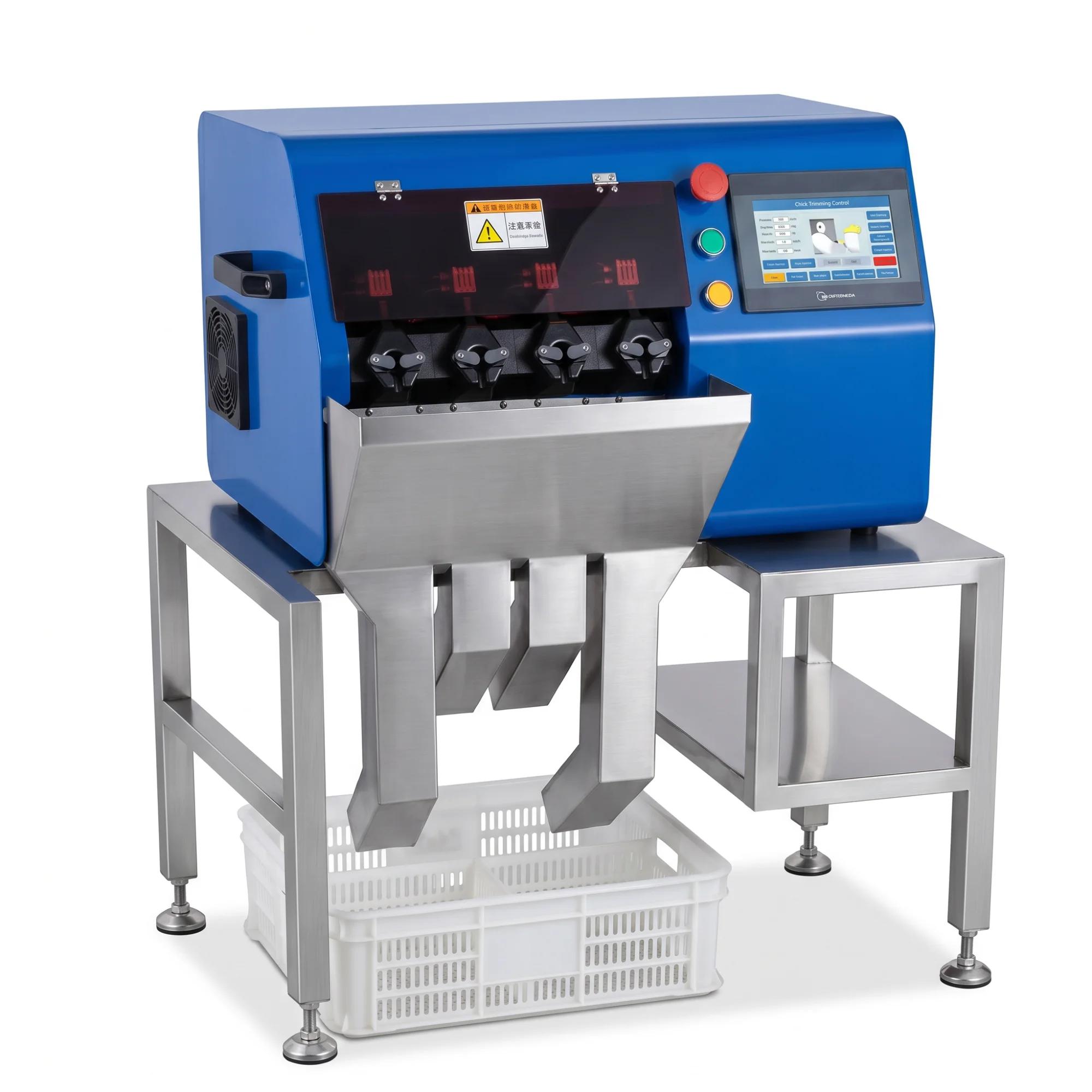
An infrared beak trimming machine project becomes much easier to discuss when the customer team can walk through the future work at full scale. Use floor tape to mark the machine footprint, access doors, operator positions, tables, supplies, buffers, observation points, and cleaning zones before installation.
Then invite five roles to rehearse one ordinary shift: operator, supervisor, qualified welfare or veterinary owner, sanitation, and maintenance. Their movements will expose questions that a small drawing often hides.

Mark More Than the Closed Machine
Begin with verified dimensions and a controlled layout. Tape the equipment body, but also mark opened covers, service positions, removable-part space, operator stance, supply locations, container movement, and the interface to adjacent work.
Jili Intelligent presents a day-old chick infrared beak trimming machine through JuliSense. Exact configuration, capacity basis, utilities, interfaces, and process suitability require confirmation for the customer's project.
Use solid lines for confirmed facts
Reserve solid tape for verified dimensions and boundaries. Use dashed tape for assumptions awaiting a site measurement, drawing revision, or customer decision.
Label the responsibility boundary
Mark where supplier equipment ends and customer facilities, utilities, furniture, handling, controls, or surrounding equipment begin. An unlabeled interface becomes an argument during installation.
Role One Walks the Normal Operator Loop
The operator rehearses preparation, normal presentation, routine observation, permitted adjustments, replenishment, documentation, exception handling, and shift handover.
During an infrared beak trimming machine rehearsal, count repeated steps and turns. A short walk repeated hundreds of times can matter more than one dramatic trip across the room.
Put supplies inside a deliberate reach zone
Mark what must be close, what can remain outside the immediate work area, how replenishment arrives, and where empty or used items go. Do not let every free corner become storage.
Protect a clear sightline
Stand at the taped operating position and confirm the operator can see the relevant work, status information, upstream arrivals, and the person responsible for escalation.
Role Two Walks the Supervisor Route
The supervisor needs to see flow, staffing, exceptions, current work, and downstream readiness without occupying the operator's space. Rehearse a normal check, a request for help, and a shift handover.
Create a decision point
Mark a place where two roles can review an issue without blocking movement or crossing a hygiene boundary. The point may hold a status board, controlled records, or communication tool.
Define who owns current work
At a pause or handover, state who controls machine status, current work, supplies, records, and the decision to continue. “The team” is not a usable owner.
Role Three Tests Independent Oversight
The customer's qualified welfare or veterinary owner should confirm the applicable observation position, criteria, authority, record, and stop condition. The supplier should not assume this professional responsibility.
The World Organisation for Animal Health Terrestrial Code provides internationally recognized animal-health and welfare references. Destination requirements and customer-approved procedures remain decisive.
Observe without creating a new risk
Tape an observation position that provides useful visibility without obstructing the operator, entering a restricted route, or encouraging unnecessary handling.
Rehearse the stop statement
The authorized person should be able to state the condition, location, immediate expectation, and responsible next role in plain language.
Role Four Brings the Cleaning Cart
Sanitation follows the planned route with the actual or representative cart, tools, containers, and personal protective equipment used by the site. It marks access, removed-part handling, collection points, waste route, inspection, reassembly, and release.
The infrared beak trimming machine footprint should remain workable when covers are open and cleaning work is underway, not only when production is running.
Check water and waste routes
Where applicable, trace approved cleaning resources and waste removal without assuming that the nearest drain solves every problem. Confirm building and site requirements.
Name the release owner
After reassembly, identify who checks cleanliness, parts, guarding, inspection status, and readiness before production may resume.
Role Five Opens the Maintenance Envelope
Maintenance walks to each routine inspection or service position using the approved access method. Mark tool clearance, removed components, isolation boundaries under site procedure, lighting, posture, and communication with production.
For machinery risk assessment and risk reduction, ISO 12100 provides a general framework. Apply the relevant legal, technical, and customer requirements to the complete installation.
Place tools before the incident
Decide which tools, wear items, documents, and contact information must be locally available and how their status is controlled.
Rehearse return to service
Diagnosis and repair do not by themselves authorize production. Record inspection, restoration, area clearance, state confirmation, communication, and restart authority.
Add One Realistic Interruption
Choose a safe, ordinary scenario permitted by the risk assessment and test plan. Freeze the rehearsal at the moment of interruption. Place markers for current work, people, supplies, and machine state.
This turns the floor exercise into an infrared beak trimming machine recovery discussion rather than a simple layout review.
Ask each role what happens next
Collect answers separately before resolving differences. The operator may expect the supervisor, while the supervisor expects maintenance. That gap is the finding.
Keep the first restart controlled
Define checks, authorization, observation of the first work after restart, and the record needed to close the event.
Score the Rehearsal With a Red Pencil
Use red only for changes that must be closed before installation. Amber marks missing evidence or ownership. Green means the involved customer and supplier roles agree and a controlled record exists.
| Rehearsal area | Evidence to keep |
|---|---|
| Operator loop | Steps, reaches, supplies, sightlines |
| Oversight | Position, criteria, stop authority |
| Cleaning | Access, removed parts, release |
| Maintenance | Service envelope, tools, restoration |
| Recovery | State, communication, restart owner |
Photograph the tape with labels
Label each photograph with drawing revision, date, role, position, and issue. An unlabelled floor picture will not support a later decision.
Update one controlled drawing
Transfer accepted changes into the official layout and action register. Do not let floor tape become the only record of the workshop.
Bring the Rehearsal Results to JuliSense
JuliSense describes project communication, commissioning, training, and support on its service page. Share verified dimensions, expected flow, roles, utilities, adjacent equipment, hygiene requirements, and the issues found during the rehearsal.
Pack a Small Rehearsal Kit
Bring the controlled layout, tape in two colors, location labels, role cards, representative empty containers or supply markers, camera where permitted, measuring tools, and one action register. The kit keeps the workshop moving without pretending that taped shapes are installed equipment.
Put decisions beside the floor mark
Use a numbered card for every issue. The same number appears on the photograph, drawing markup, action register, and final response. This prevents a useful conversation from disappearing into separate notes.
Repeat the busiest five minutes
After the first walk, repeat the busiest segment with normal replenishment, an observer, and a supervisor request occurring together. An infrared beak trimming machine layout that works only when roles arrive one at a time needs more review.
When should the tape exercise happen?
Run it before the layout and surrounding work are frozen, then repeat key portions after final interface drawings are available.
Does the rehearsal prove production performance?
No. It tests space, routes, ownership, and planned work. Representative commissioning and customer acceptance evidence are still required.
Who must approve the final process?
The customer's authorized production, welfare or veterinary, quality, safety, sanitation, engineering, and management roles approve matters within their responsibilities.
How does a buyer begin?
Use the JuliSense contact page to share the application, floor plan, operating assumptions, and project questions.
Walk the Shift Before Paying to Move Steel
An infrared beak trimming machine floor rehearsal gives customers a cheap opportunity to challenge the future shift. JuliSense can use those findings to make equipment and interface discussions more specific. The exercise does not replace engineering or acceptance; it makes both more informed.