

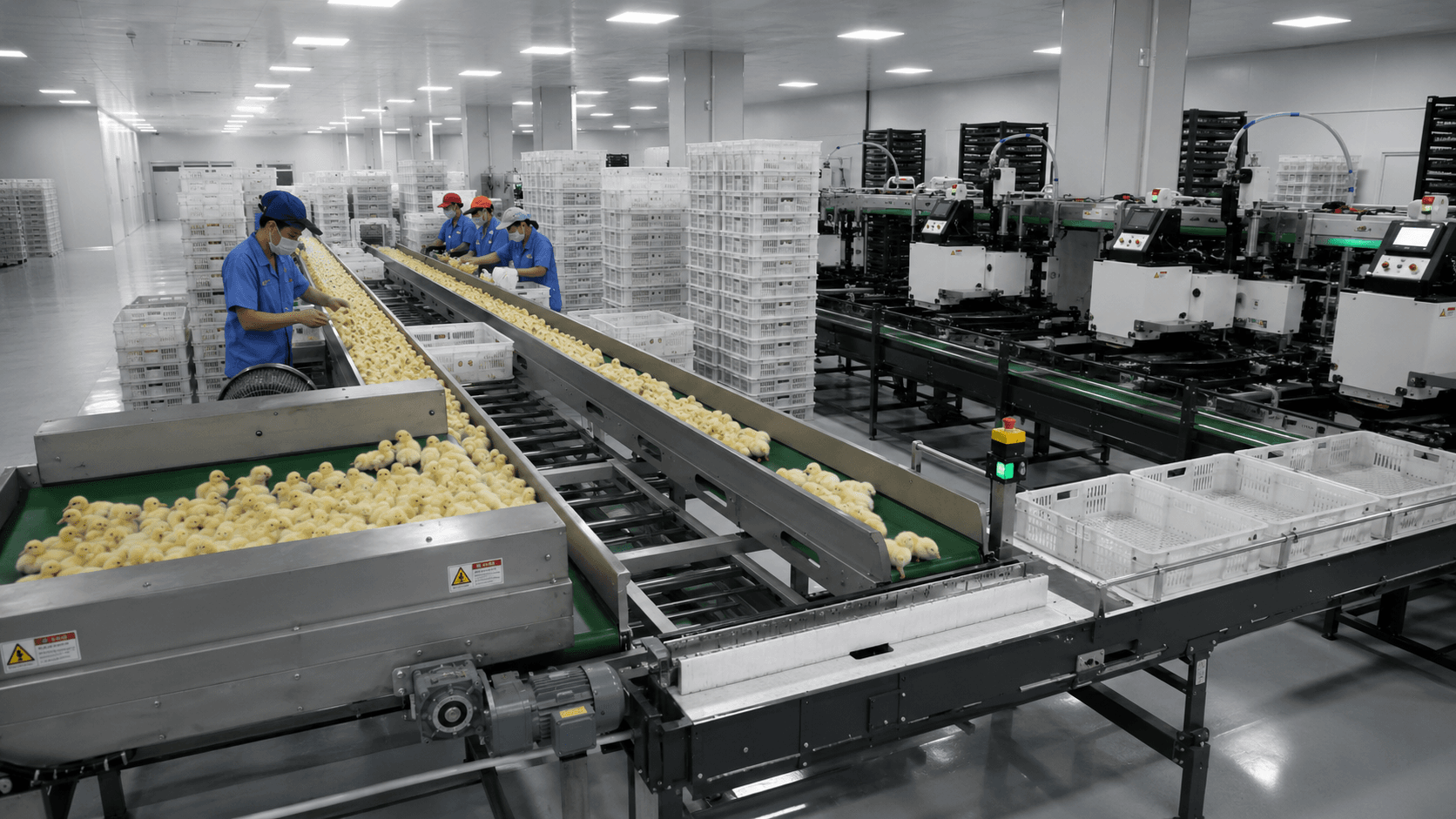
An integrated poultry hatchery automation system is not simply a collection of machines that happen to share a floor. It is a working relationship between product flow, operators, controls, utilities, records, cleaning, and customer decisions. A system can run during a factory demonstration and still leave the site team uncertain about a normal shift.
The most useful evaluation therefore happens at handover. Ask six questions that force the project to show what was agreed, what was tested, who owns each decision, and what evidence the next shift receives.
1. Does the Flow Match the Customer's Working Day?
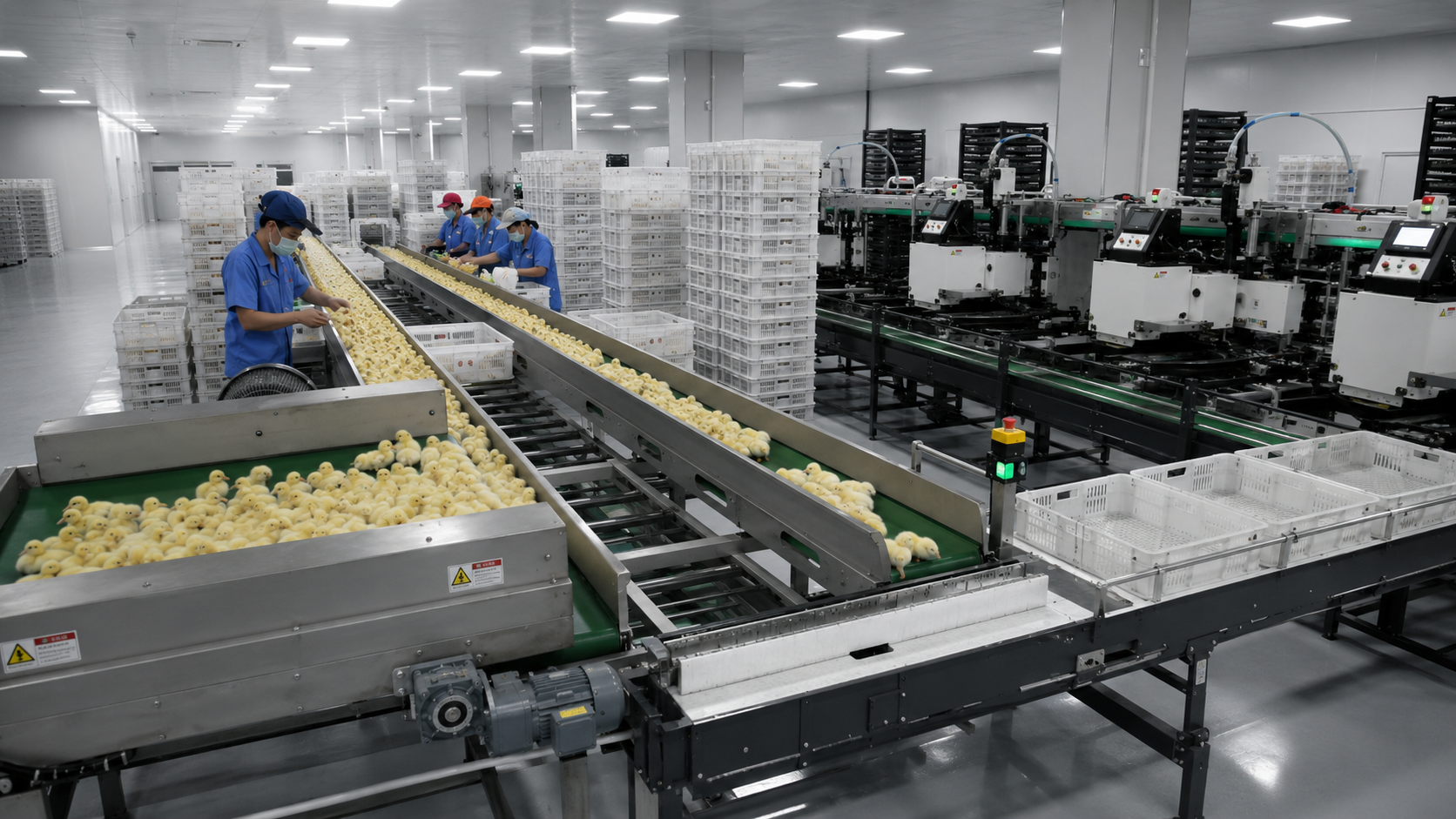
Start with the route, not the equipment list. Trace how eggs, day-old chicks, crates, frames, supplies, records, and finished loads move through the planned line. Mark every change of orientation, temporary buffer, inspection point, handoff, and decision.
Jili Intelligent presents integrated equipment through the JuliSense product portfolio. The selected integrated poultry hatchery automation system still needs to be matched to the customer's room, capacity, staffing, utilities, poultry type, and downstream workflow.
Follow one representative batch
Use a representative batch to find waiting, walking, replenishment, and communication that a clean showroom run can hide. Ask the production owner where the batch can pause without losing identity and where the next team can see its status.
Make buffers visible
Buffers are not empty space. They have an owner, a capacity, a status, and a release decision. Put those points on the layout so production and engineering discuss the same physical reality.
2. Can Every Interface Be Explained Without the Supplier?
An integrated line depends on interfaces between equipment, sensors, control signals, conveyors, operators, and customer systems. At handover, the customer should be able to explain what enters, what leaves, what signal confirms readiness, and what happens when the next zone is unavailable.
Build an interface register
Record mechanical dimensions, electrical information, signal ownership, guarding boundaries, cleaning access, expected state, and recovery responsibility for every connection. Include interfaces to customer equipment, not only the supplied machines.
Test a quiet handoff
Ask an operator to describe the handoff while the line is intentionally stopped in an approved state. If the explanation depends on a technician pointing to an unseen screen, the information has not reached the production owner.
3. Which Evidence Proves the System Is Ready?
Readiness should have more than one signal. Combine agreed test conditions, observed outputs, operator teach-back, safety checks, inspection records, open-item status, and customer acceptance. Avoid treating a smooth motion video as proof of full production readiness.
For machinery risk assessment and risk reduction, ISO 12100 provides a general framework. Apply relevant requirements to the final line and destination rather than using a general statement as a substitute for a project assessment.
Separate factory testing from site acceptance
Factory testing can confirm the agreed machine scope under controlled conditions. Site acceptance adds the customer's utilities, room, interfaces, staffing, procedures, and representative inputs. Keep both records linked but clearly separate.
Give every open item an owner
An open item needs impact, owner, due date, temporary control where applicable, required proof, and authorized closer. This makes the integrated poultry hatchery automation system easier to govern after the installation team leaves.
4. Can Operators Recover an Ordinary Pause?
The most useful recovery test is not an invented disaster. It is an approved, ordinary pause: a missing supply, an unavailable downstream zone, a request for inspection, or a controlled stop during a shift change.
Define state before restart
Record the current product position, machine status, people, signals, upstream condition, downstream condition, and open work before anyone clears the event. Then state who may inspect, who may reset, and who authorizes production restart.
Keep reset separate from release
The operator who can reset a control may not own the customer's production, quality, or welfare release. Write those roles into the training record and interface register.
5. Does Cleaning Belong in the Layout Conversation?
Cleaning and maintenance should be evaluated before the system is accepted. Identify removable parts, access envelopes, tools, inspection points, drains or collection areas, guarding boundaries, and reassembly checks. A line that runs well but cannot be cleaned or inspected predictably creates a future handover problem.
The WOAH Terrestrial Code is an internationally recognized reference for animal-health and welfare standards. Customer procedures and destination requirements remain the controlling basis for the final operation.
Walk the end-of-run state
Do not discuss cleaning beside a running line. Follow the line after a representative run and record what is retained, discarded, cleaned, inspected, reassembled, or left open.
Name the release owner
The next shift needs a visible state: ready, held for inspection, under maintenance, or waiting for an open item. Assign the person who can release that state.
6. What Does the Customer Receive After Training?
Training is complete when customer owners can explain normal operation, boundaries, exceptions, cleaning, and support without leaning on the visiting technician. The handover folder should connect configuration, drawings, interface data, records, training evidence, recommended spares, and the open-item register.
JuliSense describes commissioning, installation support, operator training, and after-sales service on its service page. Exact response commitments, included parts, travel, remote support, and exclusions belong in the project agreement.
Use a teach-back route
Let production, quality, maintenance, and project ownership each lead one section of the route. Record where they hesitate, disagree, or require an undocumented explanation.
Write the first support message
The handover should show what information to provide when support is needed: machine identification, configuration, site, date, state, event description, recent change, records, and permitted photographs or video.
A Handover Table Buyers Can Use
| Question | Evidence | Customer owner |
|---|---|---|
| Does flow fit? | Representative route and buffer map | Production |
| Are interfaces clear? | Interface register and signal map | Engineering |
| Is readiness proved? | Test, inspection, and acceptance records | Quality |
| Can work recover? | Approved pause and restart record | Supervisor |
| Can teams clean it? | Access map and release check | Maintenance and sanitation |
| Can the line be supported? | Training and support index | Project owner |
Use this table during supplier comparison. It focuses the conversation on evidence and ownership instead of rewarding the most polished demonstration.
Questions to Ask Before Signing the Handover
Does the system include customer equipment interfaces?
Ask which mechanical, electrical, control, and documentation interfaces are included and which remain customer work.
What conditions were used in the test?
Confirm inputs, staffing, duration, line speed, interruptions, cleaning state, and records. A result without conditions is difficult to apply to a site.
Who owns the next production release?
Name the customer role and the evidence required. Do not leave release authority with the supplier by default.
How can a project start with JuliSense?
Use the JuliSense contact page to share the layout, capacity, poultry type, interfaces, automation goals, and expected handover evidence.
What should be visible on the first production day?
The customer should be able to find the approved route, interface register, current configuration, pause response, cleaning release, training record, and support contact without calling the installation team. That is the practical test of whether an integrated poultry hatchery automation system has been handed over as an operating system rather than a collection of delivered assets.
What should remain open?
Keep site assumptions, customer-supplied work, future interfaces, and conditional acceptance items visible. An integrated poultry hatchery automation system is easier to improve when the next decision is named instead of hidden inside a general completion statement.
Make the Handover the System's First Shift
An integrated poultry hatchery automation system earns confidence when the customer can follow the flow, explain every interface, recover an ordinary pause, clean the line, and find the evidence after training. JuliSense can organize the equipment and service discussion around those practical questions while the hatchery retains authority over its procedures and release decisions.